Stock Futures Explained: What They Are and How to Trade Them

 Prefer us on Google
Stock futures are contracts that let traders agree on a price today for a stock or stock index that settles at a future date. Most people encounter them in one of two ways: as a leveraged instrument for betting on market direction, and as an early-warning signal that shows where Wall Street is likely to open before the 9:30 a.m. ET bell. When a headline reads "S&P 500 futures up 0.4%" at 6 a.m., that is stock futures at work.
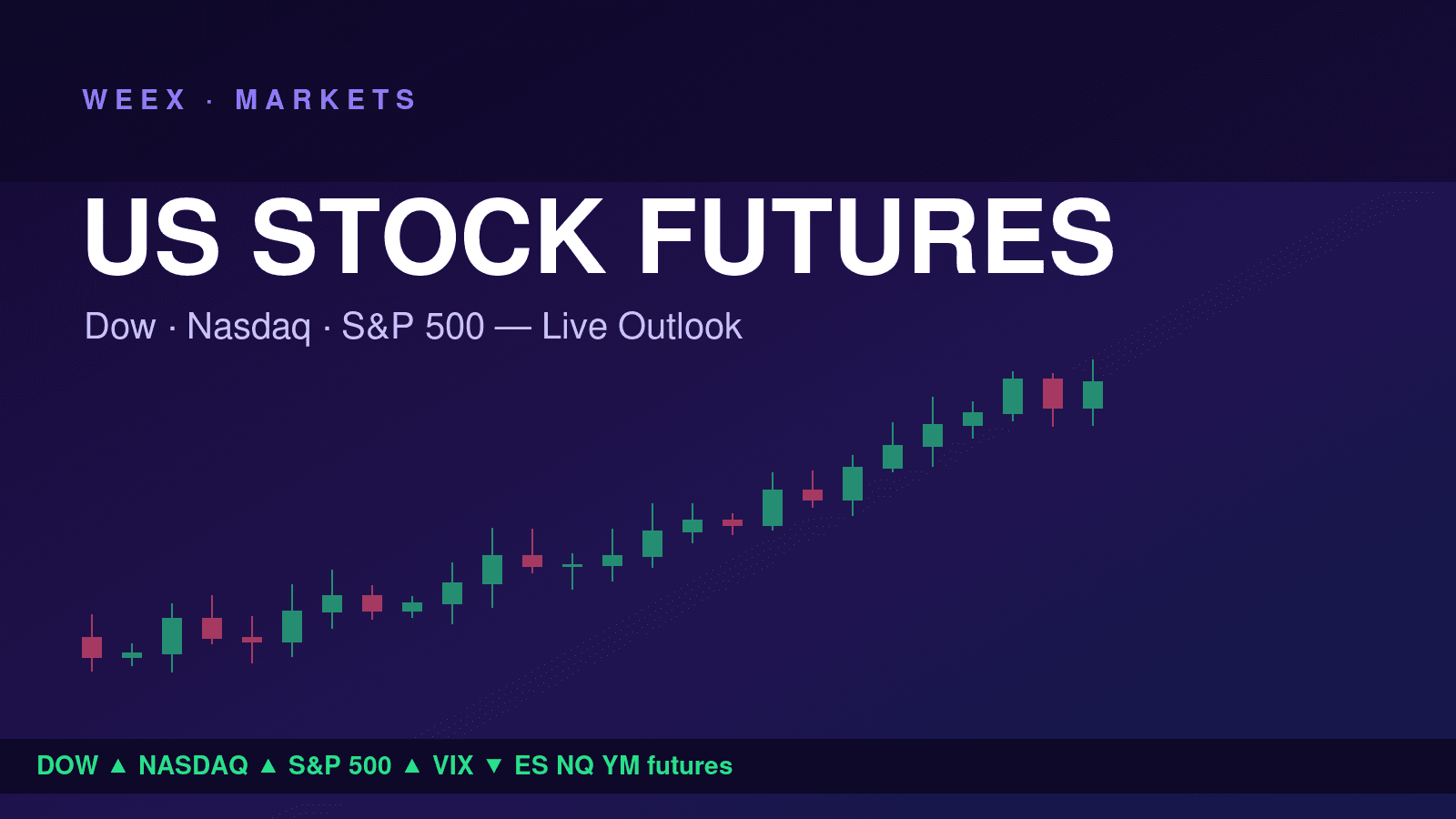
They matter now because those contracts trade nearly around the clock. While the cash stock market sits closed for roughly two-thirds of every weekday, stock futures keep pricing in overnight earnings, economic data, and geopolitical shocks. That continuous read on risk appetite is exactly why traders far outside equities — including the crypto market — keep stock futures on their screens.
What are stock futures?
A futures contract is a binding agreement to buy or sell an asset at a set price on a set date. Stock futures apply that structure to equities. There are two broad types, and confusing them is a common beginner mistake.
The contracts most people mean by "stock futures" are index futures — built on a whole benchmark rather than one company. The four US contracts that dominate the tape are below.
| Contract | Underlying index | Common nickname |
|---|---|---|
| E-mini S&P 500 (ES) | S&P 500 | "S&P futures" |
| E-mini Nasdaq-100 (NQ) | Nasdaq-100 | "Nasdaq futures" |
| E-mini Dow (YM) | Dow Jones Industrial Average | "Dow futures" |
| E-mini Russell 2000 (RTY) | Russell 2000 | "small-cap futures" |
The second type is the single-stock future, a contract on one company's shares. These exist but trade far less actively than index futures for retail traders, so most day-to-day "stock futures" talk refers to the indices above.
Every futures position takes one of two sides. A long agrees to buy at expiry and profits if the price rises; a short agrees to sell and profits if it falls. Index futures are cash-settled, meaning no one delivers a basket of 500 stocks — the contract simply settles to the index value in cash and rolls to the next quarter.
How stock futures work: margin, leverage, and expiry
Two mechanics define stock futures: leverage and continuous trading.
Futures are margined products. You post a fraction of the contract's notional value — often roughly 3% to 12% depending on the contract and broker — and control the full position. That leverage magnifies both directions. A modest index move produces an outsized swing in your account, which is the single most common reason inexperienced futures traders blow up. With a futures contract, it is possible to lose more than the cash you initially put down.
Because index futures trade nearly 24 hours a day, five days a week, they absorb news while the cash market is shut: an overseas selloff, an after-hours earnings miss, a surprise jobs number, or a geopolitical event. By the time New York opens, the futures have usually already moved. US index futures also expire on a fixed quarterly schedule, so active traders "roll" into the next contract before expiry rather than letting a position settle.
How to read stock futures before the market opens
The most useful everyday function of stock futures is as a directional indicator for the coming session. Here is the practical read.
| What you see | What it usually signals |
|---|---|
| S&P 500 futures up 0.5% premarket | Cash market likely to open higher |
| Nasdaq futures down sharply, Dow flat | Weakness concentrated in tech, not the whole market |
| All major contracts deeply red overnight | Broad risk-off move, often macro or geopolitical |
| Futures reverse after a data release | Market repricing rate or inflation expectations |
Two cautions matter. First, the premarket number is a probability, not a promise — futures can point up at 8 a.m. and the market can still open lower if sentiment shifts. Second, professionals compare the futures price to fair value (which accounts for interest rates and dividends) rather than the raw point change, because a contract can look strongly positive purely from financing rather than genuine buying. For a deeper walkthrough of the premarket tape, WEEX's guide on how to read Dow stock futures breaks down the fair-value gap in detail, and its US stock futures explainer covers the four index contracts.
Read them as a measure of pressure, not a crystal ball. Thin overnight volume can exaggerate a 3 a.m. swing, so the same move at 9:15 a.m. is far more reliable.
Stock futures vs. stocks vs. options
Newcomers often ask whether to trade futures, buy the stock, or use options. Each answers a different need.
| Feature | Stock futures | Buying stocks | Options |
|---|---|---|---|
| Ownership | No — a contract | Yes — real shares | No — a right, not obligation |
| Leverage | High (margin-based) | None (unless margin loan) | Built into the premium |
| Expiry | Fixed quarterly | None | Fixed |
| Obligation | Must settle/roll | None | Buyer can walk away |
| Dividends | No | Yes | No |
| Loss ceiling | Can exceed deposit | Limited to amount invested | Buyer limited to premium |
The core distinction: a futures contract obligates both sides to settle, while an option gives the buyer a choice. Futures pricing is straightforward — you are trading pure price action. Options add layers of complexity from time decay, volatility, and strike selection. That simplicity is why many active traders prefer futures, but it also removes the defined-risk cushion an option buyer enjoys.
Are stock futures a good investment?
The honest answer is that stock futures are a trading and hedging tool, not a buy-and-hold investment. They pay no dividends, they expire, and they demand active management. For a trader who wants leveraged exposure with modest capital, they can be efficient. For someone seeking long-term compounding, owning the underlying stocks or an index fund is usually the better fit.
The more important point is risk. Leverage cuts both ways: the same index move that delivers an outsized gain can wipe out a deposit just as fast, and overnight gaps can move a position against you before you can react. Stock futures reward discipline and punish size. If you are drawn to them mainly for the leverage, that is precisely the reason to start small.
From stock futures to crypto futures
Here is where stock futures matter well beyond Wall Street. Over recent years, Bitcoin and large-cap crypto have often traded with meaningful correlation to US equities, especially the Nasdaq-100. When tech futures sell off overnight, crypto frequently moves in sympathy. Since crypto never closes, traders use stock futures to read the macro mood during hours when US equities are shut.
The mechanics also carry over almost directly. If you understand margin, leverage, long and short, and a contract tracking an underlying price, you already grasp the core of crypto futures trading. The main structural difference is expiry. Traditional stock index futures expire quarterly and must be rolled; the dominant crypto contract, the perpetual futures contract, never expires and instead uses a funding rate to keep its price tethered to spot.
| Feature | Stock index futures | Crypto perpetual futures |
|---|---|---|
| Underlying | Equity index | Cryptocurrency (e.g. BTC) |
| Expiry | Quarterly, must roll | None |
| Price anchor | Settles to index | Funding rate vs. spot |
| Trading hours | ~24/5 | 24/7 |
| Typical max leverage | Low single digits to ~20x | Much higher on some venues |
Perpetuals remove the roll friction but add a recurring funding cost and, on many platforms, far higher leverage — which raises liquidation risk. The skill set transfers; the risk profile does not shrink.
Bottom line
Stock futures are two things at once: a leveraged way to trade index direction, and a near-real-time gauge of market sentiment that runs while the cash market sleeps. Learn to read them as pressure rather than prophecy, keep leverage honest, and treat the premarket number as a starting point rather than a signal to act on alone. For crypto-native traders, the same concepts port cleanly into perpetual contracts — with the same warning attached about respecting leverage.
Ready to apply the concept in crypto? Explore futures trading on WEEX and start with conservative position sizing.
FAQ
1. What are stock futures in simple terms?
They are contracts that let you agree on a price today for a stock or stock index that settles later. Traders use them to bet on direction with leverage and to gauge where the market will open.
2. Can stock futures predict the market open?
They strongly hint at it. If S&P 500 futures are up before the bell, the cash market usually opens higher — but sentiment can shift, and thin overnight volume can distort the signal, so treat it as a probability.
3. What is the difference between stock futures and options?
A futures contract obligates both sides to settle at expiry, while an option gives the buyer the right but not the obligation to trade. Futures track pure price action; options add time decay and volatility to the price.
4. Are stock futures riskier than buying stocks?
Generally yes. Futures are leveraged, so small index moves create large account swings, and you can lose more than your initial margin. Buying a stock outright caps your loss at the amount invested.
5. Why do crypto traders watch stock futures?
Bitcoin and large-cap crypto often correlate with US equities, especially the Nasdaq-100. Because index futures trade overnight, they help crypto traders read macro risk appetite when US stocks are closed.
Risk Warning
Trading stock futures involves substantial risk. Leverage magnifies both gains and losses, and you can lose more than your initial margin because index futures are margined, expiring contracts. Prices can gap sharply on overnight news, thin premarket liquidity can exaggerate moves, and premarket levels are estimates of the open rather than guarantees. The same cautions apply to crypto perpetual futures, where high leverage can trigger liquidation on a small adverse move and crypto assets can lose part or all of their value. Funding costs, slippage, and counterparty and regulatory risk all apply. Nothing here is investment advice. Trade only with capital you can afford to lose, and use risk controls suited to your experience.
Disclaimer: For informational purposes only. Not financial advice. Any activities, rewards, campaigns, or promotions mentioned do not constitute an offer, solicitation, or recommendation to buy, sell, or trade crypto assets. Crypto assets are highly volatile and may lose value. WEEX services, products, or campaigns may not be available in all regions. Users are responsible for complying with applicable local laws before participating.
Disclaimer: This content is provided for general branding and informational purposes only and doesn't constitute financial, investment, legal, or tax advice. Any events, rewards, online events, or related information mentioned herein should not be considered a recommendation, solicitation, or invitation to purchase, sell, trade, or otherwise deal in any crypto assets or to use any services. Crypto assets are highly volatile and may result in loss. WEEX services and online events may not be available in all regions and are subject to applicable laws, regulations, and eligibility requirements. You are responsible for ensuring that your use of WEEX services complies with local laws and for carefully assessing the risks before participating in any crypto-related activities.
You may also like
SK Hynix Stock in Korea: Price, Drivers, and How to Buy It
SK Hynix stock (KRX: 000660) is Korea's most valuable listed company on the AI memory boom. See the price, drivers, risks, and how foreign investors can buy it.
BATRA Stock: Price, Forecast, and How to Trade Atlanta Braves Holdings in 2026
BATRA stock explained — Atlanta Braves Holdings price, share classes, 2026 forecast, and how to trade equity exposure via tokenized stocks.
TSMC Stock (TSM): Price, 2026 Forecast, and How to Get Exposure
TSMC stock trades near $434 in July 2026. See TSM's valuation, dividend, analyst price targets, how to buy it, and the key risks before you invest.
GDWR Coin (Global Digital Water Reserve): Legit or Hype?
Is GDWR coin legit? Global Digital Water Reserve is a Solana narrative token with no water backing. See its price, supply, risks, and how to buy safely.
How to Bridge Assets to the Sui Network
Moving funds to the Sui network shouldn’t feel risky or confusing. This guide shows beginners how to bridge…

How to Set Up a Sui Wallet?
This guide shows how to choose a Sui wallet, install it on browser or mobile, create or import…
What Is Sui? A Complete Guide to the Sui Blockchain
Sui is an independent Layer-1 blockchain built for high throughput and low latency using an object-based data model.…
Top 5 DApps to Try on Base in 2026
Base has matured into a low-fee, consumer-friendly Layer 2 that’s ideal for trying DeFi, NFTs, and social apps…
How to Bridge Assets to Base Network?
Bridging assets to Base lets you tap low fees and fast settlement on an Ethereum Layer-2 built with…

Base vs Arbitrum vs Optimism: Which Layer 2 Should You Use?
Choosing between Base, Arbitrum, and Optimism comes down to fees, app depth, and how tightly each network is…
How to Add Base Network to MetaMask?
You’ll learn exactly how to add Base to MetaMask—manually or with one click—plus the official RPC, Chain ID,…
What Is Base? A Complete Guide to Coinbase’s Layer 2 Network
Base is a Layer 2 (L2) blockchain built on Ethereum that makes transactions faster and cheaper by moving…
Top 5 Wallets for Storing SUI in 2026
Choosing a Sui wallet in 2026 comes down to custody model, staking access, and how you interact with…
How to Set the Right Trailing Stop Percentage
A trailing stop helps you ride a crypto trend while automatically locking in gains as price moves in…
Trailing Stop vs Stop Loss: What’s the Difference
This guide breaks down the trailing stop and the classic stop-loss so you can choose the right order…
What Is a Trailing Stop Order? A Beginner’s Guide
A trailing stop is a dynamic exit tool that moves up with the market to protect gains and…
Copy Trading Platforms Compared: Which One Is Right for You?
The right copy trading platform depends on your experience, the markets you want to mirror (spot, futures, DeFi),…
Copy Trading Risks You Should Know Before You Start
Copy trading makes it easy to mirror the moves of experienced traders, but convenience can hide real risk.…
How to Choose the Right Trader to Copy
Copy trading lets you mirror another trader’s positions automatically, but the right choice hinges on more than a…
What is Roundhill Memory ETF Tokenized ETF (Ondo)(DRAMON) Coin? Everything You Need to Know Before Trading DRAMON/USDT
This guide explains what DRAMON is, how Ondo tokenizes the Roundhill Memory ETF exposure, how it works on-chain,…
Oil Trading Rewards: Share $100,000 Bonus on WEEX
WEEX is running a limited-time oil and energy trading campaign with a $100,000 reward pool. This guide explains…
Is Tangem Safe? Security Features Explained
Tangem is a card-based hardware wallet that stores your private keys inside a certified secure chip and signs…
SafePal vs Ledger: Which Wallet Should You Choose
Hardware wallets protect private keys off the internet, reducing the chance of remote hacks. This guide compares SafePal…
How to Set Up and Use SafePal Wallet? A Complete Beginner’s Guide
This beginner-friendly guide explains how to set up the SafePal app and S1 hardware wallet, create or import…
What Is SafePal Wallet? A Complete Beginner’s Guide
SafePal is a beginner-friendly crypto wallet brand that offers both a hardware wallet and a mobile software wallet…
Is Your Trailing Stop Costing You Money? Common Mistakes to Avoid
Have you noticed that after setting a trailing stop, you often get shaken out just before the real…
What Is Copy Trading? A Beginner’s Guide
Copy trading lets you automatically mirror another trader’s positions in real time. You choose a trader to follow,…
What is Credo Technology Group Holding Tokenized Stock (Ondo)(CRDOON) Coin? Everything You Need to Know Before Trading CRDOON/USDT
This article explains what Credo Technology Group Holding Tokenized Stock (Ondo) (CRDOON) is, how it works, who stands…
Is DCA a Good Strategy for Beginners?
Short answer: for most beginners, DCA (dollar-cost averaging) is a sensible starting point—simple, steady, and less stressful—though it…
Does DCA Actually Work? What the Data Shows
DCA (dollar-cost averaging) means investing a fixed amount on a set schedule, regardless of price. This article looks…
SK Hynix Stock in Korea: Price, Drivers, and How to Buy It
SK Hynix stock (KRX: 000660) is Korea's most valuable listed company on the AI memory boom. See the price, drivers, risks, and how foreign investors can buy it.
BATRA Stock: Price, Forecast, and How to Trade Atlanta Braves Holdings in 2026
BATRA stock explained — Atlanta Braves Holdings price, share classes, 2026 forecast, and how to trade equity exposure via tokenized stocks.
TSMC Stock (TSM): Price, 2026 Forecast, and How to Get Exposure
TSMC stock trades near $434 in July 2026. See TSM's valuation, dividend, analyst price targets, how to buy it, and the key risks before you invest.
GDWR Coin (Global Digital Water Reserve): Legit or Hype?
Is GDWR coin legit? Global Digital Water Reserve is a Solana narrative token with no water backing. See its price, supply, risks, and how to buy safely.
How to Bridge Assets to the Sui Network
Moving funds to the Sui network shouldn’t feel risky or confusing. This guide shows beginners how to bridge…
How to Set Up a Sui Wallet?
This guide shows how to choose a Sui wallet, install it on browser or mobile, create or import…