
Week 5 On-chain Data: Validator Adoption Decreases to 40%; Short-Term Market Likely to Remain Volatile





Original Article Title: "Is the Era of Less than 40% Long-Term Holders Nearing Its End? | WTR 2.10"
Original Source: WTR Research Institute
Weekly Recap
For the week of February 3rd to February 10th, the price of Blood Orange reached a high near $102,500 and a low close to $91,231, with a fluctuation range of approximately 10.99%. Looking at the distribution of chips, there was a large volume of chips traded around 95,000, which may provide some support or resistance.
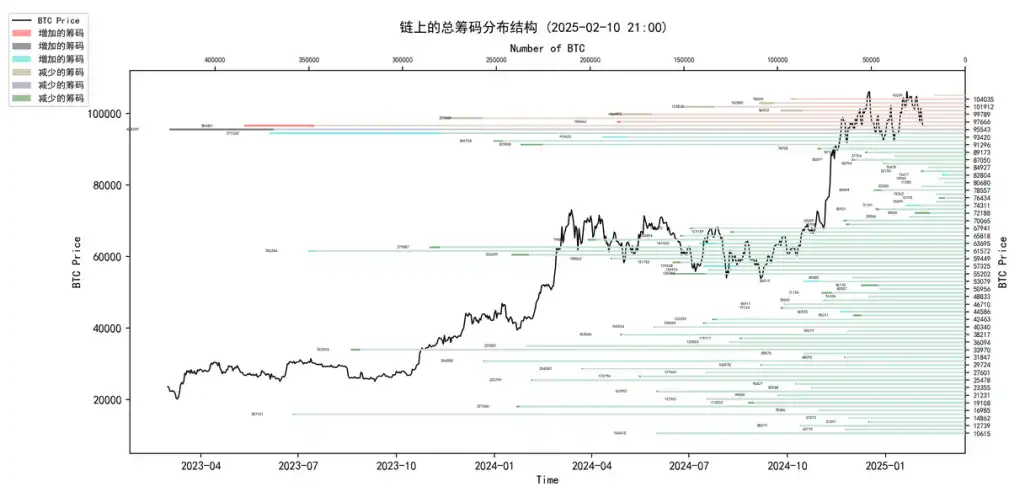
• Analysis:
1. 60000-68000 approximately 1.68 million coins;
2. 90000-100000 approximately 2.6175 million coins;
• The probability of not breaking below 87,000 to 91,000 in the short term is 85%;
• The probability of not breaking above 110,000 to 115,000 in the short term is 69%.
Important News Aspects
Economic News Aspect
1. Data from last Friday showed that the U.S. unemployment rate in January was 4.0% (previous value 4.1%).
2. January non-farm employment added 143,000 people (previous value 307,000 people).
3. The Fed has already reduced its balance sheet by over $2 trillion in this round, with the initial balance sheet size decreasing from about $9 trillion to $6.87 trillion, and the overnight reverse repurchase agreement size dropping from the previous high of $2.5 trillion to $780 billion.
4. The Fed's monetary policy report last Friday mentioned "plans to stop shrinking the balance sheet at the appropriate time."
Cryptocurrency Ecosystem News Aspect
1. The Strategic BTC Reserve Bill (Senate Bill 778) in the U.S. state of Texas was submitted to the Senate Finance Committee for review on February 7th. It aims to establish a state government-controlled BTC reserve to enhance financial security and promote digital asset innovation.
2. Cynthia Lummis, the sponsor of the U.S. "BTC Strategic Reserve Bill" and head of the Senate Banking Subcommittee on Digital Assets, stated: If the U.S. used 5% of the total BTC supply (approximately 1 million BTC) to establish a reserve, then U.S. debt could be halved in the next 20 years.
3. Felix Hartmann, Founder of Hartmann Capital, expressed: I might be a little early, but I feel like we are approaching the bottom. Interest rates have been negative for some time now, and the futures premium flipped to negative a few weeks ago;
4. The AI token has dropped by 80-99%; high-quality alternative tokens have retraced to the long-term trendline, eliminating the over-exuberance of the fourth quarter; market sentiment has completely collapsed, which is often the best signal, and today's sense of despair feels just as irrational as the fourth-quarter frenzy.
5. Global macro market commentary magazine "Kobeissi Letter" stated: ETH's short positions have increased by 40% in one week, skyrocketing by 500% since November 2024, reaching an unprecedented scale of shorting ETH, surpassing any previous time.
6. On February 10, Michael Saylor stated: Strategy (formerly MicroStrategy) increased its holdings by 7633 BTC at an average price of $97,255, with a total value of approximately $7.424 billion. BlackRock's ownership stake in Strategy has increased to 5%.
7. The participation of the younger generation, concerns about inflation, and Trump's pro-crypto stance are driving this growth, with the BTC ETF expected to surpass $250 billion, along with accumulating regulatory favorability, cryptocurrencies are accelerating into the mainstream.
8. Currently, 27 U.S. states have shown a strong interest in BTC, with Kentucky and Maryland legislators each proposing a "BTC reserve" bill, and a Florida senator also introducing a BTC investment bill. Utah may become the first U.S. state to establish a BTC reserve, as they have only 45 days to make a decision.
9. Tischhauser stated: If the U.S. establishes a BTC reserve, each additional $1 billion inflow could trigger a $200 billion market cap multiplier effect for BTC. The potential demand shock would be significant because BTC's circulating supply is very limited.
10. Economist Alex Kruger stated that the current market is not progressing as smoothly as previous bull markets. First, the Federal Reserve turned hawkish in December last year, then TRUMP caused massive volatility and liquidity outflow. For the crypto market, the most similar situations to the current one are May 2021 and May 2024. Alex believes that after the turbulence, prices will continue to rise.
Long-term Insights: Used to observe our long-term situation; Bull Market / Bear Market / Structural Changes / Neutral State
Medium-term Exploration: Used to analyze which stage we are currently in, how long this stage will last, and what circumstances we will face
Short-term Observation: Used to analyze the short-term market conditions; as well as the emergence of some trends and the likelihood of certain events under certain conditions
Long-term Insights
• U.S. Crypto ETF Reserves Flow
• Long-term Investor Participation Rate
• Large Value Transfers Off-chain
• Short-term Speculators' Cost
(See below the Reserve Flow of US Crypto ETF)
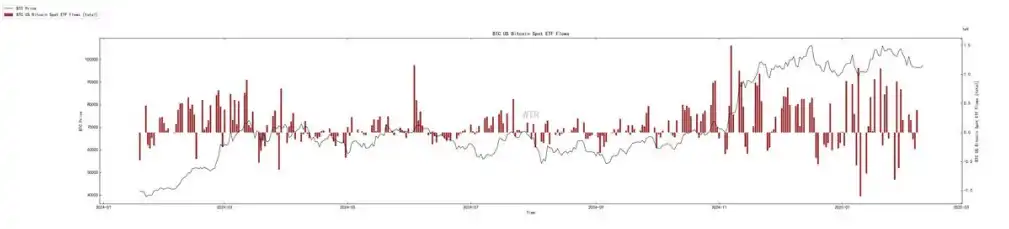
While the fund inflow status may sometimes show some outflows or sell-offs, more often than not, there is still a prevalent buying interest, with the outflow of funds not being sustained.
(See below the Percentage of Long-Term Investors' Participation)
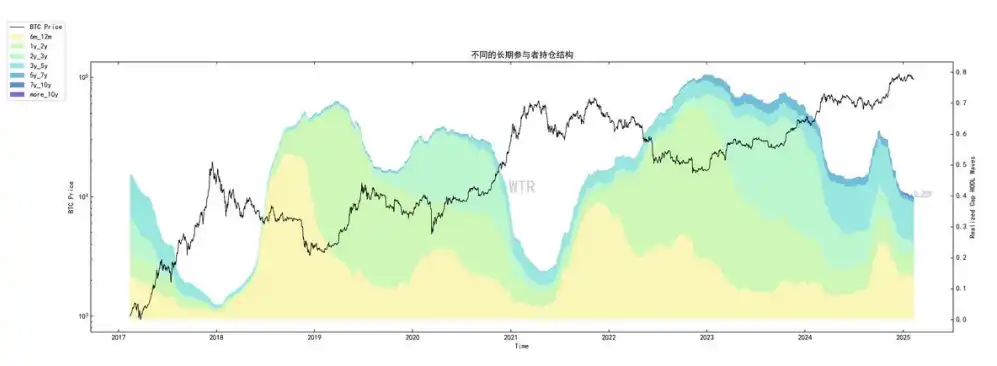
The percentage of long-term participants has further declined, dropping to 39%. Caution needs to be exercised regarding potential market risks in the future.
(See below the Large Transaction Transfer Header)
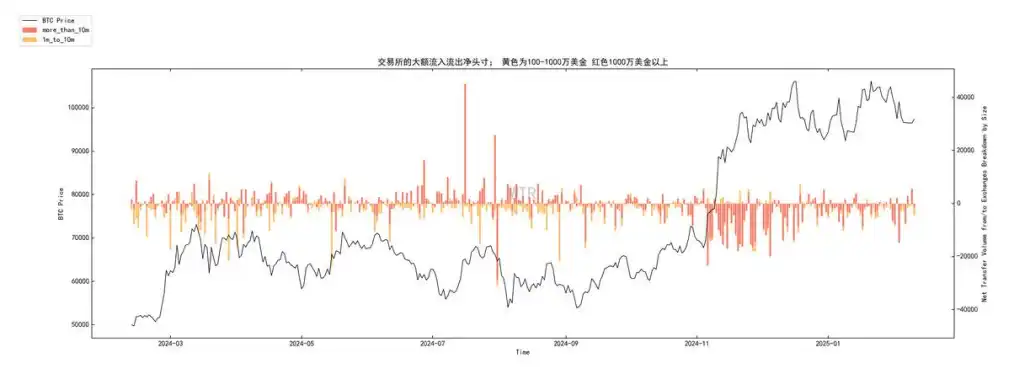
After experiencing selling pressure caused by recent days' fund inflow, resulting in a downward price test, the market has returned to a characteristic where a buying interest is gradually being maintained. There is still a slight buying interest in the market.
(See below the Short-Term Speculators' Cost)
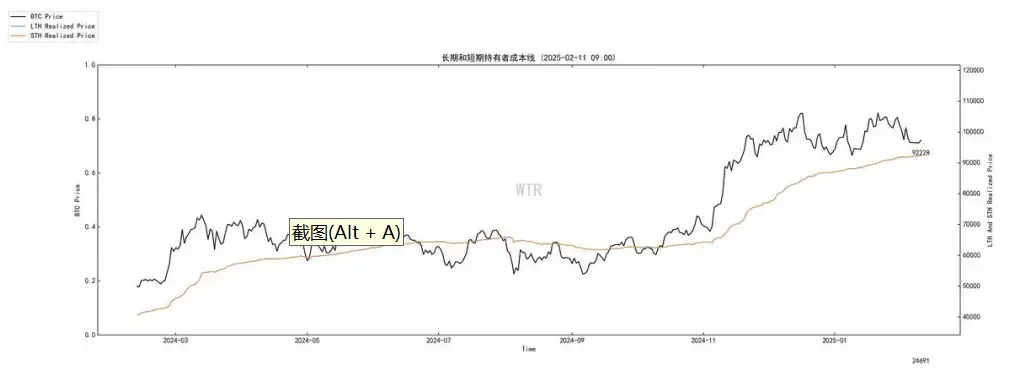
The cost for short-term speculators has surged to $92,000, a price that will act as a psychological barrier or a support level, especially as short-term participants' proportion increases.
Mid-Term Exploration
• Incremental Model
• Liquidity Supply Volume
• Whale Composite Score Model
• USDC Buying Power Composite Score
• ETH Exchange Trend Net Header
• BTC Exchange Trend Net Header
(See below the Incremental Model)
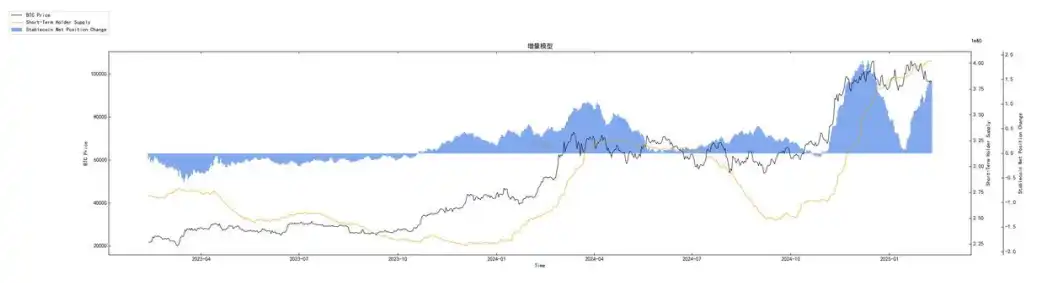
There are signs of incremental growth and supply increase to a certain extent, but the current volume is too small. The volume that could drive the market is not yet in place, or there is some cautious sentiment in the funding landscape.
(See below the Liquidity Supply Volume)
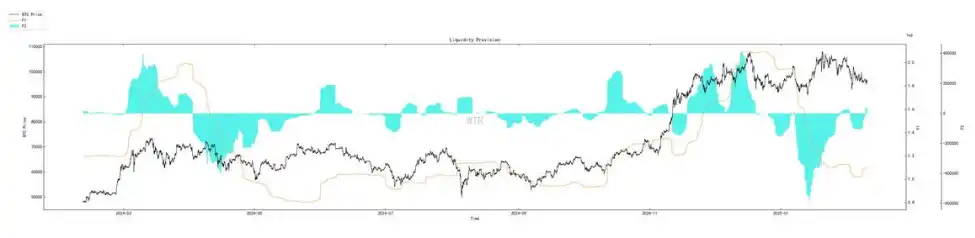
There is a noticeable increase in liquidity, mainly seen when the market is in a phase of consolidation or correction, where the liquidity supply volume will provide support and reinforcement. The liquidity of the current market may have slightly improved, and the risk of deterioration in this stage may be mitigated.
(See below the Whale Composite Score)
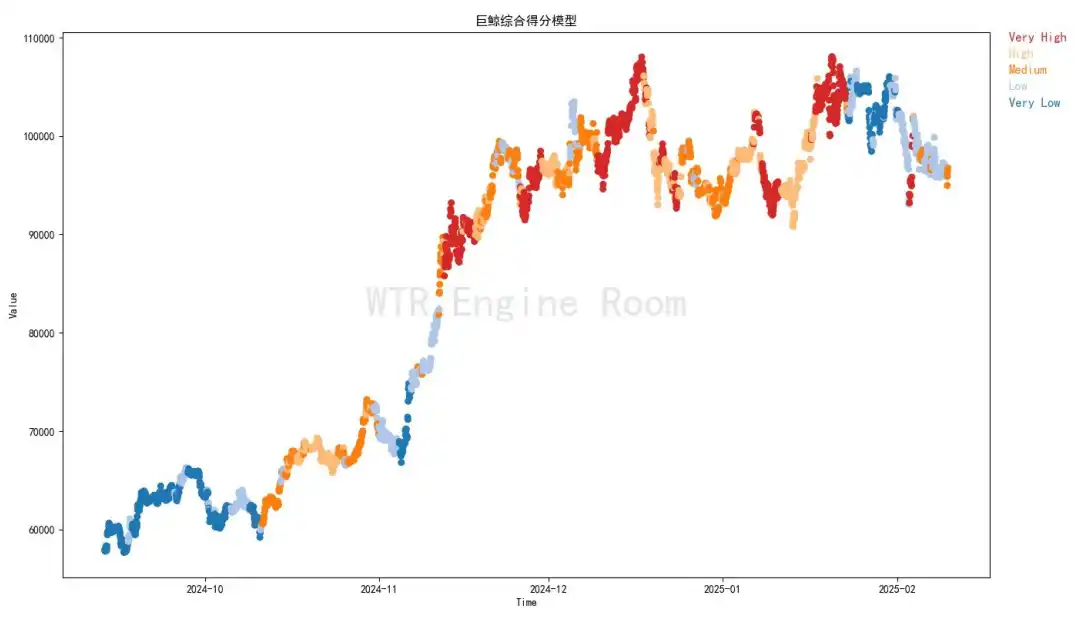
The whale's recent score status is not very clear, as it fluctuates between low and high states. There may be significant disagreements among the whales in the current market dynamics. If the whale's score status continues at the current pace, there may be significant turmoil in the market. The current rating is "Medium."
(Chart below shows the USDC Buying Power Composite Score)
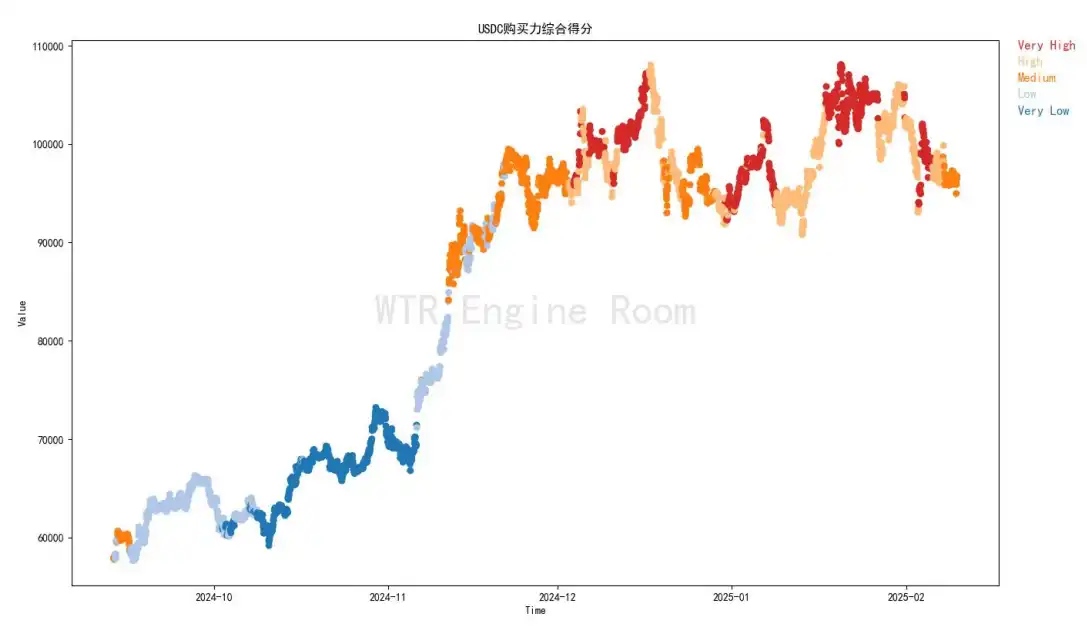
The status of USDC buying power continues to maintain a good level, which may indicate that institutional funds in the U.S. session have not shown significant exit movements. During the current adjustment phase, the pace of U.S. session funds may affect the short-term market performance.
(Chart below shows ETH Exchange Trend Net Inflow)
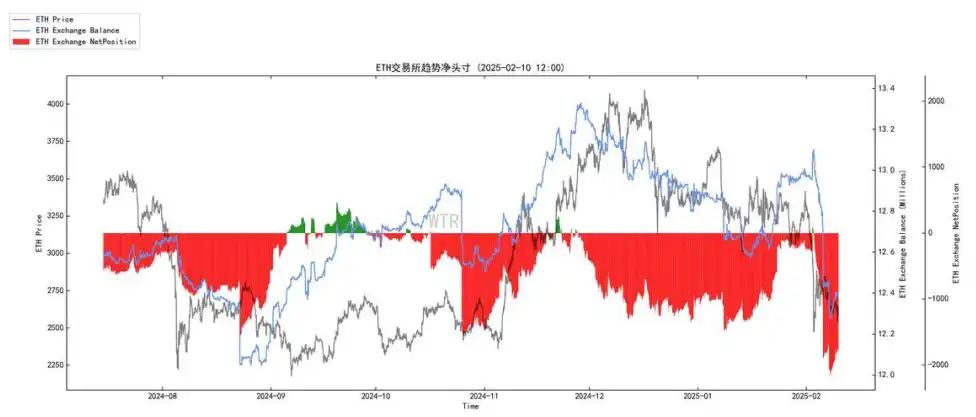
ETH exchanges have recently shown a significant outflow, indicating that on-chain entities may be starting to accumulate. Currently, there has been a compression in the recent amount of coins available for sale.
(Chart below shows BTC Exchange Trend Net Inflow)
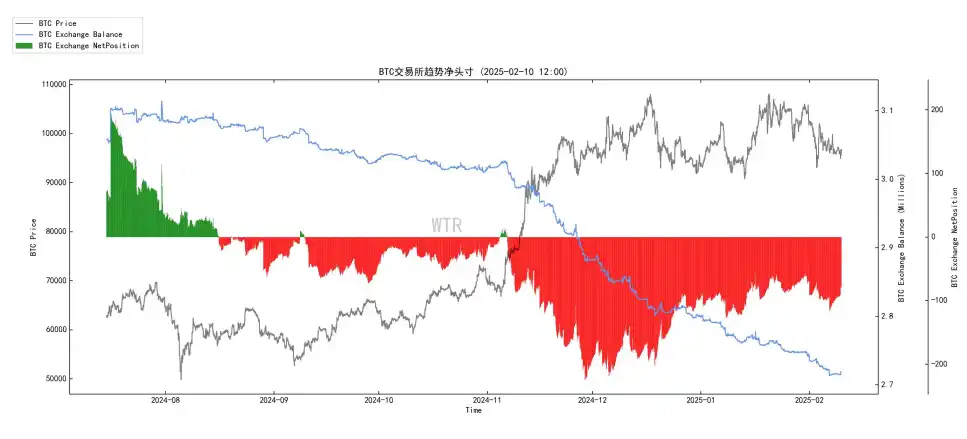
BTC continues to maintain a slow accumulation pace, suggesting that on-chain entities still hold an accumulation sentiment towards BTC. With the selling pace gradually decreasing, the subsequent selling pressure on BTC may continue to reduce.
Short-Term Observations
• Derivatives Risk Index
• Options Intent-to-Trade Ratio
• Derivatives Trading Volume
• Options Implied Volatility
• Profit and Loss Transfer Amount
• New and Active Addresses
• Honey Badger Exchange Net Inflow
• Auntie Exchange Net Inflow
• High-Weighted Sell Pressure
• Global Buying Power Status
• Stablecoin Exchange Net Inflow
• Off-chain Exchange Data
Derivatives Rating: The Risk Index is in the proximity of the neutral zone, indicating moderate derivatives risk.
(Chart below shows the Derivatives Risk Index)
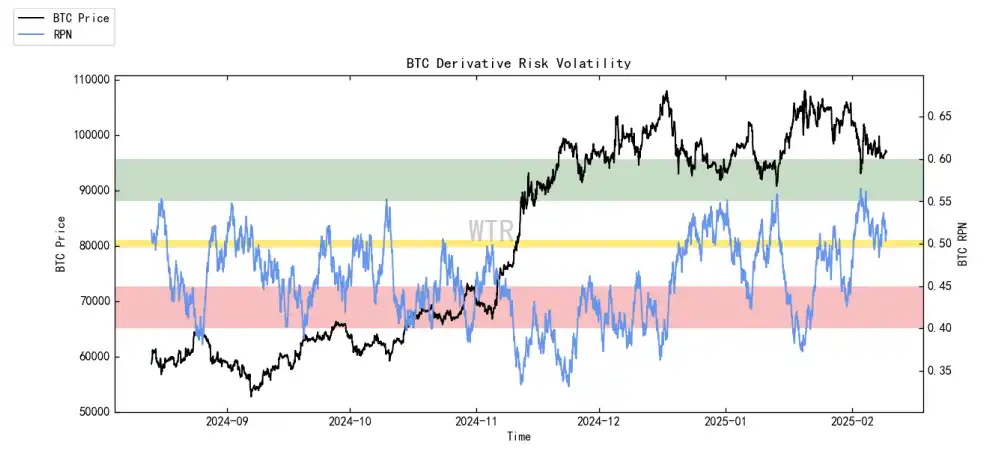
The Risk Index is in the neutral zone, suggesting that the current market state leans more towards an expectation of no specific trend.
(Chart below shows the Options Intent-to-Trade Ratio)
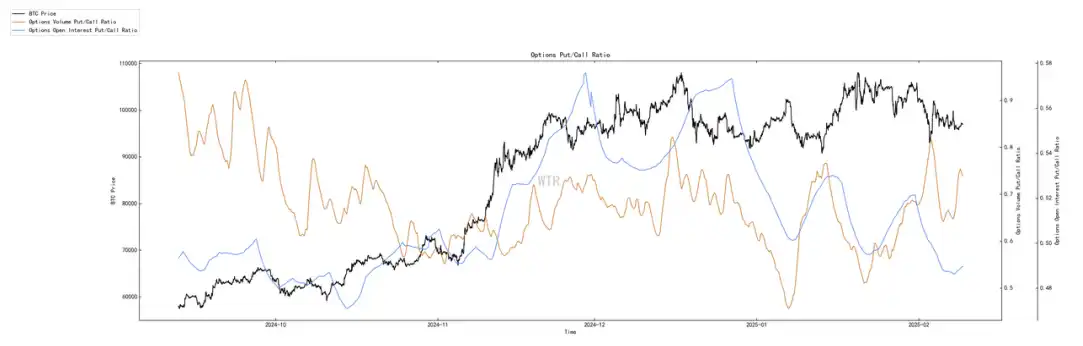
The put-to-call ratio is at a low level, with the trading volume at a moderate level.
(Chart below shows the Derivatives Trading Volume)
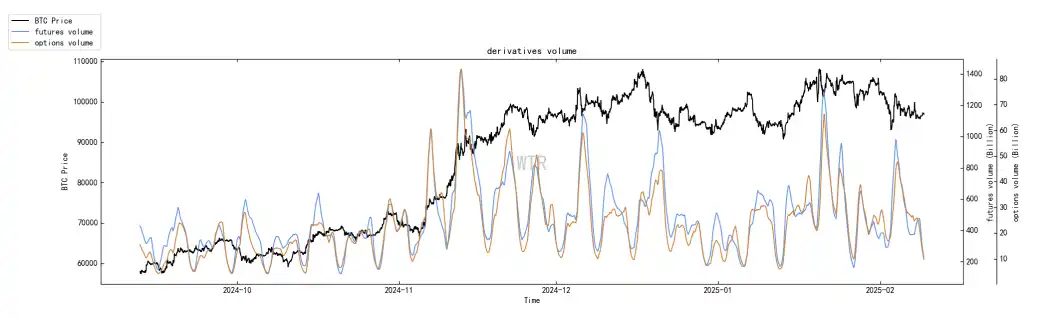
Derivatives trading volume is once again at a low level.
(Chart below shows the Options Implied Volatility)
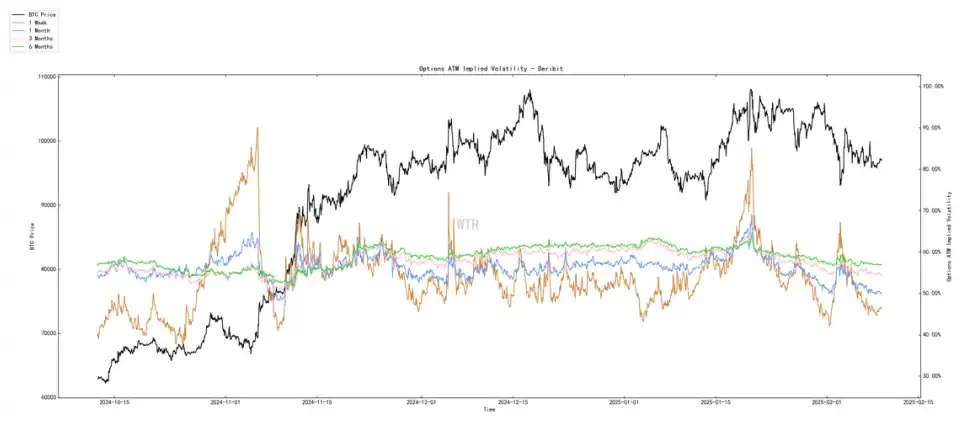
Option implied volatility shows no significant volatility in the short term.
Sentiment Rating: Neutral
(Chart below: Profit/Loss Transfer)
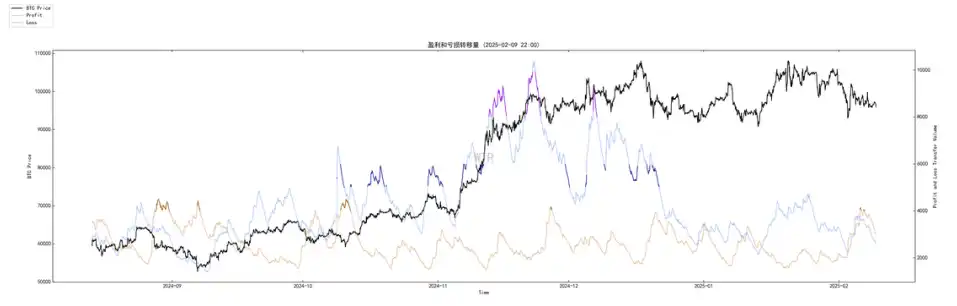
Last week's sudden market drop triggered some panic selling (orange line), but it did not lead to sustained panic afterwards. The current market positive sentiment (blue line) is also on a continuous decline. Overall, the market seems to be more in a ranging state.
(Chart below: New Addresses and Active Addresses)
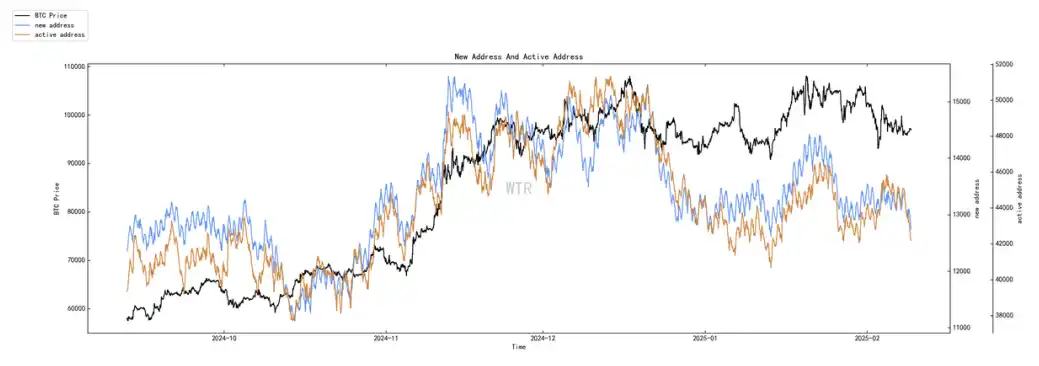
New and active addresses are at a moderate level.
Spot and Selling Pressure Structure Rating: BTC and ETH are in a state of significant outflow accumulation.
(Chart below: BTC Exchange Net Position)
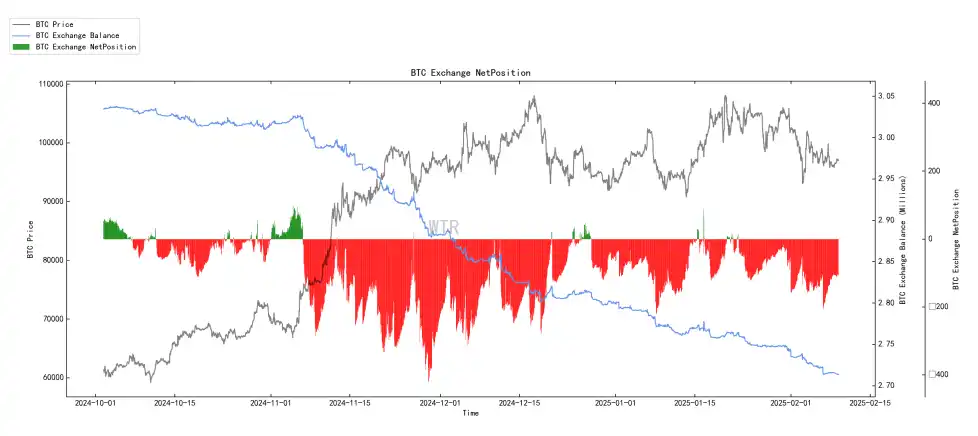
BTC exchange net position continues to show significant outflow accumulation.
(Chart below: ETH Exchange Net Position)
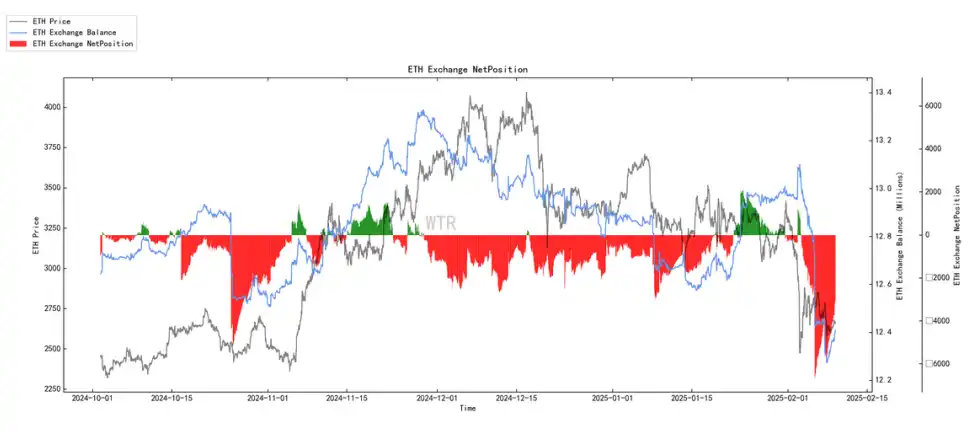
ETH exchange net position continues to show significant outflow accumulation.
(Chart below: High Weighted Selling Pressure)
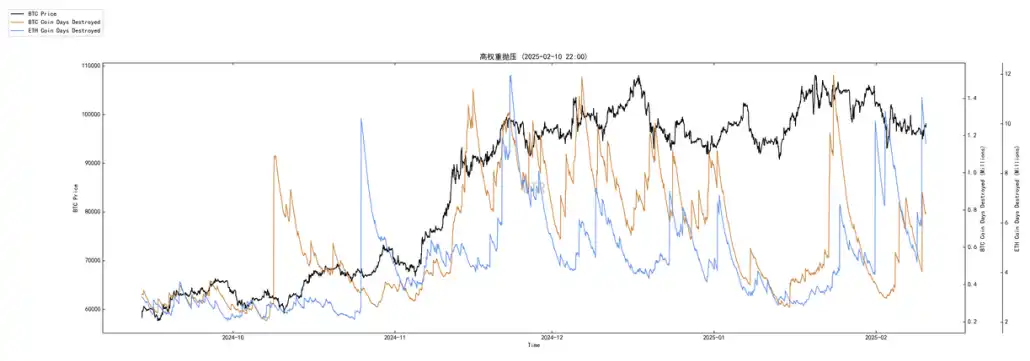
There is currently high weighted selling pressure, but it has eased somewhat.
Buy Power Rating: Global buy power is in a decreasing state, stablecoin buy power remains the same as last week.
(Chart below: Global Buy Power Status)
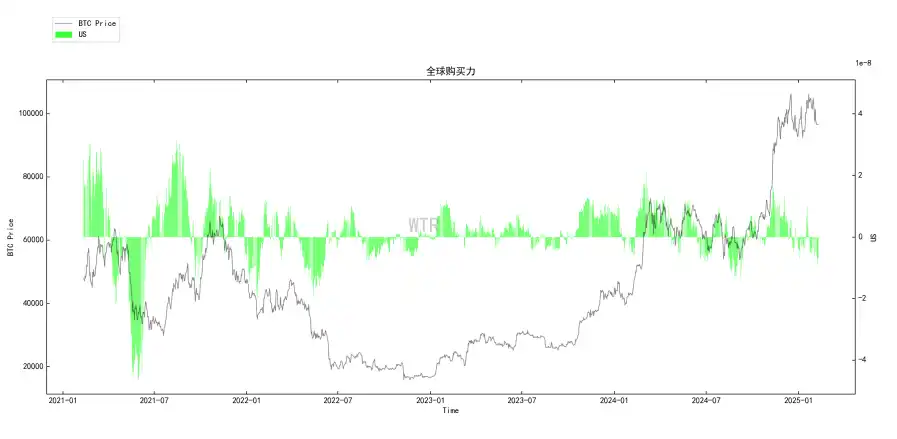
The current buy power is in a decreasing state.
(Chart below: USDT Exchange Net Position)
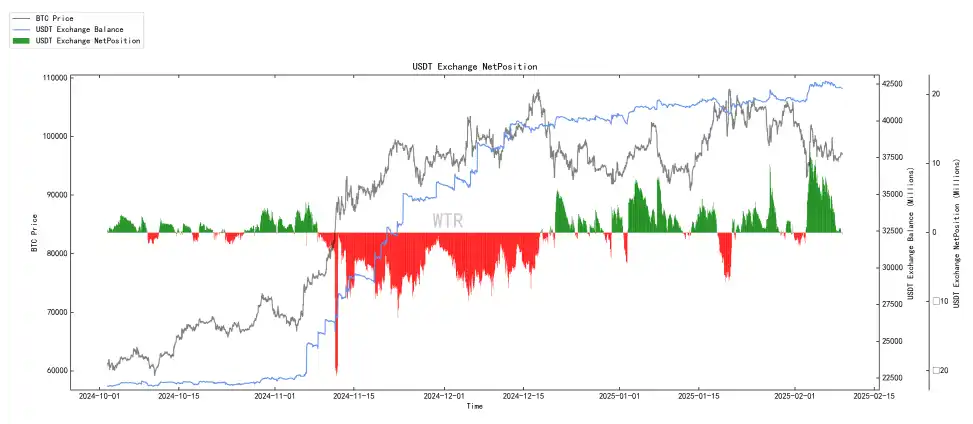
Stablecoin buy power remains the same as last week.
Off-chain Transaction Data Rating: There is buying interest at 90000; there is selling interest at 100000.
(On-chain Data from Coinbase as shown below)
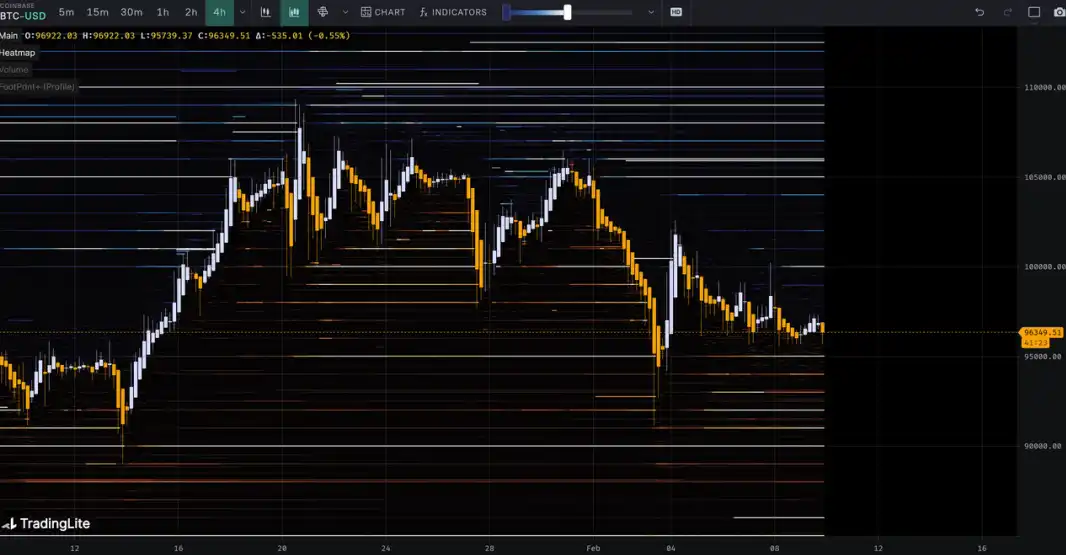
There is buying interest around 90000-95000 price range; There is selling pressure around 100000-110000 price range.
(On-chain Data from Binance as shown below)
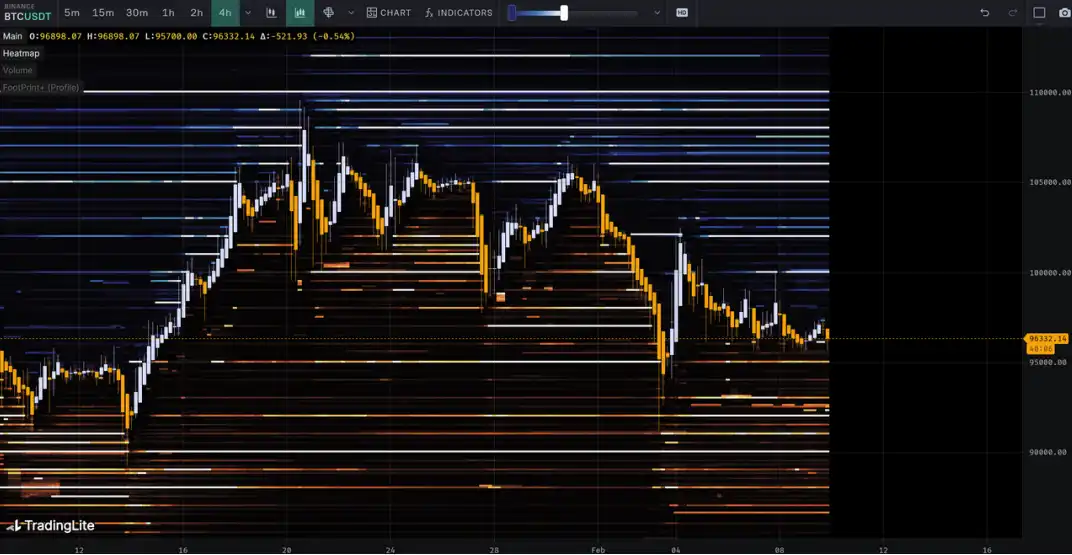
There is buying interest around 90000-95000 price range; There is selling pressure around 100000-110000 price range.
(On-chain Data from Bitfinex as shown below)

There is buying interest around 90000 price range; There is selling pressure around 110000 price range.
Weekly Summary:
Highlights:
1. The next interest rate cut and the end of balance sheet reduction are expected to take place in May-June.
2. Bitcoin's current supply is gradually decreasing, making it very scarce. If the U.S. strategic reserve decides to buy a large amount of BTC, it may trigger a 20x multiplier effect.
3. The Federal Reserve is turning dovish, Trump supports crypto, and the overall sentiment towards crypto remains optimistic this year.
4. The situation with altcoins is very different from 2016-2017 when there were just over 3000 altcoins. Now there are nearly 30,000, making it difficult for speculative capital to sustain the market value of altcoins and some specific altcoins; the future is highly uncertain.
Long-term On-chain Insights:
1. The willingness of U.S. ETF funds to buy is still present but with some minor high-selling pressure;
2. The percentage of long-term holders has dropped to 40%, signaling a need to gradually increase vigilance;
3. Large exchanges still show significant inflows, currently indicating a relative buying state;
4. Short-term speculators have increased to around $92,000, serving as a support or psychological threshold.
• Market Tone: Buying interest persists as the market gradually moves towards increased volatility and risk.
Medium-term On-chain Probe:
1. Incremental volume is relatively low, suggesting that new participants are somewhat cautious;
2. Liquidity supply has improved somewhat; there is a recent significant divergence among whale groups;
3. USDC fund sentiment remains stable;
4. ETH accumulation volume has increased recently;
5. BTC continues its slow accumulation.
• Market Sentiment:
Correction, Caution
A significant split in the recent whale community has led to an improvement in liquidity supply.
On-chain Short-term Observations:
1. The risk index is close to the neutral zone, with moderate derivative risk.
2. New active addresses are relatively low.
3. Market sentiment rating: Neutral.
4. Exchange net flows show BTC and ETH in a significant outflow accumulation state.
5. Global buying power is in a decreasing state, stablecoin buying power remains constant compared to last week.
6. Off-chain transaction data indicates buying interest at 90000; selling interest at 100000.
7. The probability of not breaking below 87000-91000 in the short term is 85%; with a 69% probability of not breaking above 110000-115000 in the short term.
• Market Sentiment:
For BTC, the market sentiment remains neutral with no panic or positive sentiment. Looking at the on-chain data, most of the on-chain chips are still in a strong hands position, with some buying power accumulating chips. Short-term market expectations suggest continued oscillation.
Risk Warning: The above is all market discussion and exploration and does not constitute investment advice; please handle with caution and guard against market black swan risks.
This article is a contribution and does not represent the views of BlockBeats.
You may also like

How much longer can Ethereum's last big buyer hold on?

The pricing controversy of Trade.xyz exposes the fatal weakness of Pre-IPO perpetual contracts

World Cup 2026 Coming – WEEX Celebrates with $1M Prize Pool & Michael Owen Live

Galaxy in-depth report: Is Solana still worth paying attention to?
Young people in South Korea make a "final effort" in the epic bull market

Dialogue with OmenX Founder: Why does the prediction market need an evolution from "spot" to "derivatives"?
When the P2P illicit funds from ten years ago turned into 60,000 bitcoins

Morning News | CME Group launches Nasdaq Cryptocurrency Index futures; Asset management giant Janus Henderson strategically invests in Ethena
Why did Oracle deliver the strongest financial report in history, yet its stock price fell?

Bitcoin Layer 2 Network Botanix: Why Did We Choose to Dissolve?

Morning Report | OpenAI has submitted an S-1 registration statement draft to the U.S. SEC; Morpho completes $175 million financing

Galaxy Deep Research Report: How Hyperliquid's HIP-4 Upgrade Changes the Landscape of Prediction Markets?

Latest research from 13 top universities including Cornell University: The current state, challenges, and misconceptions of the fusion of Crypto and AI
Deconstructing Anthropic: The Best AI Company, Possibly Also a Type of Organizational Invention

Every exchange is a "Universal Exchange."

The counterattack of traditional finance: Alliance chains are quietly reviving
Pantera Capital Partner: How Tokenization is Restructuring the Private Equity and Early Investment Ecosystem?

Mastercard Launches Agent Pay for AI, Plans to Record AI Agent Payment Authorizations on Polygon
Mastercard launched Agent Pay for AI, a new payment protocol designed to help AI agents make small payments such as pay-per-use access to data and APIs. The system plans to record human-granted AI agent permissions on Polygon, focusing on verifiable authorization, identity, and payment controls.
How much longer can Ethereum's last big buyer hold on?
The pricing controversy of Trade.xyz exposes the fatal weakness of Pre-IPO perpetual contracts
World Cup 2026 Coming – WEEX Celebrates with $1M Prize Pool & Michael Owen Live
Galaxy in-depth report: Is Solana still worth paying attention to?
Young people in South Korea make a "final effort" in the epic bull market
Dialogue with OmenX Founder: Why does the prediction market need an evolution from "spot" to "derivatives"?


