
Vana Mainnet and Tokenomics are about to go live, reshaping the Internet AI data trading model

Personal data has become the cornerstone of the internet economy. Over the past two decades, we have embraced a simple transactional model: platforms collect user data by offering free services and monetize it. This model—where "if you're not paying, you're the product"—has shaped various forms of businesses from targeted advertising to data brokers.
The rise of AI has made the situation even more complex. Platforms now sell user data for billions of dollars to train AI models—transforming personal information from a resource for targeted advertising into a core building block of artificial intelligence. However, the users generating this data have not reaped the corresponding value.
This was not the original intent. The architects of the internet envisioned user control of personal information, not platforms. Tim Berners-Lee spent years working to restore this data sovereignty. However, the convenience of cloud infrastructure and the ubiquity of free services eventually took over, making platforms the rulers of our digital world.
Today, two transformative shifts are converging: AI is exponentially increasing the value of personal data, while advancements in decentralized technologies are finally empowering individuals to control their data.
Vana is the first open-source data sovereignty protocol. It allows users to export their data from platforms and join a data commons, engaging directly with AI companies and developers. Through encrypted personal storage and client-side computation, users retain control of their data while achieving network effects that were previously only possible through centralized platforms. It provides a self-sovereign internet where both parties benefit: developers can leverage ideal datasets to build groundbreaking applications, and users have full control over their most valuable asset.
Today, we are launching the Vana Whitepaper ahead of the mainnet release. In this paper, we will explore how Vana transforms personal data from an extracted resource into an asset class controlled by creators.
Overcoming the Double Spending Problem of Data
Unlike other digital assets, the core challenge of securitizing data lies in the fact that the economic value of data relies on access permissions—once data is made public, it loses its market value. Traditional blockchains focus on public verifiability, making them unsuitable for handling private data. Vana addresses this issue through an architecture that combines private data custody with public ownership.
The Vana Network maintains a global state that includes:
· Data Ownership Record: Cryptographic proof of data ownership
· Access Control: Who can access what data under what conditions
· Verification Proofs: Certification of data quality, authenticity, and metadata
· On-chain Data Collective Agreements and Token Balances: Economic rights and governance
Although data remains encrypted and stored on individual servers or in secure enclaves, the network enables users to programmatically control who can access the data, under what conditions, and how to attribute value back to the data creator.
In practice, users can export their private data from any platform and store it in a personally controlled server protected by encryption keys, then join data collectives on Vana, which pool together similar categories of user data. These data collectives are referred to as DataDAOs, which can negotiate with AI model trainers or app developers, agreeing on compensation for data usage. When external developers purchase data, data pool contributors receive corresponding rewards.
DataDAOs and Data Tokens
The data liquidity pool is a coordination mechanism that transforms individual data into a new asset class by mapping non-fungible data to fungible data tokens. It instantiates DataDAOs through smart contracts, representing contributors, developers, and researchers within a specific data ecosystem. When users contribute data, they receive specific DLP tokens based on the DataDAO's proof of contribution.
Each DataDAO sets different contribution proof standards based on data types. For example, financial data DLP may emphasize transaction accuracy and record integrity, while social media DLP may focus on user interactions and account longevity. Health data DLP may prioritize data effectiveness and device accuracy.
The Vana protocol provides a standardized attestation framework, storing data proofs and metadata on-chain while safeguarding data privacy. Data validation is done through Trusted Execution Environments (TEEs) in the Satya Network, ensuring quality certification while protecting privacy. Some DLPs also utilize zk technology to enhance data validation, including zk email and zktls.
As the core coordination mechanism for collective data assets in the Vana Network, DLP differs from traditional DeFi liquidity pools, which coordinate fungible token pairs, as DLP coordinates non-fungible individual contribution data while maintaining data privacy and sovereignty.
The Vana Foundation is currently collaborating with 12 high-quality DataDAOs in an accelerator program and has received 300 new applications. The current DataDAO teams consist of 2 to 5 members each, dedicated to building DLPs around specific data sources, including Twitter data, synthetic data, genetic data, and browsing data, among others. Each DataDAO will issue its own data set-specific token. You can learn more about DataDAO here.
The advantage of DLPs lies in their permissionless nature—anyone can create a DLP without needing approval from the data source platform. This is because DLPs leverage existing data privacy regulations to ensure individual users own and control their personal data exports.
When AI researchers and model developers wish to access this aggregated data, they can interact directly with the DataDAO's governance system instead of negotiating with thousands of individual users. This collective bargaining approach is transformative: data contributors receive governance tokens based on their contributions, giving them economic rights and decision-making power to determine how their data is used. The end result is a virtuous cycle where high-quality data contributions are rewarded, market forces determine fair access pricing, and users are incentivized to continue contributing data.
For example, an AI researcher may propose a phased access plan to a DataDAO, first accessing 10% of the dataset for quality control, then using the full dataset for model training—all while keeping the data encrypted and secure. In exchange, they would burn a certain amount of DLP tokens, distributing the value to data contributors. This way, as the dataset's value grows, the rewards directly benefit the contributors.
DataDAOs and VANA Token
The launch of the Vana mainnet will break the monopoly of big tech companies on data. Previously, AI companies could only collaborate with centralized platforms like Meta and Google, which control vast amounts of data, limiting developer access. This situation persisted because coordinating data access for millions of users is both a technical and social challenge.
The Vana mainnet disrupts this status quo by establishing data sovereignty infrastructure. Millions of users can aggregate data into a liquid market that can compete with big tech companies while ensuring individual privacy through encryption. The Vana mainnet creates a data economy driven by market forces, not platform monopolies.
We've laid the foundation for user data ownership: users control their data through non-custodial wallets, and the data travels with them throughout their internet activities.
The VANA token achieves this vision through several key functions:
· Securing the network through validator staking
· Paying for network operations transaction fees
· DLP staking to determine rewards distribution for different DataDAOs
· Used to purchase data access rights for all DLPs
When an AI company wants to access DLP data, they must use VANA to purchase and burn DLP tokens. This establishes a direct economic link between network usage and token value. As more AI companies need to access user data, the demand for VANA and DLP tokens increases. The burning mechanism ensures that the value is fed back to the network and data contributors.
The top 16 DataDAOs will receive rewards based on their VANA holdings to incentivize early data contributors to the network. The top 16 are selected every 3 weeks and rewards are distributed based on the performance metrics of the Vana DAO. For more information about DataDAO rewards, please click here.
In this way, VANA serves as the economic foundation of data transactions and represents the total value of data assets in the network. With more AI companies accessing DLP data, the VANA purchase and burn mechanism creates a sustainable economic system that rewards data contributors and network participants.
The New Era of Open Data Economy
The launch of the Vana mainnet marks a fundamental shift in power in the AI economy. Users can collectively challenge the data monopolies of big tech companies, turning personal data into an asset under their control. This is not only to receive rewards but to redefine who is building, controlling, and benefiting from AI.
This opportunity is both urgent and immense. AI companies are facing a data bottleneck and urgently need new training data. Through Vana, users can pool their data into datasets that can compete with big platforms while maintaining encrypted control. With each new user onboarded, the Vana network grows stronger, supporting cross-platform datasets and empowering users with data sovereignty.
We are building an AI economy for users and open-source developers, not Web2 giants. In this era, data flows freely, sovereignty is maintained, and the next generation of AI models will be trained on user-owned data, with benefits returned to data contributors, enabling top AI developers to access the ideal dataset. Join us in creating a new open data economy together.
「Original Source」
You may also like

Champion's Final Bow: FC Barcelona vs Real Betis – Celebrate the Title with a Home Finale

Best Oil Trading Platform for Crypto Users in 2026
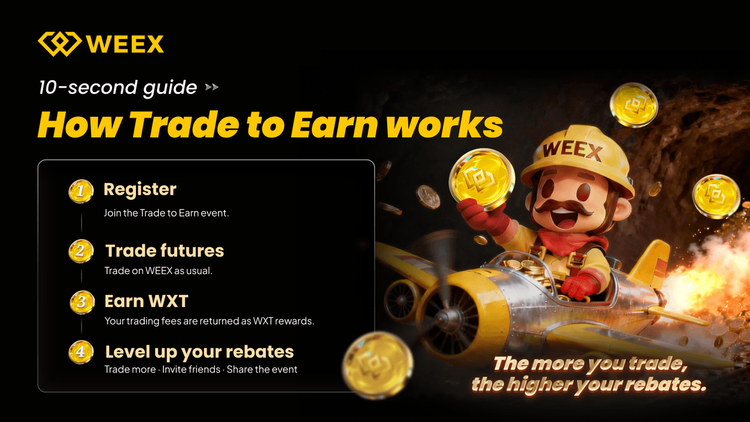
5 Futures Trading Strategies Smart Traders Use to Cut Crypto Fees and Boost Futures Returns
What Is TradFi? How Crypto Traders Can Now Access Crude Oil, Gold, and Global Markets

How WEEX Bridges Crypto and Football: A Deep Look at the LALIGA Partnership Inside the WEEX App
WEEX is not just a LALIGA sponsor. It’s a true partner. From iPhone Dynamic Island to LALIGA-themed app icons and smart posters, see how WEEX brings football passion into every trade — and builds a real bridge between crypto and sports.

FC Barcelona vs Real Madrid Preview: El Clásico – Can Barça Clinch the Title at Spotify Camp Nou?
FC Barcelona vs Real Madrid El Clásico match preview for May 11, 2026. Barça need just 1 point to win LALIGA. Can Madrid delay the trophy? Full preview inside.

At the Stripe conference, I saw the future of the AI economy

Miners welcome a new life

Seven Important Judgments by Claude Code's Founder at the Sequoia Conference

The payment moment of AI agents: Who will become the Stripe of the machine economy?

Morning Report | MoonPay acquires Solana's execution layer DFlow; Strategy releases Q1 financial report; Manta Network announces the termination of Manta staking program

Rented Tracks: What is this wave of stablecoin FX hot money really paying for?

Dialogue Velocity Eric: What is the stablecoin track that the CFO really wants?

Strategy should have said that selling coins is not ruled out

How MegaETH Achieved a TVL of 700m Within a Week of TGE? Analyzing the Packaging Strategy

Futures Trading Hours: Trade Cryptocurrency 24/7 and Earn Back Up to 45% in Trading Fees
Learn futures trading hours and the best time to trade crypto futures. Discover 24/7 market insights, peak trading sessions, and how to earn back up to 45% in fees.
Why is a16z Crypto raising another $2.2 billion to heavily invest in Web3?
Polymarket Underlying Algorithm Explained
Champion's Final Bow: FC Barcelona vs Real Betis – Celebrate the Title with a Home Finale
Best Oil Trading Platform for Crypto Users in 2026
5 Futures Trading Strategies Smart Traders Use to Cut Crypto Fees and Boost Futures Returns
What Is TradFi? How Crypto Traders Can Now Access Crude Oil, Gold, and Global Markets
How WEEX Bridges Crypto and Football: A Deep Look at the LALIGA Partnership Inside the WEEX App
WEEX is not just a LALIGA sponsor. It’s a true partner. From iPhone Dynamic Island to LALIGA-themed app icons and smart posters, see how WEEX brings football passion into every trade — and builds a real bridge between crypto and sports.
FC Barcelona vs Real Madrid Preview: El Clásico – Can Barça Clinch the Title at Spotify Camp Nou?
FC Barcelona vs Real Madrid El Clásico match preview for May 11, 2026. Barça need just 1 point to win LALIGA. Can Madrid delay the trophy? Full preview inside.

Contents
Popular coins
Latest Crypto News