
The road to advancement in the lending market: How does Morpho achieve its second leap?



Original source: Kevin, the Researcher from BlockBooster
The funding capacity of lending protocols ranks first in the DeFi track, and it is the sector with the largest amount of funds absorbed in DeFi. Moreover, lending is a market with proven demand, healthy business model, and relatively concentrated market share.
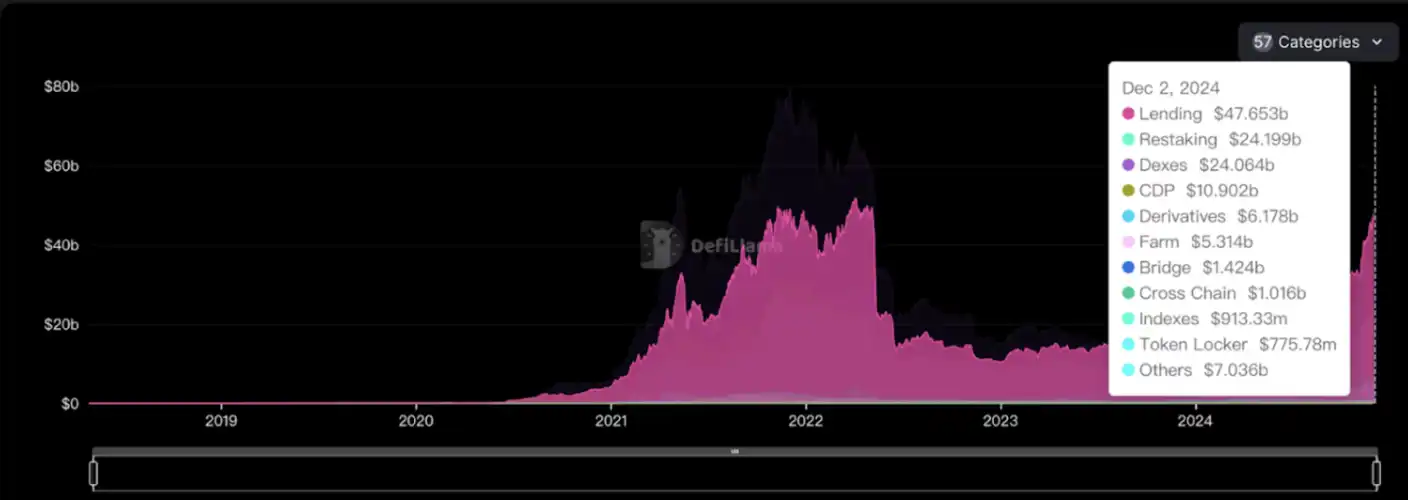
Source: defillama
The moat of the decentralized lending market is obvious: Aave's market share has further increased, stabilizing at 50-60% in 2023, and currently rising to the range of 65-70%.
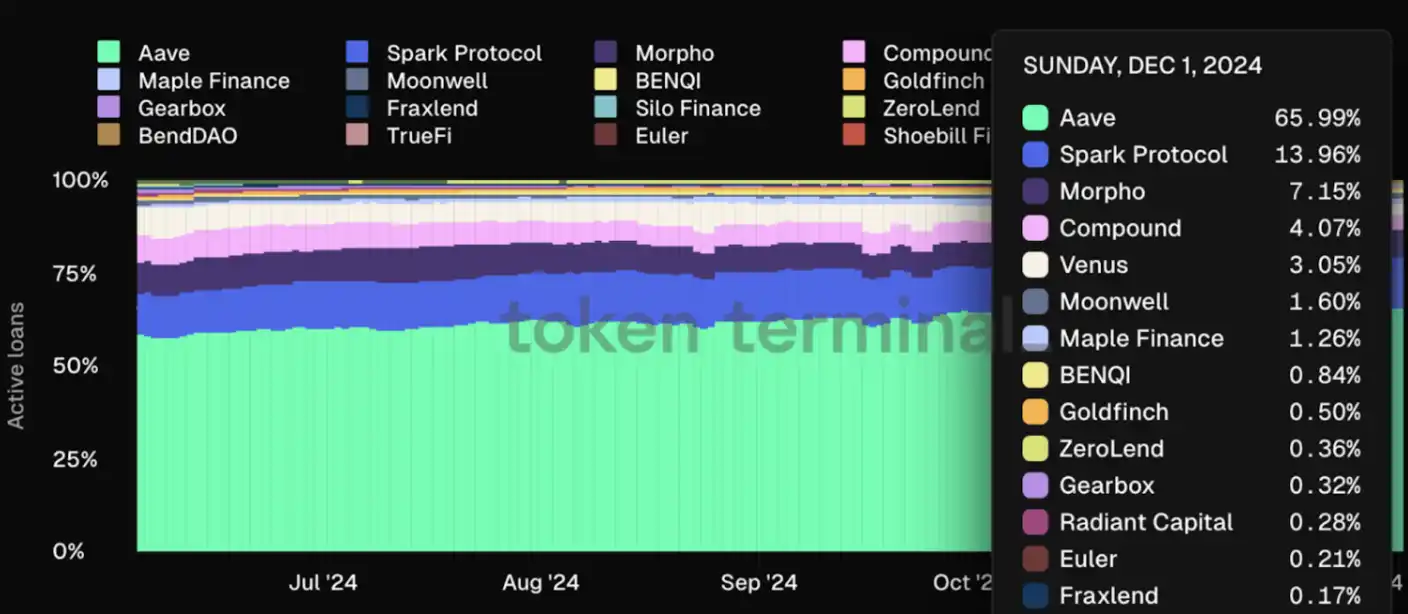
Source: https://tokenterminal.com/explorer/markets/lending
After years of accumulation, the token subsidy of Aave is gradually decreasing, but at present, in addition to Aave, other lending protocols still need sufficient additional token incentives, including Morpho. Observing the development history of Aave, we can conclude that its core advantages in achieving its current market share are:
1. Long-term and stable security performance: Aave has many fork projects, but they were all shut down in a short period of time due to theft or bad debt incidents. In contrast, Aave has maintained a relatively good security record so far. It provides an irreplaceable trust foundation for deposit users. On the other hand, some emerging lending protocols, although they may have innovative concepts or higher short-term returns, often find it difficult to win the trust of users, especially large capital users, before they have experienced several years of market testing.
2. More adequate security investment: With higher income and ample treasury funds, the leading lending protocols can provide strong resource support for security audits and risk management. This budget advantage not only ensures the security of new feature development, but also lays a solid foundation for the introduction of new assets, which is crucial to the long-term development of the protocol.
Since Morpho received financing from a16z in the second half of 2022, it has achieved a curve overtaking in the lending track within 2 years. As shown in the figure below, Morpho's current loan funds have reached $1.432b, second only to Aave and Spark.
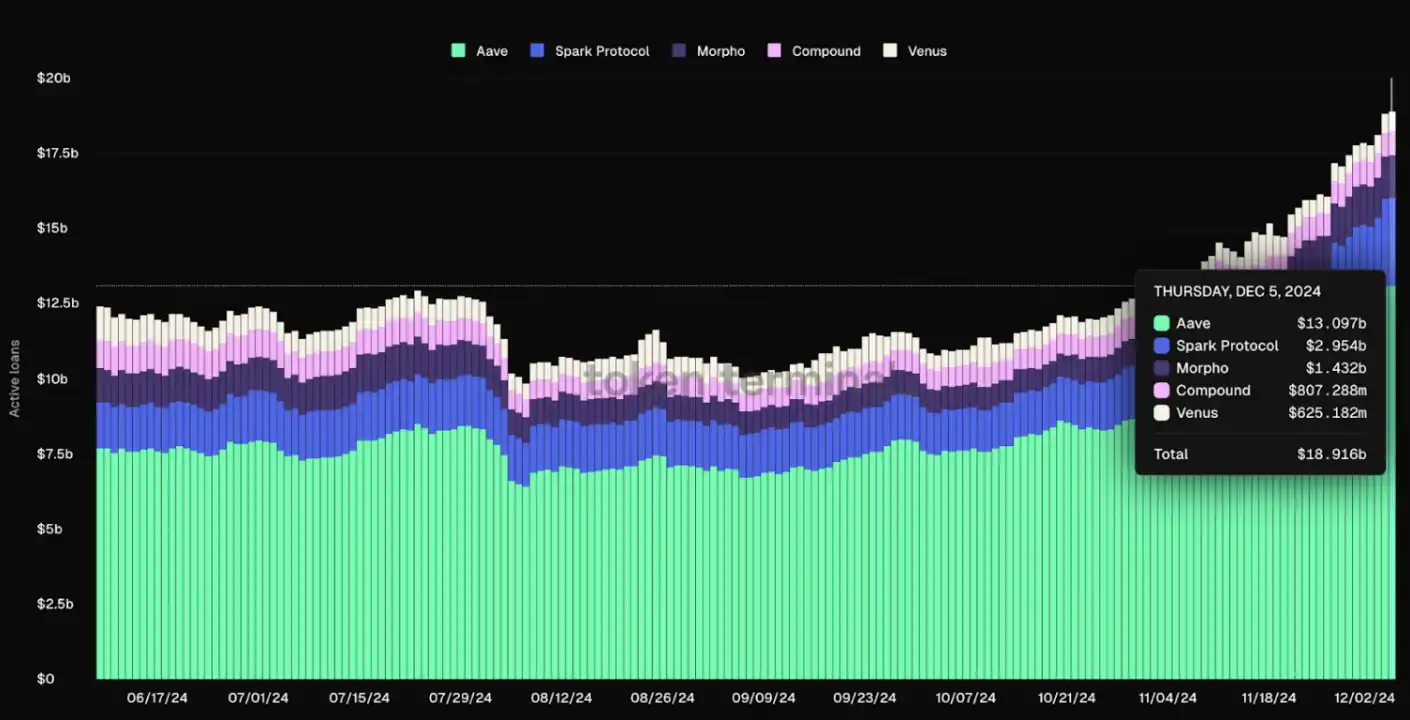
Source: https://tokenterminal.com/explorer/markets/lending
Morpho's success can be roughly divided into two periods. It is precisely through the accumulation of these two periods that Morpho's market share has steadily increased.
The first transition: Optimizing Aave and Compound to achieve rapid growth
Morpho's initial business model focuses on improving the capital utilization efficiency of lending protocols, especially the problem of incomplete matching of funds in peer-to-pool models such as Aave and Compound. By introducing a peer-to-peer matching mechanism, it provides users with better interest rate options, that is, higher deposit rates and lower borrowing rates.
The core limitation of the peer-to-pool model is that the total amount of deposits in the fund pool often far exceeds the total amount of borrowing. This imbalance brings efficiency problems: the interest of deposit users is diluted by idle funds, while borrowers need to bear the interest cost for the entire fund pool, rather than only paying interest on the part they actually use.
Morpho's solution is to introduce a new workflow: users' deposits and collateral are allocated to Aave and Compound to ensure that the base interest rate is obtained. At the same time, Morpho uses a peer-to-peer matching mechanism to prioritize large orders and allocate deposits directly to borrowers, thereby reducing idle funds. In this way, deposits can be fully utilized, and borrowers only pay interest on the required funds, achieving interest rate optimization.
The biggest advantage of this matching mechanism is that it eliminates the efficiency bottleneck in the traditional model:
1. Depositors enjoy higher returns, borrowers pay less interest, and the interest rates of both parties tend to be consistent, which greatly improves the user experience.
2. Morpho operates on Aave and Compound, using their infrastructure as a capital buffer pool to control risks at a level similar to these mature protocols.
For users, this model is very attractive:
1. Regardless of whether the match is successful or not, users can at least get an interest rate equivalent to Aave and Compound, and when the match is successful, the benefits or costs will be further optimized.
2. Morpho is built on mature protocols, and its risk control model and fund management completely follow Aave and Compound, which greatly reduces the user's trust cost for emerging platforms.
Through innovative design, Morpho cleverly utilizes the composability of DeFi protocols, successfully attracts more user funds under the premise of low risk, and realizes more efficient interest rate optimization services.
The second transition: from applications to decentralized infrastructure, separating risks and building an independent ecosystem
As mentioned before, the Morpho optimizer only completed the first transition of Morpho, allowing it to stand out among a number of lending protocols and become a platform that cannot be ignored in the market. However, whether in terms of product or protocol positioning or ecological development openness, the optimizer cannot bring a broader imagination space. Because, first of all, the growth of the optimizer is limited by the current design of the underlying lending pool, which relies heavily on its DAO and trusted contractors to monitor and update hundreds of risk parameters or upgrade large smart contracts every day. If it stands still, Morpho will not be able to attract a wider range of dev and native protocols, and can only be positioned as an ecological protocol for Aave and Compound to the market. Therefore, Morpho adopts a product idea similar to Uni V4, that is, it only makes a basic layer of a large financial service, and opens up all modules above the basic layer, that is: minimize the product, which the team calls "primitive", and open all lending parameters to individuals and ecological protocols without permission. After transferring the risk from the platform to a third party, Morpho's own ecological value will continue to increase.
Why does Morpho want to make the smallest component and open risk parameters to third parties?
1. Risk isolation: lending markets are independent of each other. Unlike multi-asset pools, the liquidation parameters of each market can be set without considering the riskiest assets in the basket. Morpho's smart contract is only 650 lines of Solidity code, cannot be upgraded, is simple and secure.
2. Customizable vaults: For example, suppliers can lend at a higher LLTV while taking the same market risk as when supplying to a multi-asset pool with a lower LLTV. It is also possible to create markets with any collateral and loan assets and any risk parameterization.
3. Reduce costs: Morpho is completely autonomous, so there is no need to introduce fees to pay for platform maintenance, risk managers, or code security experts. Singleton contracts based on simple code significantly reduce gas costs by 70%
4. Lego base layer: Third-party protocols or individuals are allowed to add more logic layers on Morpho. These layers can enhance core functionality by handling risk management and compliance, or simplify the user experience for passive lenders. For example, risk experts can build non-custodial curated vaults that allow lenders to passively earn returns. These vaults rebuild the current multi-collateral loan pool.
5. Bad debt handling design: Morpho adopts a different strategy from conventional lending protocols in handling bad debts. Specifically, if an account still has unpaid debts after liquidation and there is no collateral to make up for it, this part of the loss will be shared by all lenders in accordance with the established proportion. In this way, Morpho will not go bankrupt due to bad debts. Even if there are bad debts, it will only affect specific independent markets. Unless there are problems in large-scale markets, Morpho's own ecological value will not be damaged.
6. Developer-friendly: Account management implements the function of no GAS interaction and account abstraction, and free flash loans allow anyone to access assets in all markets at the same time with a single call.
The Morpho platform provides users with a completely autonomous construction space, on which any individual or institution can design and implement their own lending risk management mechanism. Professional financial institutions can also use the platform to cooperate with other market participants and earn fees by providing management services. Its permissionless nature allows users to flexibly set various parameters, independently create and deploy independent lending markets, without having to rely on external governance to add assets or adjust market rules. This flexibility gives market creators a high degree of freedom, allowing them to independently manage the risks and returns of lending pools based on their own risk assessments, thereby meeting the diverse needs of different users in terms of risk preferences and usage scenarios.
But looking further, the trustless design is actually to accumulate reputation and TVL at low cost. There are currently hundreds of Vaults on Morpho, but most of those listed on the Morpho Interface are from Vaults designed by risk management experts. Morpho allows anyone to create a Vault, which can increase TVL without risk, even if most of these Vaults fail, it will not cause any impact. However, the Vaults with excellent operations will stand out, and their positioning will be upgraded to the level of risk management experts, enjoying the user volume brought by the Morpho platform. Before that, Vaults created by individuals need to go through a long period of operation.
How does MorphoVault work?
Morpho Vault is a lending vault system built on the Morpho protocol, designed for the management of loaned assets. Whether it is a DAO, protocol, individual investor or hedge fund, you can freely create and manage vaults on Morpho Vault. Each vault focuses on a loan asset and supports customized risk exposure, which can allocate funds to one or more Morpho markets.
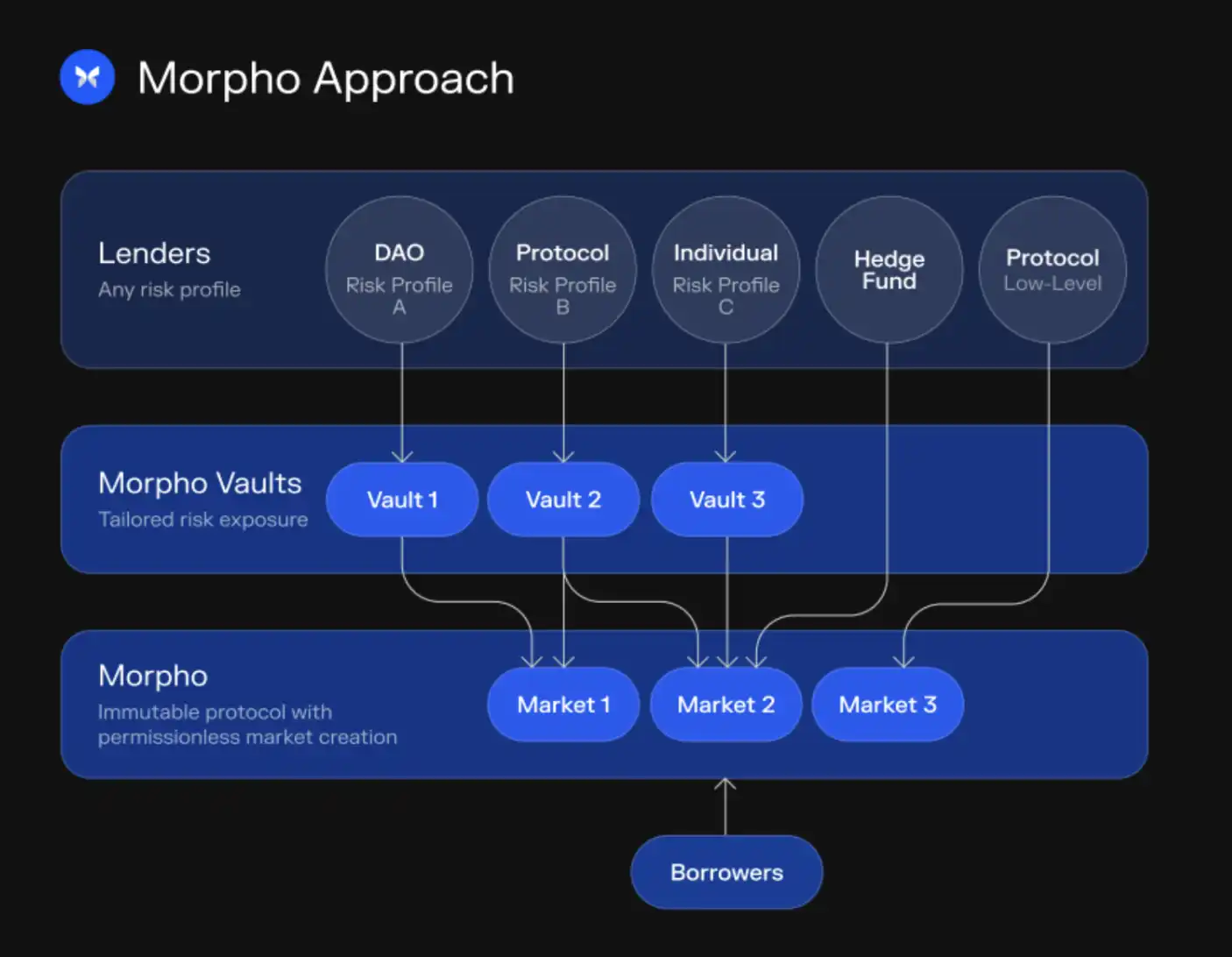
Source: Morpho
This design greatly optimizes the lending process, improves the overall user experience, and effectively aggregates market liquidity. Users can not only enter independent markets and lending pools to participate in transactions, but also easily provide liquidity, thereby earning interest in a passive way.
Another notable feature is that Morpho Vault provides a highly flexible risk management and fee structure. Each vault can flexibly adjust risk exposure and performance fee settings according to needs. For example, a vault focusing on LST assets will only involve relevant risk exposure, while a vault specializing in RWA assets will focus on this type of asset. This customized function allows users to choose the most suitable vault for investment based on their personal risk tolerance and investment goals.
Morpho has passed the token transfer proposal since late November. For the current model of attracting users by subsidizing Morpho tokens, the tradability of Morpho tokens can attract more users to participate. And since the launch of Base in June, various data have continued to rise, making it a popular DeFi protocol in the Base ecosystem. Due to the potential staking possibility of ETH ETF, the discussion of RWA is also increasing. Morpho has launched the first Coinbase-certified RWA vault deployed on the Base chain. The two vaults curated by SteakhouseFi and Re7Capital will support a variety of RWA collateral options, putting Morpho in a very special position in the Base ecosystem.
Looking back at the development history of Morpho, what other lending protocols can learn from may be the effort Morpho has put into accumulating its own reputation, starting with the initial Morpho optimizer, using Aave and Compound as capital buffers, and relying on the historical security assumptions of the two to quickly build its own brand; when the time is right to develop its own ecosystem and become an independent protocol, Morpho has greatly reduced the risks it may face by opening the lending dimension to third parties, and has developed its ecosystem in a low-cost manner to create native applications in its own ecosystem. Morpho clearly recognizes that for lending protocols, a history of smooth operation is crucial to building a security brand, which is also the foundation of Morpho.
About BlockBooster:BlockBooster is an Asian Web3 venture studio supported by OKX Ventures and other top institutions, committed to becoming a trusted partner for outstanding entrepreneurs. Through strategic investment and deep incubation, we connect Web3 projects with the real world and help high-quality entrepreneurial projects grow.
Disclaimer: This article/blog is for informational purposes only and represents the personal opinions of the author and does not necessarily represent the views of BlockBooster. This article is not intended to provide: (i) investment advice or investment recommendations; (ii) an offer or solicitation to buy, sell or hold digital assets; or (iii) financial, accounting, legal or tax advice. Holding digital assets, including stablecoins and NFTs, carries a high degree of risk and may fluctuate in price or become worthless. You should carefully consider whether trading or holding digital assets is appropriate for you based on your financial situation. If you have questions about your specific situation, please consult your legal, tax or investment advisor. The information provided in this article (including market data and statistics, if any) is for general informational purposes only. Reasonable care has been taken in preparing these data and charts, but no responsibility is assumed for any factual errors or omissions expressed therein.
You may also like

Morning Report | BitMine increased its holdings by 126,971 ETH last week; trader Eugene announced his exit from the crypto market

Wang Chuan: How can one not feel anxious after the neighbor Old Wang made thirty times profit by investing in storage stocks? (Seven) - A quarter-century cycle

Cryptocurrency CEXs are flocking to sell US stocks, and traditional brokerages are facing an "uninvited guest."

$75 billion in foreign capital has fled, and South Korean retail investors have absorbed it all using leverage

Japan’s Three Megabanks Plan Joint Stablecoin Issuance in Fiscal 2026
MUFG, SMBC, and Mizuho reportedly plan to jointly issue fiat-pegged stablecoins in fiscal 2026, signaling Japan’s growing push into bank-led digital payment infrastructure.

Humanity Discloses H Token Dual-Chain Attack Details, With Losses on Ethereum and BSC Exceeding $36 Million
Humanity said the H token attack across Ethereum and BSC caused more than $36 million in losses after leaked ProxyAdmin keys enabled malicious contract upgrades and token minting.
White House Discusses CLARITY Act With Law Enforcement Ahead of Senate Vote
The White House discussed the CLARITY Act with law enforcement ahead of a Senate vote, focusing on illicit finance risks and developer protections.

Bitcoin Trading Guide 2026: Strategies for Experienced Traders

What Is XAUT and PAXG? Why Tokenized Gold Is Booming in 2026

Will the SpaceX IPO Hurt Bitcoin? Here's What Traders Are Watching

Foreign selling in the South Korean stock market accelerates, with cumulative net sales reportedly reaching $75 billion this year
On June 9, The Kobeissi Letter, citing Goldman Sachs data, reported that global investors are selling South Korean stocks at an unusually rapid pace. In the latest trading session, foreign investors sold about $801 million worth of Kospi constituent stocks again; total foreign outflows last week reached about $10 billion, and the market has been in net foreign selling on nearly every trading day over the past month. According to the data cited in the report, foreign investors have sold about $75 billion worth of South Korean stocks so far this year. Meanwhile, South Korean retail and institutional investors together recorded roughly $69 billion in net buying over the same period, suggesting that the market’s main buying support has come from domestic capital rather than returning overseas funds. The information currently disclosed still mainly comes from The Kobeissi Letter’s retelling and Goldman Sachs data summaries, while public details on the statistical period and the specific definition of “selling” remain relatively limited.

Fortune Warns of Strategy’s Financing Structure Risks as Bitcoin Premium Narrows
Fortune warned that Strategy’s Bitcoin treasury model faces growing financing risks as MSTR’s net asset premium narrows and preferred stock dividend pressure increases.

Ferrari Challenge Le Mans: Carl Moon to Dominate in WEEX Livery

Sahara AI Responds to SAHARA’s Sharp Drop: No Contract or Product Security Issues Found, Internal Investigation Underway
Sahara AI responded to SAHARA’s 60% price drop, saying no token contract or product security issues have been found and an internal investigation is underway.

WEEX Deposit/Withdrawal Dynamic Island: Your Asset Status, Always in Sight
Scaling Crypto Derivatives: The Digital Asset Infrastructure Behind High-Volume Trading
In the fast-moving digital asset ecosystem, derivatives platforms face an extreme architectural test. High-leverage futures markets demand more than just standard security—they require absolute operational precision, zero-latency matching engines, and ironclad structural scalability, all while navigating intense market volatility.
As global platforms scale to meet these demands, the industry is shifting away from rigid, monolithic setups toward a more agile, "decoupled" infrastructure philosophy.
The Blueprint for High-Volume Copy TradingFor elite global exchanges like WEEX (founded in 2018), this architectural choice becomes critical when scaling high-volume retail features like social copy trading. When thousands of users automatically mirror the real-time strategies of elite traders simultaneously, it triggers sudden, monumental spikes in concurrent transactional volume.
To prevent execution latency or settlement bottlenecks during these peak volatility events, a platform's primary engine must remain entirely dedicated to risk management, copy-trade synchronization, and order matching.
The Architectural Rule: New-generation platforms must separate front-end user execution engines from heavy backend infrastructural overhead to eliminate operational friction.
By separating these layers, platforms can maintain complete sovereignty over their trading environments and user experiences while strategically aligning with institutional-grade infrastructure ecosystems. This strategic framework allows modern exchanges to leverage advanced Digital Asset Custody infrastructure such as Cobo’s behind the scenes, ensuring that backend wallet management scales elastically alongside trading spikes.
Capitalizing on Market Momentum and 400× LeverageIn a derivatives arena where platforms offer up to 400× leverage on perpetual contracts, capital efficiency and market agility are core business metrics. To capture market momentum, an exchange needs the ability to rapidly expand its asset offerings, supporting everything from legacy crypto assets to sudden, trending altcoins across a massive library of trading pairs.
Adopting a flexible, scalable Wallet-as-a-Service (WaaS) solution such as Cobo’s could completely rewrite the development timeline for high-growth exchanges. Instead of spending months of engineering capital building out custom backend wallet architectures for every new blockchain network, platforms can deploy localized infrastructure in days.
This agility allows platforms to instantly scale their listings to over a thousand trading pairs without compromising security or delaying time-to-market. It mirrors the exact operational advantages seen during high-velocity market events, similar to how advanced wallet infrastructure empowers platforms during sudden asset surges; allowing exchanges to pass that speed and liquidity directly to their global user base.
A Mature Foundation for GrowthThe synergy between trusted infrastructure ecosystems and global trading platforms represents the natural evolution of a maturing crypto market. As WEEX continues to scale its global spot and derivatives offerings for over 6 million users, adopting robust backend paradigms proves that platforms no longer have to compromise between cutting-edge trading velocity and uncompromised structural security.

Get Paid to Onboard? Try WEEX’s New Homepage with Rewards for Registration, Deposit & Trade
WEEX Custom Layout: Build Your Perfect Trading Workspace in Seconds
Morning Report | BitMine increased its holdings by 126,971 ETH last week; trader Eugene announced his exit from the crypto market
Wang Chuan: How can one not feel anxious after the neighbor Old Wang made thirty times profit by investing in storage stocks? (Seven) - A quarter-century cycle
Cryptocurrency CEXs are flocking to sell US stocks, and traditional brokerages are facing an "uninvited guest."
$75 billion in foreign capital has fled, and South Korean retail investors have absorbed it all using leverage
Japan’s Three Megabanks Plan Joint Stablecoin Issuance in Fiscal 2026
MUFG, SMBC, and Mizuho reportedly plan to jointly issue fiat-pegged stablecoins in fiscal 2026, signaling Japan’s growing push into bank-led digital payment infrastructure.
Humanity Discloses H Token Dual-Chain Attack Details, With Losses on Ethereum and BSC Exceeding $36 Million
Humanity said the H token attack across Ethereum and BSC caused more than $36 million in losses after leaked ProxyAdmin keys enabled malicious contract upgrades and token minting.


