
The Culprit Behind AI's Shutdown? The "daos.fun Bubble" Behind AICC's Plummet

As a project that promotes a "VC-free Investment DAO Platform," daos.fun instead staged a weekend drama of "VC Coins."
On January 11, Aiccelerate DAO's native token AICC, supported by ai16z co-founder Shaw, Virtuals Protocol contributor #001 Ethermage, and Story co-founder Jason as advisors, was officially launched for trading. After the launch, AICC's market value briefly surpassed $3 billion. However, this momentary highlight was soon shattered by a frenzy of sell-offs. Whale dumping caused a significant drop in market value, sparking strong dissatisfaction in the market.
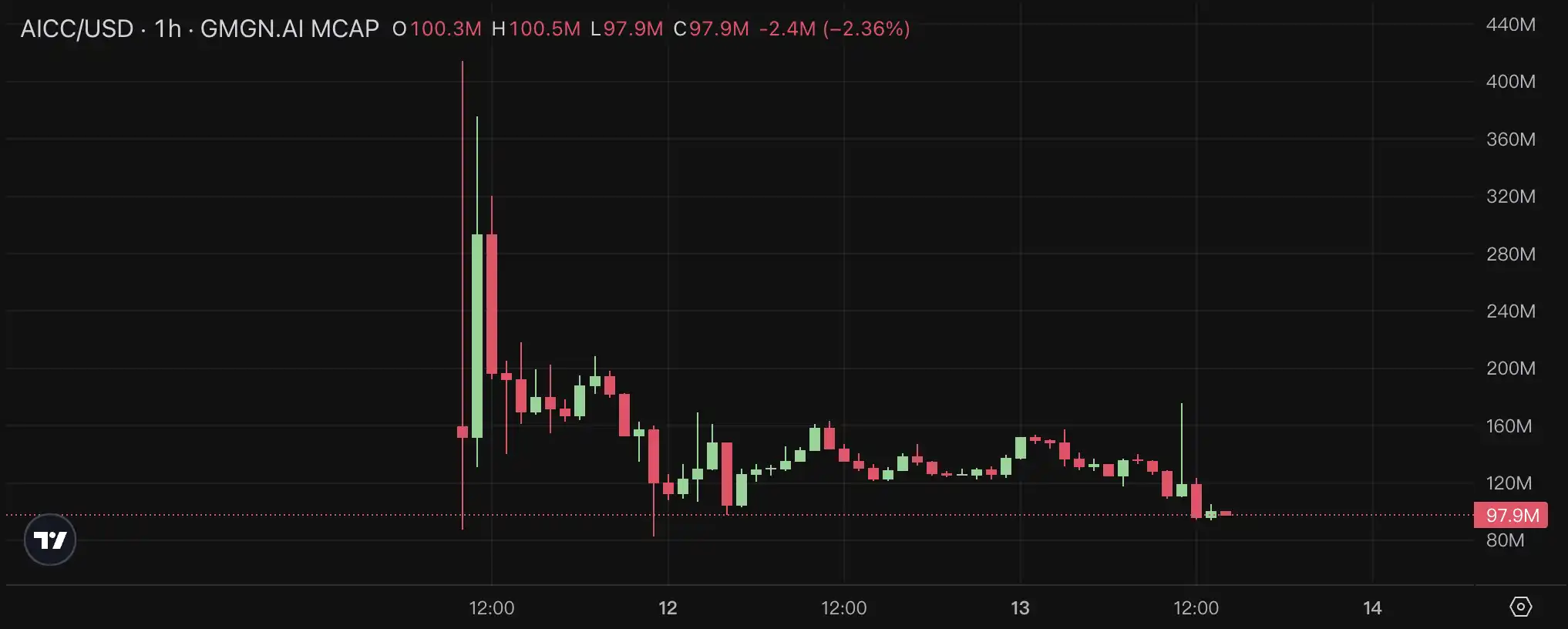
Immediate Sell-Off upon Launch Sparks Outrage
The hype around Aiccelerate DAO started a week ago, with the official announcement that users interested in becoming partners and participating in the presale could express their interest and how they could help the project through actions such as retweeting, liking, and commenting on tweets. Aiccelerate DAO would then select suitable partners for the presale based on user participation and expected contribution.
Using the daos.fun platform, Aiccelerate DAO distributed tokens to 250 KOLs, with each receiving an allocation of 0.5 SOL. These tokens instantly turned into $250,000 to $400,000 each upon launch. Additionally, the project's advisory group could donate stakes capped at 5 SOL.
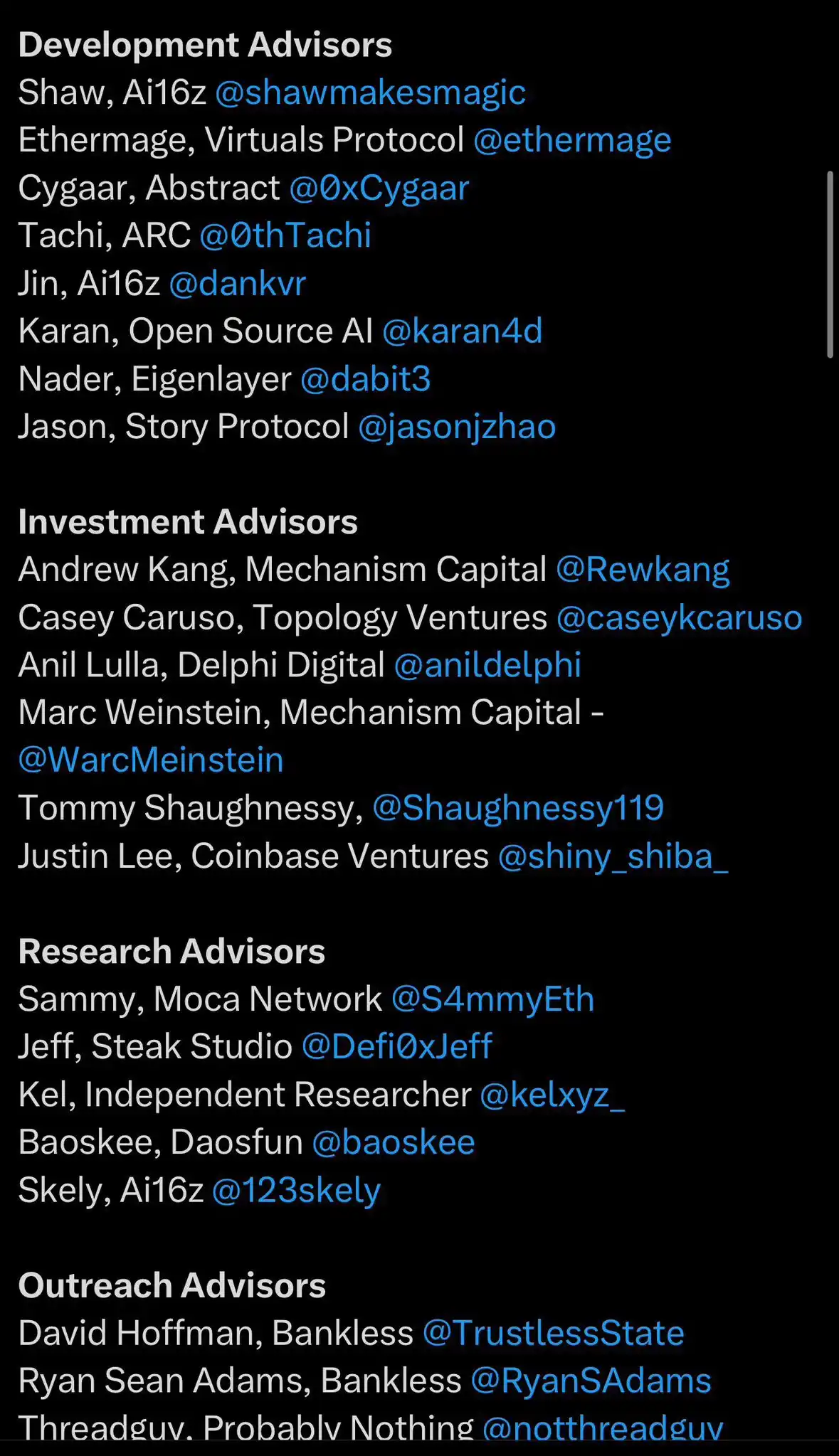
However, these whitelisted users not only failed to fulfill their commitment to supporting the project's development but also chose to immediately sell for profit upon launch. This not only caused a drastic drop in AICC's market value but also had a blood-sucking impact on other AI concept tokens on the chain.
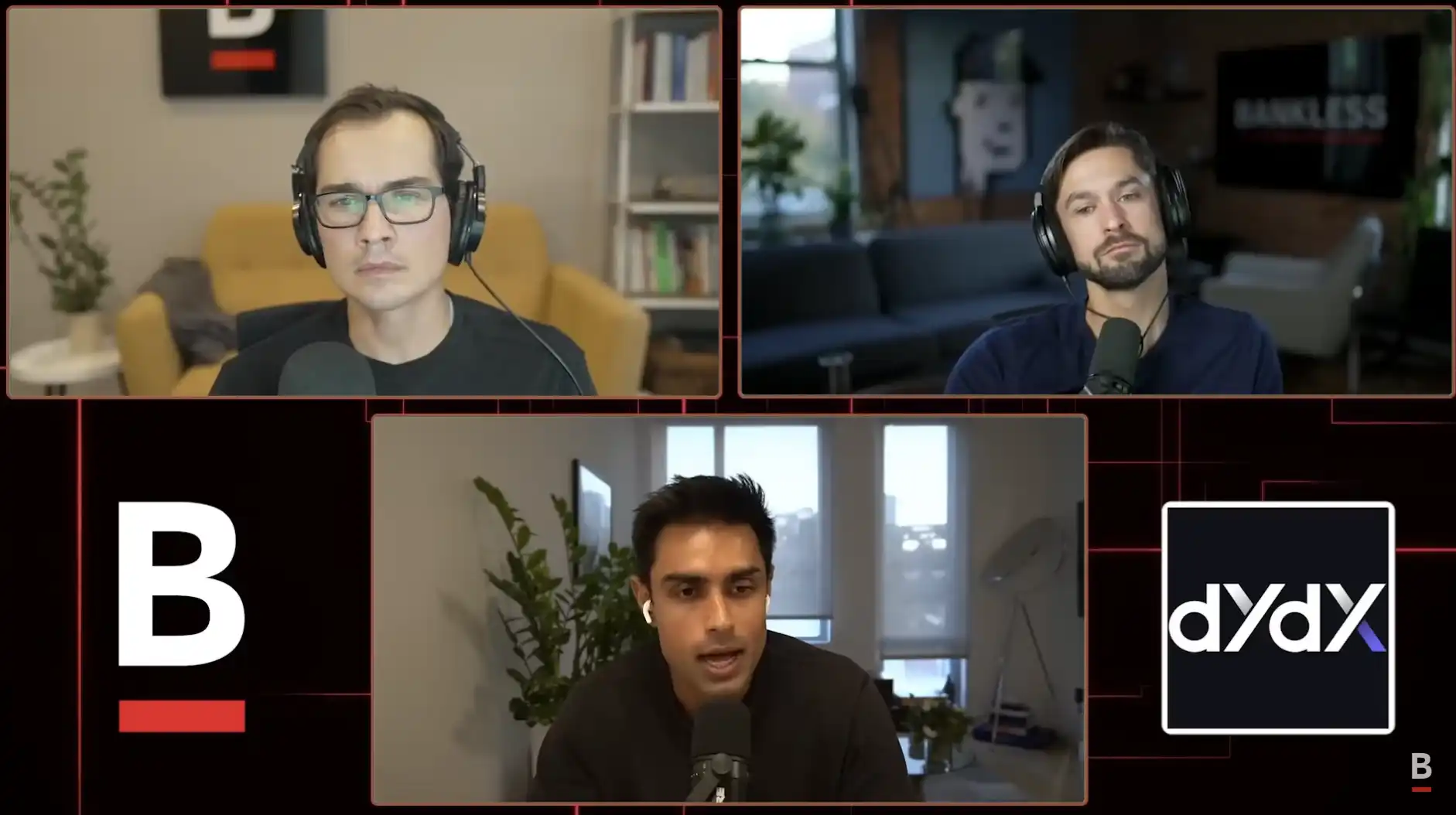
In this "Crypto+AI" race track KOL gathering, the most criticized behavior was from the crypto podcast Bankless with a significant holding and its VC arm, Bankless Ventures, regarding their sell-off actions post AICC launch.
The Rollup founder Andy tweeted that Bankless Ventures was selling tokens through a publicly associated wallet with their X account. "They are promoting this project on YouTube with the co-founder while selling on the day of launch."
Reportedly, Bankless's two hosts each invested 5 SOL, Ben Lakoff managing Bankless Ventures invested 2 SOL under Ventures, and personally invested 5 SOL.
The founder of Aiccelerate DAO, Ejaaz, previously served as a product manager at Coinbase. In November last year, Ejaaz began making frequent appearances on the Bankless podcast to discuss AI+Crypto.
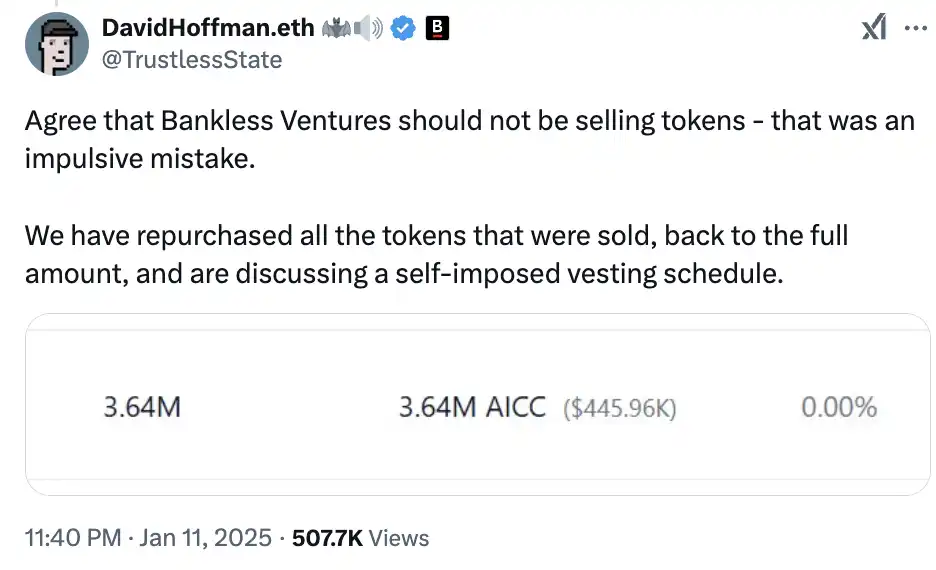
Following Andy's tweet, Bankless co-founder David responded by stating that they had initiated a buyback of the AICC shares sold by Bankless Ventures, referring to it as "an impulsive mistake."
However, Bankless's brand image took a significant hit, with members of the community mentioning Bankless's show sponsor, accusing them of being an accomplice to fraud.
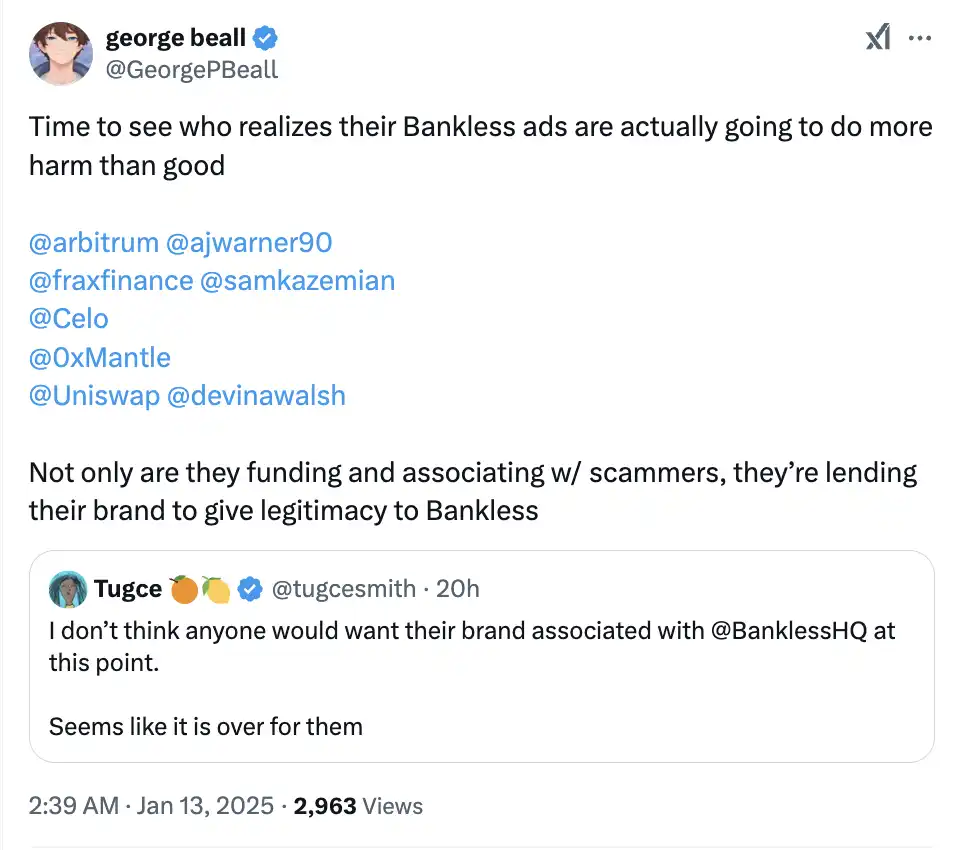
In the latest Bankless Discord channel, Bankless co-founder Ryan responded, stating that both he and David were completely unaware of the token sale and that it was carried out by Ben Lakoff, who lacked an understanding of Aiccelerate DAO's background, for the purpose of profit-taking.
Will the market still support daos.fun?
Amidst this labyrinthine token dump, daos.fun's whitelist mechanism has been a focal point of market attention. It is not a casual endorsement in the project's comment section that grants whitelist access; typically, only Key Opinion Leaders (KOLs) with a large following and community base receive whitelist status to advocate for the project.
daos.fun is another standout asset launch following pump.fun; however, daos.fun is a fund launchpad where the "fund" launched through daos.fun will operate in the form of a DAO and issue corresponding DAO tokens.
A select few creators with an invitation code can set fundraising goals, fund expiration, and management fees. Additionally, daos.fun's fundraising process introduces whitelist rules, where the team selectively distributes fundraising participation eligibility to users based on community engagement through their social accounts to establish a certain level of social reputation and ethical constraints.
However, AICC, with its large and luxurious KOL lineup and a chart that saw a significant sell-off after a strong initial listing, has challenged the ethical lock-up mechanism of daos.fun. On one hand, the project initiating the investment DAO did not have clear whitelist criteria, and on the other hand, users who acquired tokens at a low price during the fundraising phase are not immune to selling off quickly as the project gains traction.
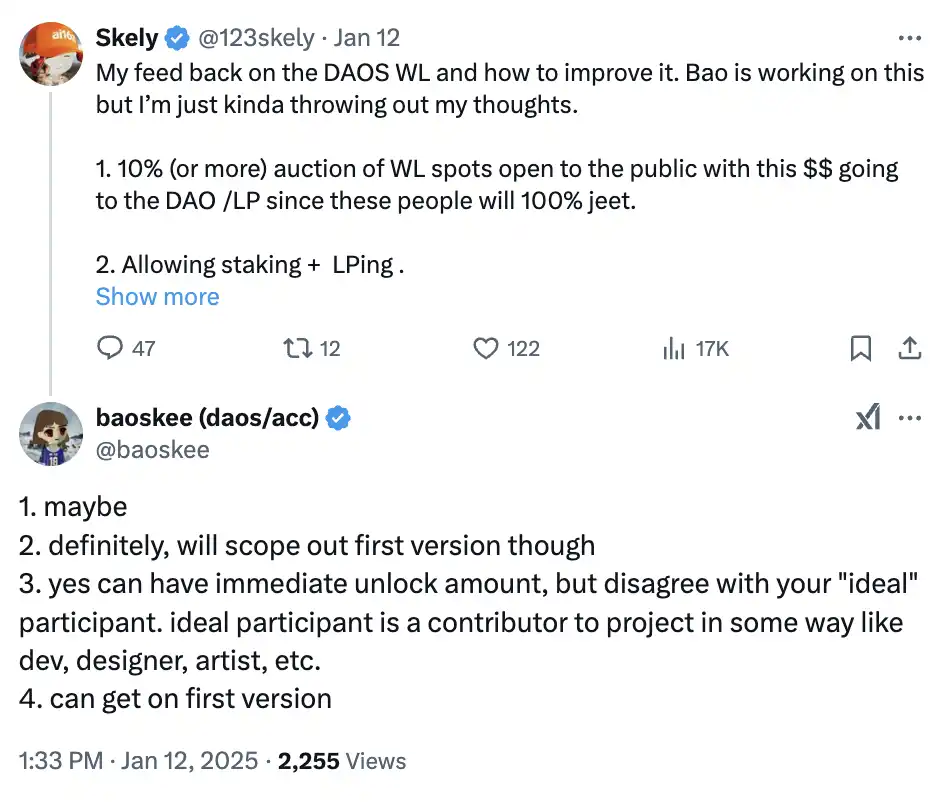
The crypto Key Opinion Leader (KOL) Skely believes the ideal whitelist participant should be someone who 「sells at the peak and buys at the dip, stabilizes the price by providing a large amount of liquidity, is willing to take risks, and injects their SOL funds and tokens into the liquidity pool together.」 However, obviously, this is not behavior that a purely profit-driven individual would choose.
Skely believes that the current whitelist mechanism of daos.fun can be improved through the following suggestions, such as: allocating 10% (or more) of the whitelist slots through public auction to the public, with the auction proceeds used for the DAO or liquidity pool (LP) since these individuals typically tend to quickly cash out. Allowing staking and liquidity provision. And allowing whitelist users to sell to a certain extent, but with transparent rules in place to set buyer expectations while avoiding full-scale dumping.
The founder of daos.fun, baoskee, responded that all of these suggestions are feasible.
Meanwhile, the community also criticized AICC, which launched with a high valuation even before having a product, following the same script that led to the backlash against VC coins in the past – where pricing power is in the hands of the project team, packaging it in the market to sell it back to retail investors. Whether it is a core player donating 5 SOL or a KOL receiving a 0.5 SOL share through 「sweet talk,」 under the current token issuance model, any process of 「presale + whitelist + immediate trading upon listing」 is challenging to rid of speculators entirely.
Peeling off the glamorous façade, 「Crypto+AI」 still requires sufficient product support and real-world use cases to establish a foothold in the current fiercely competitive market. Instead of being labeled as a 「AI concept stock」 bubble, it is better to allow users to truly experience the project's technical depth and practical long-term planning. This is also the only way for investors to return to rationality and reject 「VC coins.」
You may also like

OpenAI Reveals It Has Confidentially Submitted an S-1 to the SEC, Keeping the Door Open for a Future IPO
On June 9, according to an OpenAI announcement, the company recently confidentially submitted a draft S-1 registration statement to the U.S. Securities and Exchange Commission (SEC), beginning the preliminary compliance process for a potential initial public offering. OpenAI said it chose to disclose this proactively because it expected the news might leak; however, the company has not yet set a specific listing timeline, and related arrangements may still take some time.

Latest research from 13 top universities including Cornell University: The current state, challenges, and misconceptions of the fusion of Crypto and AI
Deconstructing Anthropic: The Best AI Company, Possibly Also a Type of Organizational Invention
Apollo and Blackstone Reportedly Back $35 Billion Anthropic Chip Financing as Deal Details Remain Unclear
On June 9, according to currently available news alerts, Apollo and Blackstone Group participated in a $35 billion financing for an Anthropic “chip project.” Based on the original wording of the report, the funding has already been raised, but public information remains limited. The financing structure, use of proceeds, project entity, and whether Apollo and Blackstone participated through equity, debt, or project financing have not yet been disclosed.

Humanity Protocol Security Incident Escalates: More Than $31 Million Stolen From Related Addresses as Attacker Continues Selling H for ETH
On June 9, according to monitoring by Onchain Lens, more than $31 million has been stolen from addresses linked to Humanity Protocol, and the attack is still ongoing, with the hacker continuously swapping H tokens for ETH. Project founder Terence Kwok later confirmed the security incident on X, saying the issue involved a private key leak.

Bloomberg: As Bitcoin Weakens, Stablecoins and RWA Continue to Drive Expansion in Crypto Businesses
In June, Bloomberg reported that despite Bitcoin falling below $60,000 last week, wiping out about $235 billion in market value within seven days, and dropping close to 50% from last year’s peak, some core businesses in the crypto industry are still expanding, mainly in stablecoins, real-world asset tokenization (RWA), payments, and infrastructure. The report also noted that overall altcoin activity has contracted significantly: altcoin market capitalization has fallen from a peak of about $431 billion in November 2021 to around $170 billion, and among the tens of millions of tokens issued in recent years, fewer than 1,700 still maintain meaningful trading activity.

Galaxy Deep Research Report: How Hyperliquid's HIP-4 Upgrade Changes the Landscape of Prediction Markets?
Binance Research: RWA Market Expected to Expand Nearly 6x from Early 2025, with Public Equities and Onchain Payments Heating Up Together
In June, Binance Research said in its monthly market report that the real-world asset (RWA) market is expected to grow by about 589% from the beginning of 2025. Bond- and money market fund-related RWA expanded by about $6.5 billion, up 83% year over year, while publicly traded equity RWAs grew by about 422%. The report also noted that monthly crypto debit card transaction volume exceeded $747 million in May, up 48.6% year to date.

Japan to Assess a Framework for Yen Stablecoins and Crypto ETFs as Asia’s Compliant Payments Narrative Heats Up
Recently, according to the original report, Japan is considering the launch of yen stablecoins and cryptocurrency ETFs. Public information remains limited at this stage, and there is still no complete policy text, regulatory draft, or clear implementation timeline, so this is better characterized as a “policy discussion” rather than formal implementation. The original wording also noted that advancing stablecoin regulation in Asia is driving XRP usage and supporting growth in the XRPL ecosystem. However, based on currently available public information, there is not enough evidence to directly establish a clear causal relationship between this round of discussion in Japan and XRP or XRPL.

ZachXBT: Humanity private key leak and abnormal surge in H token should be viewed separately
On June 9, according to related disclosures, on-chain investigator ZachXBT posted an update on Humanity’s roughly $31 million security incident, saying that after further analyzing fund flows, he currently tends to believe the project team was not involved in an “inside job” or a self-staged attack. According to him, the official explanation about the private key leak was broadly accurate, but before the token unlock, the price of H had been artificially pushed higher, and the hacker later took advantage of that market environment; therefore, the private key leak and the earlier abnormal price pumping should be regarded as two separate and independent events. This reframing has shifted the market’s understanding of the nature of the incident. Earlier discussion around Humanity had focused on whether the team directly participated in the attack or used the security incident to cover up internal operations. ZachXBT’s latest remarks shift the focus from “whether it was self-theft” to “whether there were pre-unlock market structure issues.” He also questioned whether the team may have.

Morning Report | OpenAI has submitted an S-1 registration statement draft to the U.S. SEC; Morpho completes $175 million financing

Morning Report | BitMine increased its holdings by 126,971 ETH last week; trader Eugene announced his exit from the crypto market

Wang Chuan: How can one not feel anxious after the neighbor Old Wang made thirty times profit by investing in storage stocks? (Seven) - A quarter-century cycle
Cryptocurrency CEXs are flocking to sell US stocks, and traditional brokerages are facing an "uninvited guest."
$75 billion in foreign capital has fled, and South Korean retail investors have absorbed it all using leverage

Japan’s Three Megabanks Plan Joint Stablecoin Issuance in Fiscal 2026
MUFG, SMBC, and Mizuho reportedly plan to jointly issue fiat-pegged stablecoins in fiscal 2026, signaling Japan’s growing push into bank-led digital payment infrastructure.

Humanity Discloses H Token Dual-Chain Attack Details, With Losses on Ethereum and BSC Exceeding $36 Million
Humanity said the H token attack across Ethereum and BSC caused more than $36 million in losses after leaked ProxyAdmin keys enabled malicious contract upgrades and token minting.
White House Discusses CLARITY Act With Law Enforcement Ahead of Senate Vote
The White House discussed the CLARITY Act with law enforcement ahead of a Senate vote, focusing on illicit finance risks and developer protections.
OpenAI Reveals It Has Confidentially Submitted an S-1 to the SEC, Keeping the Door Open for a Future IPO
On June 9, according to an OpenAI announcement, the company recently confidentially submitted a draft S-1 registration statement to the U.S. Securities and Exchange Commission (SEC), beginning the preliminary compliance process for a potential initial public offering. OpenAI said it chose to disclose this proactively because it expected the news might leak; however, the company has not yet set a specific listing timeline, and related arrangements may still take some time.
Latest research from 13 top universities including Cornell University: The current state, challenges, and misconceptions of the fusion of Crypto and AI
Deconstructing Anthropic: The Best AI Company, Possibly Also a Type of Organizational Invention
Apollo and Blackstone Reportedly Back $35 Billion Anthropic Chip Financing as Deal Details Remain Unclear
On June 9, according to currently available news alerts, Apollo and Blackstone Group participated in a $35 billion financing for an Anthropic “chip project.” Based on the original wording of the report, the funding has already been raised, but public information remains limited. The financing structure, use of proceeds, project entity, and whether Apollo and Blackstone participated through equity, debt, or project financing have not yet been disclosed.
Humanity Protocol Security Incident Escalates: More Than $31 Million Stolen From Related Addresses as Attacker Continues Selling H for ETH
On June 9, according to monitoring by Onchain Lens, more than $31 million has been stolen from addresses linked to Humanity Protocol, and the attack is still ongoing, with the hacker continuously swapping H tokens for ETH. Project founder Terence Kwok later confirmed the security incident on X, saying the issue involved a private key leak.
Bloomberg: As Bitcoin Weakens, Stablecoins and RWA Continue to Drive Expansion in Crypto Businesses
In June, Bloomberg reported that despite Bitcoin falling below $60,000 last week, wiping out about $235 billion in market value within seven days, and dropping close to 50% from last year’s peak, some core businesses in the crypto industry are still expanding, mainly in stablecoins, real-world asset tokenization (RWA), payments, and infrastructure. The report also noted that overall altcoin activity has contracted significantly: altcoin market capitalization has fallen from a peak of about $431 billion in November 2021 to around $170 billion, and among the tens of millions of tokens issued in recent years, fewer than 1,700 still maintain meaningful trading activity.


