
RWA Evergreen Product Crisis: Why is the GLP Model Doomed to Collapse Under RWA Evergreen?



Original Article Title: The Genesis Story: How Crypto Found Me
Original Article Author: @hmalviya9
Original Article Translation: zhouzhou, BlockBeats
Editor's Note: Although the usage of RWA perpetual products (such as Ostium) has seen a surge, the GLP liquidity model is unsustainable due to high funding rates, a zero-sum game between traders and LPs, a lack of hedging mechanisms, which have limited platform expansion. In contrast, HyperLiquid, utilizing a more flexible HLP model, has shown superior performance. In the future, for Ostium to achieve long-term healthy development, it may need to transition to an order book model to reduce costs and enhance market efficiency.
Below is the original content (slightly reorganized for better readability):
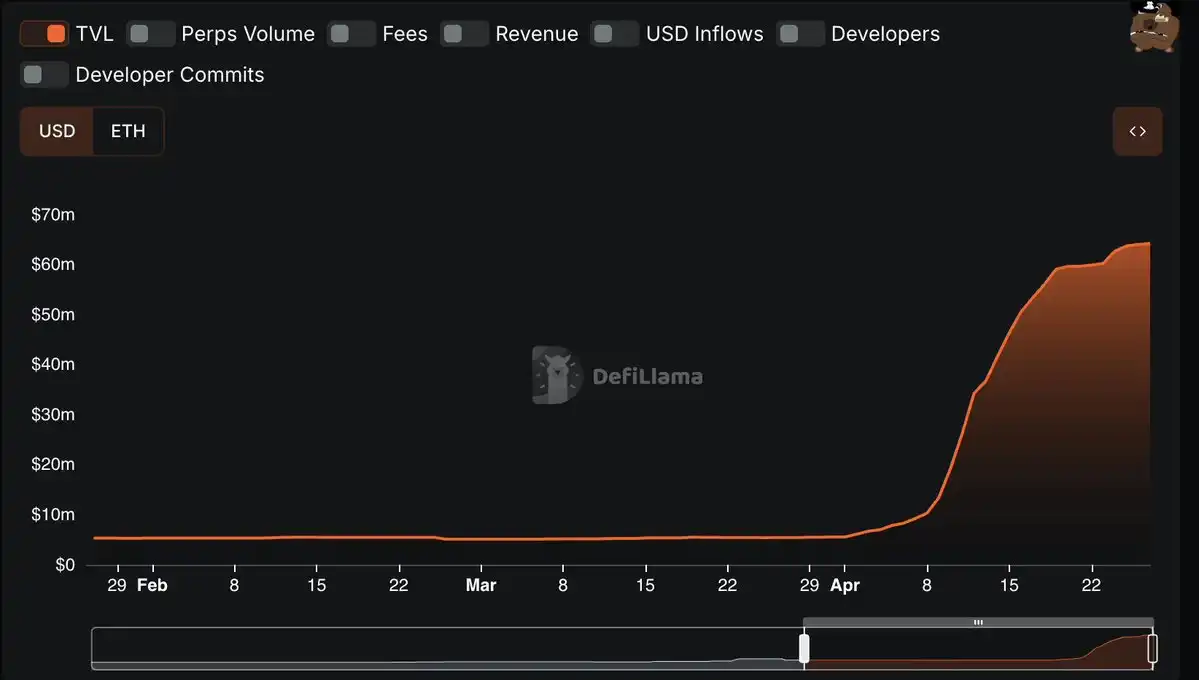
Over the past month, as the tariff crisis loomed, the currency market shook, and the stock market fluctuated like an electrocardiogram, the usage of RWA perpetual contracts has seen a remarkable growth. The total deposit volume of @OstiumLabs has skyrocketed from a stable level of less than 6 million USD to over 60 million USD in just one month. Trading volume has also seen a substantial increase. HyperLiquid has also launched a perpetual contract market for @Paxos' PAXG.
The demand to use crypto derivatives to long or short RWA has become very apparent. The question is, are the current solutions good enough? If not, how can they be improved?
Why Might These Solutions Not Be Good Enough?
In the introductory part, I mentioned two seemingly contradictory viewpoints: on one hand, traders are indeed using RWA products; on the other hand, I questioned whether the existing solutions are good enough.
Some may wonder, if users are choosing these platforms, doesn't it mean that the current RWA perpetual contracts are already good enough? But the reality is different. Let me explain through some data.
If we look at the funding rate on Ostium, we can see that the funding rate for the gold pair (XAU/USD) has reached as high as 30%, and it is still at 13% now.
In comparison, the funding rate for BTC on Bybit is approximately half of Ostium's, while the BTC funding rates on Binance and OKX are only about a quarter of Ostium's. Some may think this is because gold has performed better, but that is not necessarily the case.
Gold has risen by about 50% year to date, and Bitcoin has seen a similar increase.
Moreover, when we compare the crypto market with the traditional financial market (such as CME), the difference becomes even more apparent. If you are long on gold on CME and roll over your position, the annualized cost is about 6%, only half of Ostium's lowest funding rate, with a difference of 600 basis points.
Seeing such a significant spread, readers engaging in delta neutral trading may perceive a huge arbitrage opportunity: for example, shorting on Ostium, earning a 13% funding rate, while being long on CME, incurring a 6% annualized cost. But in reality, it is not the case.
Because Ostium employs a similar model to GLP (GMX's Liquidity Pool), currently, if you are short on Ostium, you actually have to pay a 13% funding rate.
This means that both delta neutral traders and market makers have no incentive to provide liquidity. This is not incidental but a fundamental issue in Ostium's design.
Unsustainability of the GLP Model
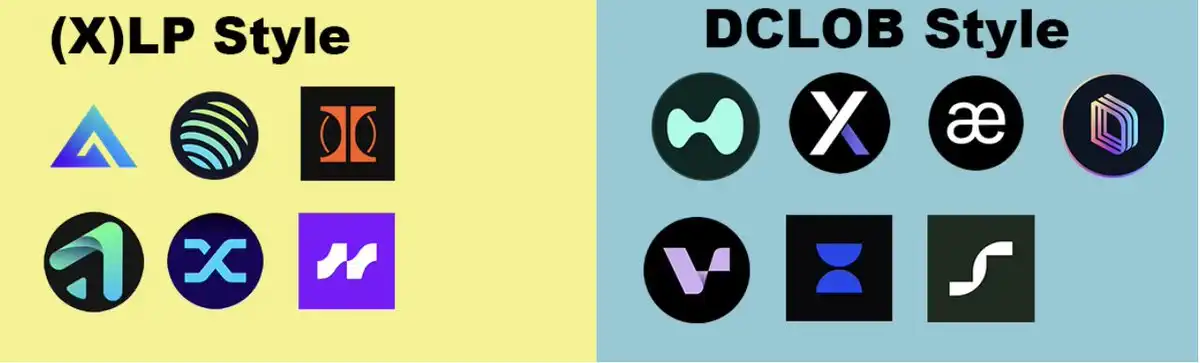
The GLP model used by Ostium and @GainsNetwork_io is, in essence, not scalable.
The GLP model fundamentally involves all traders gambling against the protocol's liquidity pool. Initially introduced by GMX, their pool is called GLP. In Ostium, it is called OLP; on Gains, it is various g(asset) treasuries.
It is crucial to note that the GLP/OLP model is very different from @HyperliquidX's HLP model. The pricing model of HLP is hidden and dynamically changing, while the pricing of GLP is fixed and static.
This means that although HyperLiquid also has base liquidity providers, the base LP is not the sole counterparty, and the funding rate mechanism can still incentivize the market towards greater efficiency. However, under Ostium's OLP model, traders must incur losses for OLP's liquidity providers to profit. It is a purely zero-sum game.
Moreover, unlike the HLP model, which can partially hedge exposure on-chain, there is no stabilization mechanism in the OLP model to hedge RWA's risk exposure.
While the OLP model helped Ostium quickly bootstrap liquidity in the early stages, it has now become a hindrance to their continued growth. Just like HyperLiquid eventually had to relax HLP's absolute counterparty control over user trades, Ostium also needs to loosen the OLP's grip on pricing dominance to achieve greater scalability.
A cautionary tale has already emerged: in terms of relative share in the gold market, Ostium's current gold market position is only $4 million, while HyperLiquid's newly launched PAXG market position has already reached $15 million (with lower funding rates and opening costs as well).
Furthermore, Ostium's current total locked value is $65 million, with $57 million, or 86% of funds, concentrated in the OLP. While HyperLiquid is also high, its proportion is around 60%, which is relatively healthier.
In summary, this model is not sustainable.
Future Possible Directions
While the above issues could become severe if left unchecked, theoretically, they can all be addressed by changing the model.
If Ostium were to transition to an order book model, it could reduce fees, funding rates would decrease due to improved market efficiency, and the platform could still generate profits by collecting trading fees.
The OLP can also continue to exist but should operate in a more dynamically flexible manner.
In my personal view, as someone who loves the RWA perpetual concept, this is the only sustainable long-term model for the RWA perpetual product, not only for Ostium but also for Gains and all related projects.
The GLP/"casino-style" model can only be used for the cold-start phase; long-term development is not realistic, as this has been validated multiple times.
You may also like

The large models in the United States are moving towards closure in the name of security
From the white-haired stock god to the billionaire fund mogul, the smart people shorting Nvidia are all getting rich using the same framework
Morning Report | CoinEx becomes a key hub for Iran to evade sanctions, involving over $3.8 billion in funds; Kalshi seeks a new round of financing, with a valuation potentially rising to $40 billion
Global Launch: As predictions become the most scarce asset in the AI era, Manadia is defining the next generation of the value internet
Why do cryptocurrency projects always like to change their names?
Who is footing the bill for the $64 billion accounting frenzy?
I never expected that the first application of AI x Crypto would be in security auditing
What is your view on Binance's competitive advantages?
ETH has entered a non-consensus phase, and the turning point is approaching!
The shift in the cloud of the air: from despising stablecoins a year ago to the high-profile entry of capital today
The survival dilemma of small and medium exchanges behind the withdrawal anomalies exposed by AscendEX
Why Is Bitcoin Falling Below $60K? 5 Key Market Drivers Explained
Bitcoin has dropped sharply amid ETF outflows, Strategy stock weakness, AI stock rallies, and changing Fed expectations. Explore the key forces driving BTC’s latest correction and what traders should watch next.
Bitcoin vs. Gold in 2026: Which Asset Performs Better in Different Markets?
The cryptocurrency industry has entered the "Show Me" era: merely relying on vision is no longer enough
Morning News | The draft amendment to the People's Bank of China Law aims to clarify the legal status of digital renminbi; South Korea will transfer about 40 unregistered virtual asset service providers to law enforcement agencies
Interpreting the Ethereum Foundation's new structure: Reaffirming self-sovereignty amid institutional trends
Former SpaceX engineer reconstructs the financial execution system using first principles
Tidal Investment: We still have a positive outlook on the AI industry chain, but the reasons have changed
The large models in the United States are moving towards closure in the name of security
From the white-haired stock god to the billionaire fund mogul, the smart people shorting Nvidia are all getting rich using the same framework
Morning Report | CoinEx becomes a key hub for Iran to evade sanctions, involving over $3.8 billion in funds; Kalshi seeks a new round of financing, with a valuation potentially rising to $40 billion
Global Launch: As predictions become the most scarce asset in the AI era, Manadia is defining the next generation of the value internet
Why do cryptocurrency projects always like to change their names?
Who is footing the bill for the $64 billion accounting frenzy?


