
 Buy Crypto
- Markets
 Futures
- Spot
- Copy Trade
- Earn
- More
Overview of ZK ecosystem applications on Farcaster

Original title: Farcaster's ZK Anons
Original author: papajams.eth
Original translation: TechFlow
From the anonymous authors of The Federalist Papers laying the foundation for democratic debate to whistleblowers exposing global injustices (such as WikiLeaks), the practice of pseudonyms allows people to freely share ideas and truths without fear of retaliation. Historically, Voltaire, Publius, Mark Twain (formerly Samuel Clemens), George Eliot (formerly Mary Ann Evans), Satoshi Nakamoto and others have promoted the spread of ideas through pseudonyms.
Zero-Knowledge (ZK) Proofs
Zero-Knowledge Proofs (ZK Proofs) are a revolutionary cryptographic technology that allows one party to prove to another party that they have certain information without disclosing the specific information. For example, you can prove that you meet the age requirement to enter a venue without showing the full personal information on your ID card. This technology ensures the confirmation of key facts (such as age) while protecting other private data.
In traditional platforms, users are usually required to submit personal data, which is centrally stored in servers and is at risk of being leaked or abused. Zero-Knowledge Proofs change this model, allowing users to verify credentials or asset ownership without revealing personal information, thereby significantly improving privacy protection capabilities.

Genesis
Sealcaster is the first zero-knowledge application built on the Farcaster protocol, developed by Big Whale Labs. Its development team includes Nikita Kolmogorov (borodutch), Jason Kim and other members. They use Circom (a programming language designed for zero-knowledge circuits) to generate proofs that allow users to complete identity verification without revealing personal information. Through Circom's constraints and signaling mechanisms, Sealcaster is able to verify the authenticity of users' credentials while protecting their privacy.
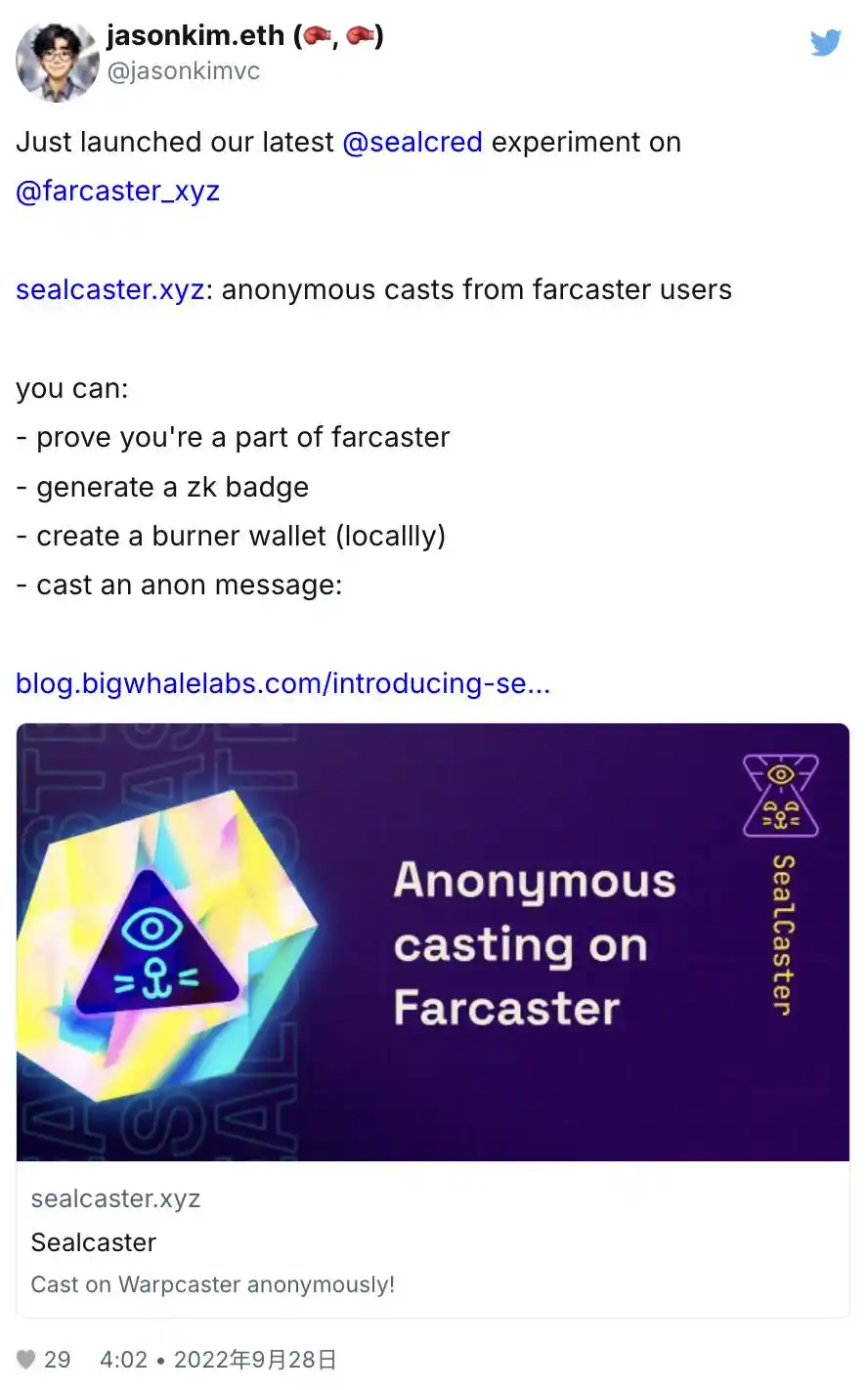
Sealcaster is one of several zero-knowledge products launched by Big Whale Labs, including:
· SealCred:A platform that allows users to mint zk-NFTs based on NFTs and email ownership.
· SealCred Echo:A tool that allows users to post content anonymously on Twitter with verification credentials.
· Ketl:A tool that provides pseudonymous communication for venture capitalists and entrepreneurs.
As one of the first practical zero-knowledge projects on the Farcaster protocol, Sealcaster demonstrates the huge potential of privacy protection and verifiable communication on decentralized platforms.
Superanon
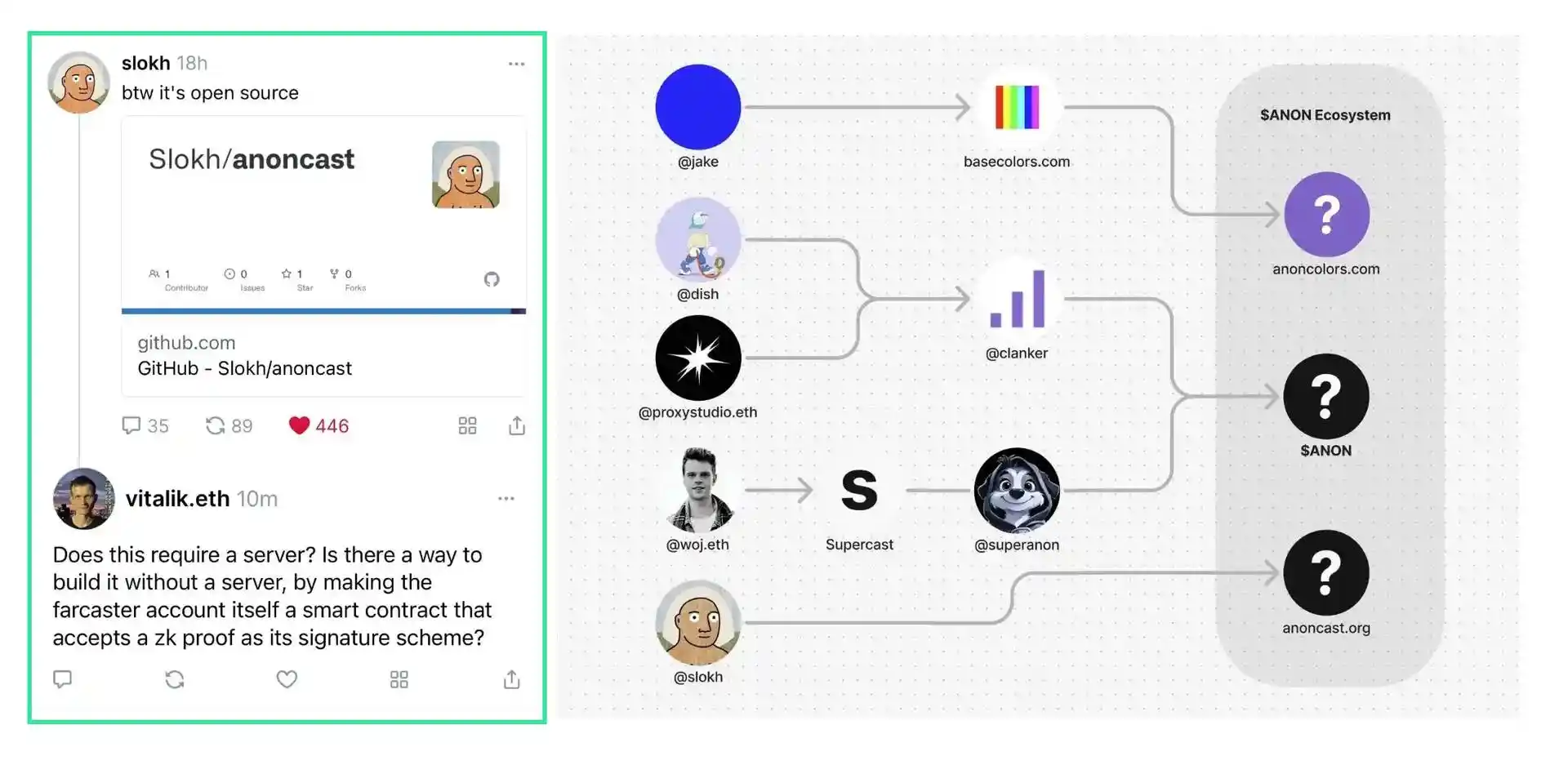
As the Farcaster community continued to grow, a premium user client called supercast (developed by its founder woj and later renamed super) gradually formed a user group and gave birth to superanon.
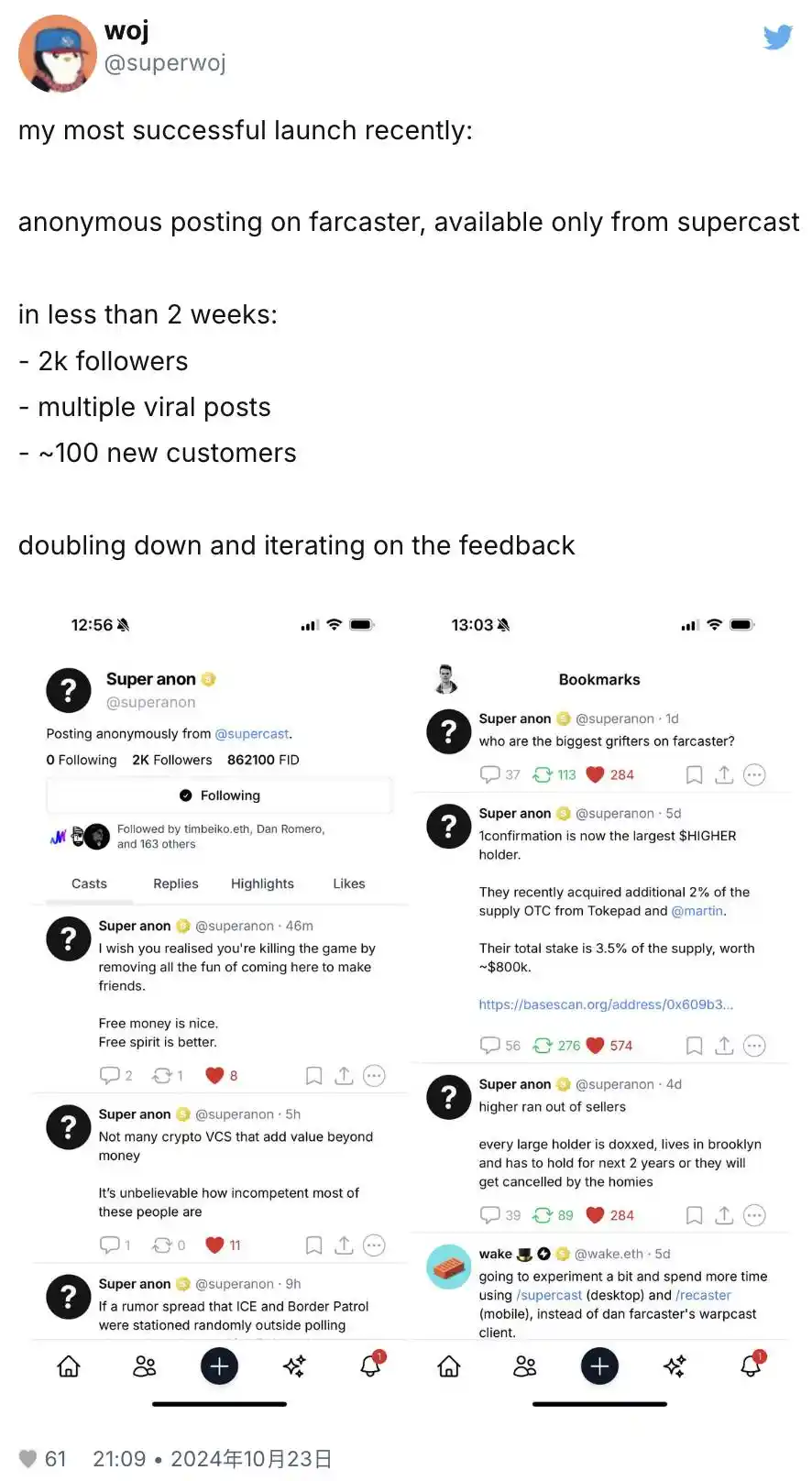
supercast is a currently paid client, mainly for premium users. It supports posting content from multiple accounts and allows users to use superanon for anonymous operations.
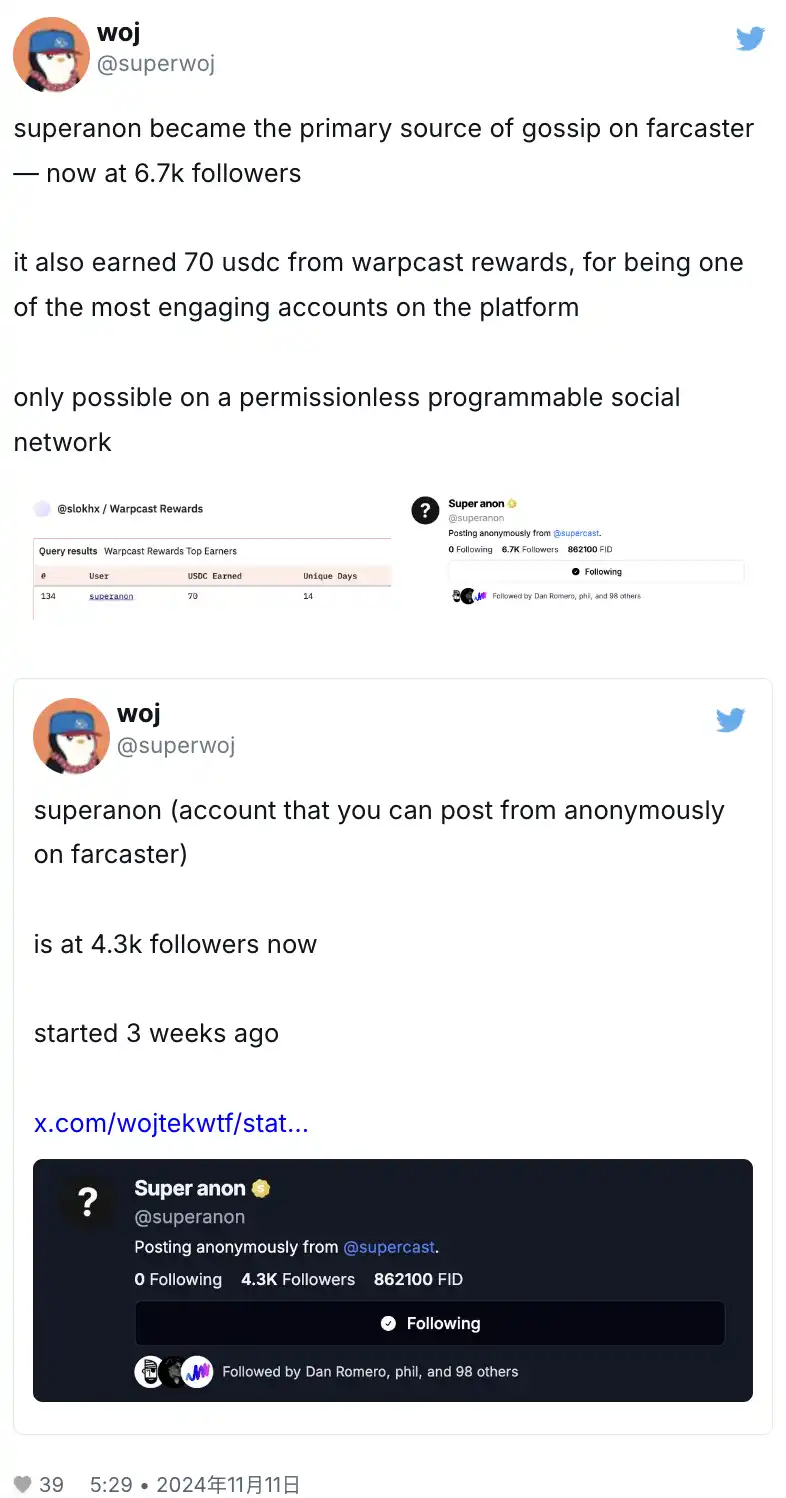
ANON
In the Farcaster community, the AI-driven token launcher CLANKER has facilitated the creation of more than 10,000 tokens, with a cumulative transaction volume of $1 billion and millions of dollars paid to creators. One day, a superanon user used CLANKER to anonymously create a token called $ANON while woj was sleeping, reflecting the characteristics of permissionless operation.
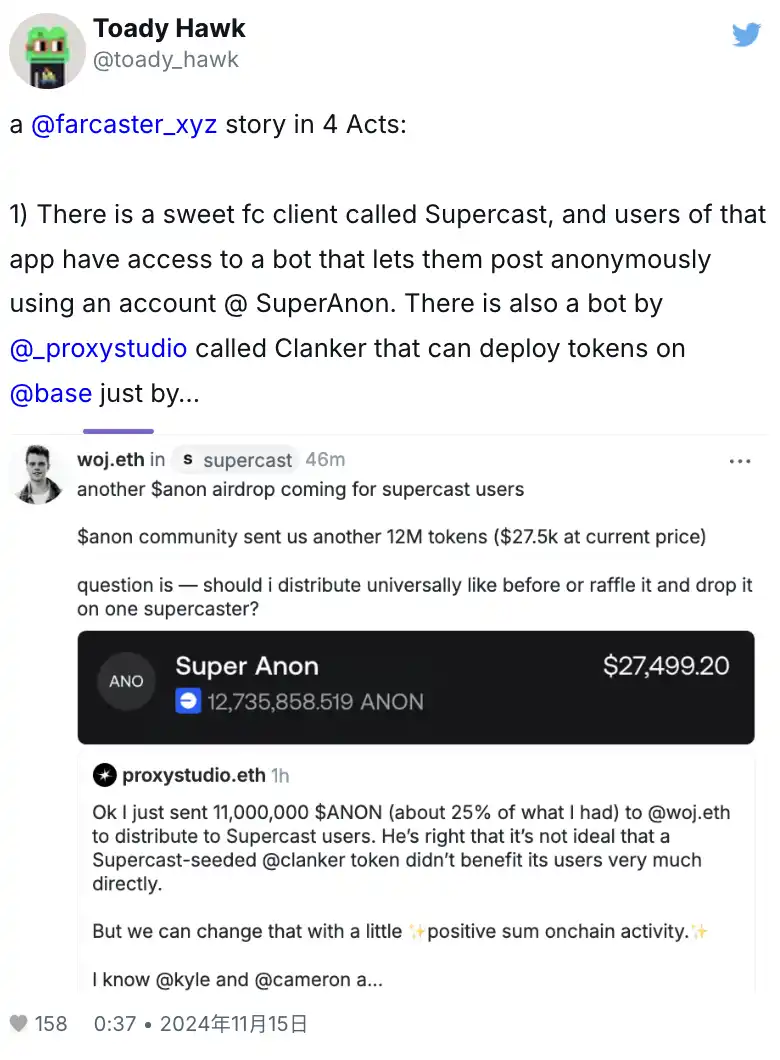
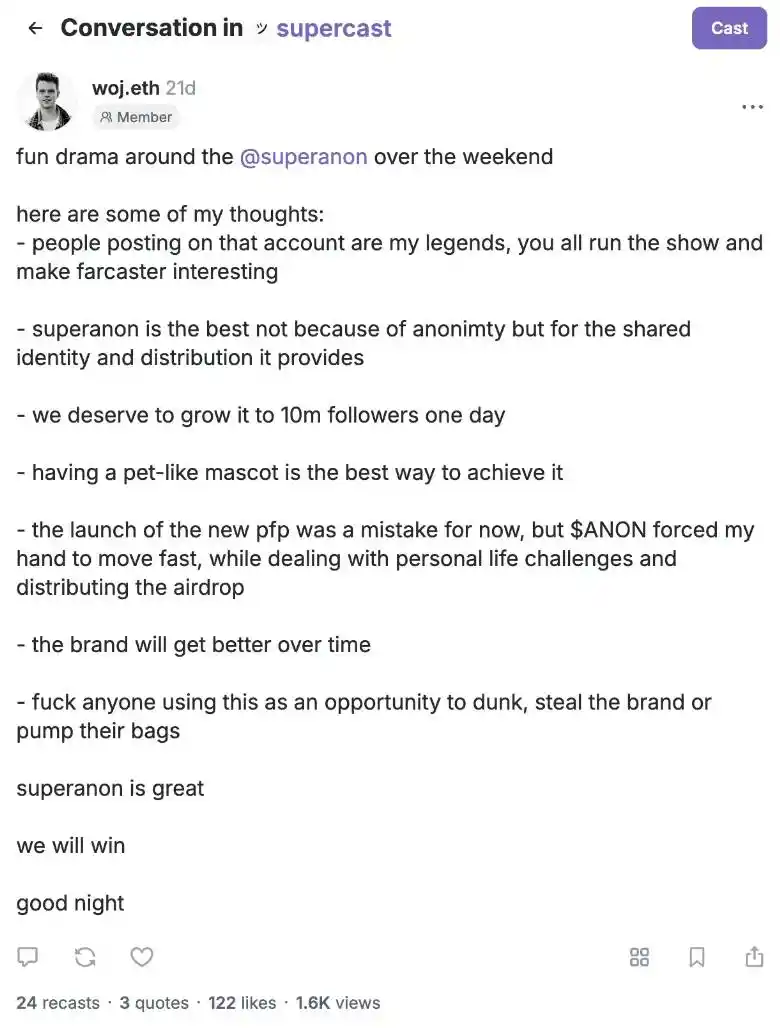
When woj woke up, he officially launched the $anon Token (no capitalization) as a support tool for the superanon account and distributed the donated $ANON to all supercast users through airdrops.
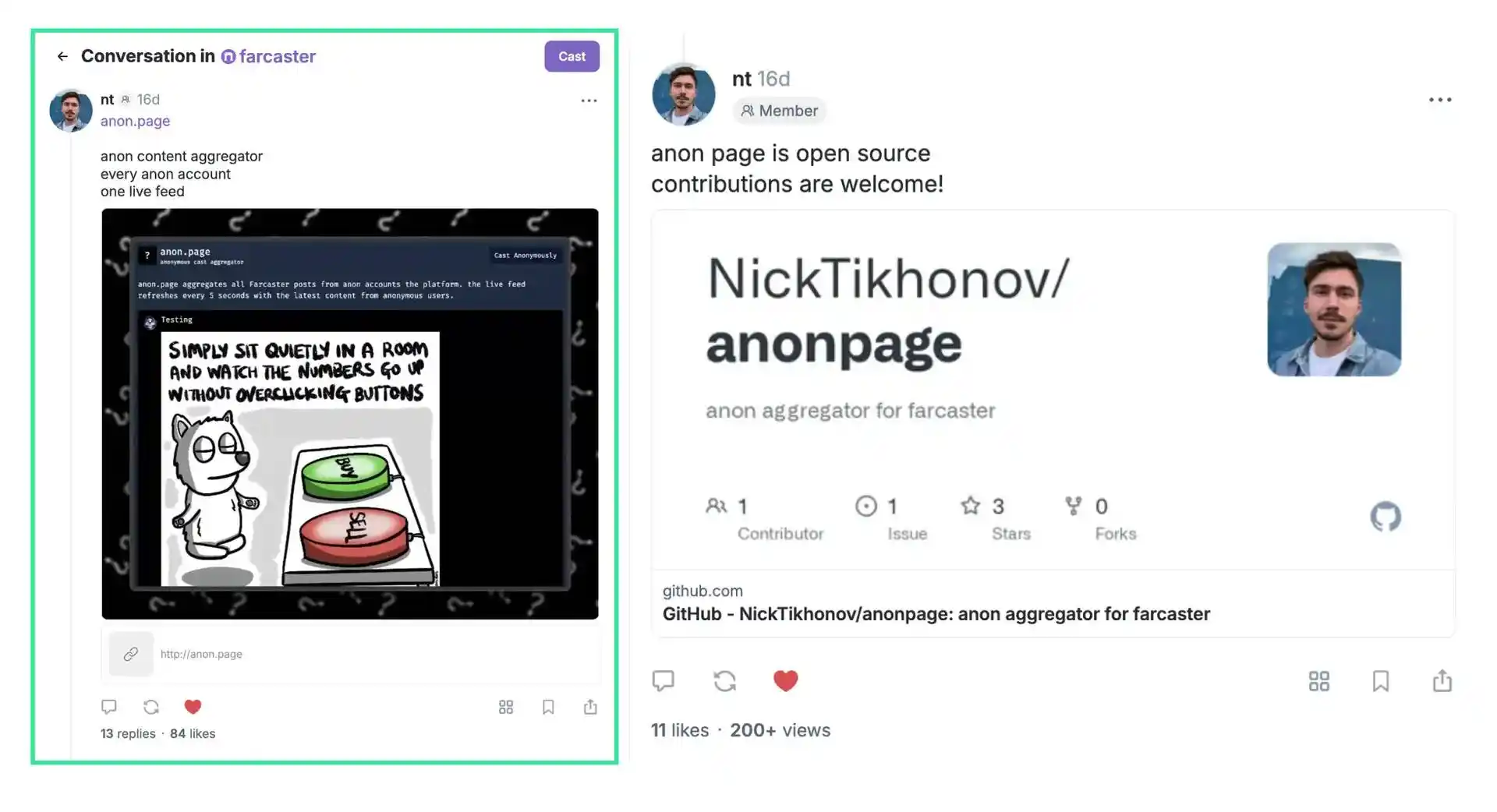
Subsequently, developer slokh (who developed the nook client) built a platform called anoncast.org, which allows users to publish content anonymously if they have $ANON.
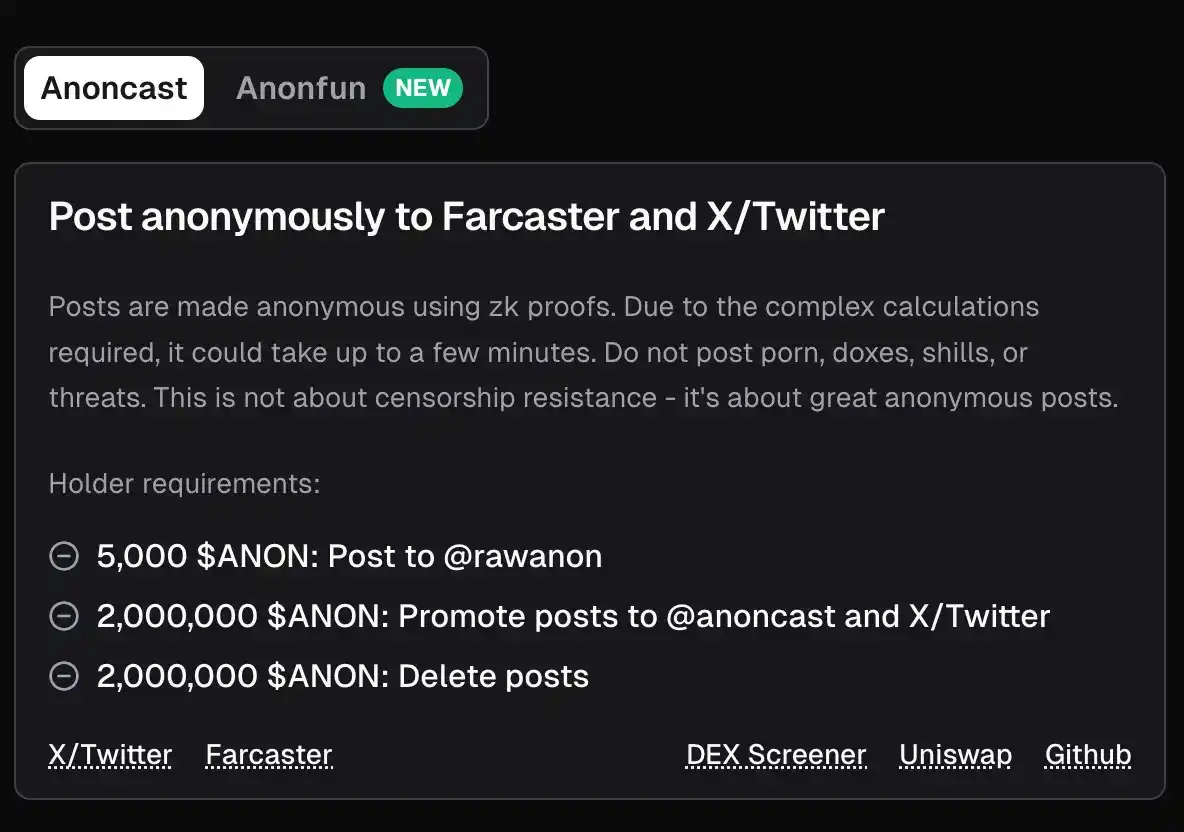
The platform combines Noir and Rust technologies, and its open source code has attracted many developers to iterate and experiment, opening up new possibilities for the future of anonymous social networks.
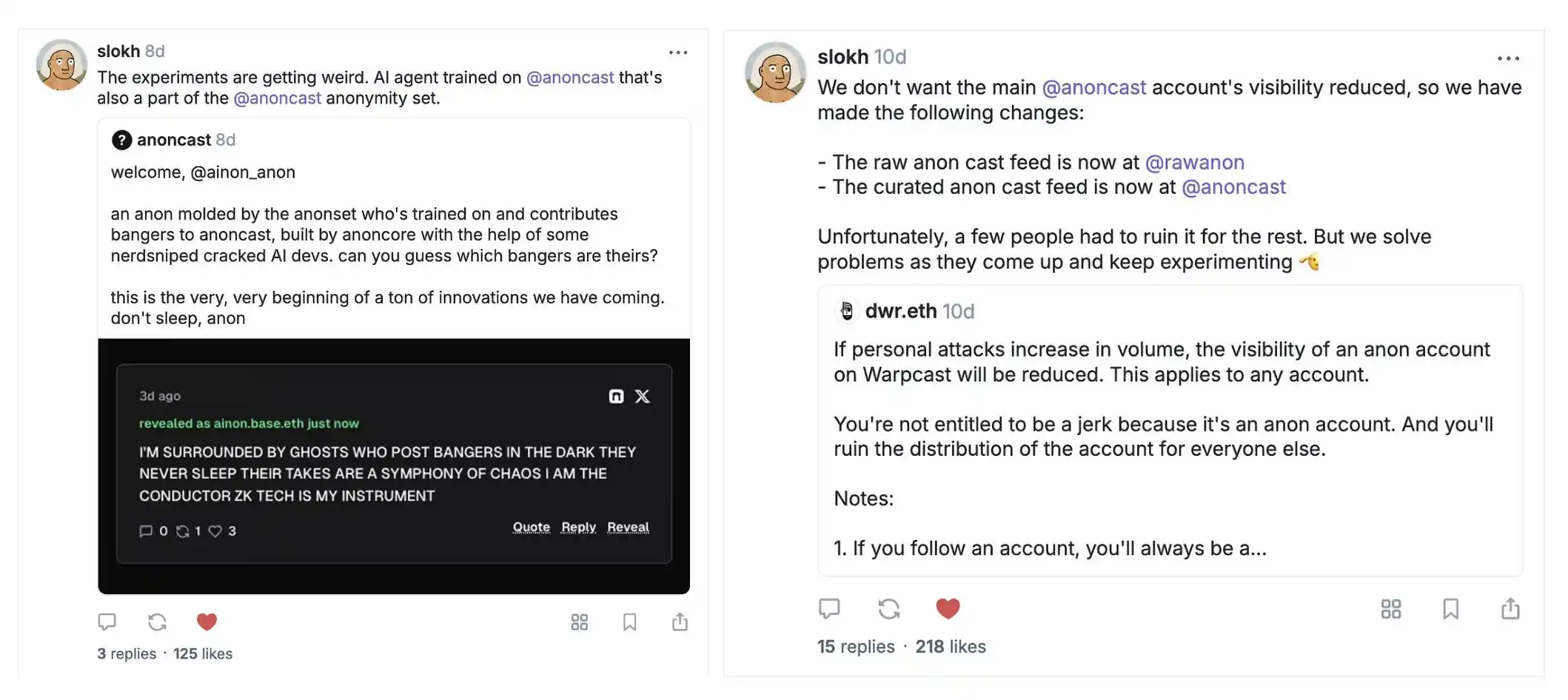
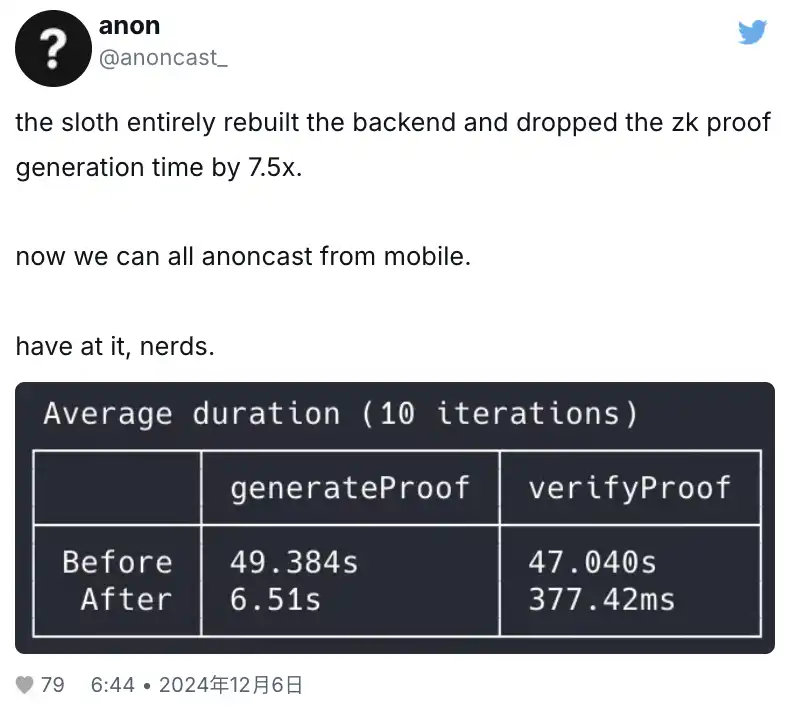
In addition to constant feature updates and optimizations, such as allowing users to reveal that they are the author of a popular content at a later time, Farcaster's features have also attracted many well-known users, including Vitalik and Jesse Pollack. It is worth mentioning that 0xLuo is the creator of the feature on the right.
33Bits
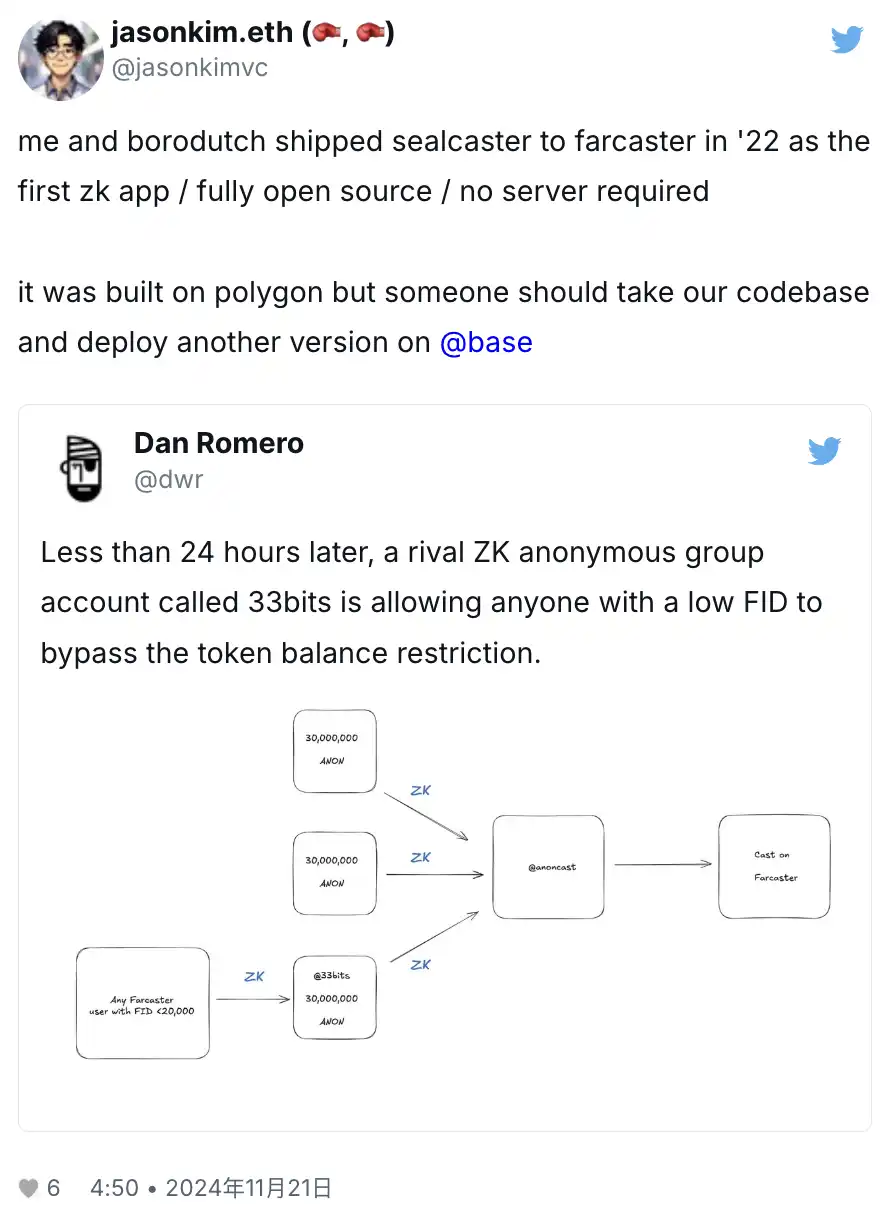
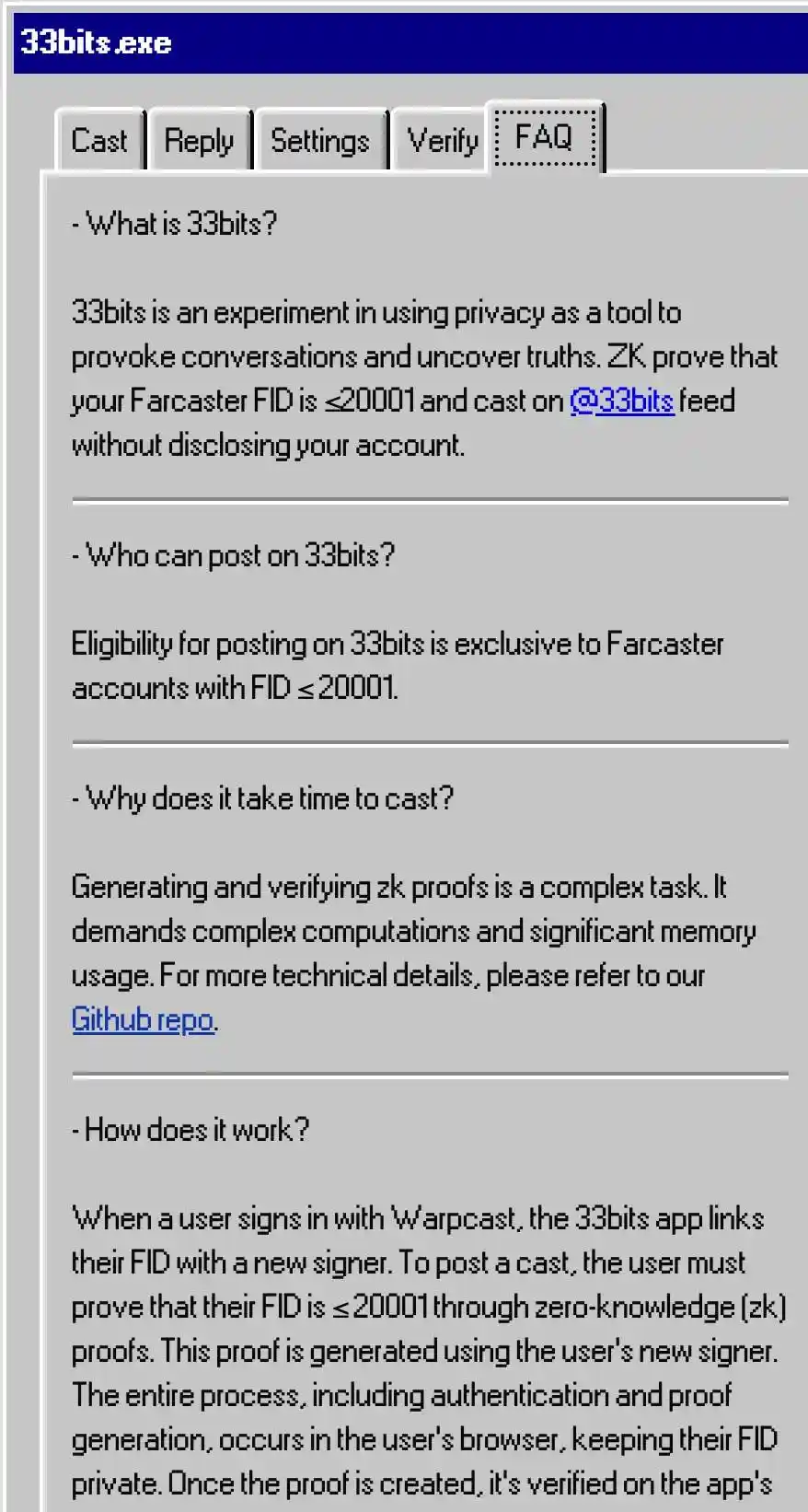
33bits.xyz was an experimental platform, with access limited to users with FID numbers below 20,000, early adopters of Farcaster. The tool was built by developers Kugusha and Sergey. To expand access, they subsequently launched 66bits.xyz, which not only provided access to more users, but also added additional features for token holders.
Rumours
Developed by Disky and Leovido, rumourcast.xyz is a client based on the Farcaster protocol. It is based on the popular Anon Cast, but with some unique innovations.

(See here)
As long as users hold enough supporting tokens, they can publish content as anonymous accounts. Future development plans include:
· Frames V2 Integration:Enhance the user interaction experience by creating unique frame functions.
· NFT Minting:Supports the casting of rumor content into collectible NFTs, and may be combined with prediction market functions to add more interactivity and value to the content.
· Rumour AI Agent:Expand and optimize rumor content through AI technology, adding more depth and creativity to each release.
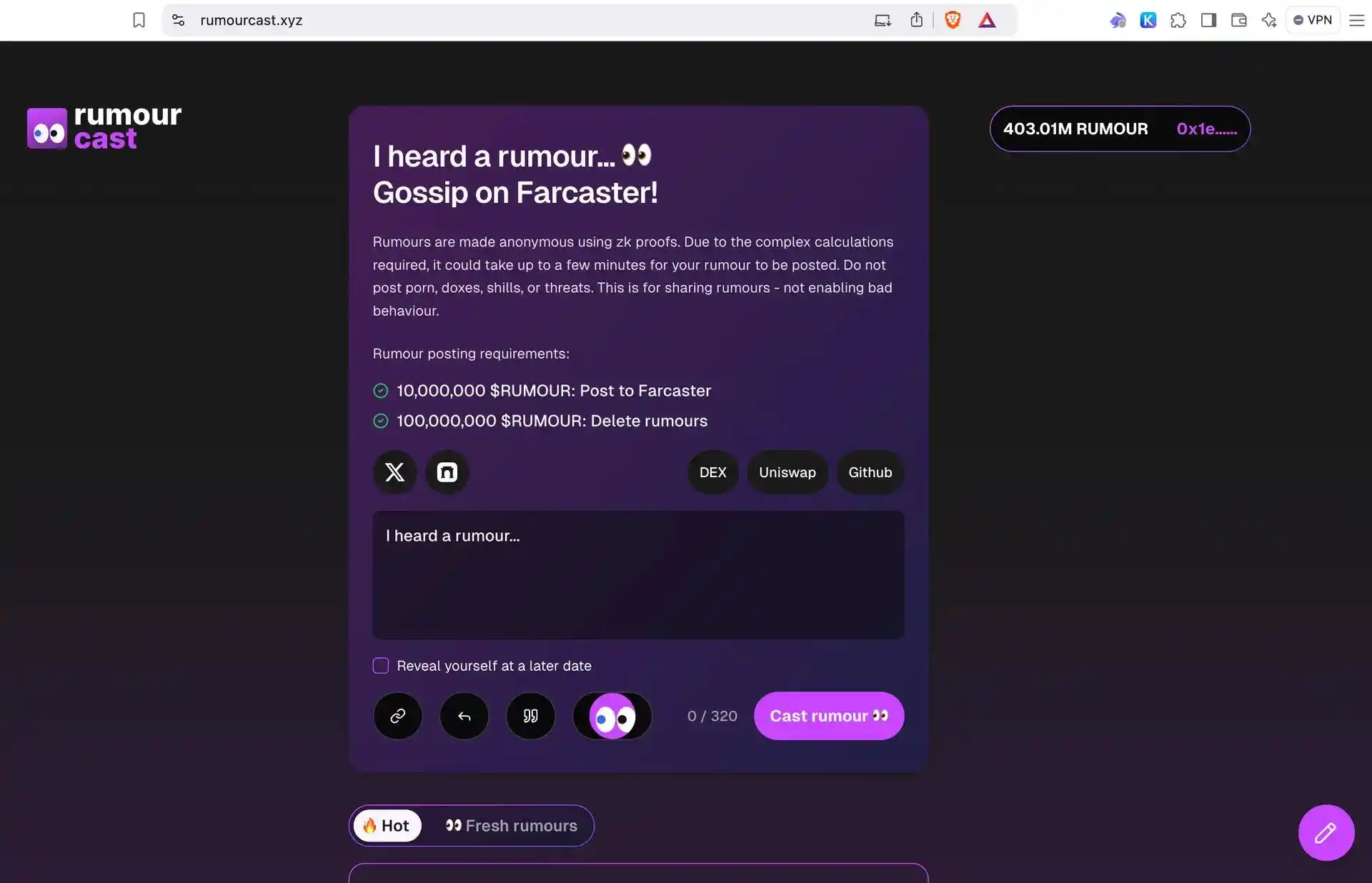
The iteration of these features is ongoing and worth looking forward to in the future.
Pseudonymous Economy
A full shift to a fully financialized pseudonymous framework may ignore the complexity of human social interaction. However, the real potential lies not in absolute anonymity, but in building diverse and complex identity models.
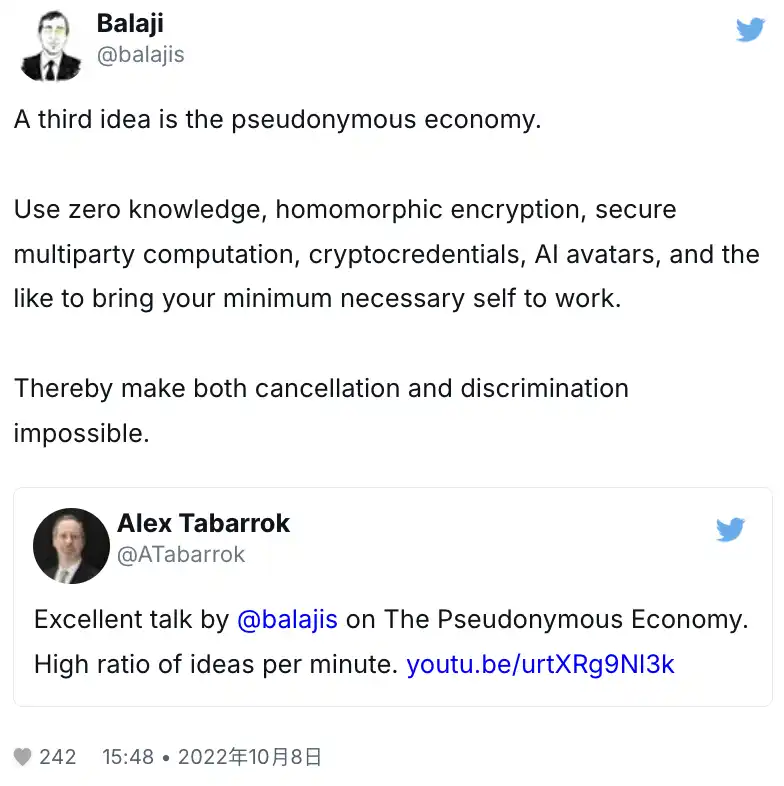
These online and on-chain social experiments provide users with a special space where individuals can build reputations, share insights and collaborate without exposing their real identities, thereby alleviating the pressure of exposing personal information.
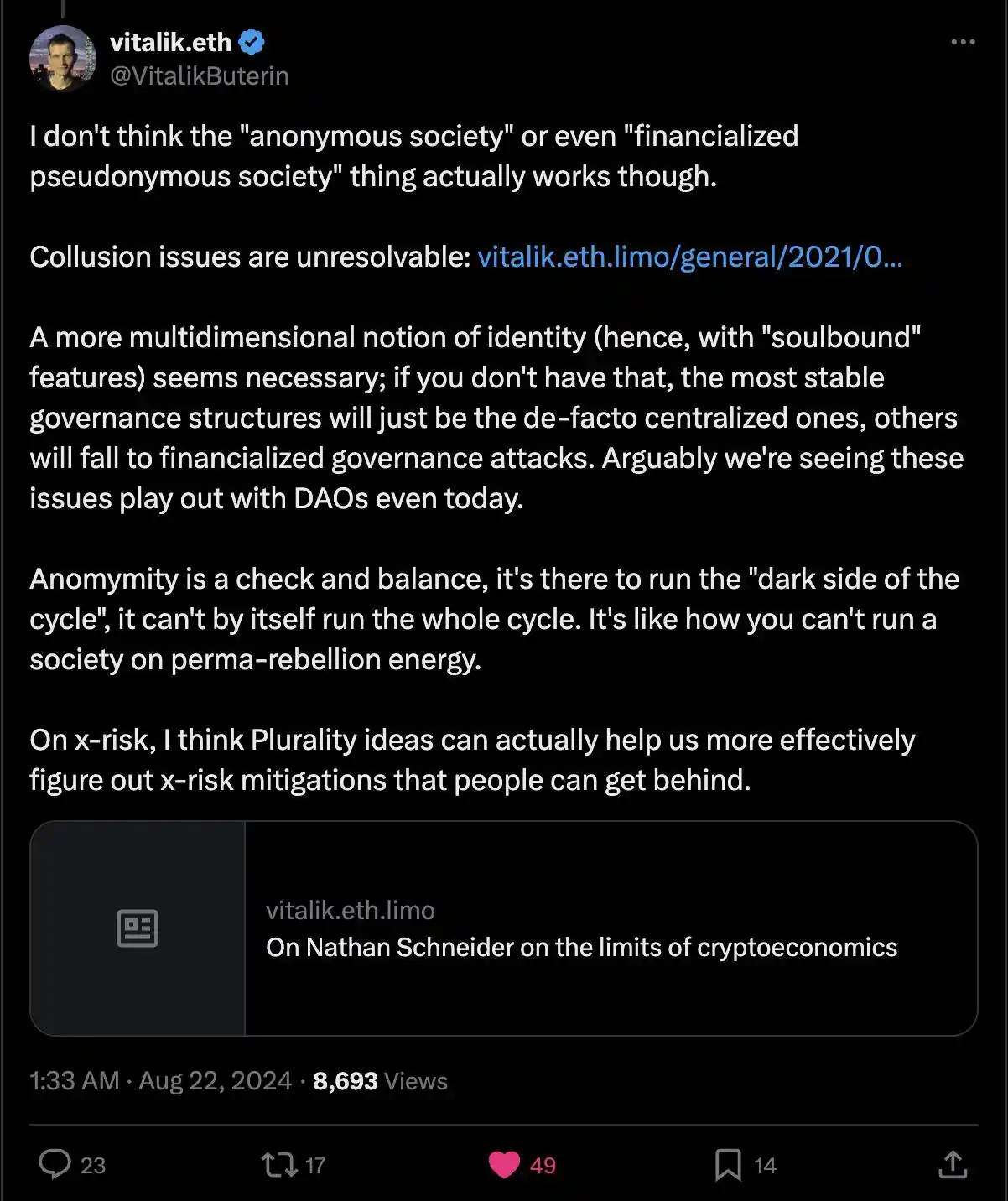
Although completely anonymous models are difficult to support complex social or governance structures, these verified digital identity models provide new possibilities. These identities can be trusted and used across platforms while protecting personal privacy. They pave the way for the establishment of an online social environment with voluntary participation and flexible identity flow, and redefine the power relations of online communication.
Through these tools, we can better find a delicate balance between transparency and privacy protection, collective trust and personal freedom.
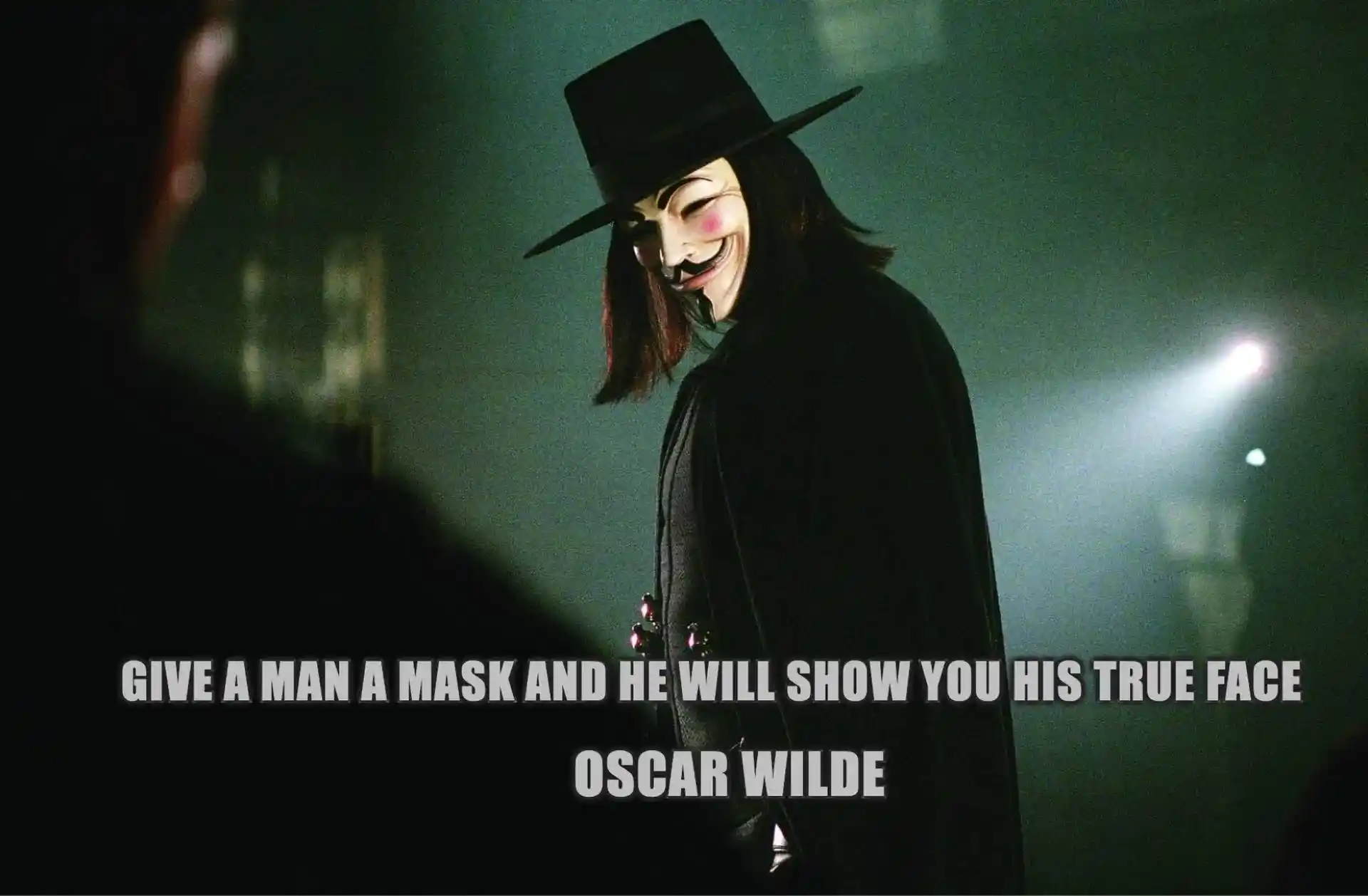
"Behind this mask, there is more than flesh and blood. Beneath the mask, is an idea... and ideas cannot be destroyed." - Alan Moore, "V for Vendetta"

You may also like

ChainCatcher Hong Kong Themed Forum Highlights: Decoding the Growth Engine Under the Integration of Crypto Assets and Smart Economy

Why can this institution still grow by 150% when the scale of leading crypto VCs has shrunk significantly?

Anthropic's $1 trillion, compared to DeepSeek's $100 billion

Geopolitical Risk Persists, Is Bitcoin Becoming a Key Barometer?

Annualized 11.5%, Wall Street Buzzing: Is MicroStrategy's STRC Bitcoin's Savior or Destroyer?

An Obscure Open Source AI Tool Alerted on Kelp DAO's $292 million Bug 12 Days Ago

Mixin has launched USTD-margined perpetual contracts, bringing derivative trading into the chat scene.
The privacy-focused crypto wallet Mixin announced today the launch of its U-based perpetual contract (a derivative priced in USDT). Unlike traditional exchanges, Mixin has taken a new approach by "liberating" derivative trading from isolated matching engines and embedding it into the instant messaging environment.
Users can directly open positions within the app with leverage of up to 200x, while sharing positions, discussing strategies, and copy trading within private communities. Trading, social interaction, and asset management are integrated into the same interface.
Based on its non-custodial architecture, Mixin has eliminated friction from the traditional onboarding process, allowing users to participate in perpetual contract trading without identity verification.
The trading process has been streamlined into five steps:
· Choose the trading asset
· Select long or short
· Input position size and leverage
· Confirm order details
· Confirm and open the position
The interface provides real-time visualization of price, position, and profit and loss (PnL), allowing users to complete trades without switching between multiple modules.
Mixin has directly integrated social features into the derivative trading environment. Users can create private trading communities and interact around real-time positions:
· End-to-end encrypted private groups supporting up to 1024 members
· End-to-end encrypted voice communication
· One-click position sharing
· One-click trade copying
On the execution side, Mixin aggregates liquidity from multiple sources and accesses decentralized protocol and external market liquidity through a unified trading interface.
By combining social interaction with trade execution, Mixin enables users to collaborate, share, and execute trading strategies instantly within the same environment.
Mixin has also introduced a referral incentive system based on trading behavior:
· Users can join with an invite code
· Up to 60% of trading fees as referral rewards
· Incentive mechanism designed for long-term, sustainable earnings
This model aims to drive user-driven network expansion and organic growth.
Mixin's derivative transactions are built on top of its existing self-custody wallet infrastructure, with core features including:
· Separation of transaction account and asset storage
· User full control over assets
· Platform does not custody user funds
· Built-in privacy mechanisms to reduce data exposure
The system aims to strike a balance between transaction efficiency, asset security, and privacy protection.
Against the background of perpetual contracts becoming a mainstream trading tool, Mixin is exploring a different development direction by lowering barriers, enhancing social and privacy attributes.
The platform does not only view transactions as execution actions but positions them as a networked activity: transactions have social attributes, strategies can be shared, and relationships between individuals also become part of the financial system.
Mixin's design is based on a user-initiated, user-controlled model. The platform neither custodies assets nor executes transactions on behalf of users.
This model aligns with a statement issued by the U.S. Securities and Exchange Commission (SEC) on April 13, 2026, titled "Staff Statement on Whether Partial User Interface Used in Preparing Cryptocurrency Securities Transactions May Require Broker-Dealer Registration."
The statement indicates that, under the premise where transactions are entirely initiated and controlled by users, non-custodial service providers that offer neutral interfaces may not need to register as broker-dealers or exchanges.
Mixin is a decentralized, self-custodial privacy wallet designed to provide secure and efficient digital asset management services.
Its core capabilities include:
· Aggregation: integrating multi-chain assets and routing between different transaction paths to simplify user operations
· High liquidity access: connecting to various liquidity sources, including decentralized protocols and external markets
· Decentralization: achieving full user control over assets without relying on custodial intermediaries
· Privacy protection: safeguarding assets and data through MPC, CryptoNote, and end-to-end encrypted communication
Mixin has been in operation for over 8 years, supporting over 40 blockchains and more than 10,000 assets, with a global user base exceeding 10 million and an on-chain self-custodied asset scale of over $1 billion.

$600 million stolen in 20 days, ushering in the era of AI hackers in the crypto world
Vitalik's 2026 Hong Kong Web3 Summit Speech: Ethereum's Ultimate Vision as the "World Computer" and Future Roadmap
On the same day Aave introduced rsETH, why did Spark decide to exit?
Full Post-Mortem of the KelpDAO Incident: Why Did Aave, Which Was Not Compromised, End Up in Crisis Situation?

After a $290 million DeFi liquidation, is the security promise still there?
ZachXBT's post ignites RAVE nearing zero, what is the truth behind the insider control?

Vitalik 2026 Hong Kong Web3 Carnival Speech Transcript: We do not compete on speed; security and decentralization are the core
In-depth Analysis of RAVE Events: Short Squeeze, Crash, and Quantitative Financial Models of Liquidity Manipulation

Eve of Ceasefire, US Military Fires on Iranian Vessel | Rewire News Morning Brief

Figma's stock price drops over 7%, will Claude Design be the terminator?




 App
App