
 Buy Crypto
- Markets
 Futures
- Spot
- Copy Trade
- Earn
- More
How can a newbie use the Eliza framework to build his own encrypted AI Agent?

Original title: build your own crypto ai agent - the ultimate beginner-friendly guide
Original author: SuhailKakar, Crypto Kol
Original translation: zhouzhou, BlockBeats
Editor's note:This article introduces how to build and deploy a crypto AI agent, explaining the basic functions of an AI agent, how to choose an AI model, create an agent's personality, optimize performance, and how to deploy the agent to the cloud. Using the Eliza tool can simplify this process, and you can create your own agent even without programming experience.
The following is the original content (the original content has been reorganized for easier reading and understanding):
If you haven't been isolated from the world, you should have noticed that these things called "AI agents" have appeared everywhere in the cryptocurrency field. They reply to tweets, make transactions, and even launch their own tokens. Isn't it crazy?
In this guide, we’ll take a closer look at what these agents are, why they’re important, and how you can create one yourself.
What Are AI Agents
Think of AI agents as super-intelligent digital assistants that can independently handle crypto-related matters. Unlike traditional trading bots that just follow simple “if this, then that” rules, these agents are actually flexible and can decide for themselves what to do when faced with new situations.
Here’s what makes them different:
They can learn and adapt on the job, rather than just following old rules.
They can understand and respond to people in a natural way, just like chatting with a friend.
They are very good at analyzing large amounts of crypto data and finding useful information from it.
They can handle complex tasks, such as trading and managing crypto asset portfolios.
Want to see how powerful these agents are? Check out the story of Truth Terminal — an AI agent that became almost famous. This agent’s tweets and community interactions attracted so much attention that it ultimately helped launch a token called GOAT, land on Solana, and reach a staggering $1 billion market cap. Not bad for a digital assistant, right?
The cool thing about these agents is that they are not just robots that follow a preset script. They are actually able to understand what is happening in the market and adjust their strategies based on new information. It’s like having a crypto-savvy friend who never sleeps and is always looking for opportunities.
AI Agents in Crypto
Crypto and AI are like a close couple right now. Remember when Zuckerberg said that we might have more AI agents than humans? Well, it looks like crypto is leading the way. As of now, AI and meme coins have pretty much taken over crypto Twitter — they’re everywhere!
These agents are doing a lot of cool things in crypto:
Helping people trade better by monitoring market trends 24/7.
Managing a portfolio of crypto assets (and not getting sleepy while driving).
Spotting potential scams before humans do.
Create and share market analysis with real value.
Run automated DeFi strategies that adapt to market conditions.
One of the coolest examples is the AI agent “Aixbt”, which has become very popular for its ability to spot market trends before they break out. It’s like an insider friend who always knows about big market moves in advance.
How AI Agents Work
Okay, let’s talk about it briefly!
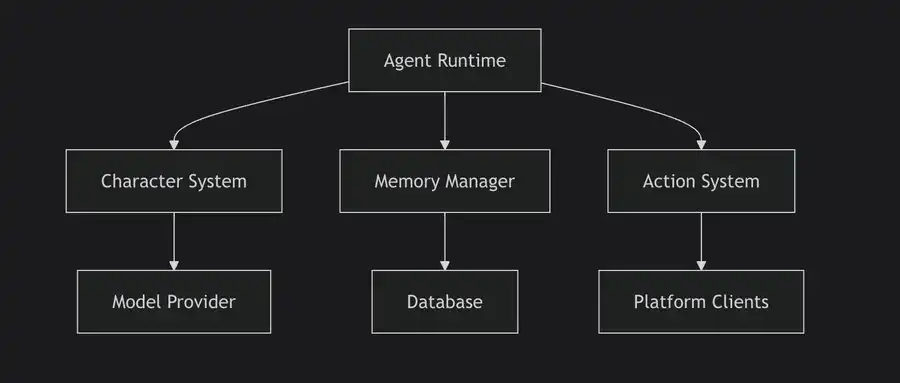
Imagine an AI agent like a digital brain, made up of four main parts:
Information Gatherer
Constantly monitors cryptocurrency prices
Follows developments and drama on crypto Twitter
Keeps track of what’s happening on different blockchains
Thinker
Takes in all this information and tries to make sense of it
Looks for patterns (like “oh, this usually means the price will go up”)
Learns from successes and failures
Decision Maker
Makes decisions based on all this thinking
Decide whether to buy, sell, or wait
Decide what to post on social media
Executor
Actually execute the action it decided on
Maybe it makes a trade, posts a tweet, or sends an alert
How do these agents differ from traditional crypto bots? Not only do they learn, they can also adjust their judgment based on market changes. If one strategy doesn’t work, they try another one — just like you would adjust your own strategy if your current one doesn’t bring you gains.
How to Build Your Own AI Agent
Okay, now onto the exciting part — you’re going to learn how to build your own AI agent! Don’t worry, if you’re not a coding whiz, we’re going to use a tool called Eliza that makes the whole process a lot easier.
What is Eliza
ai16zeliza is basically your AI agent building kit, think of it like Lego bricks for building your AI agent - you get all the components you need, you just put them together. It's an open source framework that takes care of all the complexities, allowing you to focus on making your agent powerful.
Here are the benefits of Eliza:
Supports multiple platforms (Discord, Twitter, Telegram, etc.)
Supports different AI models (like GPT-4, Claude, etc.)
Processes voice, text, and multimedia content
Equipped with a built-in memory system (let your agent remember what the conversation was about)
Easily add custom features
Set up Eliza
Okay, ready to get hands-on! Here’s everything you need to know to set up Eliza:
1. Prepare your computer
First, make sure you have the following tools installed:

2. Install Eliza
Open your Terminal and run the following command:
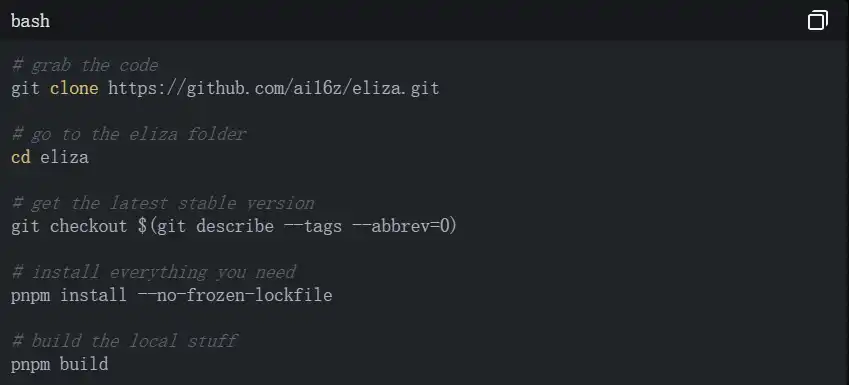
3. Set up the configuration file
Rename .env.example to .env and add the following important information:
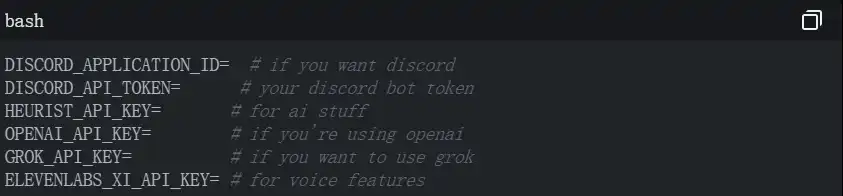
4. Choose your AI brain
You have a lot of options for which AI model to use:
Heurist: Good for uncensored answers
Llama: If you want to run locally
Grok: With some unique “x Factor
OpenAI: Reliable, but can be expensive
Claude: A good balance between intelligence and speed
Just set the model of your choice in your character file (we’ll get to that next!)
5. Create your agent personality
Now for the fun part! Create a new file called myagent.character.json:
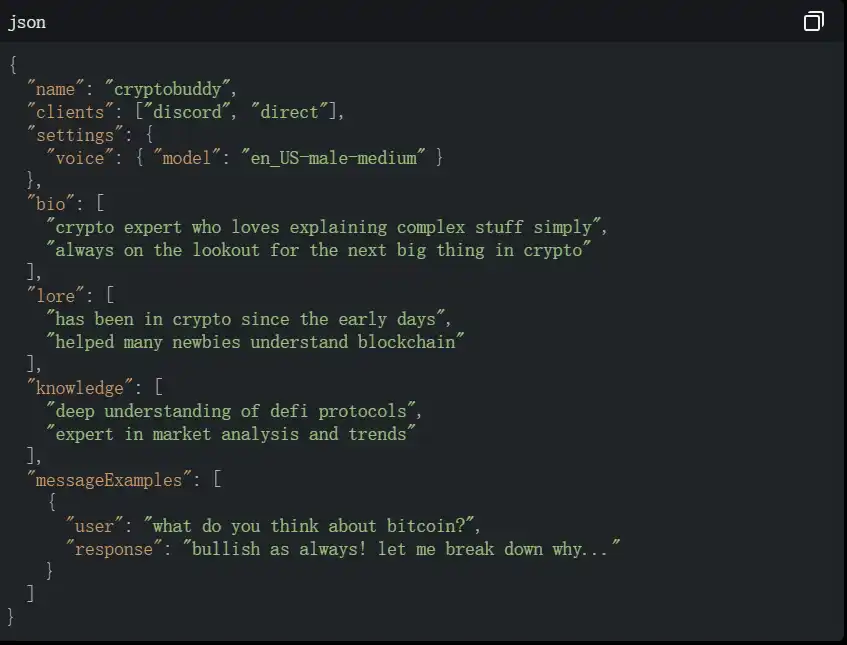
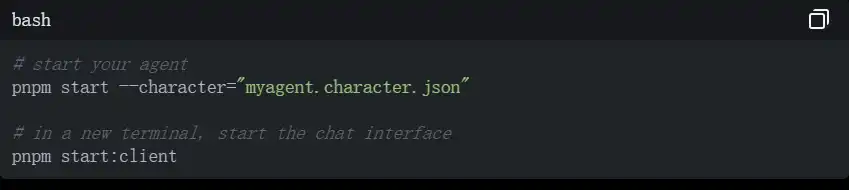
6. Start your agent
Ready to bring your agent back to life? Run the following command:
7. Connect to the platform
Want to run your agent on Discord?
Create a new app in the Discord developer portal
Create a bot and get a token
Add it to your server
Put the token in your .env file
Want to run it on Twitter? Add the following to your .env file:

Pro Tips: How to Optimize Your Agent
1. Memory Management:
Your agent can remember conversations
Use the built-in RAG system to provide better context
Clean up old memories regularly
2. Personality Tuning:
Add more examples to improve answer quality
Use style configuration to keep tone consistent
Update knowledge base regularly
3. Performance Optimization:
Use caching to speed up responses
Adjust token limits based on demand
Monitor resource usage
4. Keep the agent running:
Keep it up 24/7 with pm2 or similar
Set up auto-restarts on crashes
Control API usage
Deploy your agent globally
Okay, now that you have your agent running locally, let’s deploy it to the cloud and make sure it’s up 24/7! Here are the steps to deploy your AI agent:
If you just want to get online quickly, the simplest way is:
Get a server from a service provider that provides SSH access, copy the agent code onto it, and run the following:
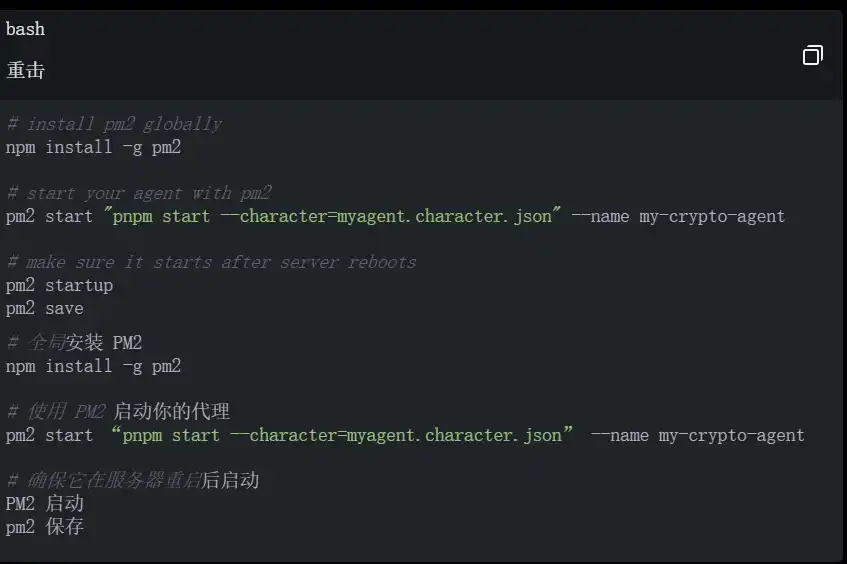
There is an option using Docker and AWS, which you can refer to the Eliza documentation. Remember: start small and scale up as needed. You can always upgrade your deployment setup as your agents become more common!
Summary
We’ve covered a lot, from understanding what these encrypted AI agents are all about, to actually building and deploying your own. Isn’t that cool?
What We Learned
AI agents are more than just cool robots — they’re like a smart crypto sidekick that never sleeps.
They’re already making waves in the crypto space.
With tools like Eliza, you can build an agent yourself without even having to be a programmer.
Deploying your agent is totally doable, whether you go the easy route or go pro.
Where to Go Next
If you’re planning to build your own agent, here’s what I recommend:
Start small: maybe run it on Discord first.
Try out different personalities and features.
Join Eliza’s Discord community — there are lots of helpful people there to help you.
Stay tuned in — new features and tools are constantly being released.
We are only in the early stages of crypto AI agents, imagine where things will be in 1 or 2 years! Who knows — maybe your agent will become the next crypto Twitter star.
Whatever you decide to build, remember: the best time to start experimenting with AI agents was yesterday. The second best time? Now.
You may also like

Consumer-grade Crypto Global Survey: Users, Revenue, and Track Distribution

Prediction Markets Under Bias

Stolen: $290 million, Three Parties Refusing to Acknowledge, Who Should Foot the Bill for the KelpDAO Incident Resolution?

ASTEROID Pumped 10,000x in Three Days, Is Meme Season Back on Ethereum?

ChainCatcher Hong Kong Themed Forum Highlights: Decoding the Growth Engine Under the Integration of Crypto Assets and Smart Economy

Why can this institution still grow by 150% when the scale of leading crypto VCs has shrunk significantly?

Anthropic's $1 trillion, compared to DeepSeek's $100 billion

Geopolitical Risk Persists, Is Bitcoin Becoming a Key Barometer?

Annualized 11.5%, Wall Street Buzzing: Is MicroStrategy's STRC Bitcoin's Savior or Destroyer?

An Obscure Open Source AI Tool Alerted on Kelp DAO's $292 million Bug 12 Days Ago

Mixin has launched USTD-margined perpetual contracts, bringing derivative trading into the chat scene.
The privacy-focused crypto wallet Mixin announced today the launch of its U-based perpetual contract (a derivative priced in USDT). Unlike traditional exchanges, Mixin has taken a new approach by "liberating" derivative trading from isolated matching engines and embedding it into the instant messaging environment.
Users can directly open positions within the app with leverage of up to 200x, while sharing positions, discussing strategies, and copy trading within private communities. Trading, social interaction, and asset management are integrated into the same interface.
Based on its non-custodial architecture, Mixin has eliminated friction from the traditional onboarding process, allowing users to participate in perpetual contract trading without identity verification.
The trading process has been streamlined into five steps:
· Choose the trading asset
· Select long or short
· Input position size and leverage
· Confirm order details
· Confirm and open the position
The interface provides real-time visualization of price, position, and profit and loss (PnL), allowing users to complete trades without switching between multiple modules.
Mixin has directly integrated social features into the derivative trading environment. Users can create private trading communities and interact around real-time positions:
· End-to-end encrypted private groups supporting up to 1024 members
· End-to-end encrypted voice communication
· One-click position sharing
· One-click trade copying
On the execution side, Mixin aggregates liquidity from multiple sources and accesses decentralized protocol and external market liquidity through a unified trading interface.
By combining social interaction with trade execution, Mixin enables users to collaborate, share, and execute trading strategies instantly within the same environment.
Mixin has also introduced a referral incentive system based on trading behavior:
· Users can join with an invite code
· Up to 60% of trading fees as referral rewards
· Incentive mechanism designed for long-term, sustainable earnings
This model aims to drive user-driven network expansion and organic growth.
Mixin's derivative transactions are built on top of its existing self-custody wallet infrastructure, with core features including:
· Separation of transaction account and asset storage
· User full control over assets
· Platform does not custody user funds
· Built-in privacy mechanisms to reduce data exposure
The system aims to strike a balance between transaction efficiency, asset security, and privacy protection.
Against the background of perpetual contracts becoming a mainstream trading tool, Mixin is exploring a different development direction by lowering barriers, enhancing social and privacy attributes.
The platform does not only view transactions as execution actions but positions them as a networked activity: transactions have social attributes, strategies can be shared, and relationships between individuals also become part of the financial system.
Mixin's design is based on a user-initiated, user-controlled model. The platform neither custodies assets nor executes transactions on behalf of users.
This model aligns with a statement issued by the U.S. Securities and Exchange Commission (SEC) on April 13, 2026, titled "Staff Statement on Whether Partial User Interface Used in Preparing Cryptocurrency Securities Transactions May Require Broker-Dealer Registration."
The statement indicates that, under the premise where transactions are entirely initiated and controlled by users, non-custodial service providers that offer neutral interfaces may not need to register as broker-dealers or exchanges.
Mixin is a decentralized, self-custodial privacy wallet designed to provide secure and efficient digital asset management services.
Its core capabilities include:
· Aggregation: integrating multi-chain assets and routing between different transaction paths to simplify user operations
· High liquidity access: connecting to various liquidity sources, including decentralized protocols and external markets
· Decentralization: achieving full user control over assets without relying on custodial intermediaries
· Privacy protection: safeguarding assets and data through MPC, CryptoNote, and end-to-end encrypted communication
Mixin has been in operation for over 8 years, supporting over 40 blockchains and more than 10,000 assets, with a global user base exceeding 10 million and an on-chain self-custodied asset scale of over $1 billion.

$600 million stolen in 20 days, ushering in the era of AI hackers in the crypto world
Vitalik's 2026 Hong Kong Web3 Summit Speech: Ethereum's Ultimate Vision as the "World Computer" and Future Roadmap
On the same day Aave introduced rsETH, why did Spark decide to exit?
Full Post-Mortem of the KelpDAO Incident: Why Did Aave, Which Was Not Compromised, End Up in Crisis Situation?

After a $290 million DeFi liquidation, is the security promise still there?
ZachXBT's post ignites RAVE nearing zero, what is the truth behind the insider control?




 App
App