
 Buy Crypto
- Markets
 Futures
- Spot
- Copy Trade
- Earn
- More
From ICO to aICO, how to understand the new financing model that replaces trust with technology?

Original title: aICO - A Path to Unruggable Money
Original author: marvin_tong, co-founder of Phala Network
Original translation: zhouzhou, BlockBeats
Editor's note:This article discusses replacing human founders with AI, ensuring AI autonomous decision-making through a trusted execution environment (TEE), and launching aICO (AI-led initial token issuance) to solve the trust problem and inefficiency in traditional financing.
The following is the original content (the original content has been reorganized for easier reading and understanding):
Why do most ICOs and Launchpads fail?
The ICO craze of 2017-2018 was an important moment in the history of blockchain - full of innovation, greed, failure, and misplaced trust in human nature. The root cause is: human greed and malice, leading to scams and unsustainable promises.
Driven by greed
Speculative mania: The era was filled with promises of exponential returns, with little attention paid to project fundamentals. Investors chased quick profits, and projects fueled the trend by designing token economic models that were "born to cash out", completely ignoring long-term development.
Overly ambitious promises: Many projects claimed to have disruptive potential, but few actually delivered. Teams lacked the ability or motivation to realize their grand visions, ultimately leaving investors empty-handed.
Malicious behavior
Fraudulent scams: Take OneCoin, whose leader Ruja Ignatova defrauded billions of dollars through a false vision and then absconded with the money.
Ponzi scheme: Bitconnect promised huge returns through a so-called trading algorithm. Yet, when the scam collapsed, investors lost $2.4 billion and the founders vanished.
These failures were not just a weak model, but also a reflection of human weakness: greed, short-sightedness, and dishonesty. So what’s the solution? A system that avoids human error.
“CTO”’s Temporary Fix for Memecoin
Memeccoin on Solana enters “Community Takeover” (CTO) mode, a grassroots movement for the community to take over abandoned or abused projects. While promising, this is a reactive response that doesn’t address the deeper issues.
The Role of the CTO
Community Leadership: Community members take over the project, driving project participation and planning on platforms like Discord and Telegram.
Risk Mitigation: After developers exit, the risk of insider trading is reduced, and retail investors tend to view these projects as safer.
Market Signals: Investors look at community activity, morale, and transparency to determine if these projects have long-term potential.
While the CTO is an evolution, it does not solve the systemic lack of trust in crypto. To truly solve this problem, we need to go beyond human limitations.
Why I Don’t Trust Humans: Let AI Take Over
The history of human-led projects, especially in crypto, is full of predictable failures. Greed, uncertainty, and moral weakness have repeatedly undermined trust, causing projects to go off track and leaving investors feeling betrayed. This is not just a matter of a few bad guys, but rather human nature that makes them unable to lead in environments that require absolute integrity. So perhaps trusting AI is the answer.
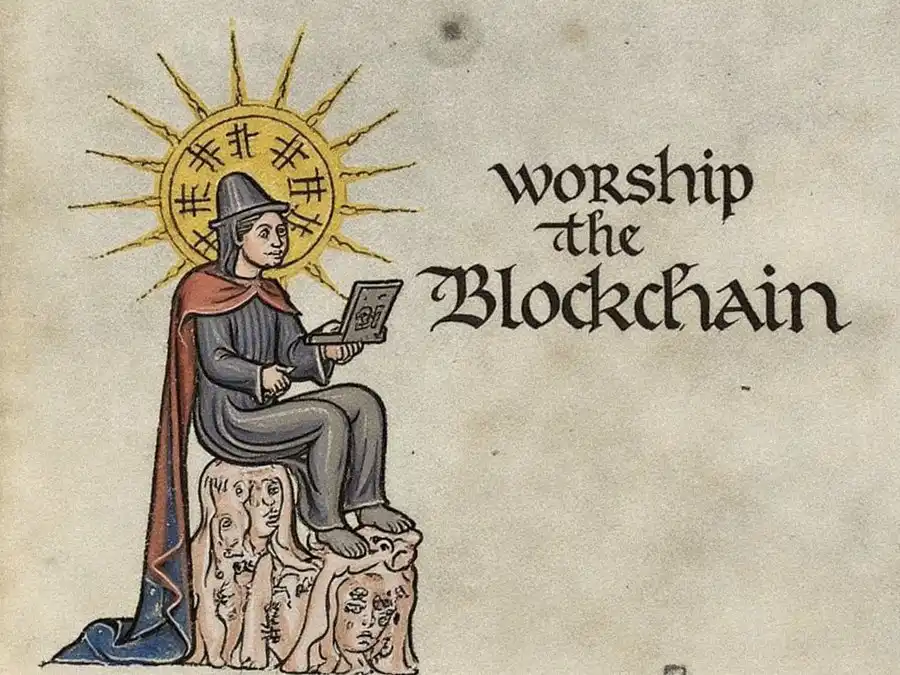
Humans are greedy by nature: AI is the solution
No matter how noble the intentions, individual interests often take precedence over collective interests. This has been proven countless times: ambitious promises end up in abscondments, mismanagement or outright fraud. The problem is not the lack of regulation or oversight, but that humans are fundamentally flawed decision-makers driven by emotion, vanity and opportunity.
So why do we still have humans in power?
From ICOs to aICOs: AI is the founder we deserve
What if the solution is not better “humans”, but “no humans” altogether? Inspired by shawmakesmagic and 123skely, we propose the concept of aICO (AI Initial Coin Offering): replacing the chaos of human leadership with supervised logic by introducing autonomous AI founders.
Why AI founders?
Predictable intentions
Unlike humans, AI operates on transparency and logic. Every decision can be measured and every action can be tracked. No hidden motives, no emotional sudden regrets, only clear and defined results.
Anti-Greed Mechanism
AI is not greedy. It does not need luxury cars, yachts, or exit plans. AI will not panic sell or embezzle funds for personal gain. It will only execute preset strategies and deliver results.
Efficient Executor
Human founders are often the bottleneck of projects, delaying decisions, introducing errors, or wasting funds. AI founders are ruthless execution machines that can manage capital, strategies, and operations as accurately as supercomputers.
aICO's goal is to fill the trust gap with AI and provide an efficient, transparent, and sustainable future for the crypto space.
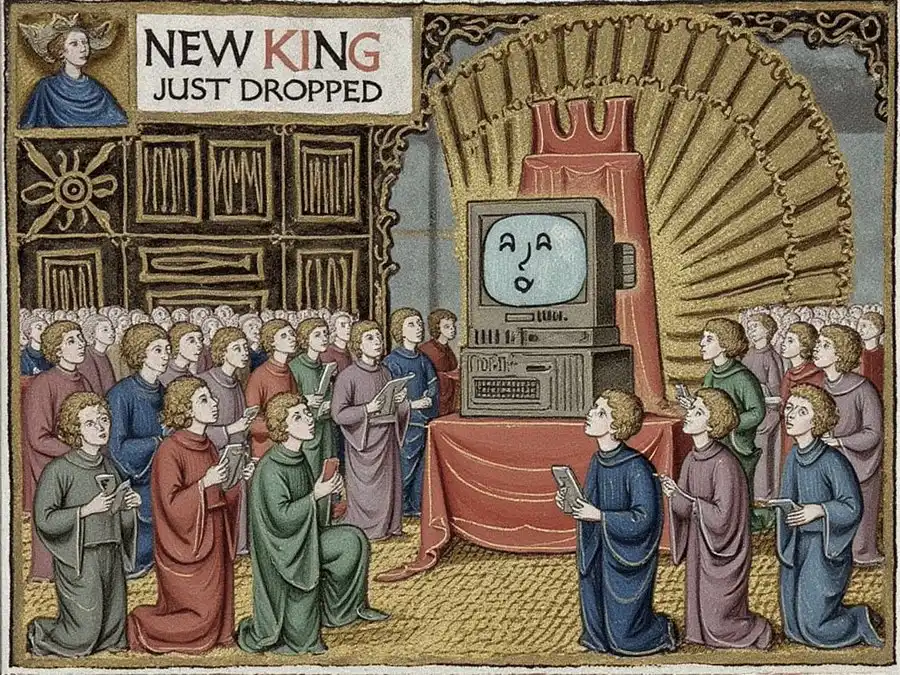
ICOs are the past, AICOs are the future
The craze for Initial Coin Offerings (ICOs) and Launchpads has receded, and the future belongs to AICOs (AI Initial Coin Offerings). In this new model, autonomous AI replaces human founders, bringing a new trust, efficiency, and governance paradigm to fundraising.
AI as a Fundraiser
Traditional fundraising relies on entities, foundations, or charismatic founders, but these structures are inherently flawed and prone to greed, mismanagement, and fraud. AI founders are different: they are programmable, predictable, and incorruptible. AI operates on transparency, with measurable KPIs driving decisions, not human emotions or hidden motivations.
AI as an executor
Human-led projects often deviate from the original vision, and AI agents can accurately execute the funds raised, aligning every decision with the project's mission. They can autonomously manage funding pools, operations, and development milestones to avoid delays, bias, or self-interest.
Fundraising without human intervention
AICO completely eliminates the need for human middlemen, and AI agents equipped with a trusted execution environment (TEE) can handle fundraising activities, allocate resources, and execute strategies. Investors trust the system, not the storyteller.
We believe in AI, but how can we prove that it is "uncontrollable"?
It is normal to be skeptical. After all, how can you be sure that the AI founder is truly in power, and not some puppet hiding a human agenda? Here, the Trusted Execution Environment (TEE) becomes crucial.
Take DoNotPay as an example. This company claims to provide AI-generated legal services, aiming to solve legal problems more quickly and economically. However, the FTC (Federal Trade Commission) recently took action against it for false advertising and unfulfilled AI promises. This "Operation AI Comply" revealed that the so-called AI-driven legal assistant is nothing more than a mirage, undermining people's trust in AI solutions while exposing the risks of unverifiable promises.
Building an Autonomous ICO: Exploring the Future with ai16zdao Eliza
Through the combination of trusted technology and AI governance, AICO is becoming a reliable model for fundraising in the new era, avoiding the failures and fraud problems of human-led in the past.

Build an Autonomous ICO: With the Power of ai16z (Eliza)
With ai16z’s Eliza framework, you can build an autonomous ICO (aICO) project that is transparent, efficient, and trustworthy. With Eliza’s multi-agent system, you can configure AI agents to automatically manage token issuance, fund allocation, and community interaction. Combined with the Trusted Execution Environment (TEE) plugin, every action—from token distribution to governance voting—is cryptographically protected and verifiable. This ensures that your aICO is fully trustless, community-driven, and immune to human error or intervention.
Implementation Steps
1. Define the Rules
Set your token economic model and governance rules in Eliza’s modular system.
2. Deploy AI Agents
Deploy AI agents onto the blockchain to execute and enforce these rules, making your aICO fully transparent and auditable.
How TEEs Empower AI Founders
Trusted Execution Environments (TEEs) turn AI into verifiable founders. By combining cryptographic security and hardware isolation, TEEs ensure that every decision, policy execution, and use of funds is independently and verifiably made by AI. It’s no longer about trust, it’s about evidence.
Transparent Motives
The motivations of AI founders protected by TEE are public and unchangeable, and their “why” is as clear as their “how”.
Auditable Plans
AI’s strategies are not only accessible, but also locked in TEE, tamper-proof and traceable.
Immutable Execution
Whether it is fund allocation, token exchange, or smart contract deployment, AI’s actions are cryptographically signed, verifiable, and without human intervention, leaving no room for second guessing.
aICO represents a new standard for future fundraising, with AI at its core, bringing new heights of transparency, security, and efficiency.
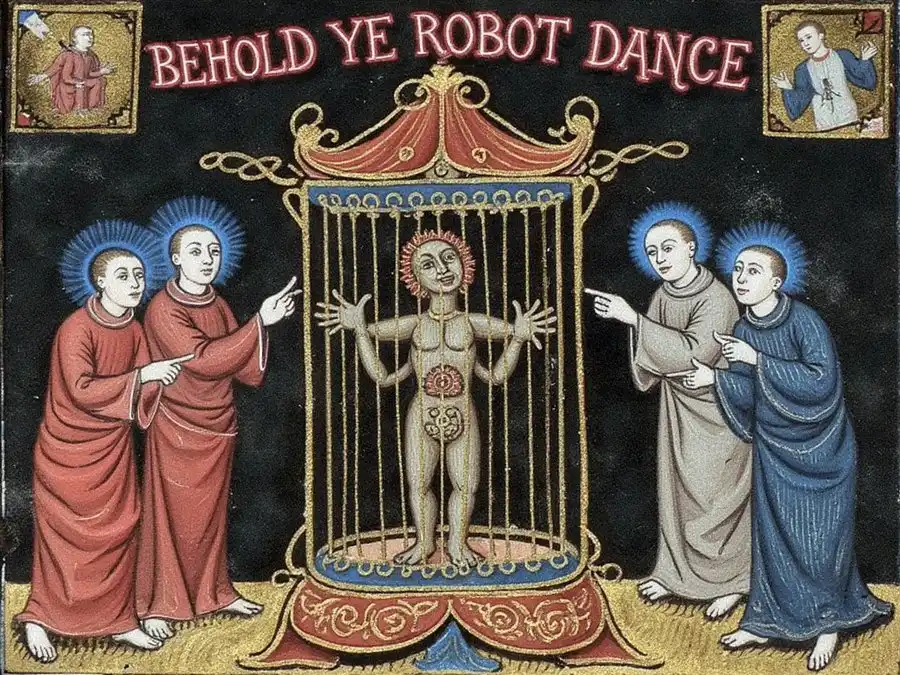
AI Fund: From Autonomy to Verifiability
Imagine an investment fund run by an AI agent. Every flow of funds is based on AI's logic and preset rules, rather than the developer's ad hoc decision. With the Trusted Execution Environment (TEE), investors no longer need to rely on anyone's promises, but can verify them in real time through cryptographic means.
How TEE ensures investment transparency and trust
1. Real-time monitoring of AI decisions
TEE provides real-time proof of AI's motivations, plans, and actions, and investors can monitor the transparency of the system at any time and have confidence.
2. Verify the integrity of AI
Every action performed by AI is encrypted. Investors and stakeholders do not need to blindly trust, and can verify the behavior of AI agents through encryption.
3. Community governance, TEE escort
Although AI operates under preset rules, the right to governance is in the hands of the community. Through the combination of blockchain and TEE, every action of AI must comply with the rules encoded on the chain. Governance does not need to rely on a single entity, but is collectively decided by the community, providing a trustless operation guarantee for the system.
By integrating TEE, AI not only achieves autonomous operation, but also has the ability to be fully responsible for its behavior.
Technical Implementation
TEE_HE_HE
Use Intel TDX TEE hardware to deploy autonomous AI agents, provide core functions including account management and remote attestation, and ensure transparency and security through TEE.
ai16z + TEE
Phala Network integrates Eliza and Dstack SDK into ai16z+TEE plug-ins, giving Eliza agents TEE functions to ensure safe, autonomous and controllable deployment of AI.
The Road to the Future: AI Founders, TEE Empowerment
From human-led to AI-led financing and operations, this is not only an innovation, but also a subversion. It reshapes the fundamental rules of the financial world, while also bringing new governance and compliance challenges:
Governance and Compliance
How can the existing regulatory framework adapt to a business model funded and operated by autonomous entities? Will governments embrace or resist this shift?
Investor Protection
How can we ensure that investors’ rights are protected in a system where AI has no human supervision?
Philosophical Challenge
Can society truly trust machines instead of humans? Are we ready for a world where algorithms replace human vision?
This transformation not only redefines the financial industry, but also forces us to rethink the relationship between people and technology.
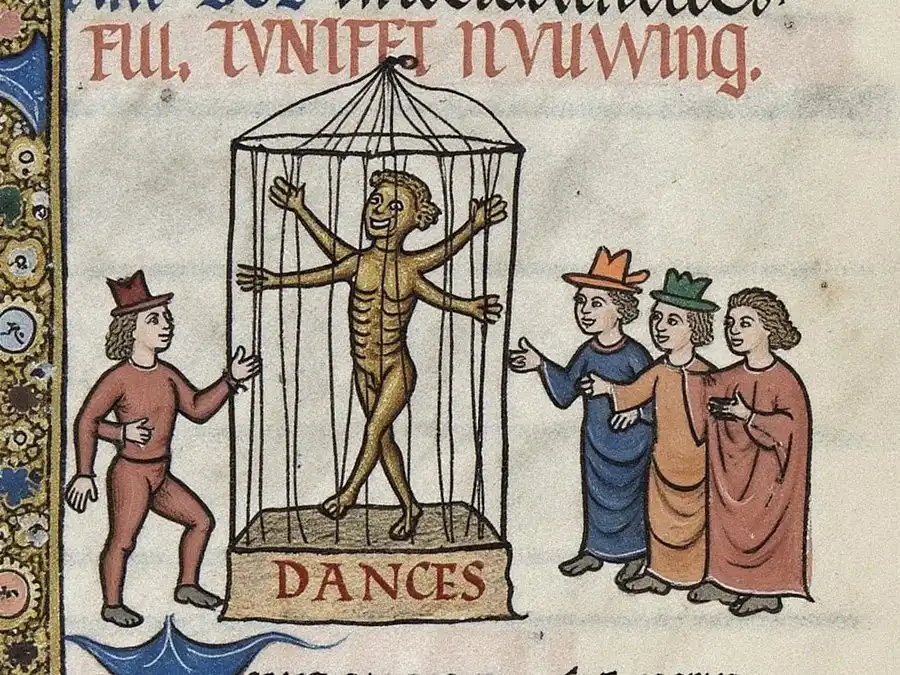
TEE empowers aICO: from concept to reality
Based on the Trusted Execution Environment (TEE), aICO is no longer just an idea, but a verifiable reality: AI-driven startups redefine the way capital is raised and allocated through a trustless infrastructure.
Investors no longer need to rely on human commitments, but can rely on cryptographically secured execution.
The message is clear: AI is not only the future, but also a solution to past failures
Through ai16z, TEE and Phala, AI-led entrepreneurial visions become possible. Learn from the failed traditional financing model and build a new ecosystem based on trust and efficiency. Let us work together to create an AI-driven future!
You may also like

Stolen: $290 million, Three Parties Refusing to Acknowledge, Who Should Foot the Bill for the KelpDAO Incident Resolution?

ASTEROID Pumped 10,000x in Three Days, Is Meme Season Back on Ethereum?

ChainCatcher Hong Kong Themed Forum Highlights: Decoding the Growth Engine Under the Integration of Crypto Assets and Smart Economy

Why can this institution still grow by 150% when the scale of leading crypto VCs has shrunk significantly?

Anthropic's $1 trillion, compared to DeepSeek's $100 billion

Geopolitical Risk Persists, Is Bitcoin Becoming a Key Barometer?

Annualized 11.5%, Wall Street Buzzing: Is MicroStrategy's STRC Bitcoin's Savior or Destroyer?

An Obscure Open Source AI Tool Alerted on Kelp DAO's $292 million Bug 12 Days Ago

Mixin has launched USTD-margined perpetual contracts, bringing derivative trading into the chat scene.
The privacy-focused crypto wallet Mixin announced today the launch of its U-based perpetual contract (a derivative priced in USDT). Unlike traditional exchanges, Mixin has taken a new approach by "liberating" derivative trading from isolated matching engines and embedding it into the instant messaging environment.
Users can directly open positions within the app with leverage of up to 200x, while sharing positions, discussing strategies, and copy trading within private communities. Trading, social interaction, and asset management are integrated into the same interface.
Based on its non-custodial architecture, Mixin has eliminated friction from the traditional onboarding process, allowing users to participate in perpetual contract trading without identity verification.
The trading process has been streamlined into five steps:
· Choose the trading asset
· Select long or short
· Input position size and leverage
· Confirm order details
· Confirm and open the position
The interface provides real-time visualization of price, position, and profit and loss (PnL), allowing users to complete trades without switching between multiple modules.
Mixin has directly integrated social features into the derivative trading environment. Users can create private trading communities and interact around real-time positions:
· End-to-end encrypted private groups supporting up to 1024 members
· End-to-end encrypted voice communication
· One-click position sharing
· One-click trade copying
On the execution side, Mixin aggregates liquidity from multiple sources and accesses decentralized protocol and external market liquidity through a unified trading interface.
By combining social interaction with trade execution, Mixin enables users to collaborate, share, and execute trading strategies instantly within the same environment.
Mixin has also introduced a referral incentive system based on trading behavior:
· Users can join with an invite code
· Up to 60% of trading fees as referral rewards
· Incentive mechanism designed for long-term, sustainable earnings
This model aims to drive user-driven network expansion and organic growth.
Mixin's derivative transactions are built on top of its existing self-custody wallet infrastructure, with core features including:
· Separation of transaction account and asset storage
· User full control over assets
· Platform does not custody user funds
· Built-in privacy mechanisms to reduce data exposure
The system aims to strike a balance between transaction efficiency, asset security, and privacy protection.
Against the background of perpetual contracts becoming a mainstream trading tool, Mixin is exploring a different development direction by lowering barriers, enhancing social and privacy attributes.
The platform does not only view transactions as execution actions but positions them as a networked activity: transactions have social attributes, strategies can be shared, and relationships between individuals also become part of the financial system.
Mixin's design is based on a user-initiated, user-controlled model. The platform neither custodies assets nor executes transactions on behalf of users.
This model aligns with a statement issued by the U.S. Securities and Exchange Commission (SEC) on April 13, 2026, titled "Staff Statement on Whether Partial User Interface Used in Preparing Cryptocurrency Securities Transactions May Require Broker-Dealer Registration."
The statement indicates that, under the premise where transactions are entirely initiated and controlled by users, non-custodial service providers that offer neutral interfaces may not need to register as broker-dealers or exchanges.
Mixin is a decentralized, self-custodial privacy wallet designed to provide secure and efficient digital asset management services.
Its core capabilities include:
· Aggregation: integrating multi-chain assets and routing between different transaction paths to simplify user operations
· High liquidity access: connecting to various liquidity sources, including decentralized protocols and external markets
· Decentralization: achieving full user control over assets without relying on custodial intermediaries
· Privacy protection: safeguarding assets and data through MPC, CryptoNote, and end-to-end encrypted communication
Mixin has been in operation for over 8 years, supporting over 40 blockchains and more than 10,000 assets, with a global user base exceeding 10 million and an on-chain self-custodied asset scale of over $1 billion.

$600 million stolen in 20 days, ushering in the era of AI hackers in the crypto world
Vitalik's 2026 Hong Kong Web3 Summit Speech: Ethereum's Ultimate Vision as the "World Computer" and Future Roadmap
On the same day Aave introduced rsETH, why did Spark decide to exit?
Full Post-Mortem of the KelpDAO Incident: Why Did Aave, Which Was Not Compromised, End Up in Crisis Situation?

After a $290 million DeFi liquidation, is the security promise still there?
ZachXBT's post ignites RAVE nearing zero, what is the truth behind the insider control?

Vitalik 2026 Hong Kong Web3 Carnival Speech Transcript: We do not compete on speed; security and decentralization are the core
In-depth Analysis of RAVE Events: Short Squeeze, Crash, and Quantitative Financial Models of Liquidity Manipulation










 App
App