
 Buy Crypto
- Markets
 Futures
- Spot
- Copy Trade
- Earn
- More
Electric Capital 2024 Developer Report: The industry is growing at an average annual rate of 39%; Asia becomes the continent with the highest proportion of developers

Original author: Maria, Electric Capital
Original translation: 1912212.eth, Foresight News
Since its inception, 829 people have participated in the production of the sixth annual ElectricCapital Developer Report. We analyzed a record 902 million code commits, covering 1.7 million code bases.
How does the crypto industry data perform in 2024?
Key points summary:
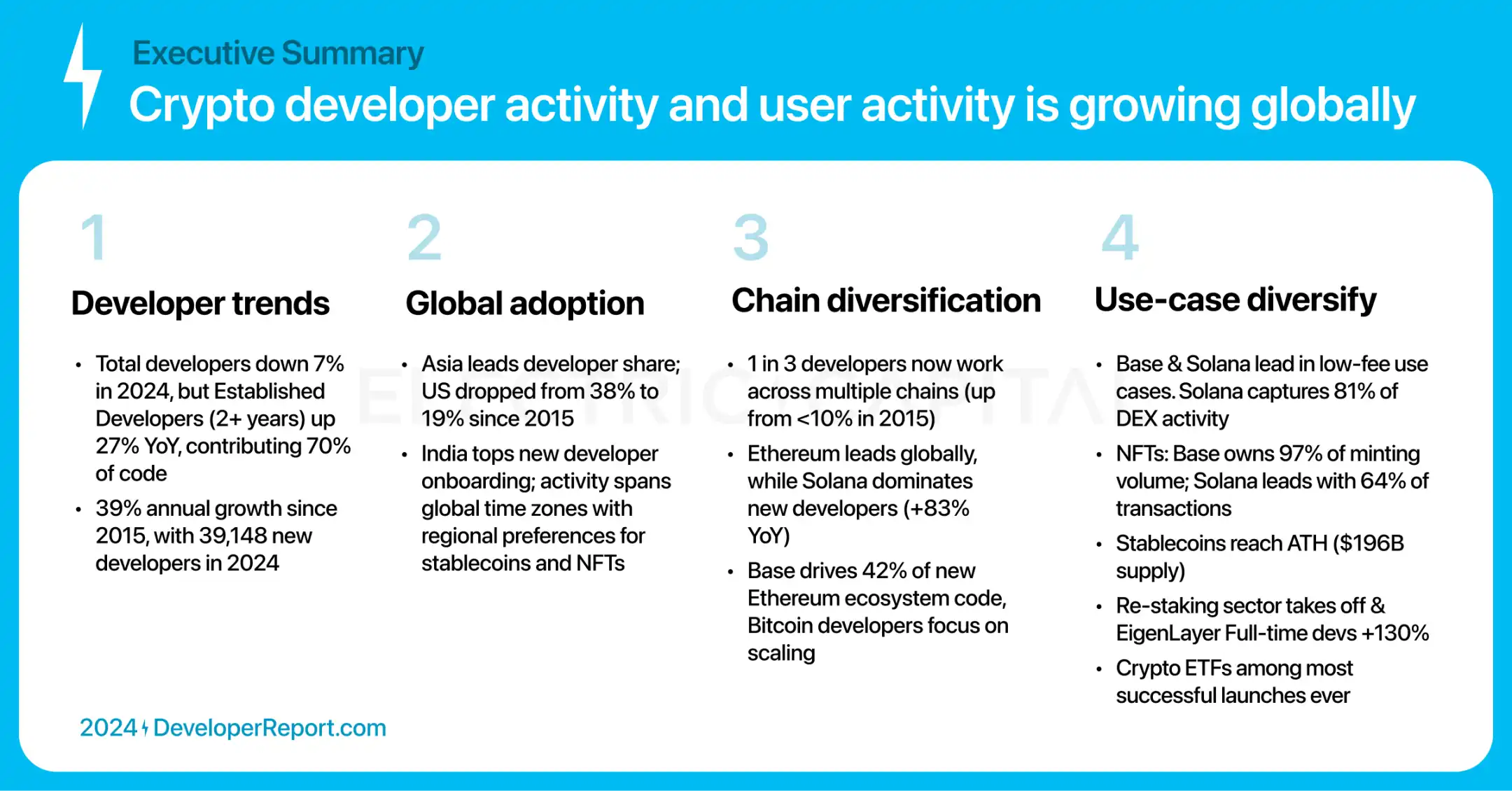
· The crypto industry is global, and developer momentum has shifted from North America to other regions.
· Developers and use cases are diversifying across different ecosystems.
· Applications cover all time zones, indicating widespread adoption around the world.
We underestimate the number of developers in crypto because our count focuses only on open source development activity.
Our methodology includes:
· Merge developer profiles into a single, standard identity.
· Identify and exclude bot accounts.
· Remove codebases that do not reflect development activity, such as data lists.
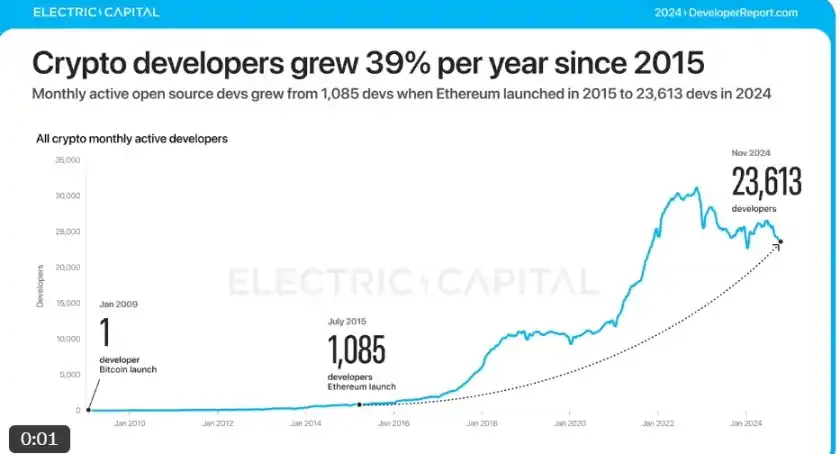
Since Ethereum launched in 2015, the crypto industry has grown at an average annual rate of 39%. In 2015, there were about 1,000 monthly active developers. Today: 23,613 monthly active developers.
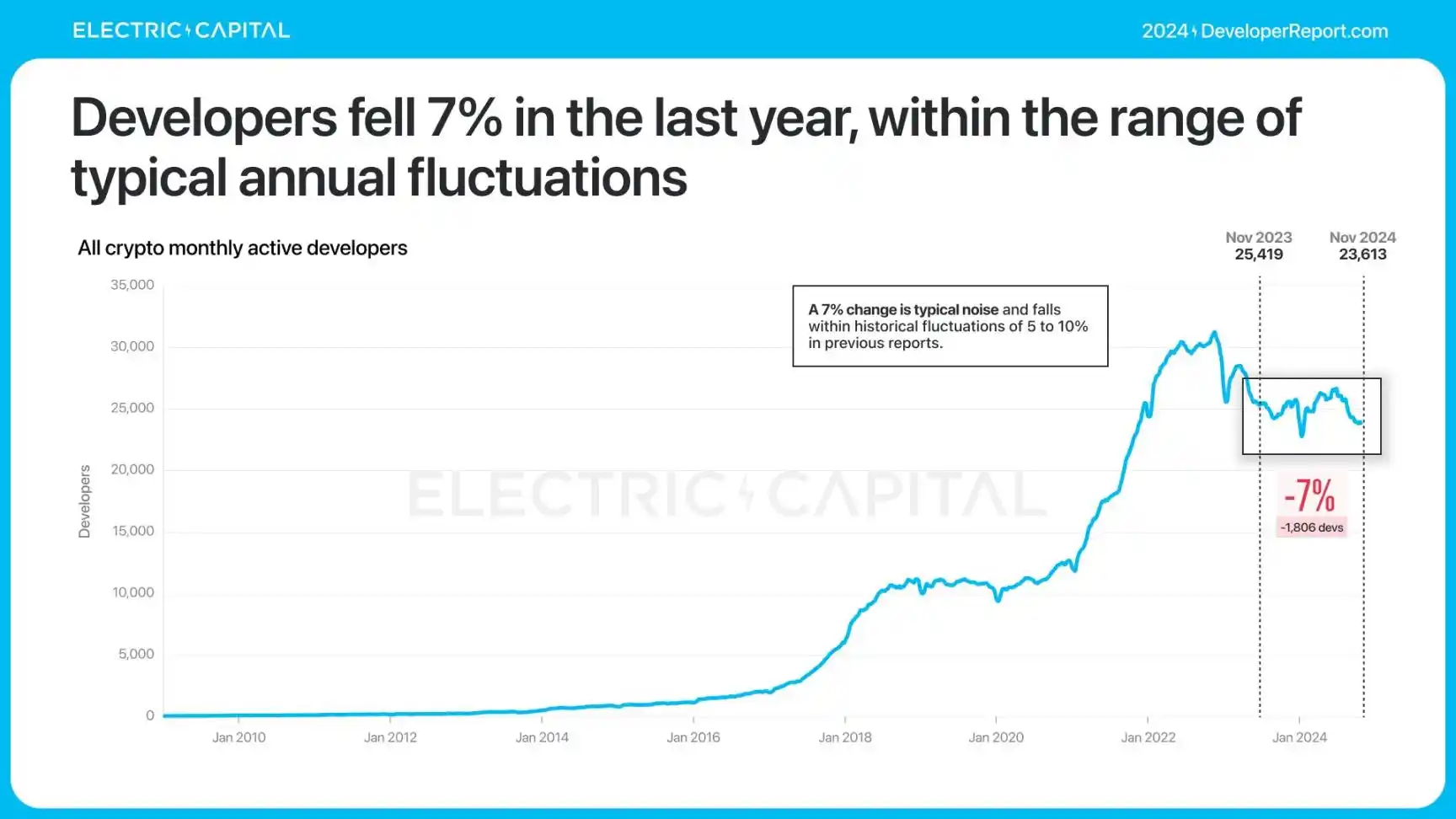
The number of monthly active developers has slightly decreased by 7% over the past year.
However, the number of developers who have been working in crypto for more than two years has grown by 27%.
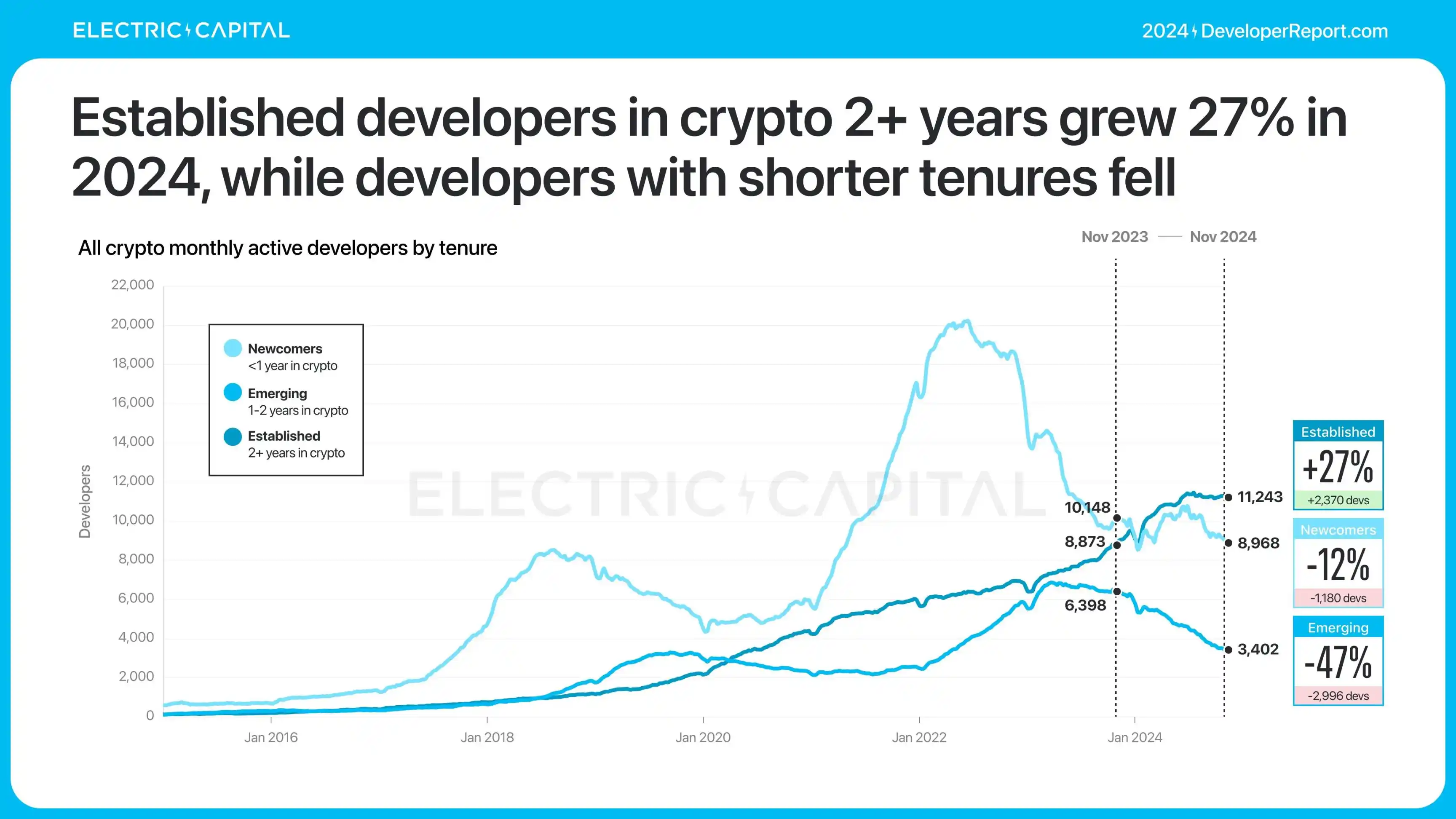
These experienced developers drive the industry forward as they contribute 70% of code commits.
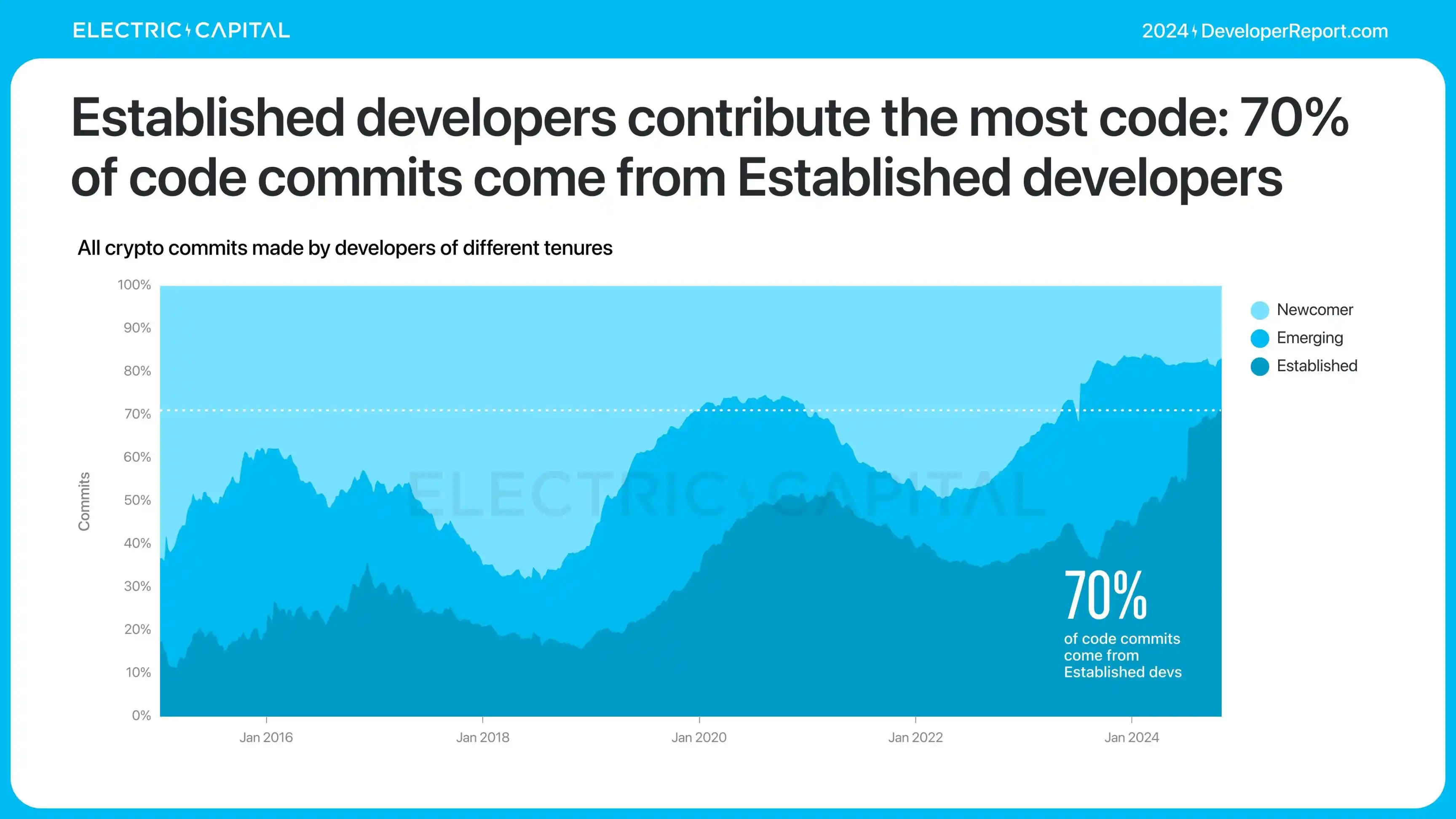
How has the crypto industry changed since 2015? Let’s take a look at the global diversity of crypto developers.
The center of gravity of developer distribution shifted from the United States and Europe at 82% to the rest of the world.
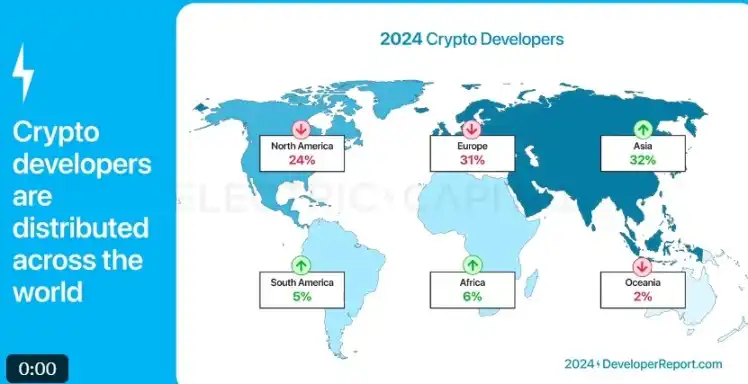
Asia is now the continent with the highest developer share, with one in three crypto developers living in Asia. Europe is second. North America has dropped from first to third since 2015.
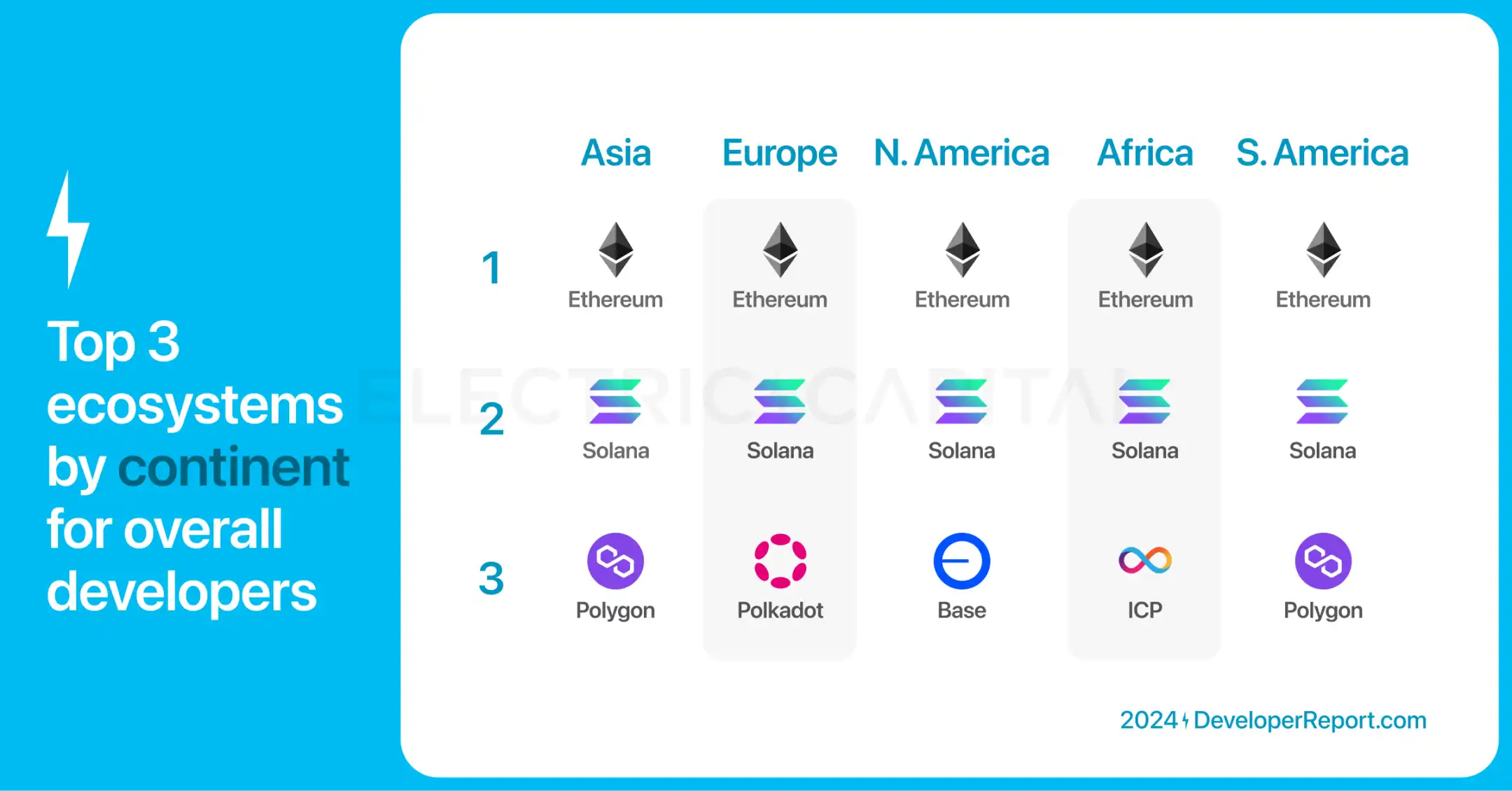
We can identify the top ecosystems on these continents by developer share.
Ethereum is the top ecosystem in every major continent by developer share.
· Solana is second.
· Polygon is third in Asia and South America.
· Polkadot is third in Europe.
· Base is third in North America.
· dfinity is third in Africa.
The United States, India, the United Kingdom, China, and Canada account for the largest share of global crypto developers.
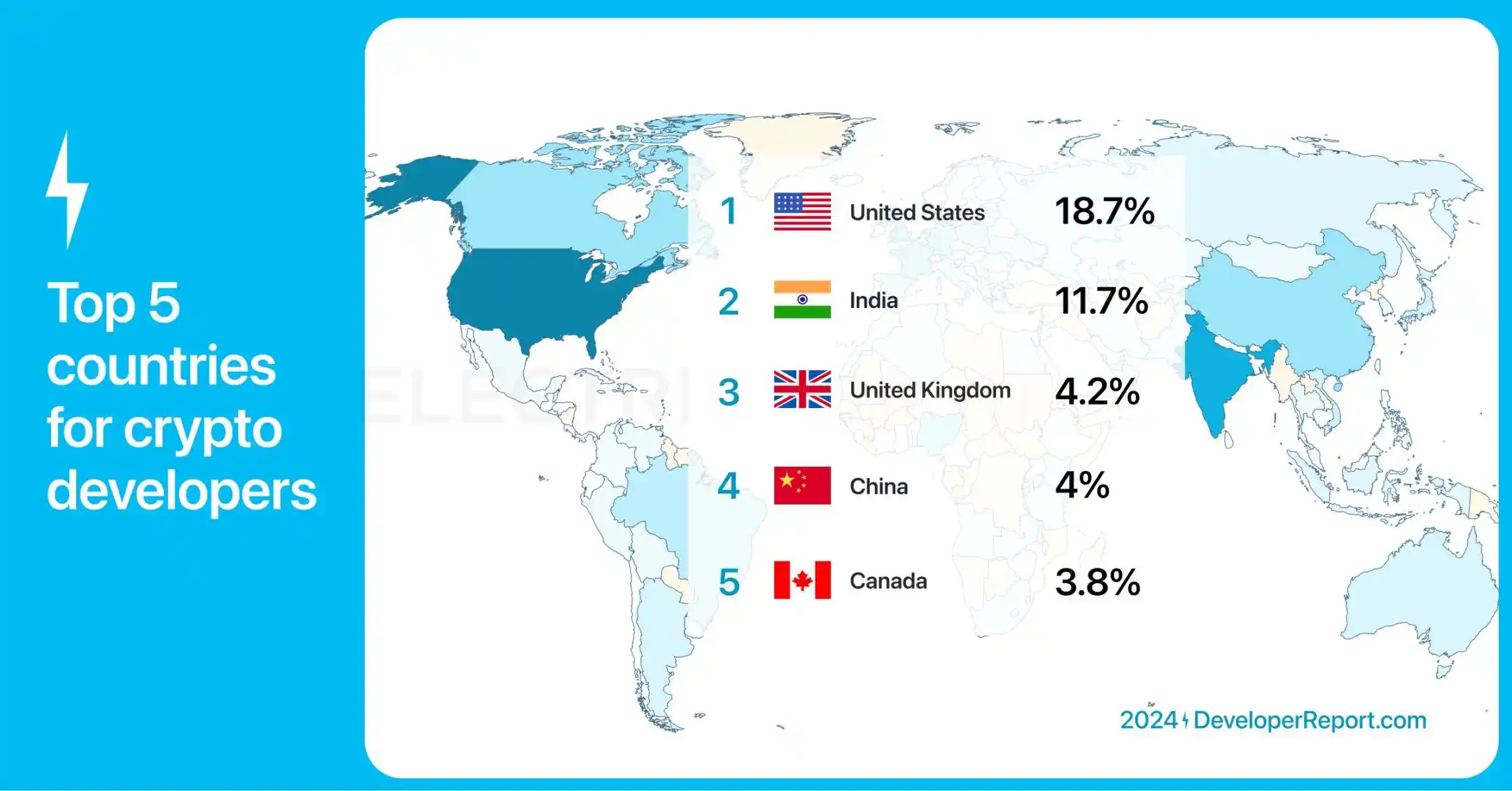
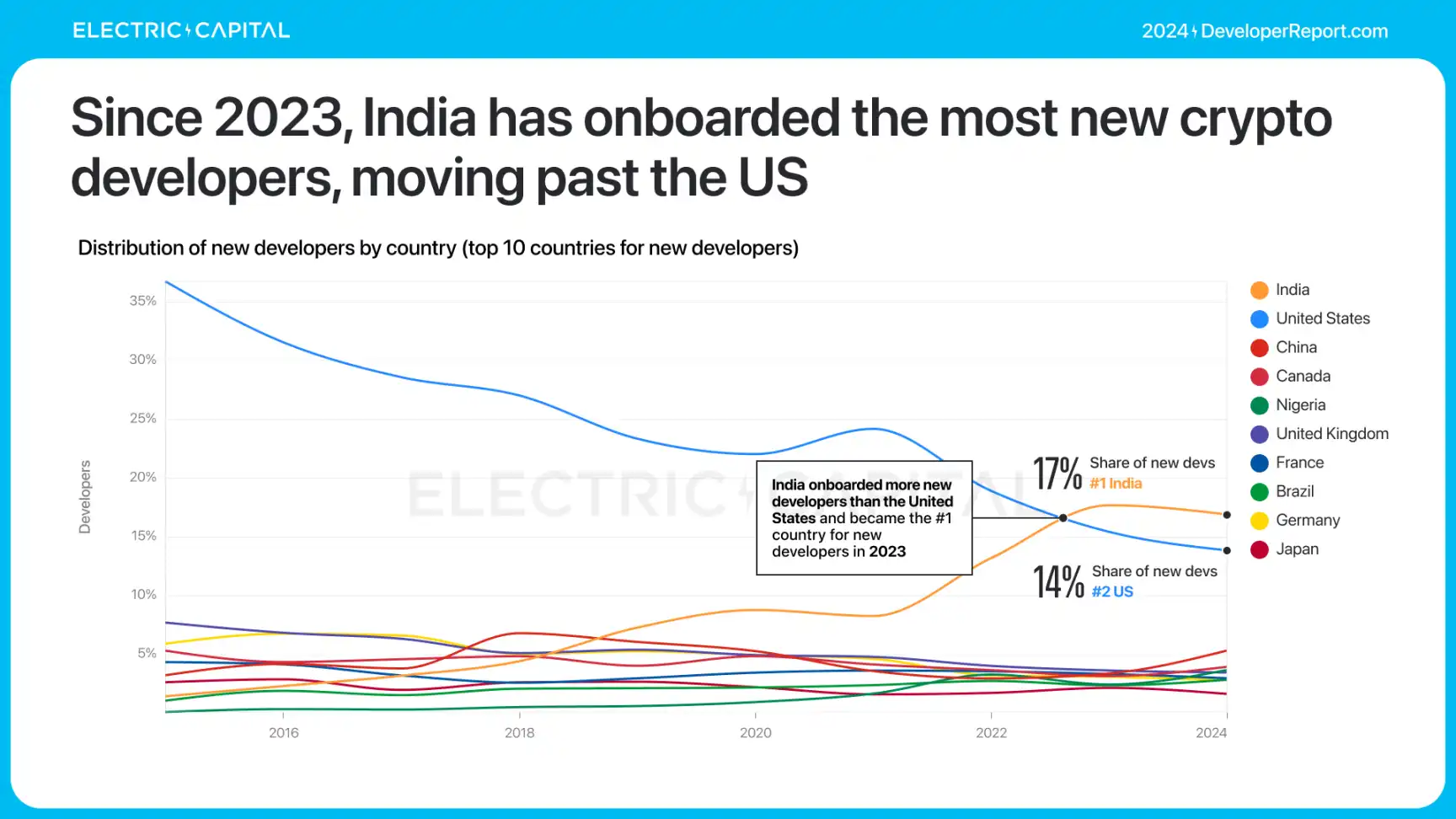
The United States remains the country with the highest share of crypto developers, but has continued to decline since 2015. India rose from 10th to second place.
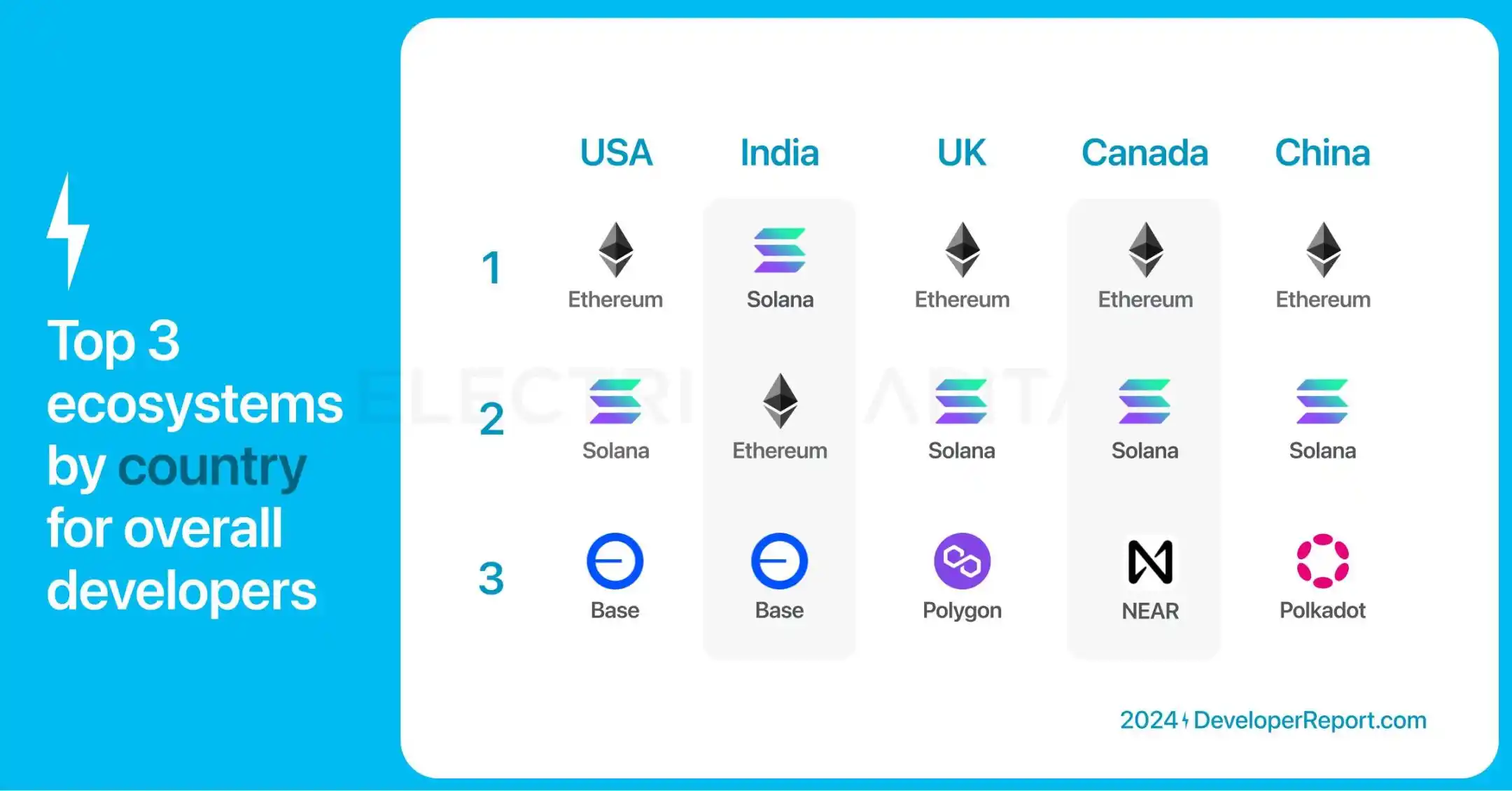
The top three ecosystem developer share by country:
· Ethereum ranks first in the United States, the United Kingdom, China, and Canada, and ranks second in India.
· Solana ranks first in India and second everywhere else.
· Base ranks third in the United States and India.
· Polygon ranks third in the United Kingdom.
· NEAR Protocol ranks third in Canada.
· Polkadot ranks third in China.
India saw the highest number of new crypto developers in 2024. 17% of new crypto developers are from India.
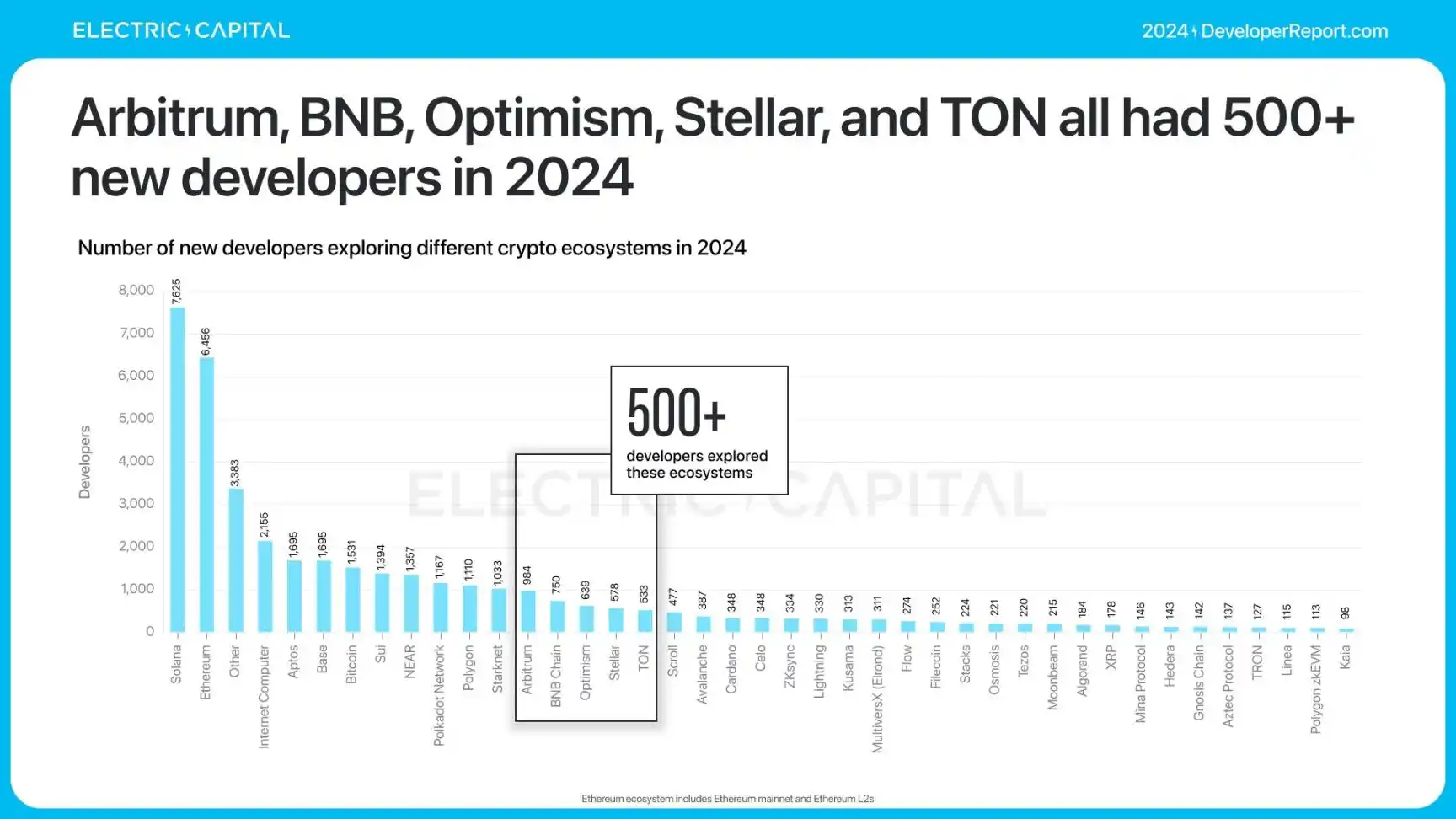
Let’s focus on new developers – a total of 39,148 new developers explored crypto in 2024. We can break these new developers down by ecosystem.
Solana became the ecosystem with the highest number of new monthly developers joining in July 2024.
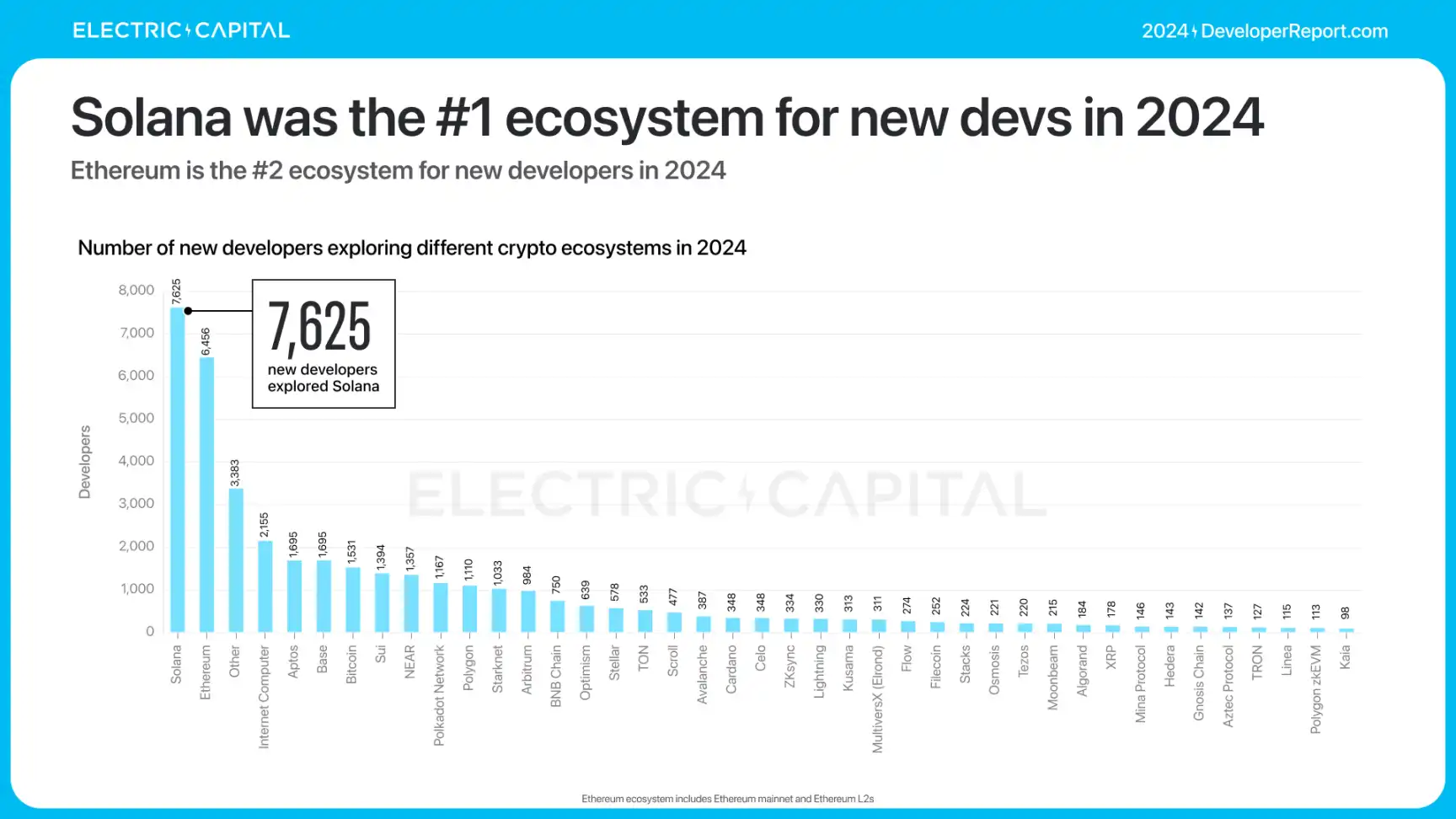
Overall New Developers in 2024:
Solana is the ecosystem with the most new developers, ranking first.
Ethereum is second. dfinity, Aptos, Base, Bitcoin, SuiNetwork, NEAR Protocol, Polkadot, Polygon, and Starknet all have more than 1,000 new developers.
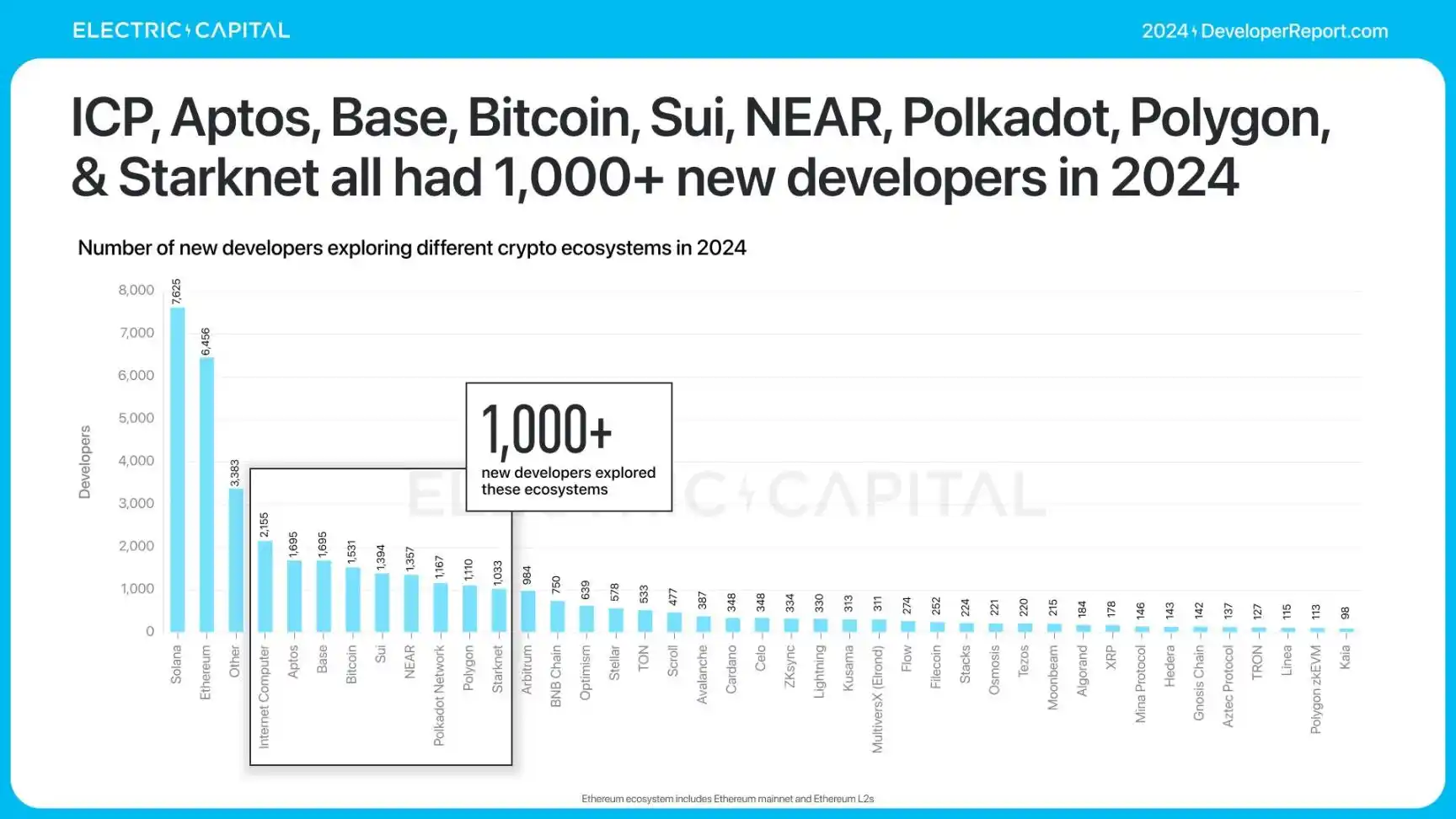
arbitrum, BNBCHAIN, Optimism, StellarOrg, and ton_blockchain all have more than 500 new developers.
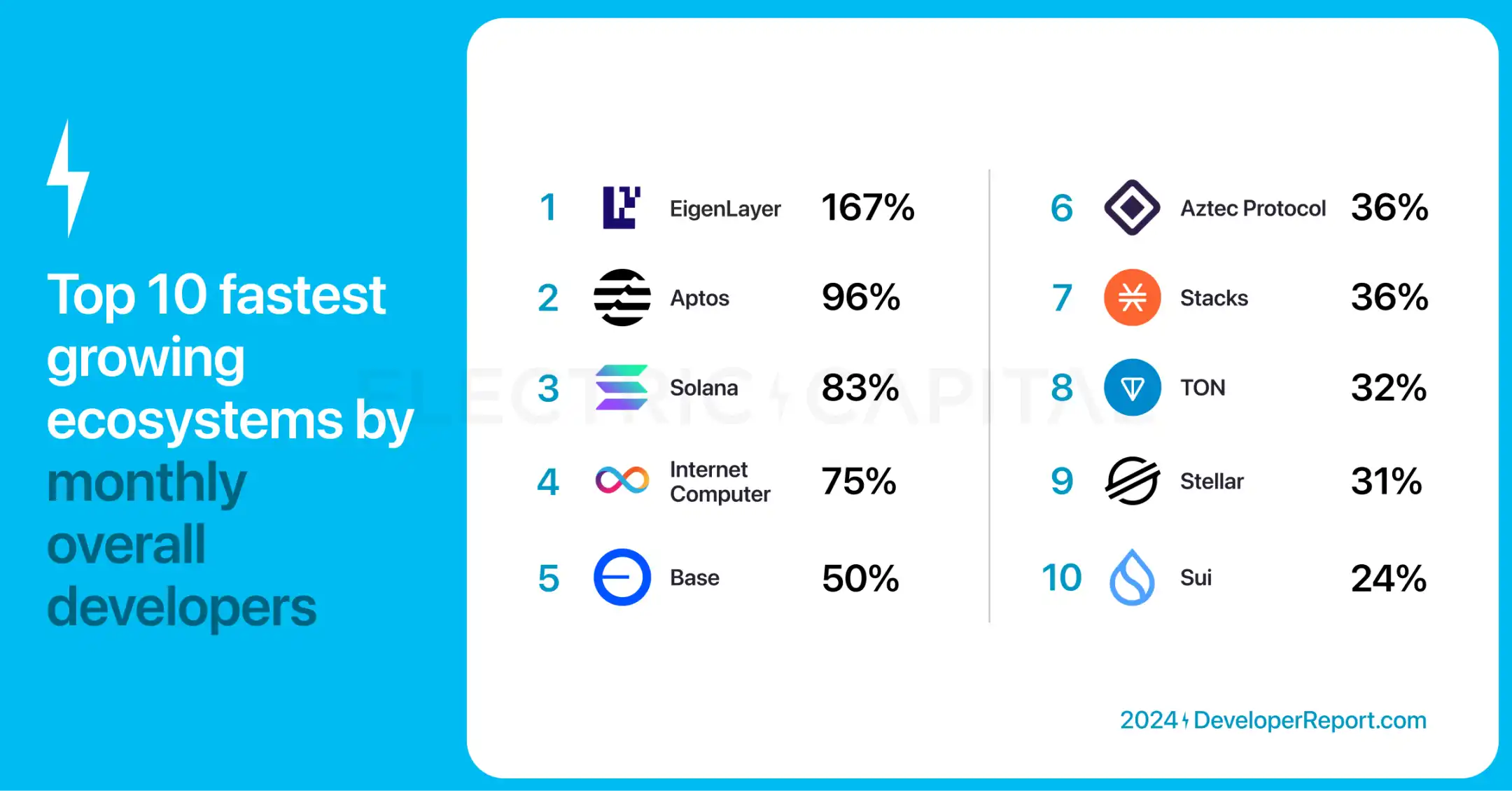
Who is growing the fastest in total number of developers? The total number of developers reflects the interest of new developers and hackathon participants.
Based on data from Q3 2023 and Q4 2024, the top 10 fastest growing ecosystems by total developer count are:
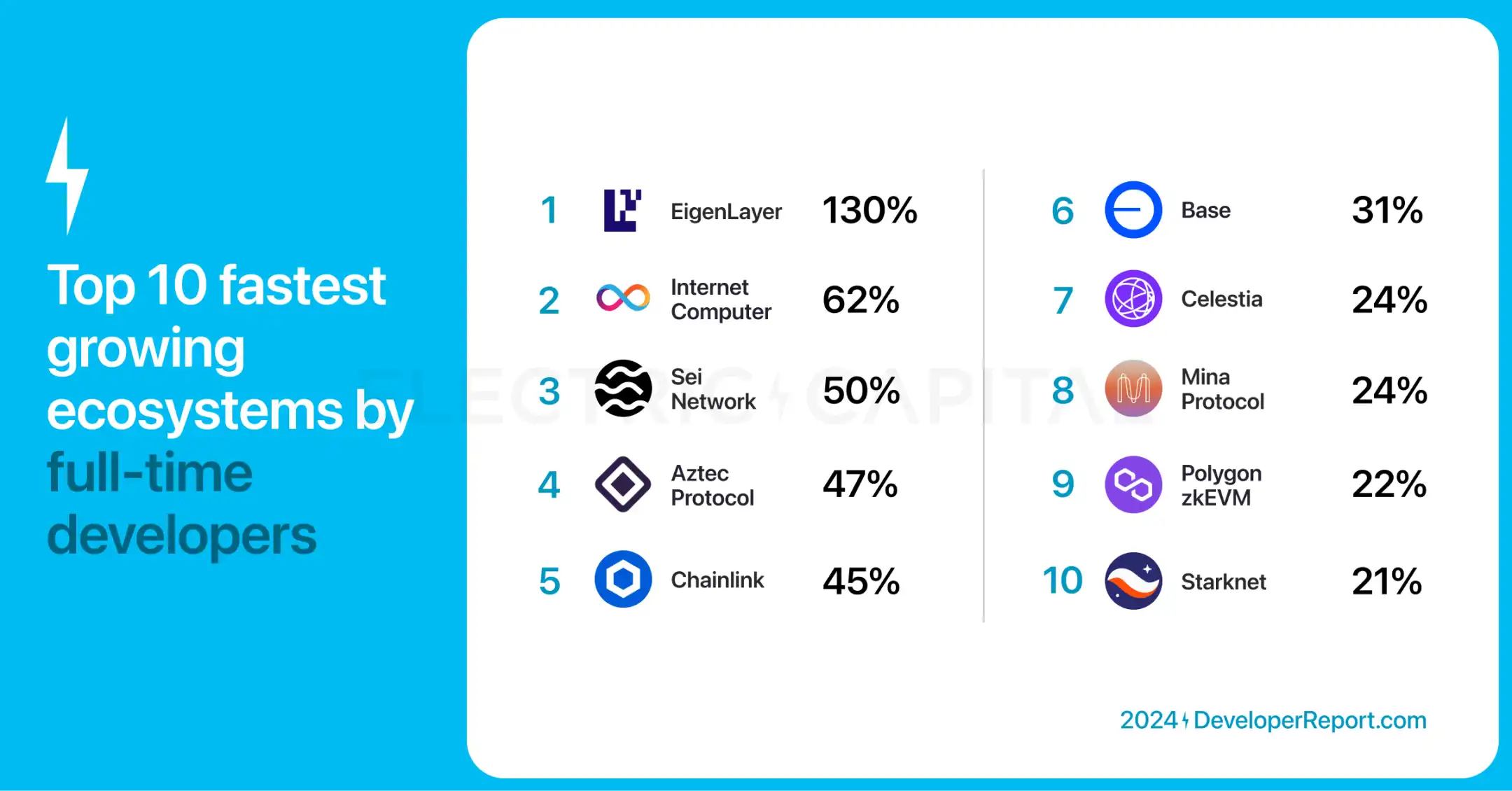
Who is growing fastest in full-time developers? Full-time developers commit code more than 10 days per month, so they contribute a steady amount of work to the ecosystem.
Based on data from Q3 2023 and Q4 2024, the top 10 fastest growing ecosystems by full-time developers are:
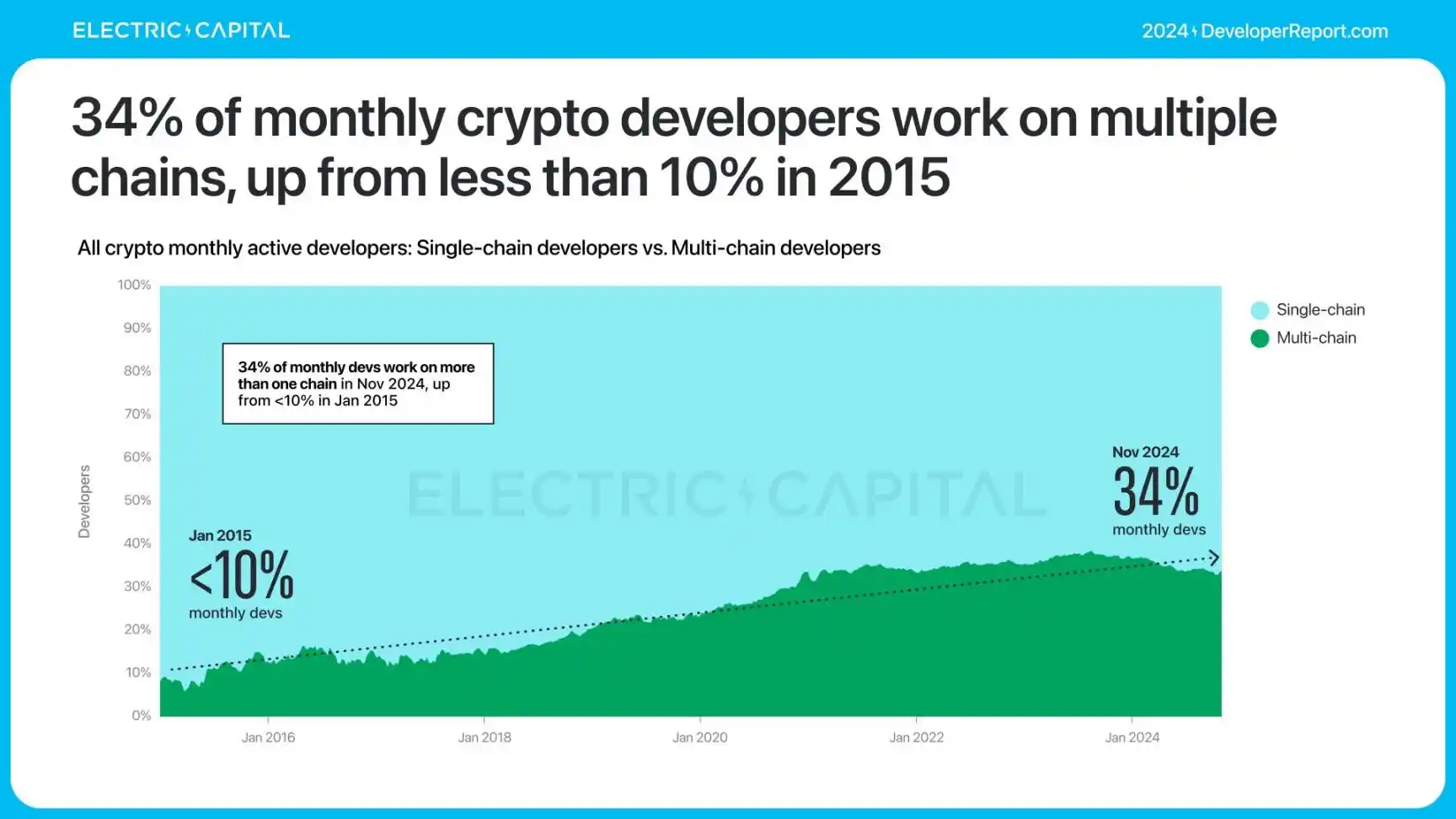
Many developers are active on multiple chains - One in three crypto developers now works on multiple chains, and this trend is growing. Monthly active multichain developers increased from less than 10% in 2015 to 34% in 2024.
Chains with the most multichain developers share developer resources with Ethereum.
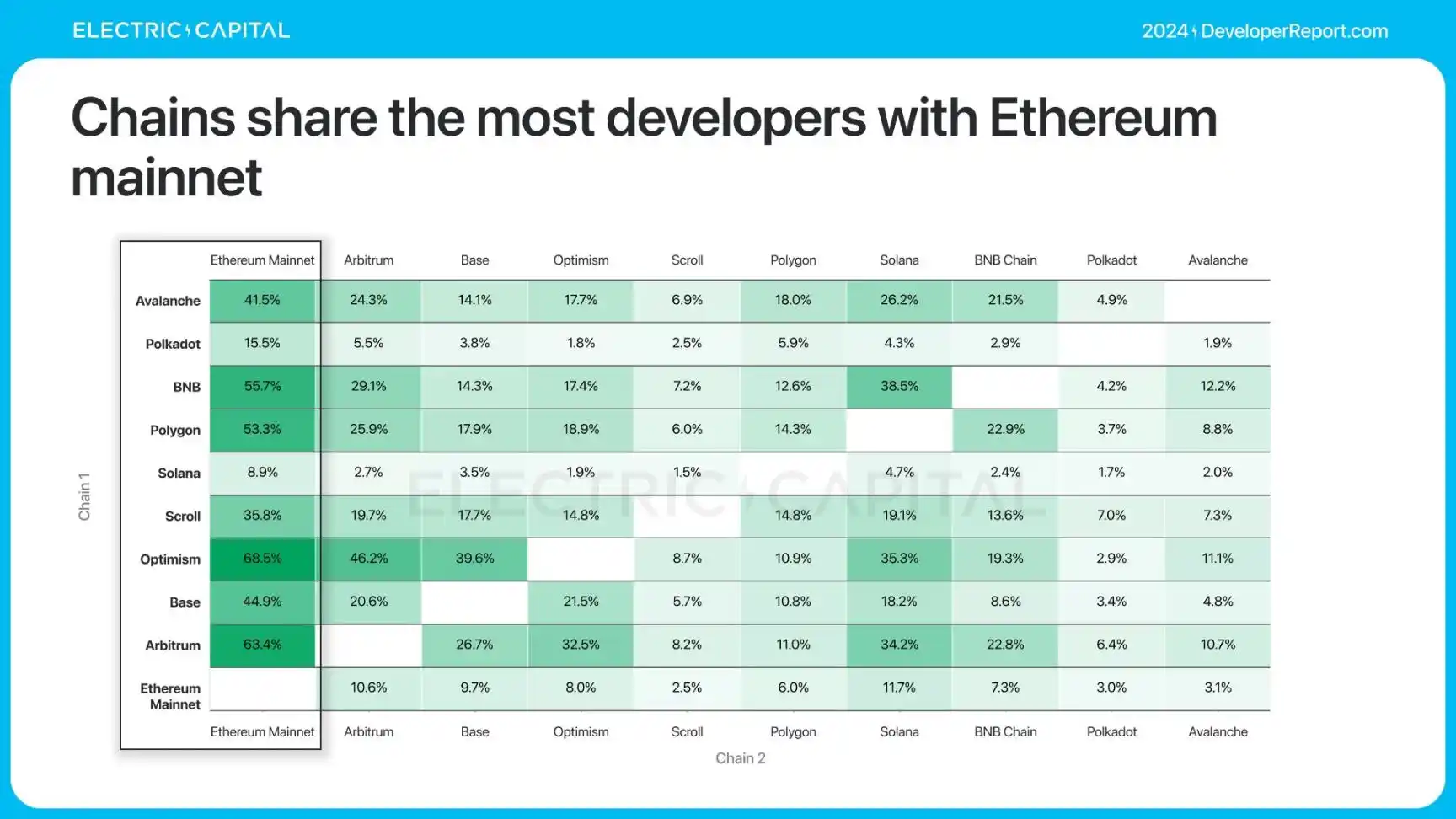
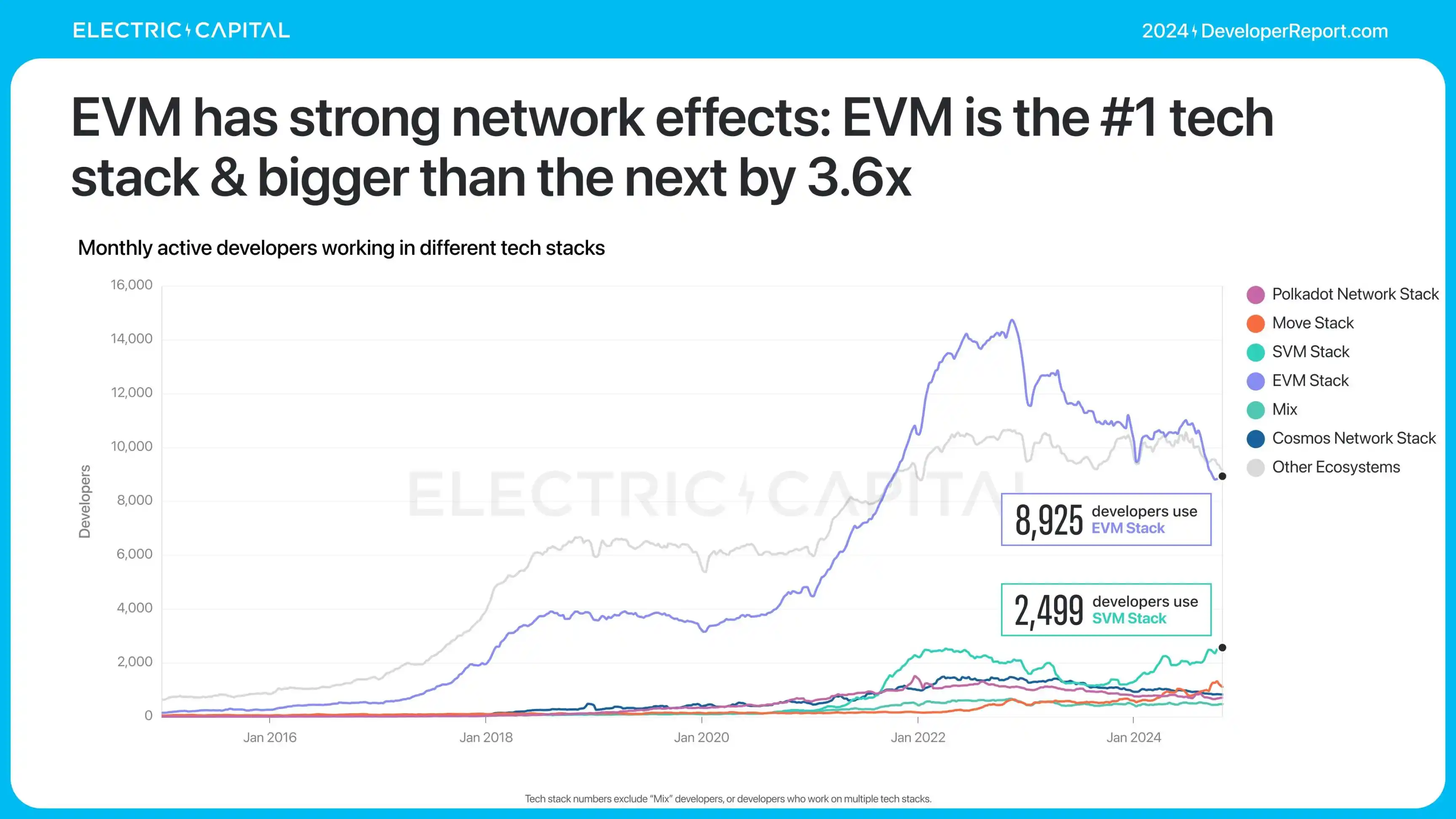
EVM chains share the most developers and have significant network effects: 74% of multichain developers work on EVM chains.
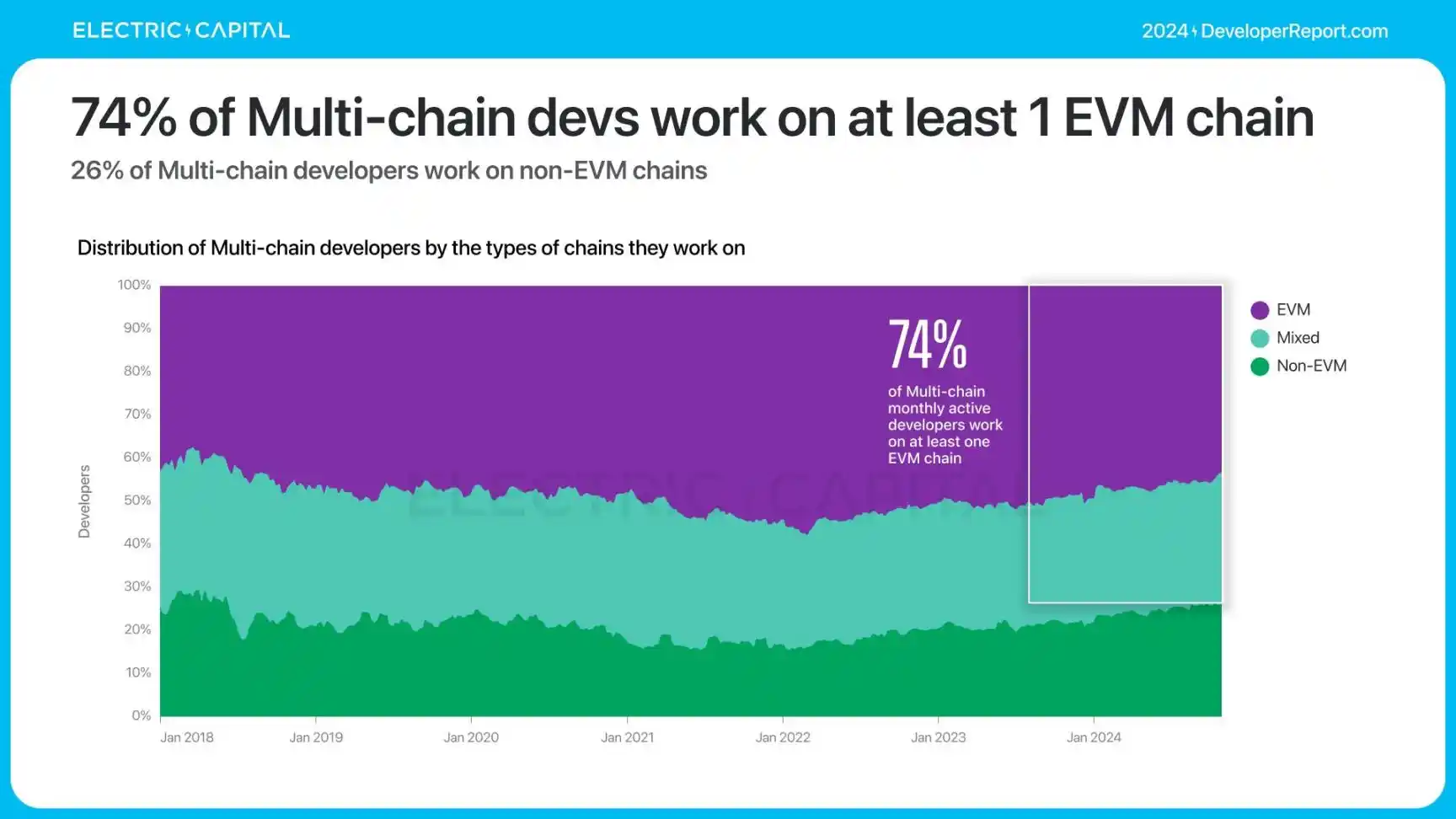
The percentage of EVM cross-chain deployers has grown 4x since 2021.
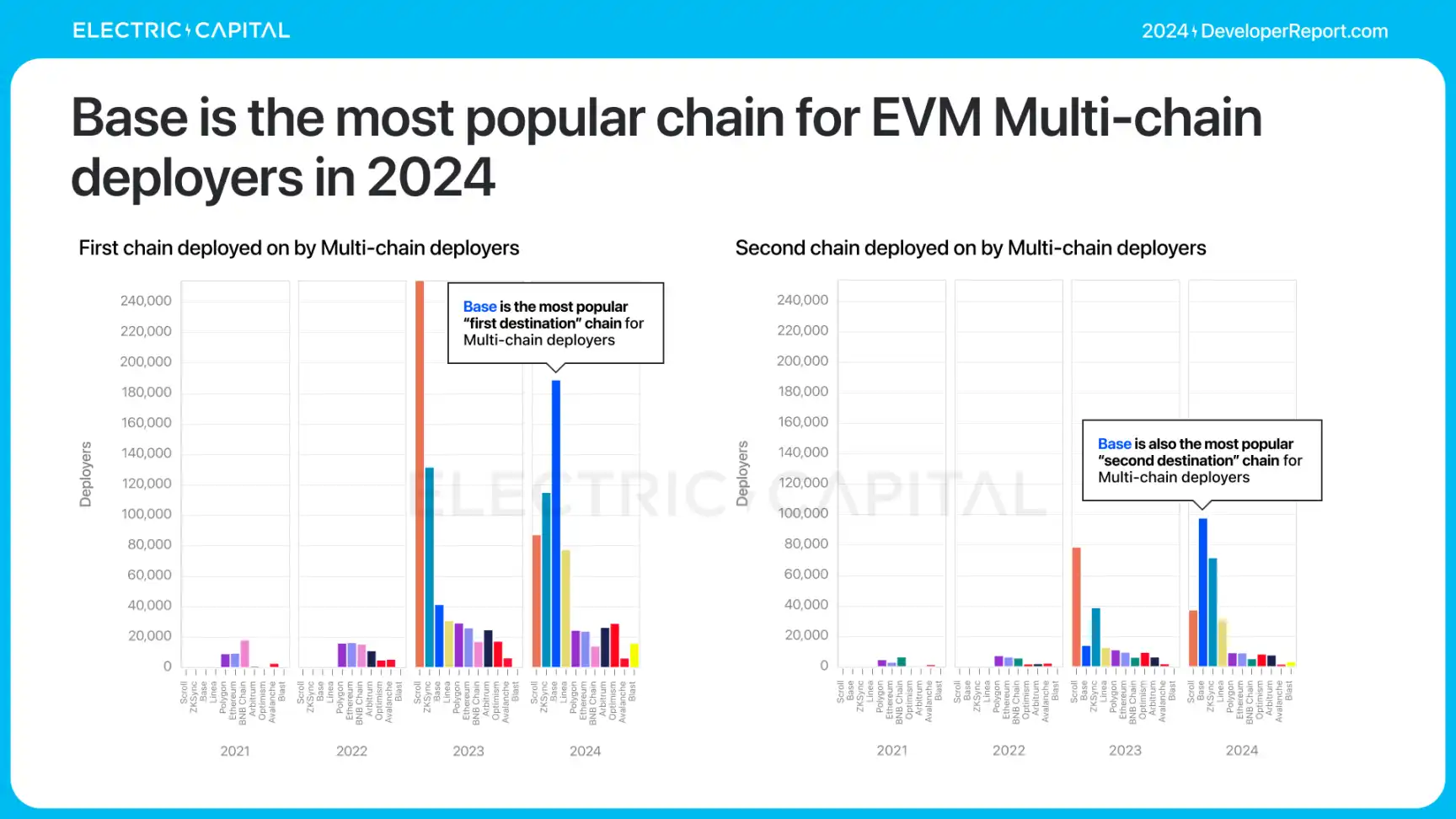
Base is the most popular chain for EVM multi-chain deployers in 2024, but Base deployers tend to stay on the Base chain.
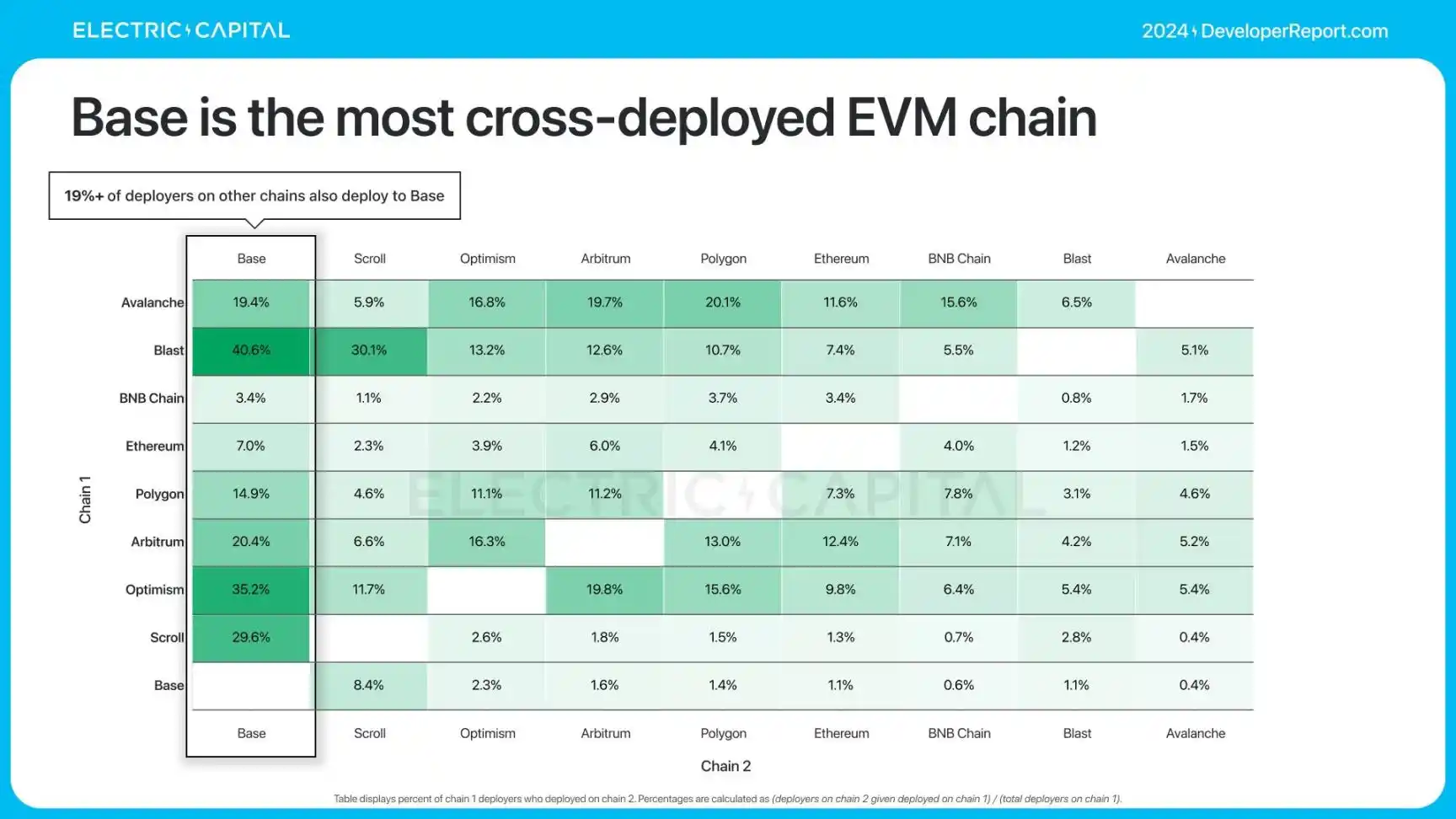
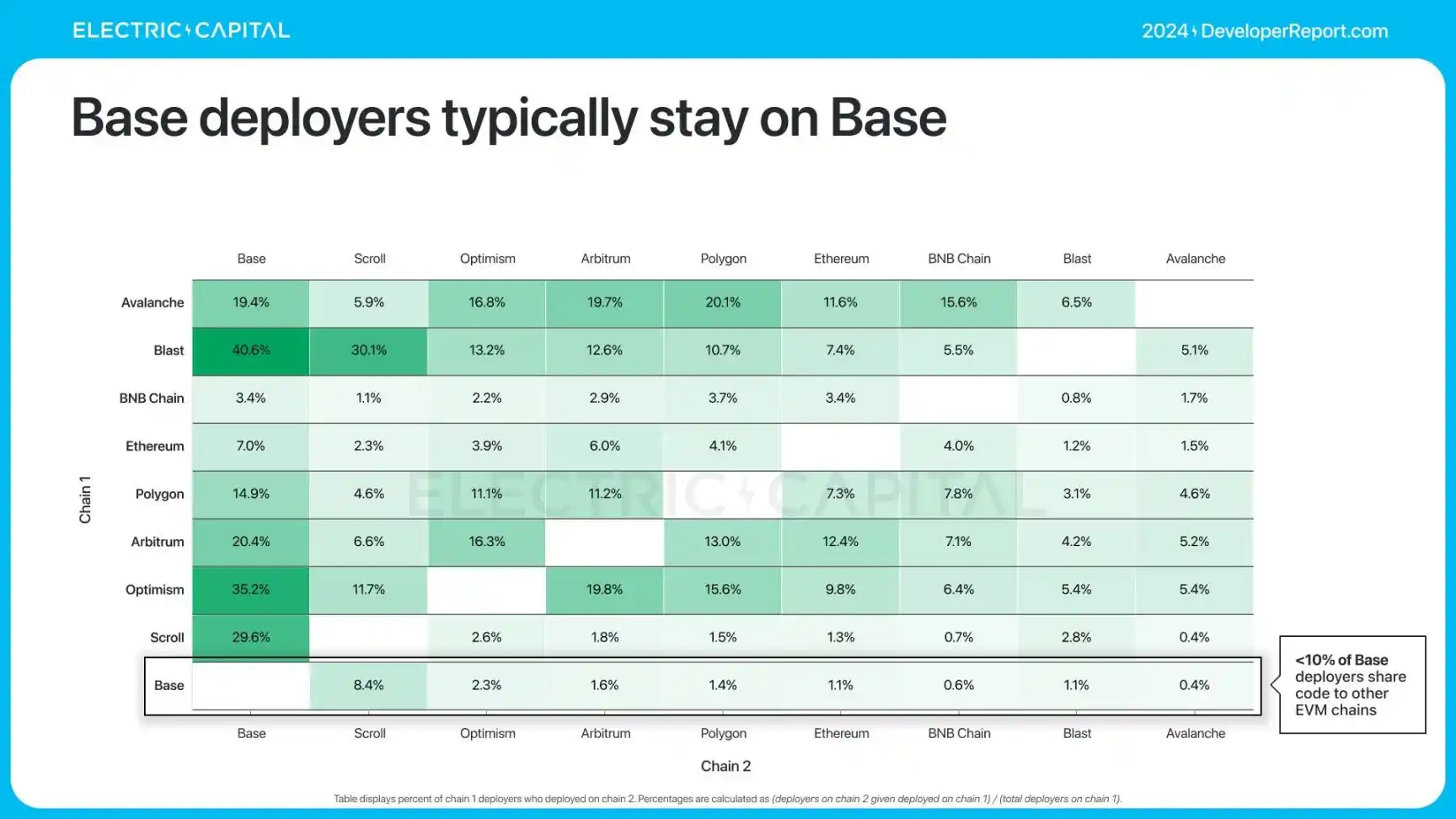
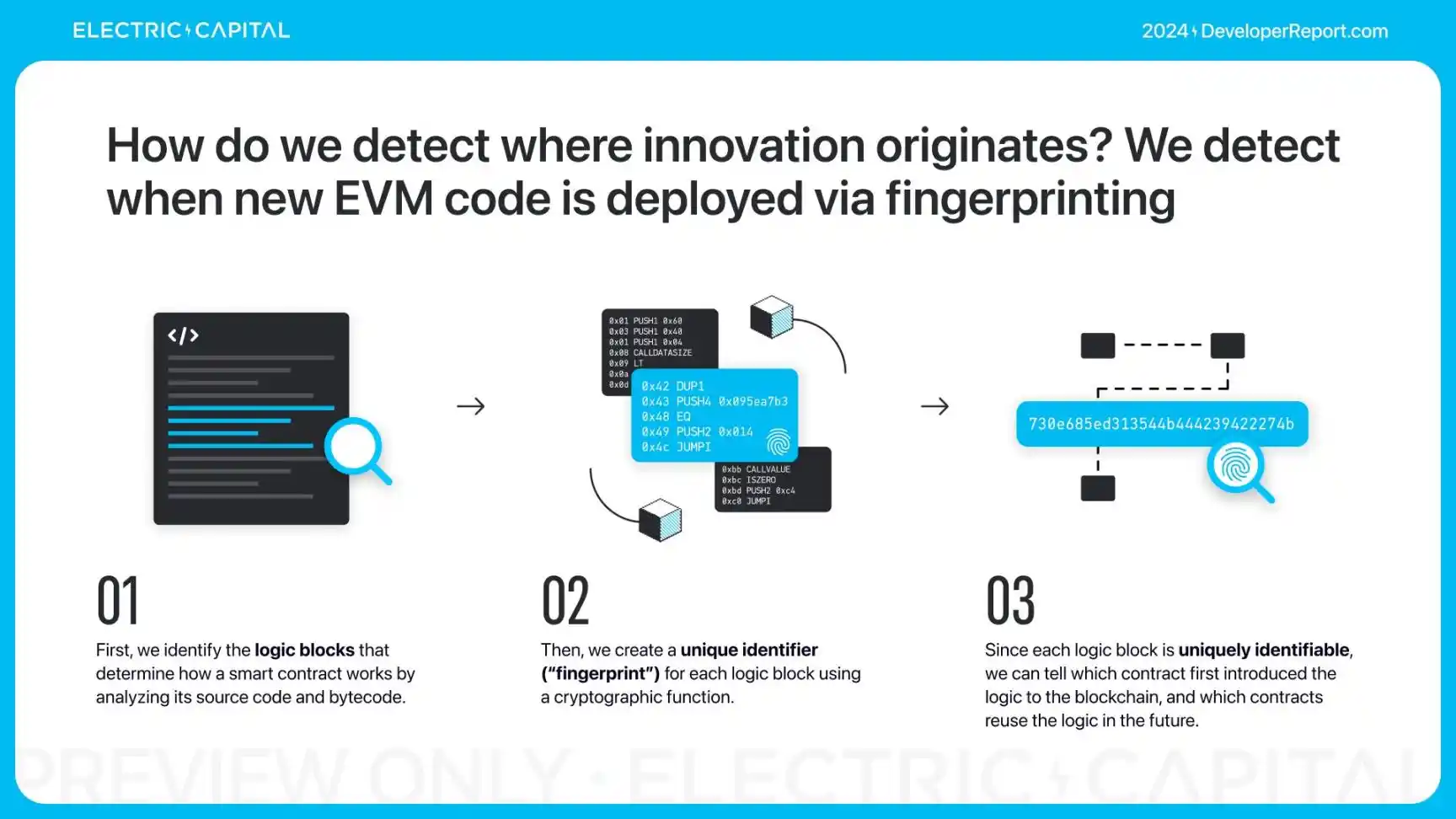
Since deployers publish code to multiple chains, where is most of the original code written?
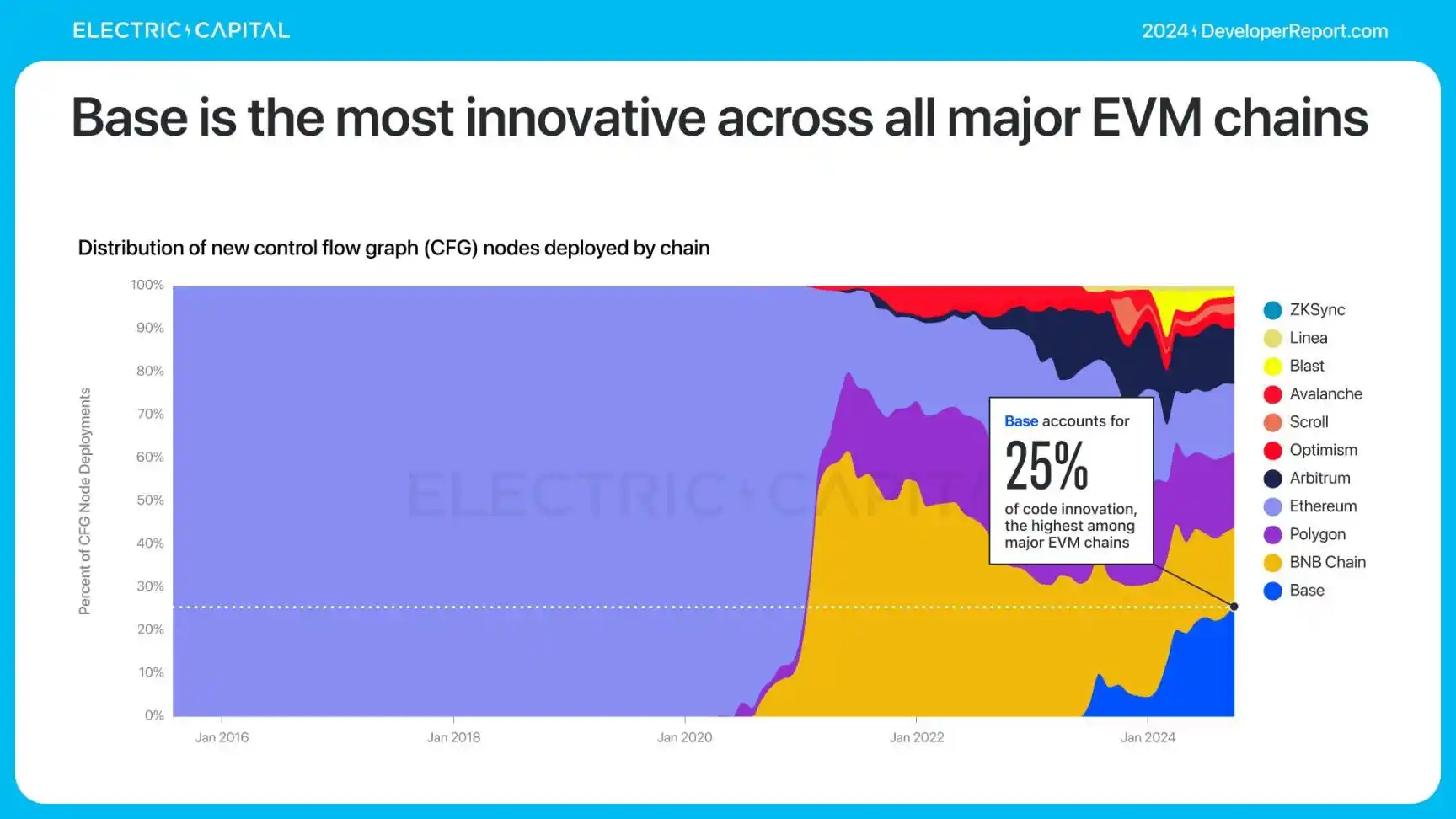
Before 2020, almost all original on-chain code logic on the EVM was on Ethereum.
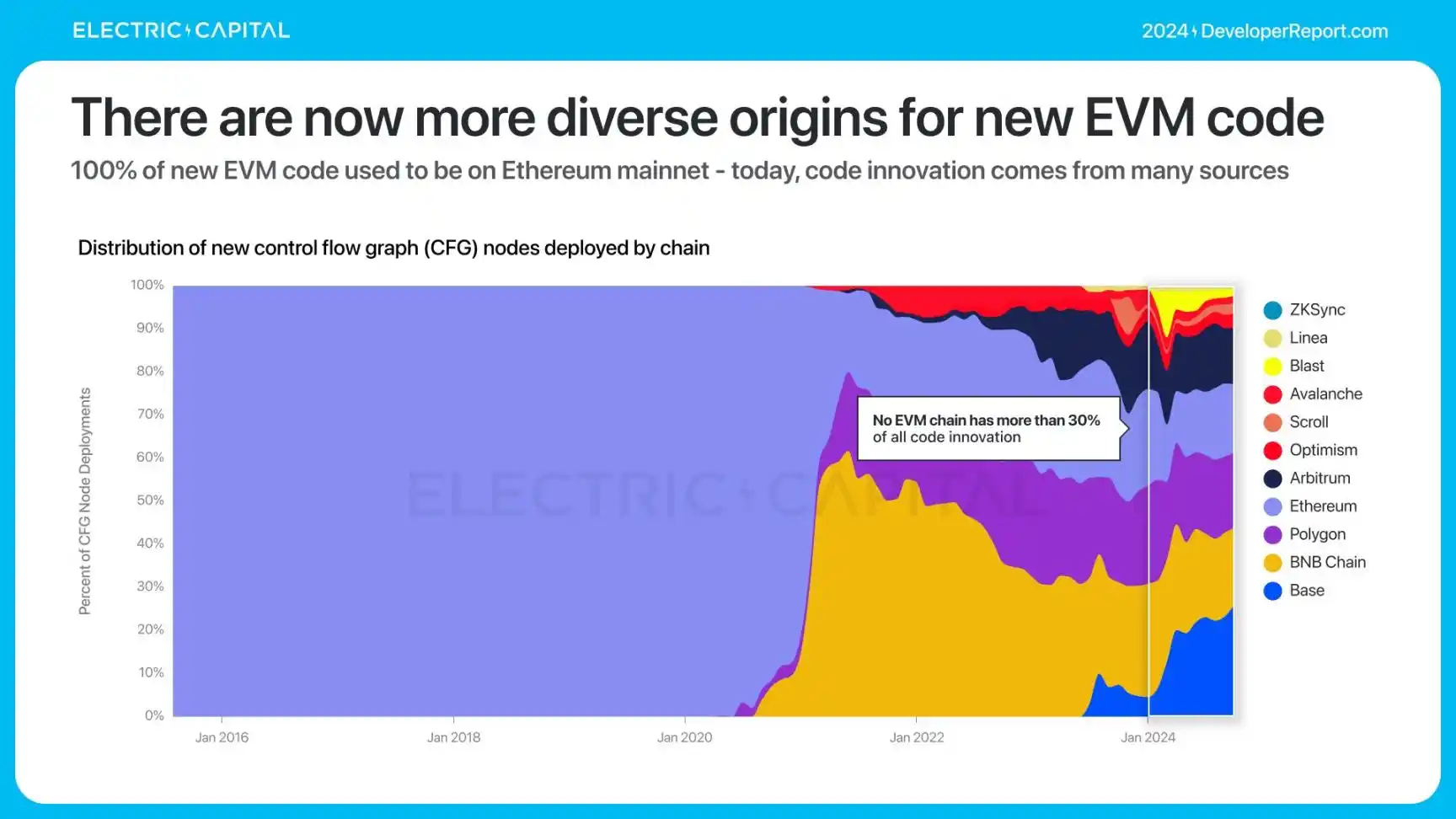
Now, no EVM chain has more than 30% of code innovation.
Base now accounts for 25% of original on-chain code logic on all EVM chains, the most of any major EVM chain.
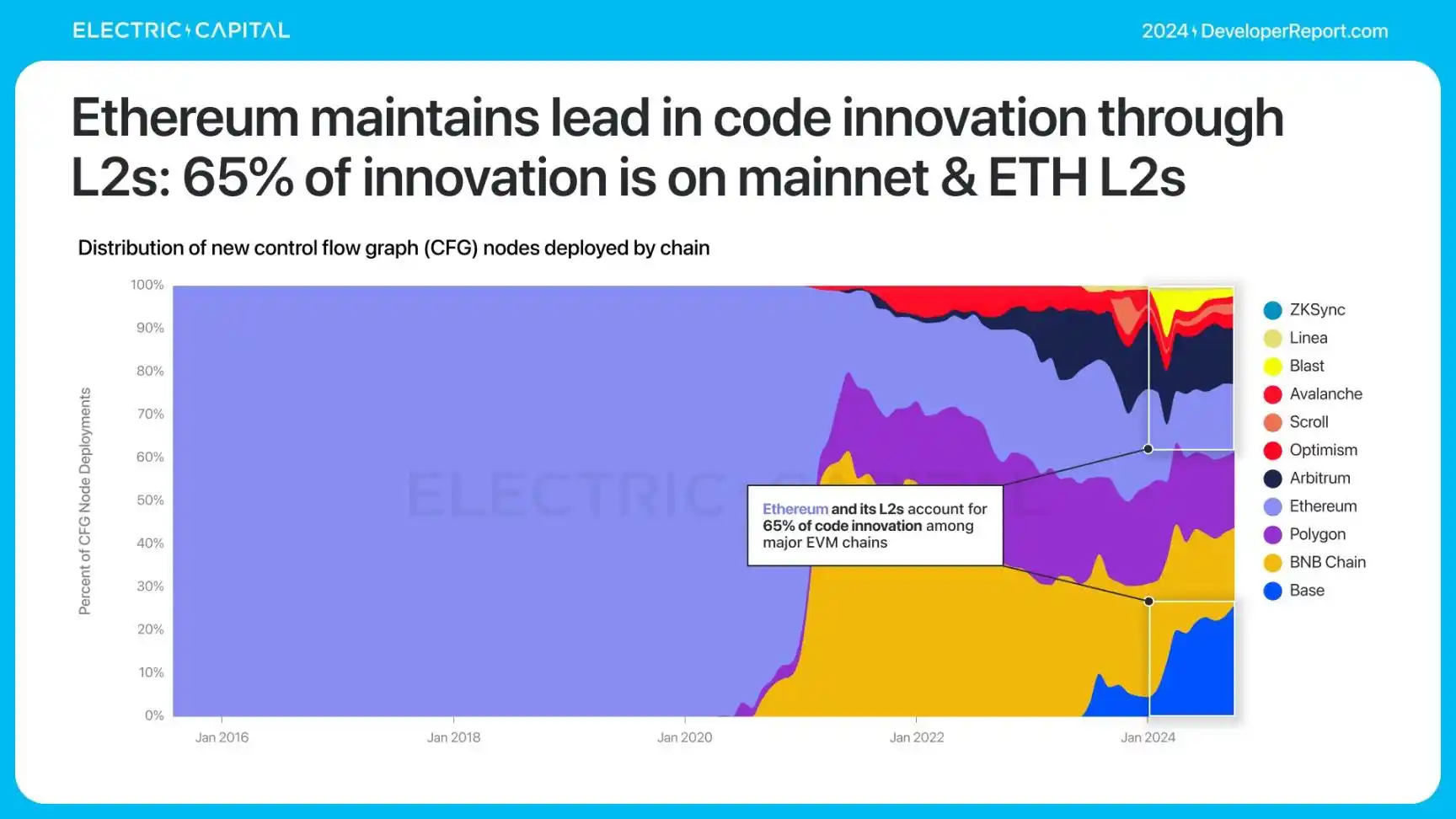
This is how the Ethereum ecosystem stays ahead of the curve in code innovation — through L2 chains. 65% of innovation happens on mainnet and ETH L2 chains.
The Ethereum ecosystem demonstrates strong network effects through dominance among EVM and multi-chain developers. How is the ecosystem performing?
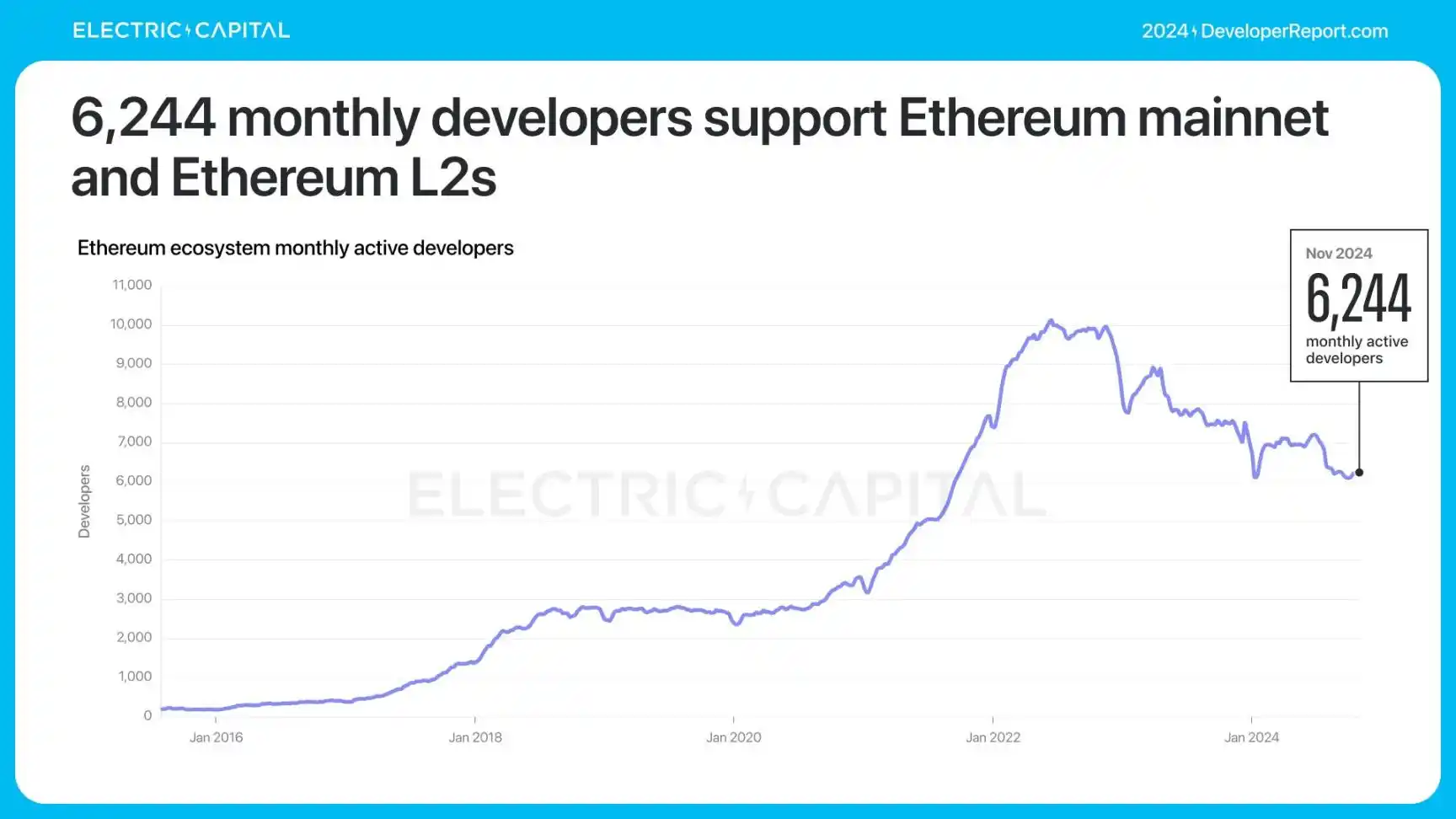
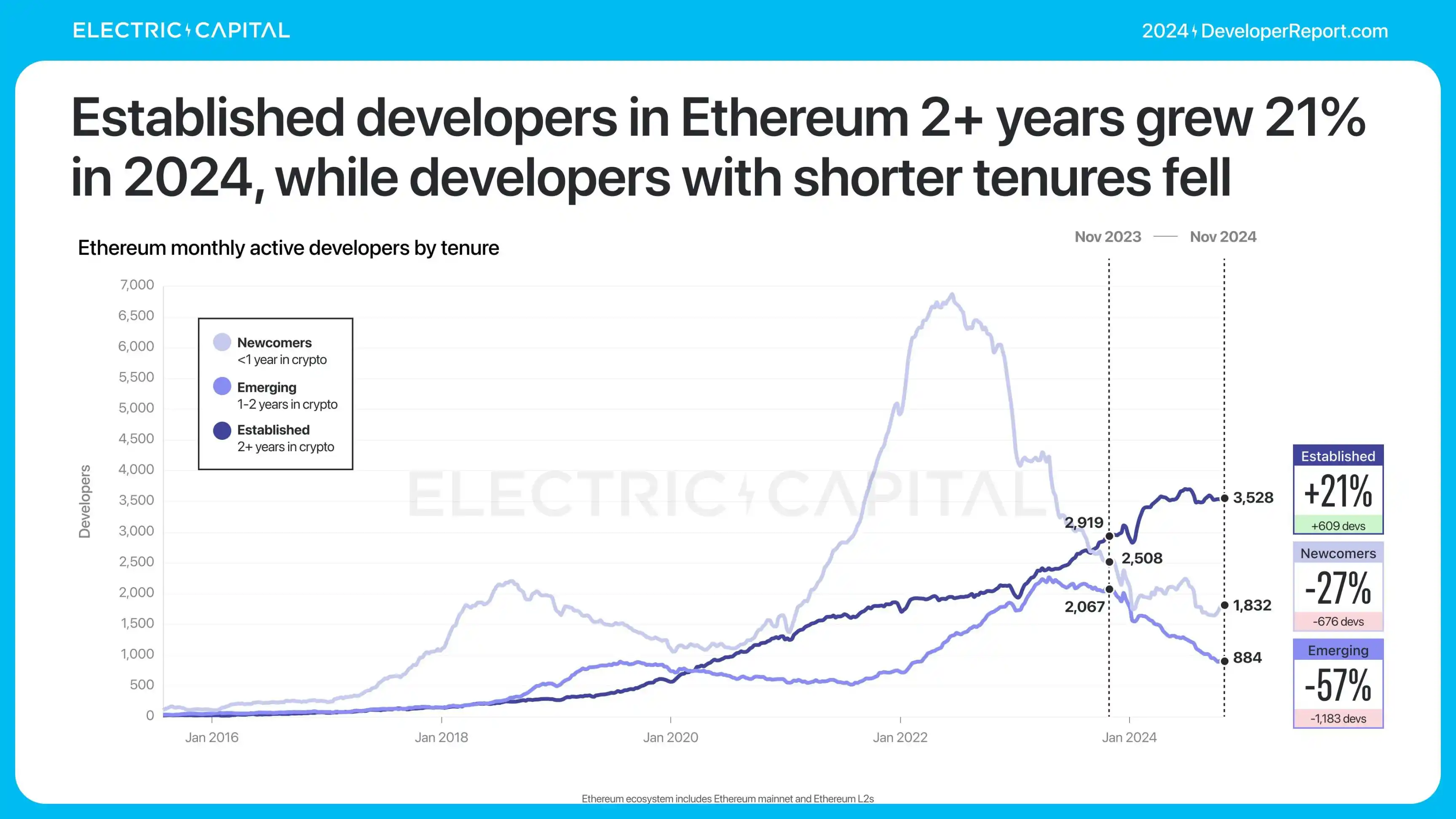
Ethereum’s monthly active developers are 6,244, down 17% year-over-year.
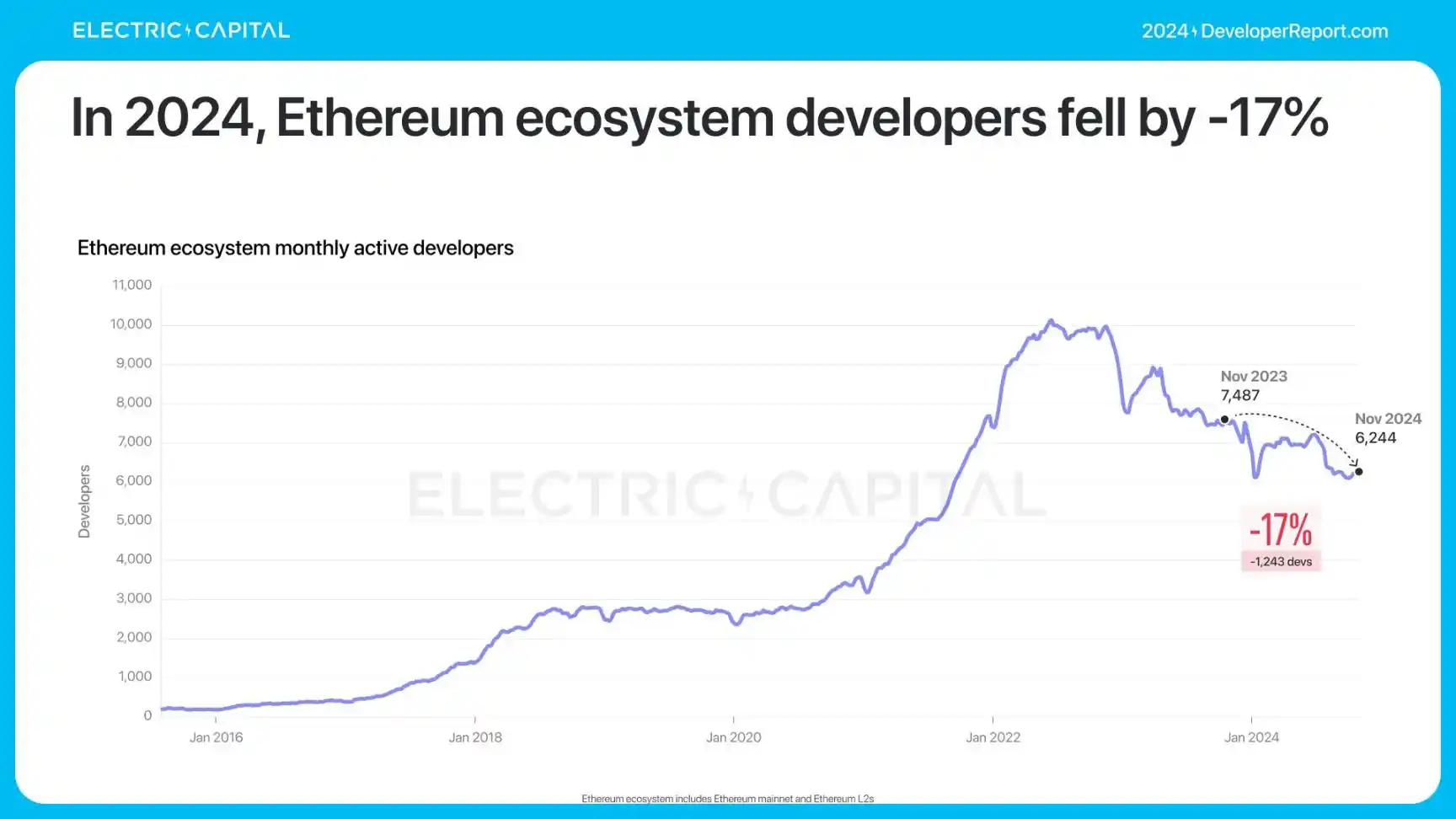
Most of the losses came from developers who joined after 2021. Among developers who have been working on Ethereum for more than 2 years, there has been a 21% increase.
More than half of Ethereum developers are now working on the Ethereum L2 chain, compared to 25% in 2022.
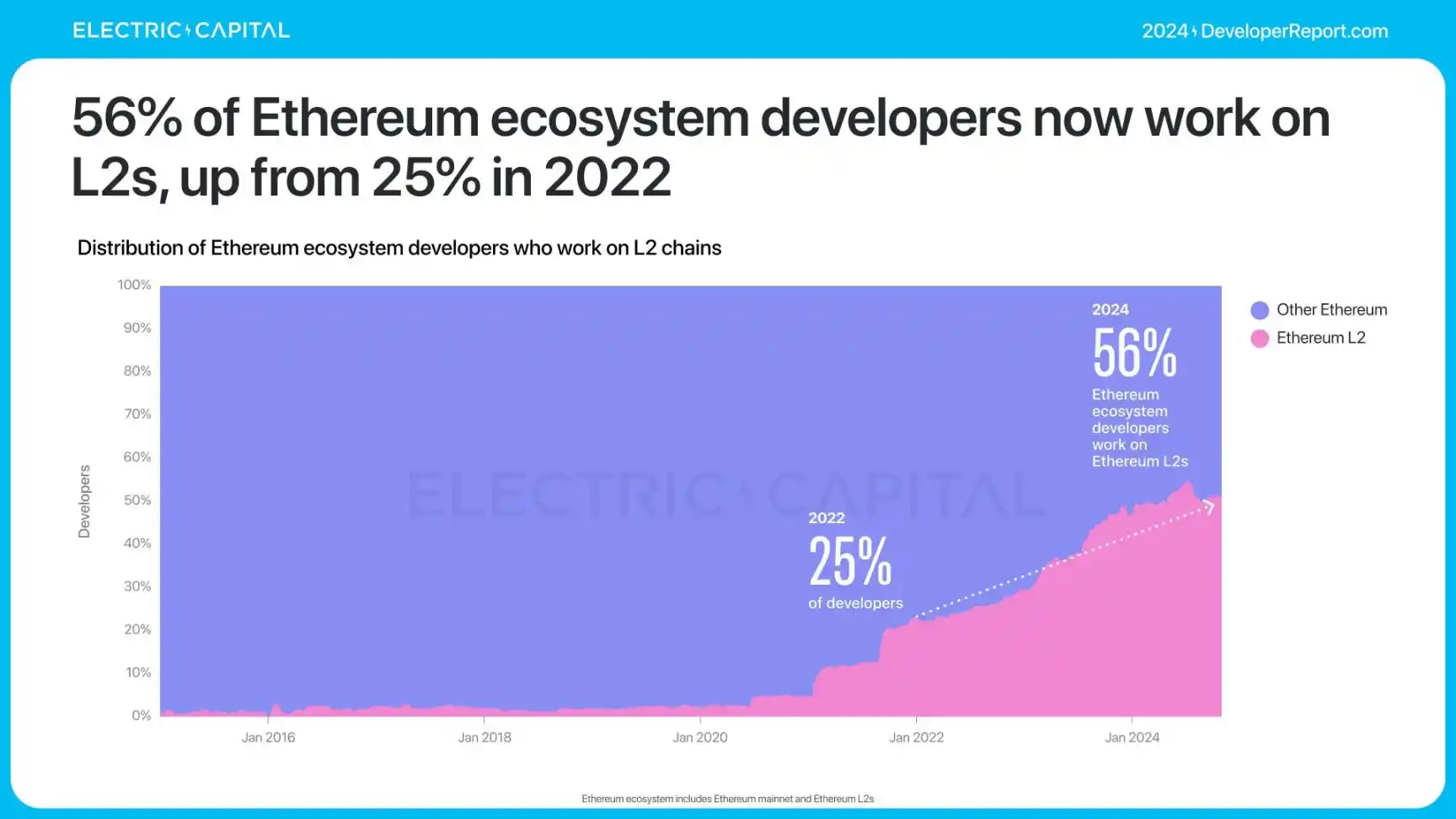
The Ethereum L2 chain has experienced significant growth in developers over the past 4 years. The total number of monthly active developers on the Ethereum L2 chain is 3,592, an average annual increase of 67% since the launch of Arbitrum in 2021.
Base is the largest Ethereum L2 chain.
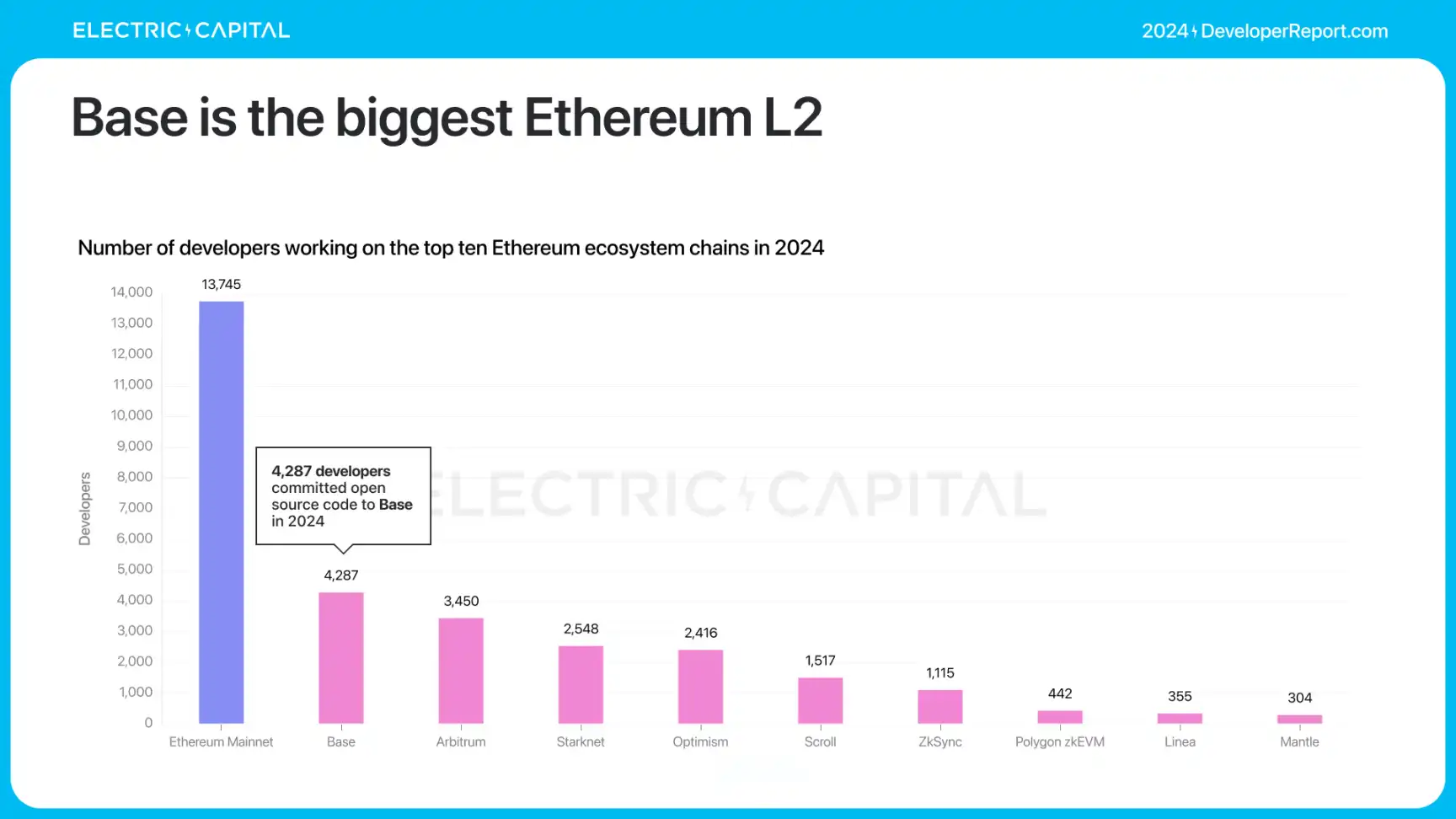
arbitrum, Starknet, Optimism all have over 2,000 developers in 2024.
Bitcoin has 1,200 monthly active developers in 2024, which remains stable.

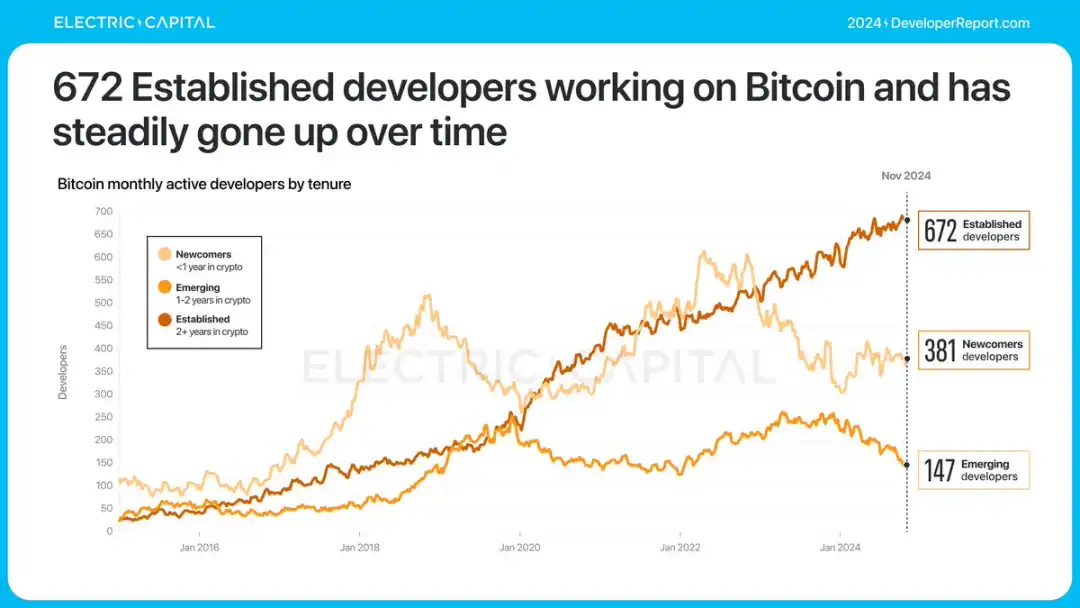
The number of experienced Bitcoin developers (those who have been working on Bitcoin for more than 2 years) has been growing steadily. Currently, there are 672 experienced Bitcoin developers active per month, a new high.
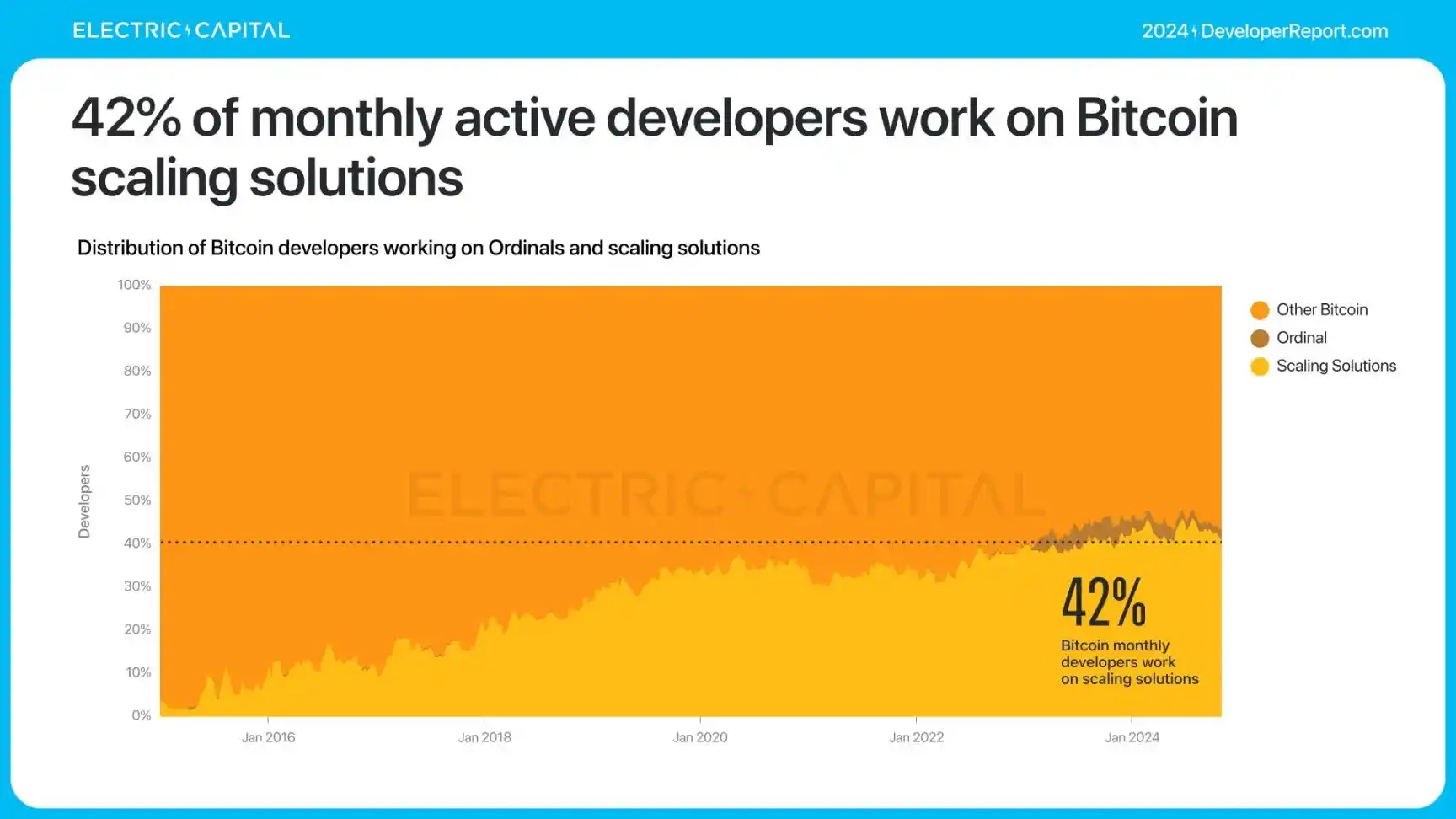
42% of Bitcoin developers — almost half — are working on Bitcoin scaling solutions.
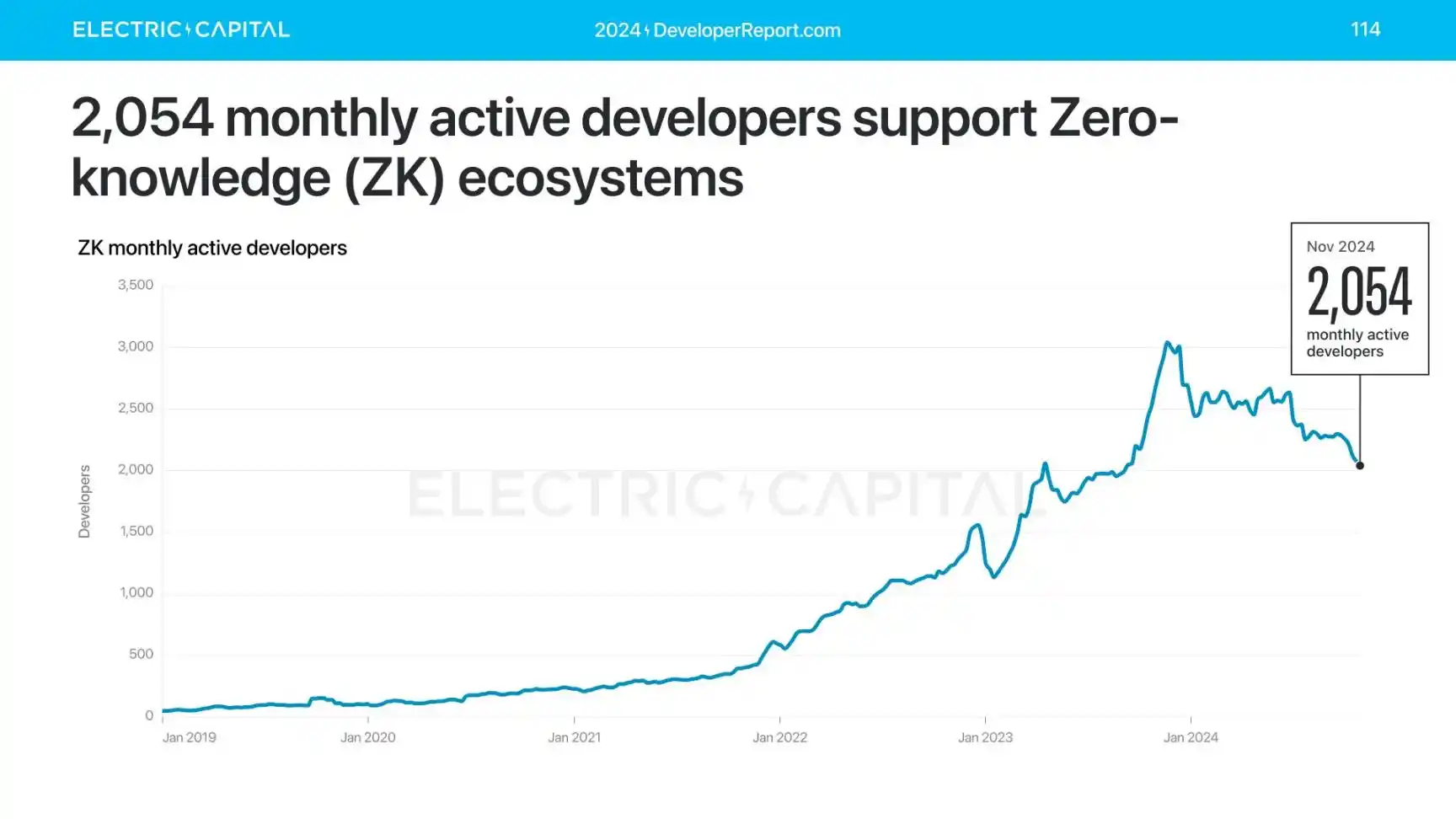
Zero-knowledge proofs (ZK) is a developer-centric, research-born field. How is it growing?
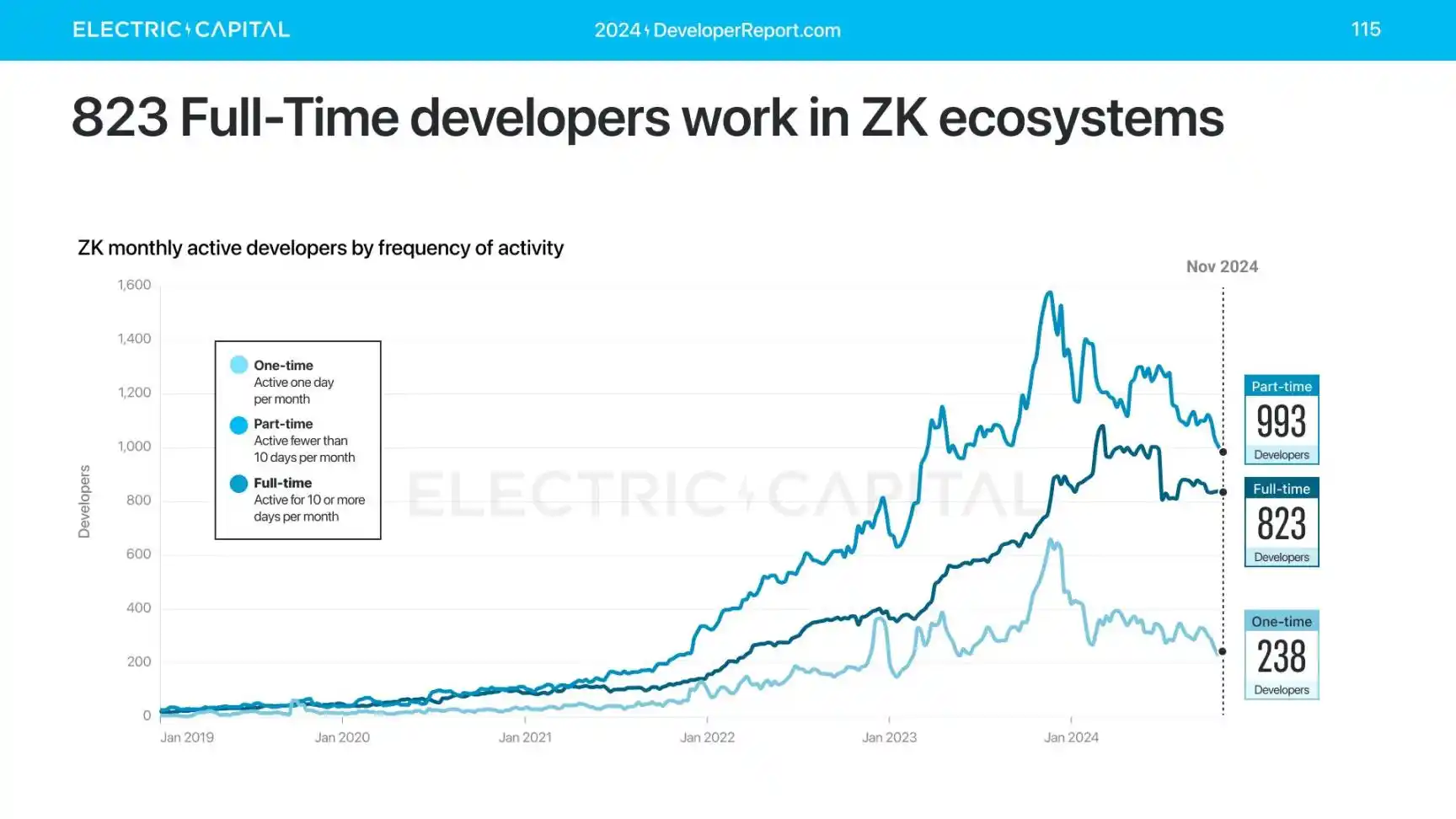
Over 2,000 monthly active developers work in the ZK ecosystem, of which 823 are full-time developers committing code more than 10 days per month.
On-chain deployments of zero-knowledge proofs (ZK) have also grown from 40 in 2020 to 639 in 2024.
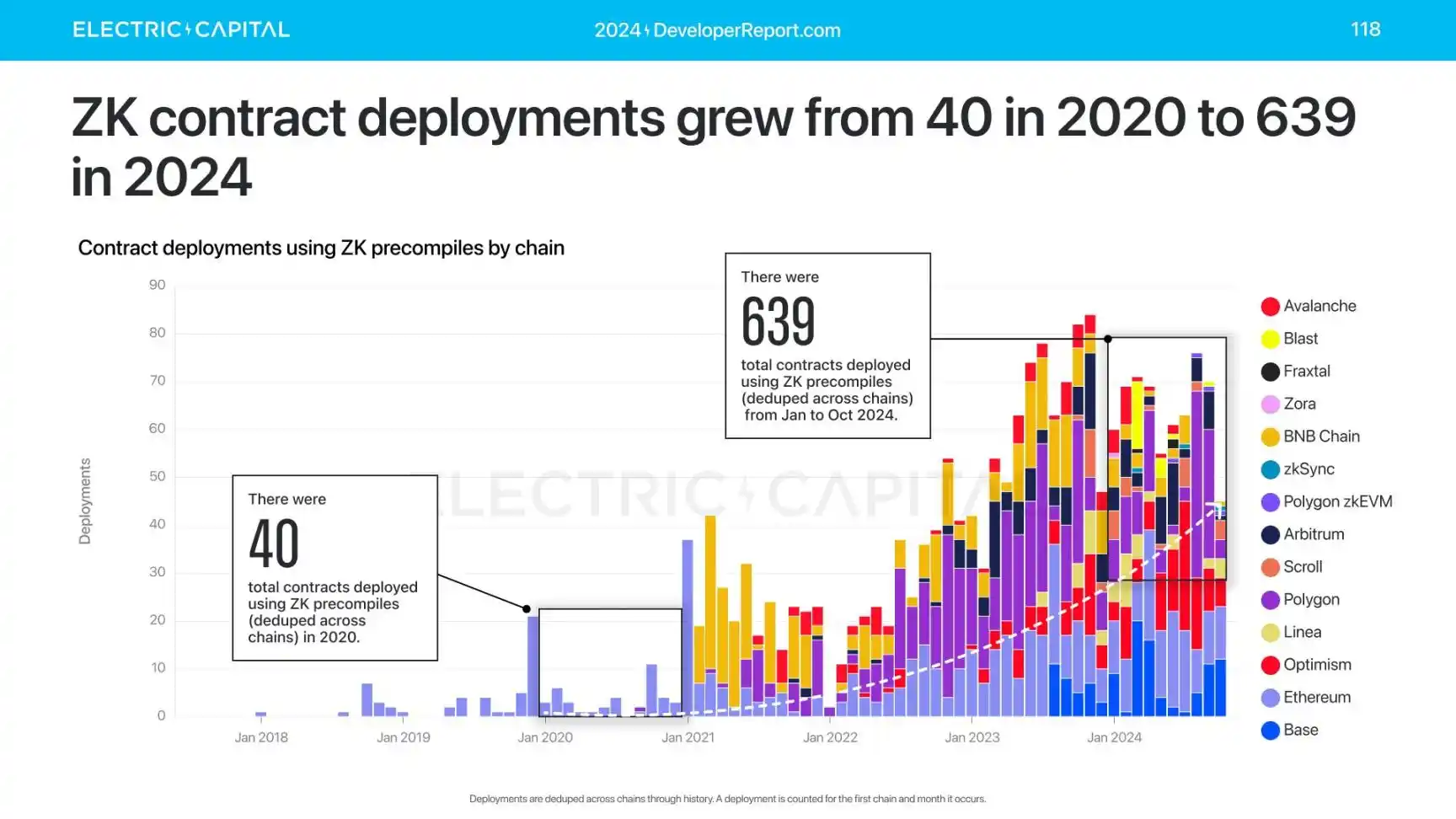
Zero-knowledge proofs (ZK) are also growing from 40 on-chain deployments in 2020 to 639 in 2024.
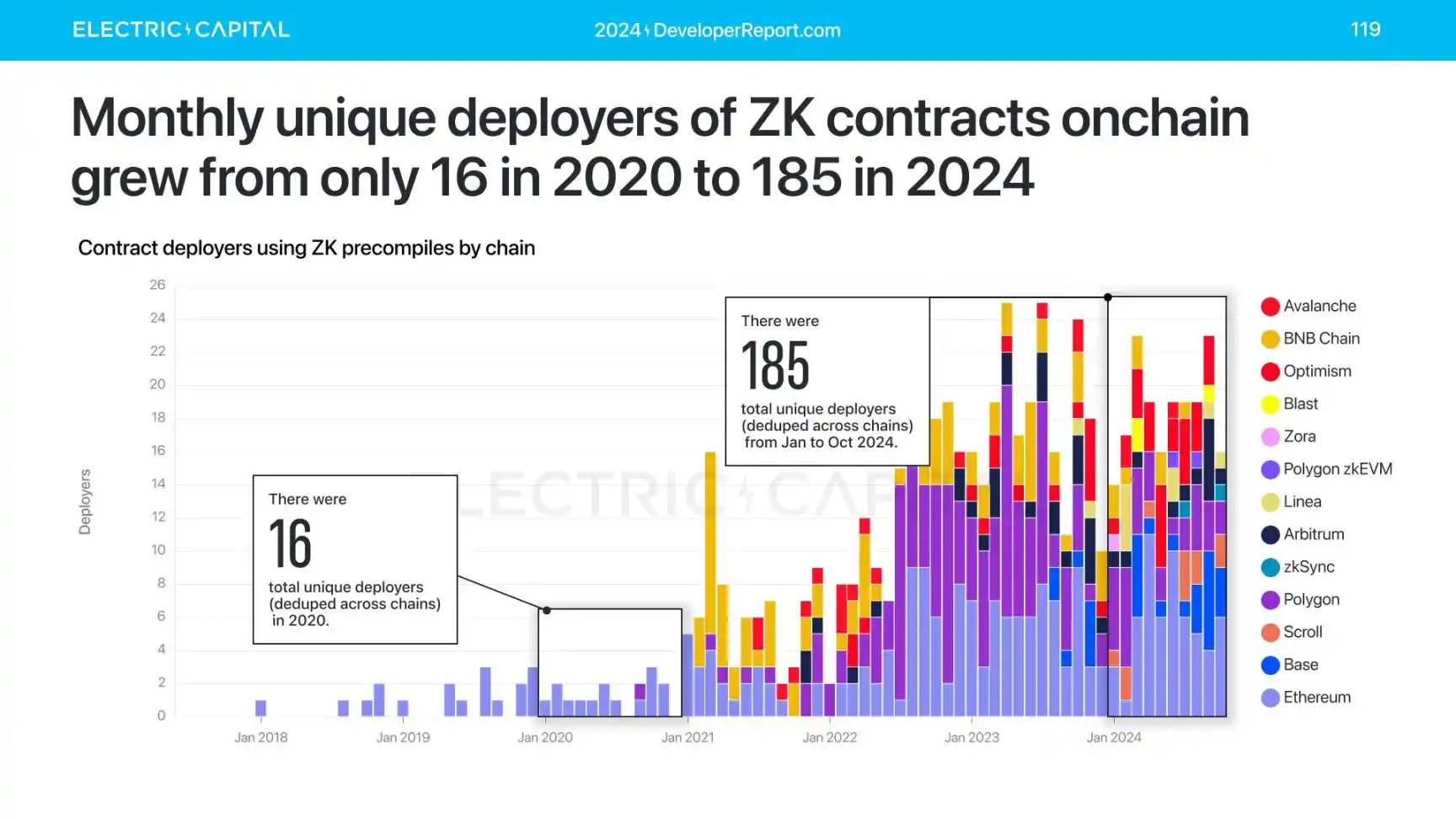
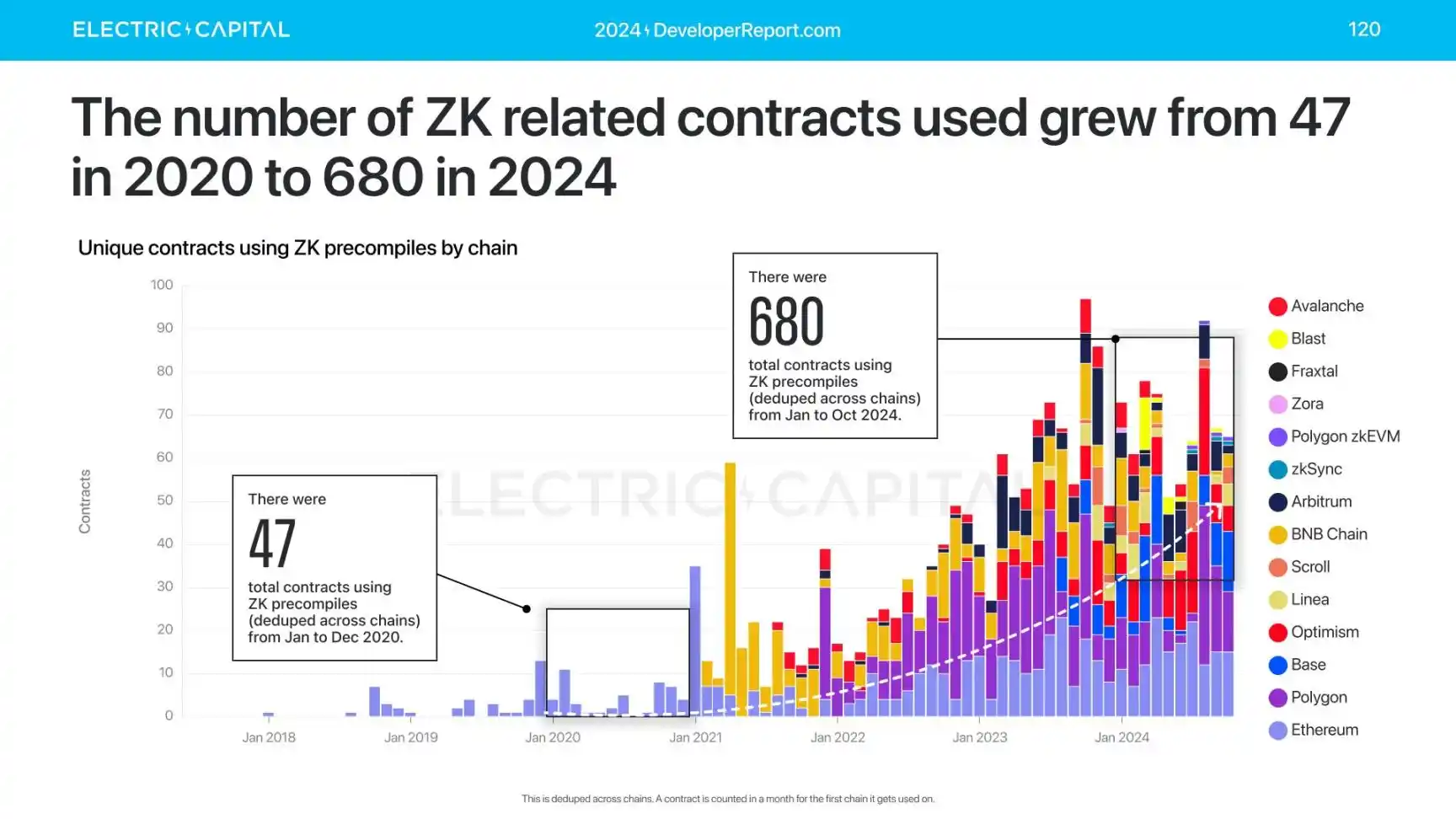
Zero-knowledge proofs (ZK) are also growing from 40 on-chain deployments in 2020 to 639 on-chain deployments in 2024.
While the numbers are still relatively flat, they show definite growth. The number of deployers has also increased.
ZK is also gaining usage - contracts precompiled using ZK grew from 47 in 2020 to 680 this year.
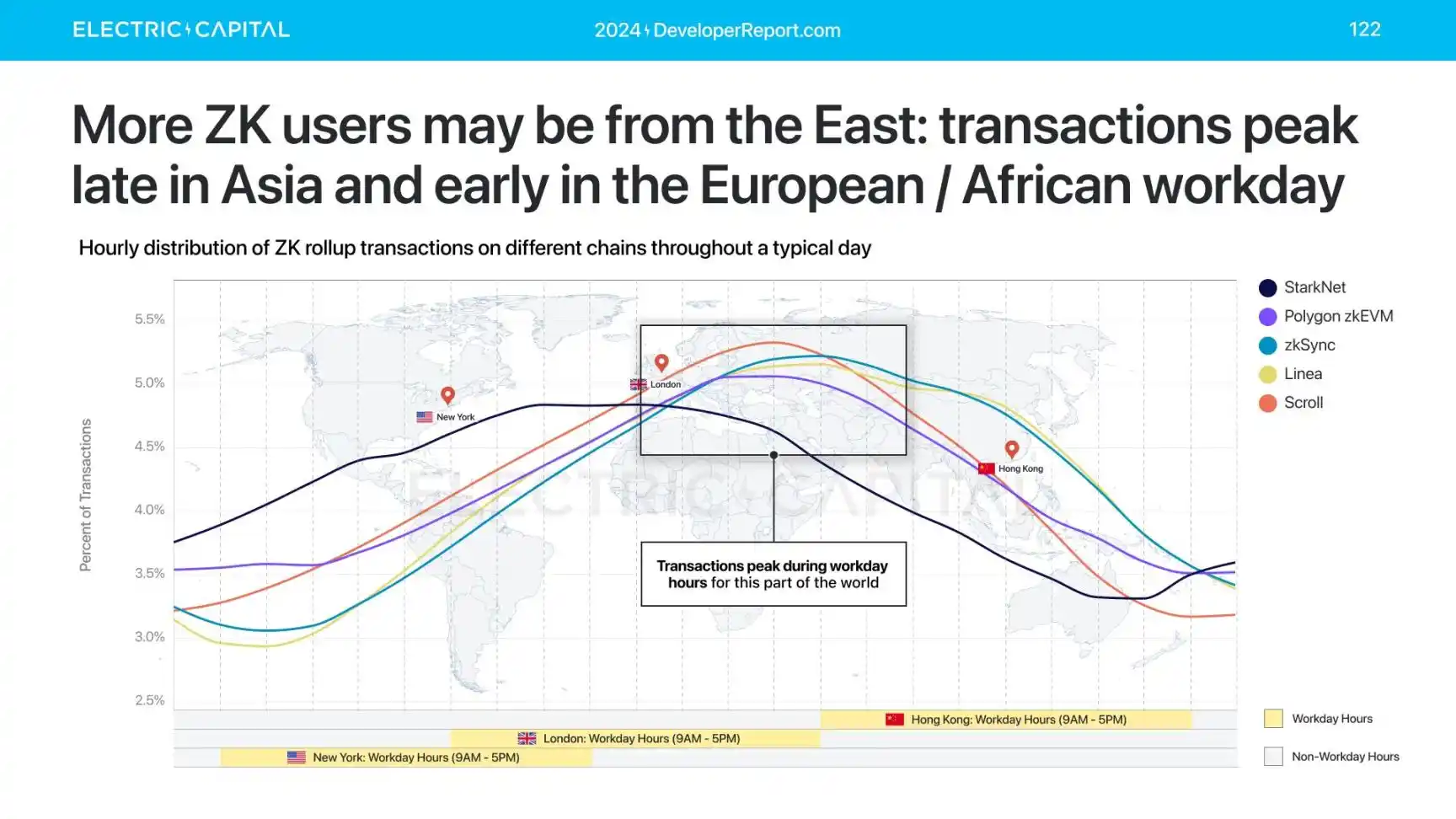
When are Zero-Knowledge Proof (ZK) developers and users active?
Deployers of ZK Rollup contracts are active during Eastern Hemisphere business hours, as are ZK users.
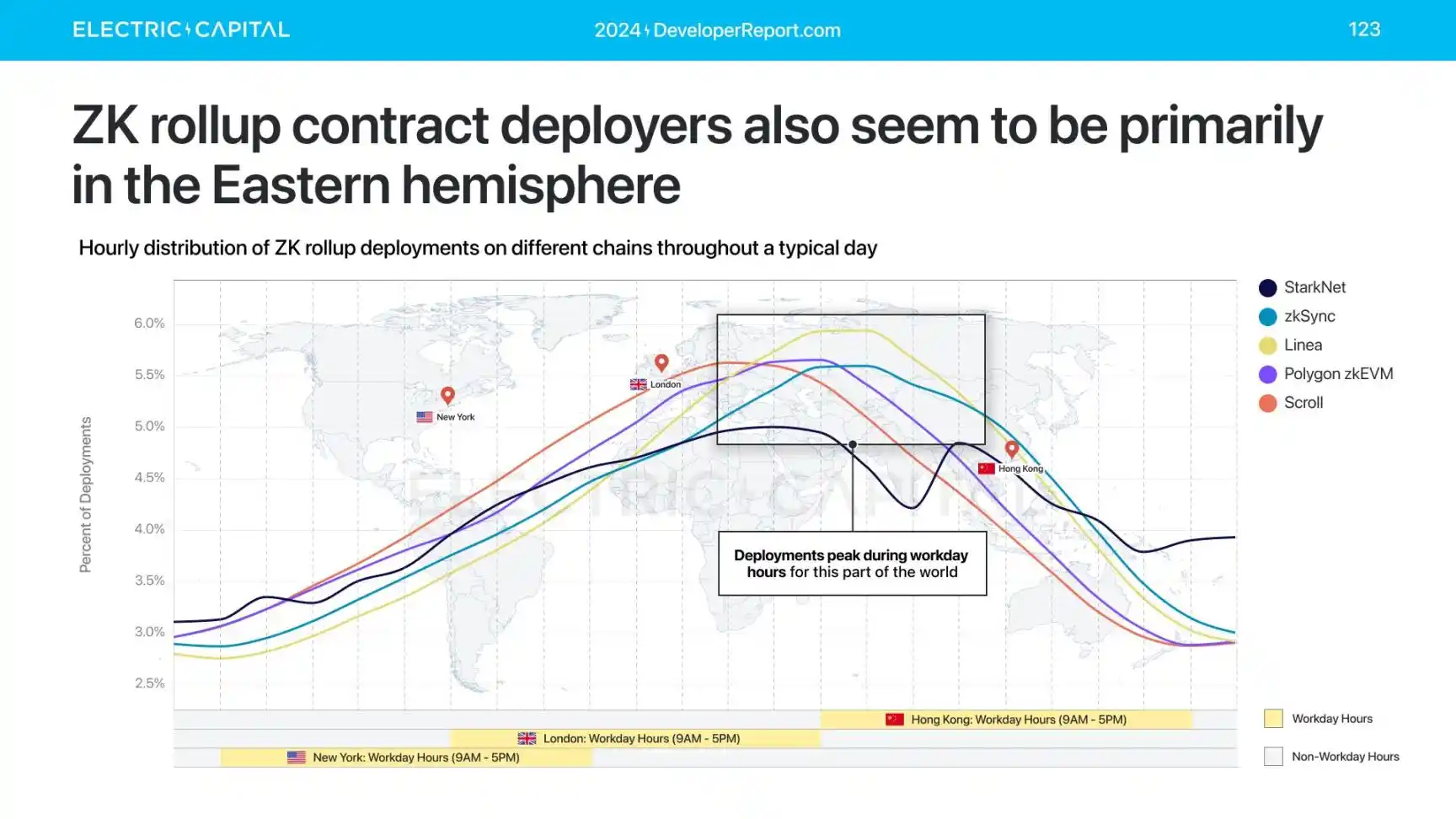
ZK users and deployers appear to be concentrated in the Eastern Hemisphere, particularly in Eastern Europe, Africa, and Asia.
NFTs and DeFi are established use cases in crypto - most of the top smart contracts are related to NFTs or DeFi. How are these use cases developing? Let's start with NFTs.
NFT deployments grew more than 3x year-over-year across all major NFT active chains (Bitcoin, Ethereum, Polygon, Solana, Zora, Base).
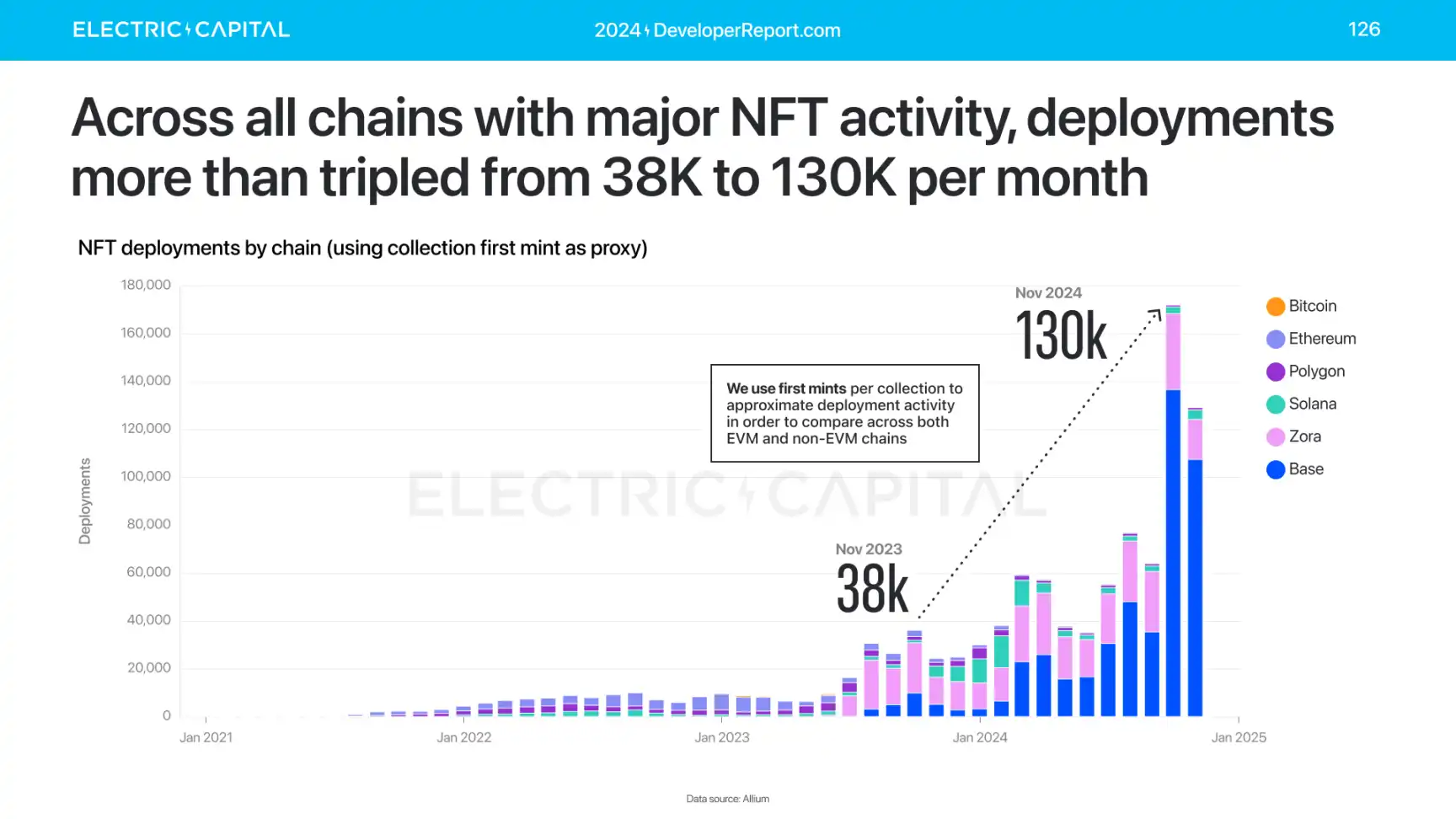
NFT deployments reached an all-time high. 87% of new deployments occurred on Base and Zora.
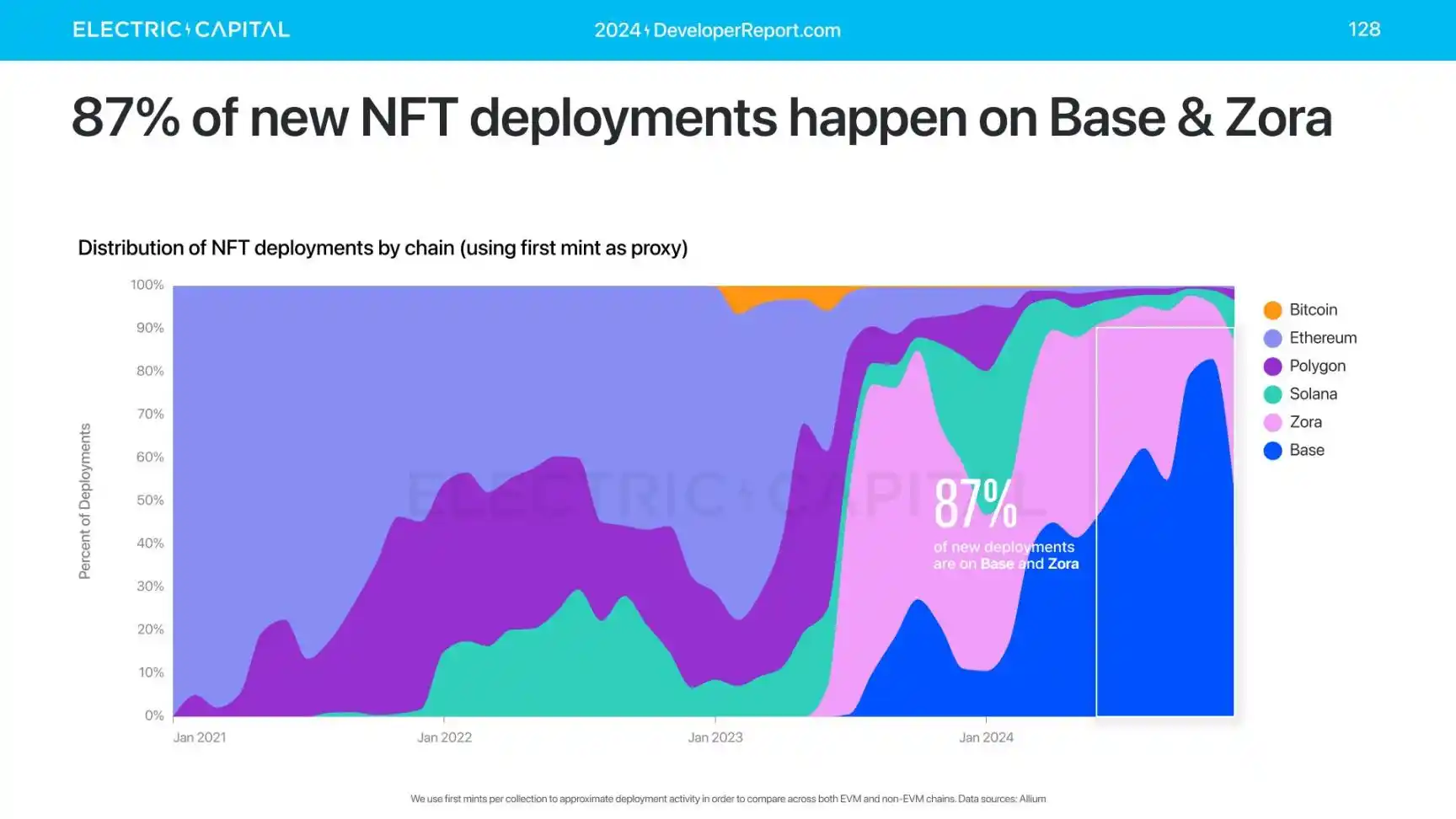
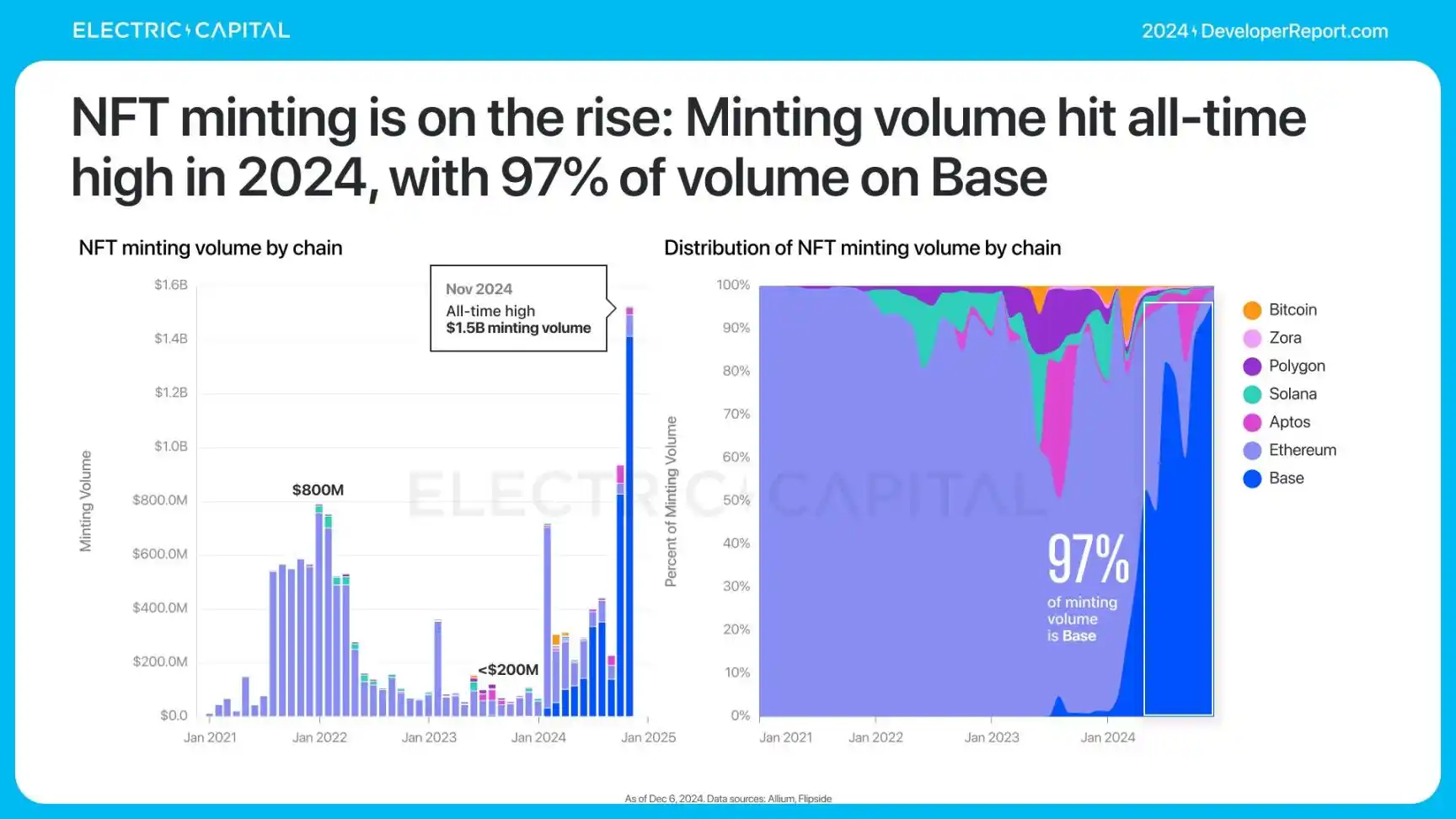
NFT activity shifted significantly toward minting.
In 2024, NFT minting reached an all-time high, with 97% of minting occurring on Base.
Solana has 57% of minting wallets and captures 64% of minting transactions.
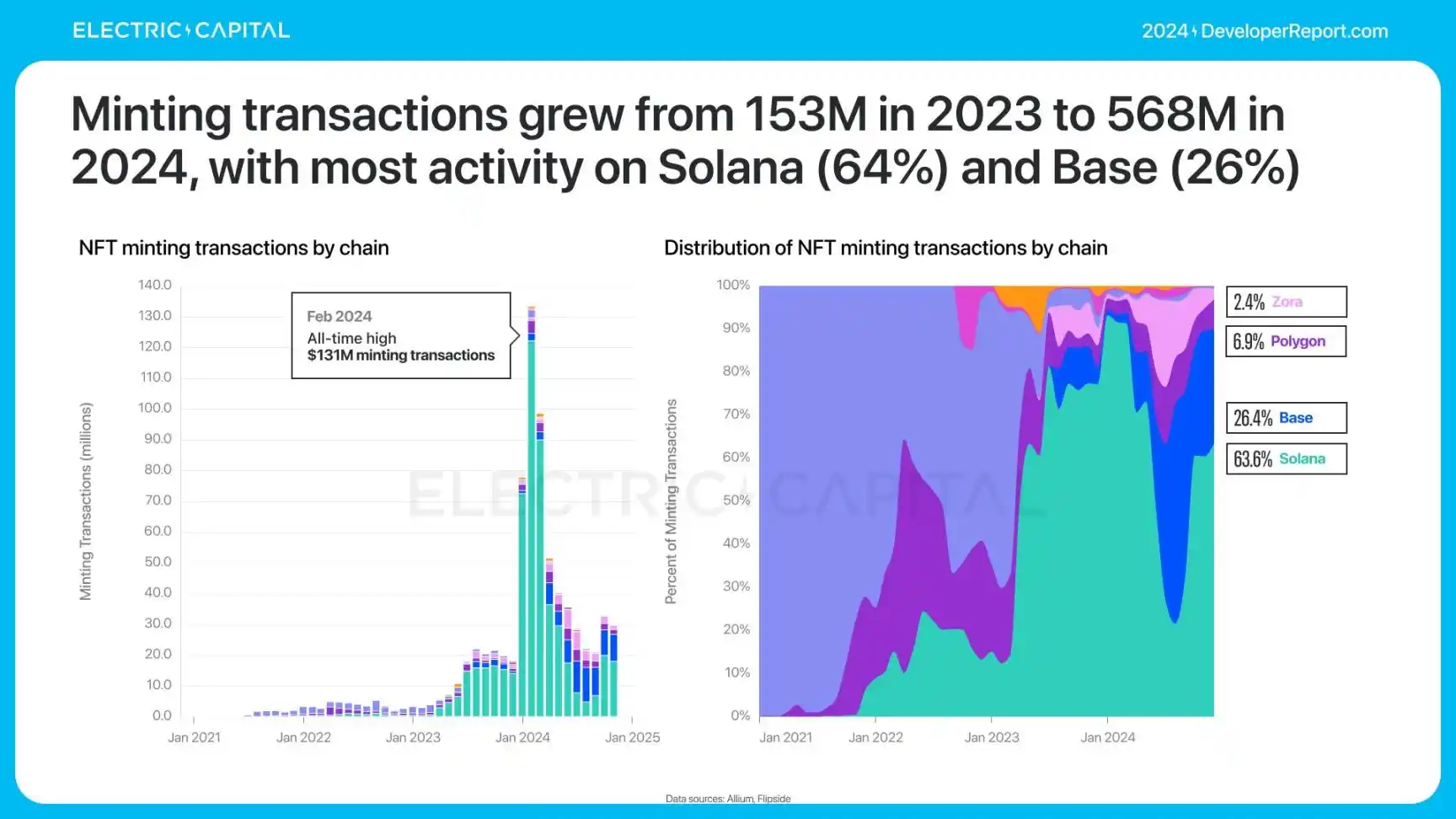
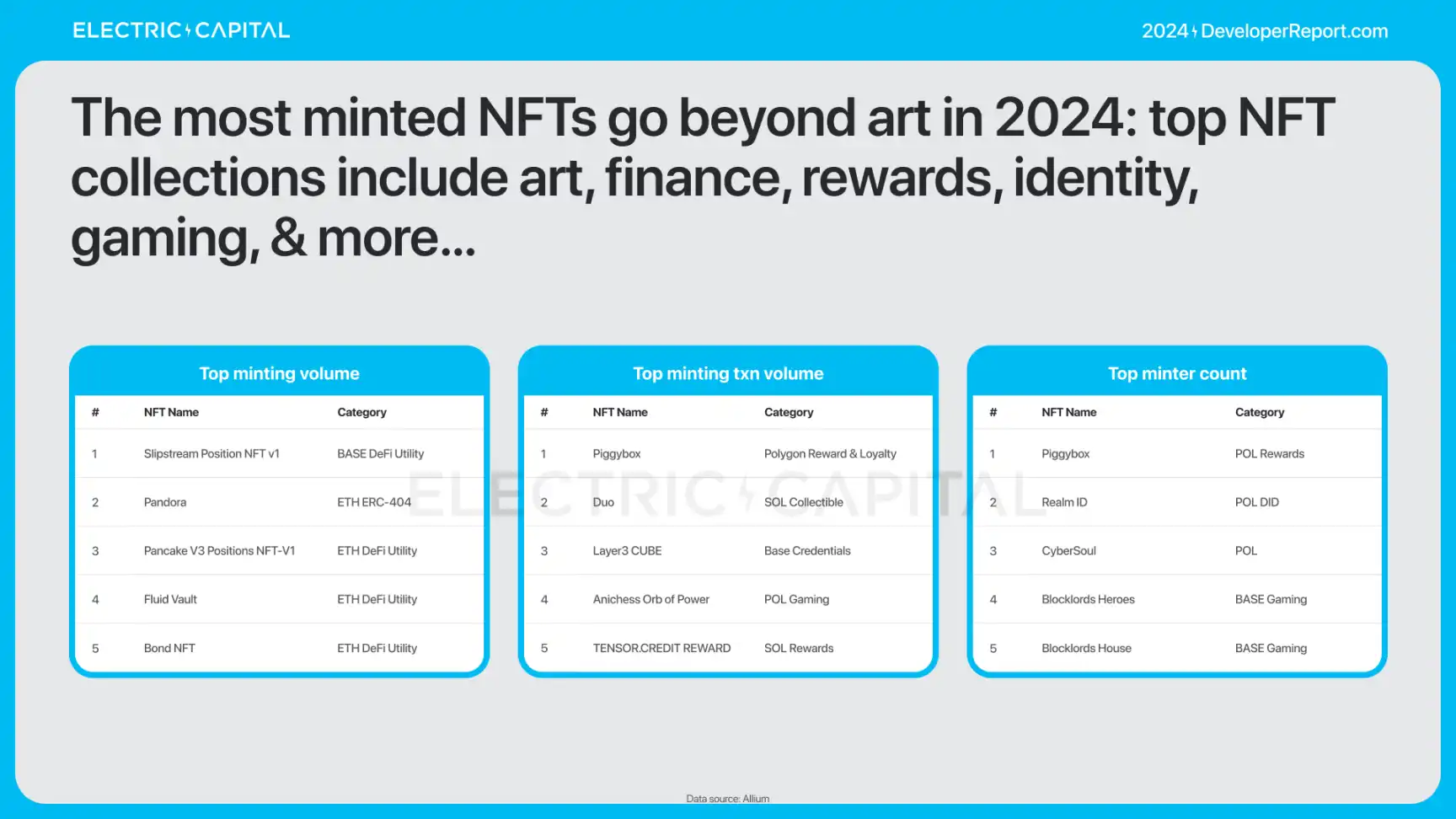
The increase in minting activity is because NFTs have expanded beyond the art field in 2024 to cover more application scenarios.
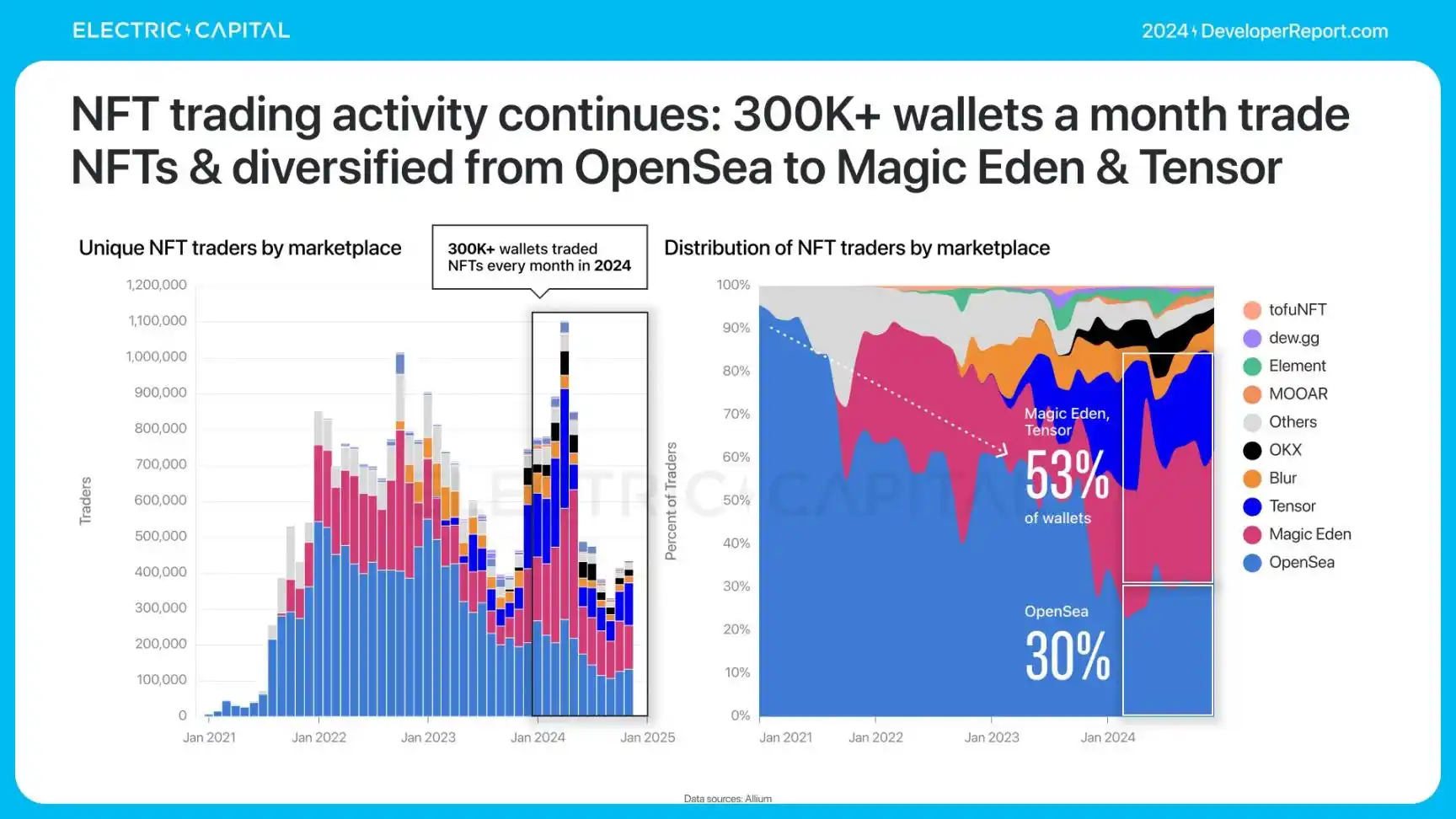
NFT trading remains an important base application and has expanded from OpenSea to platforms such as Magic Eden and Tensor.
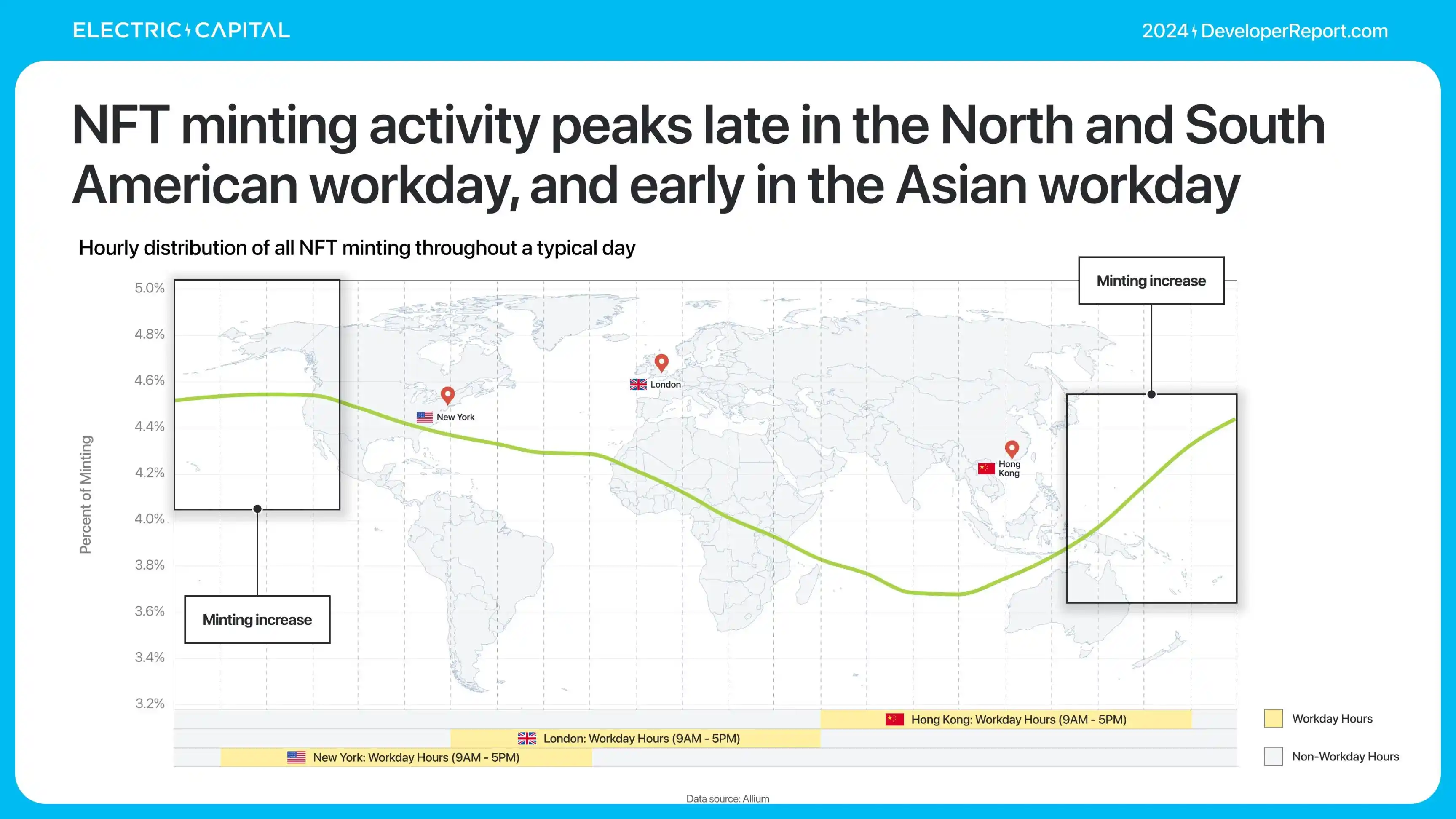
NFT minting and trading volumes peaked in different regions - suggesting different user groups.
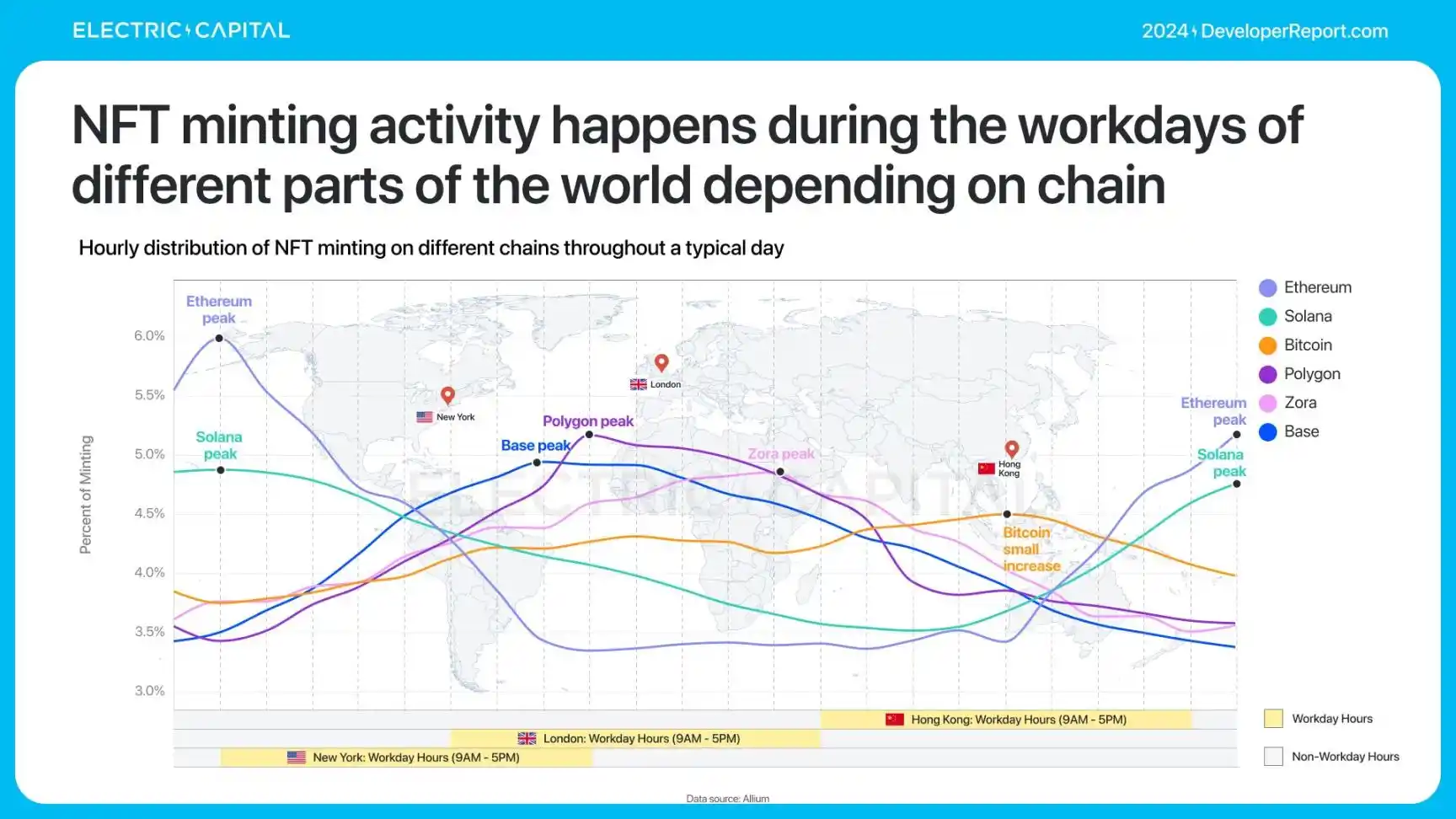
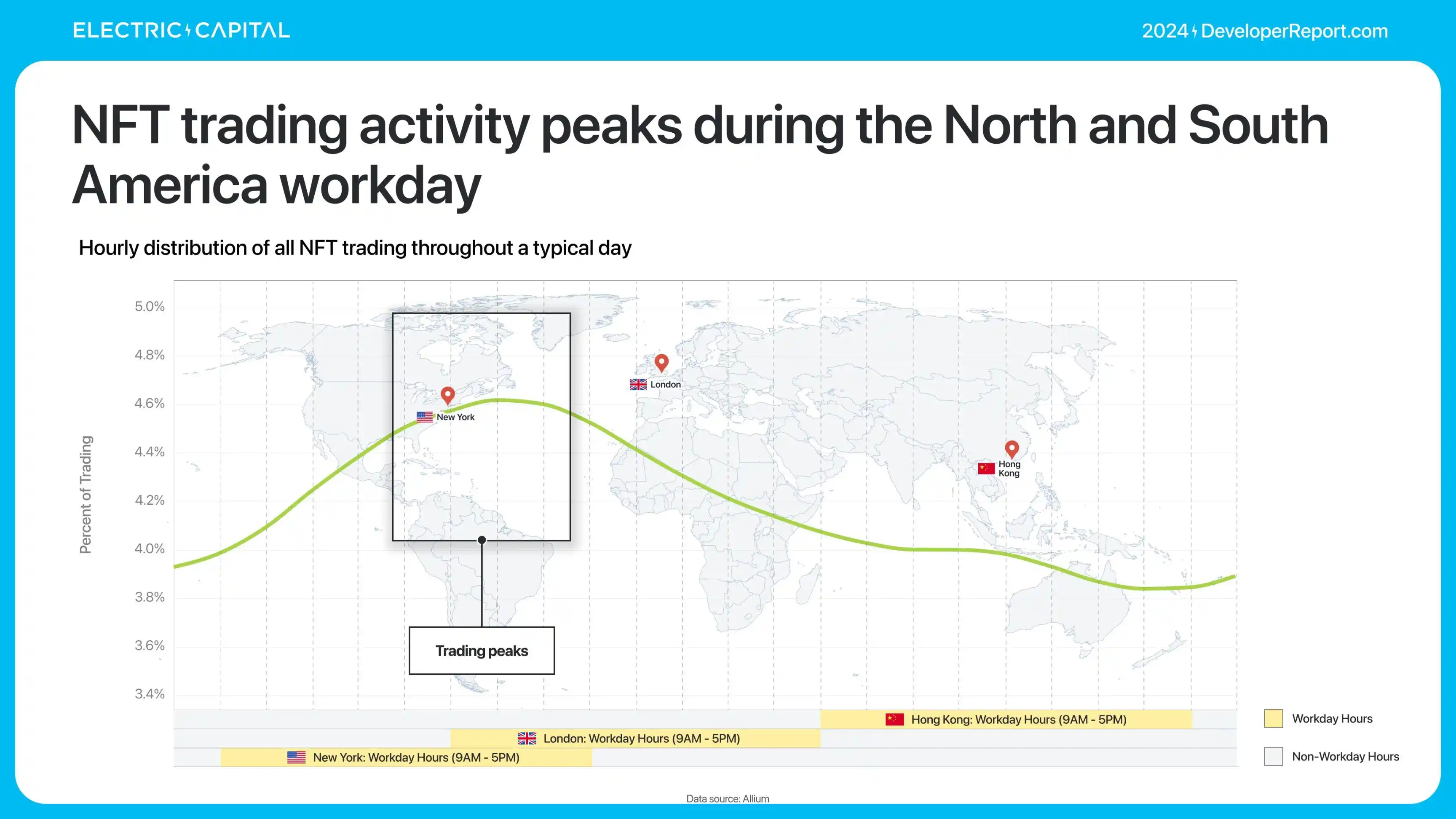
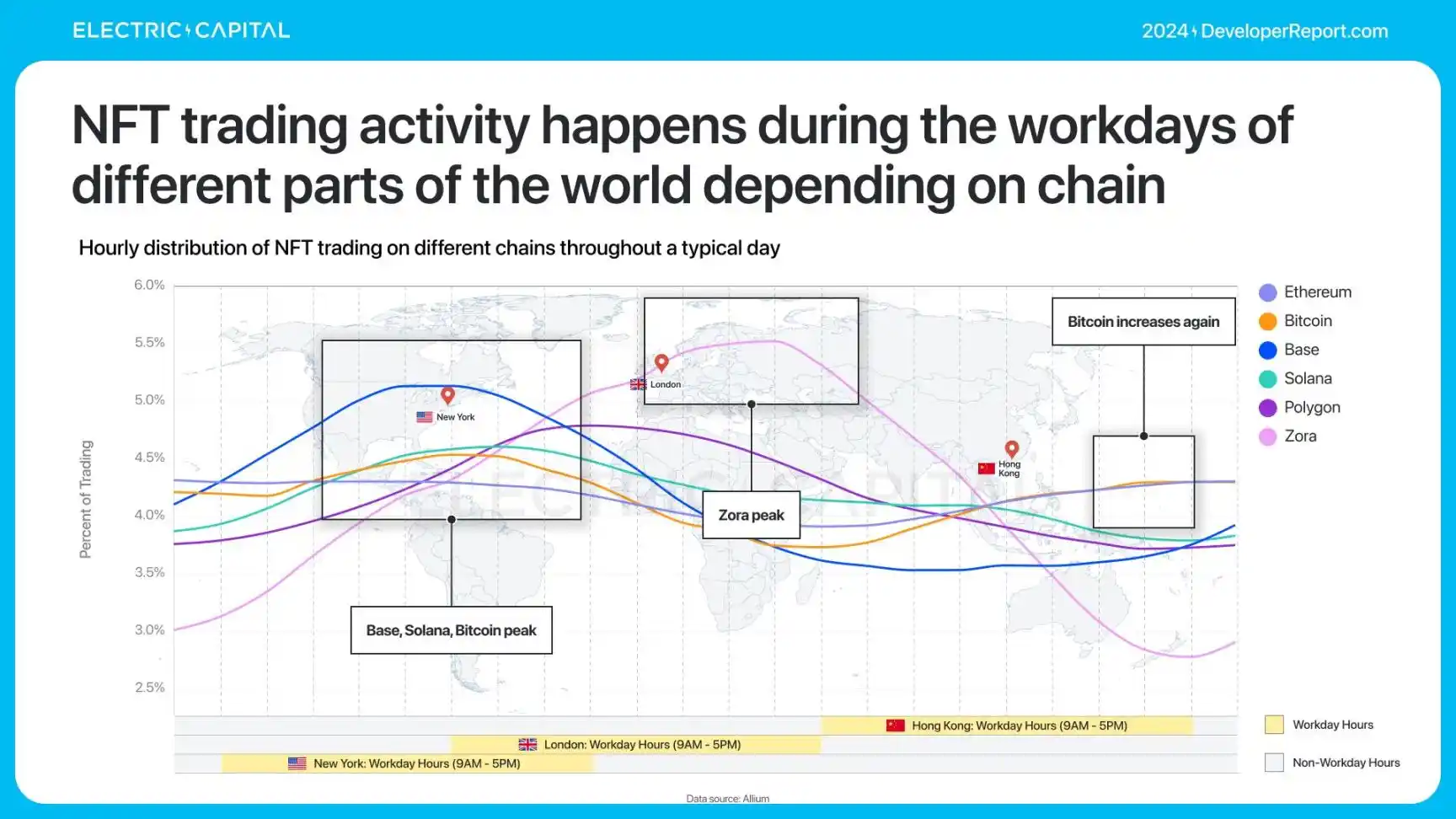
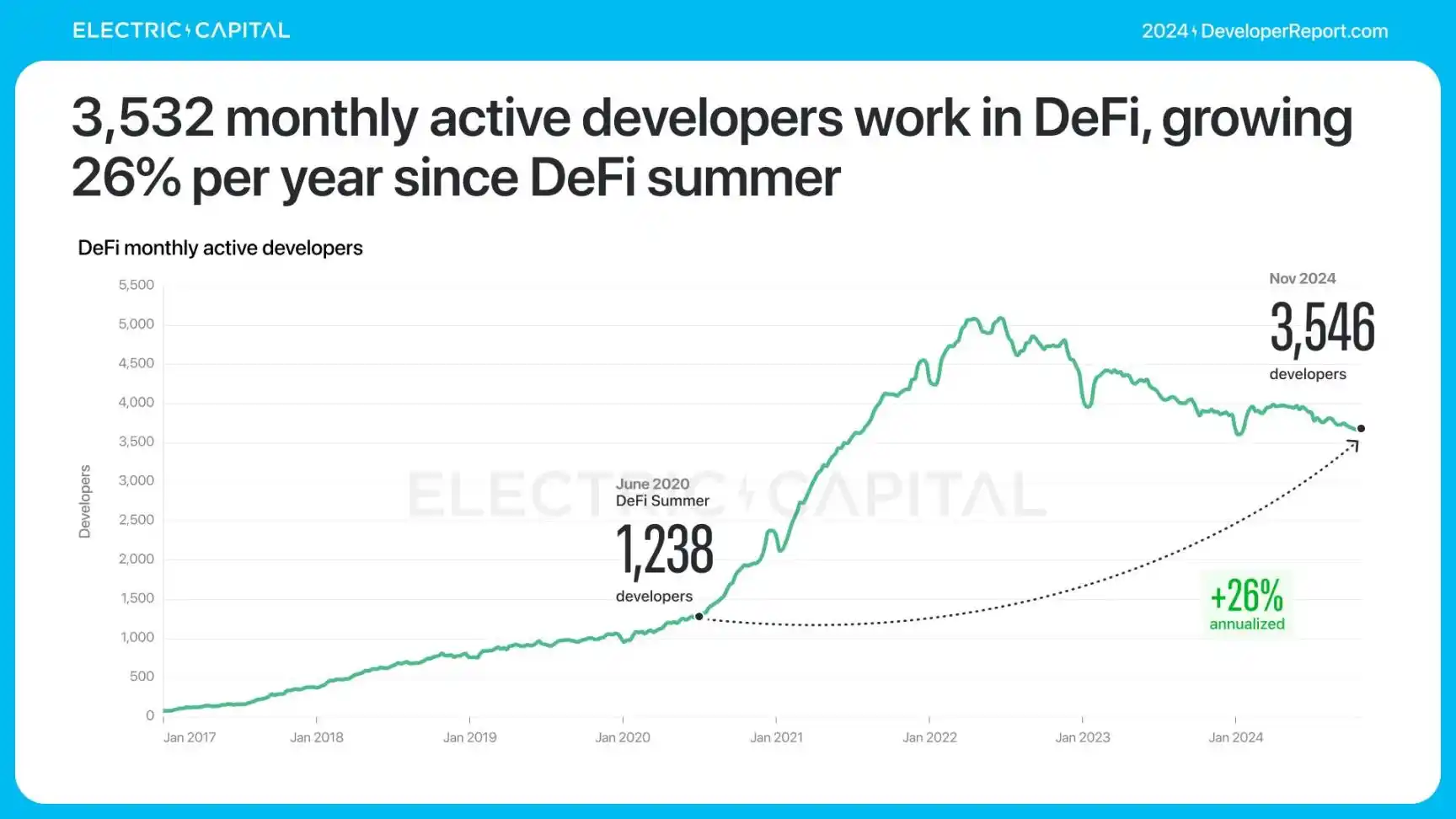
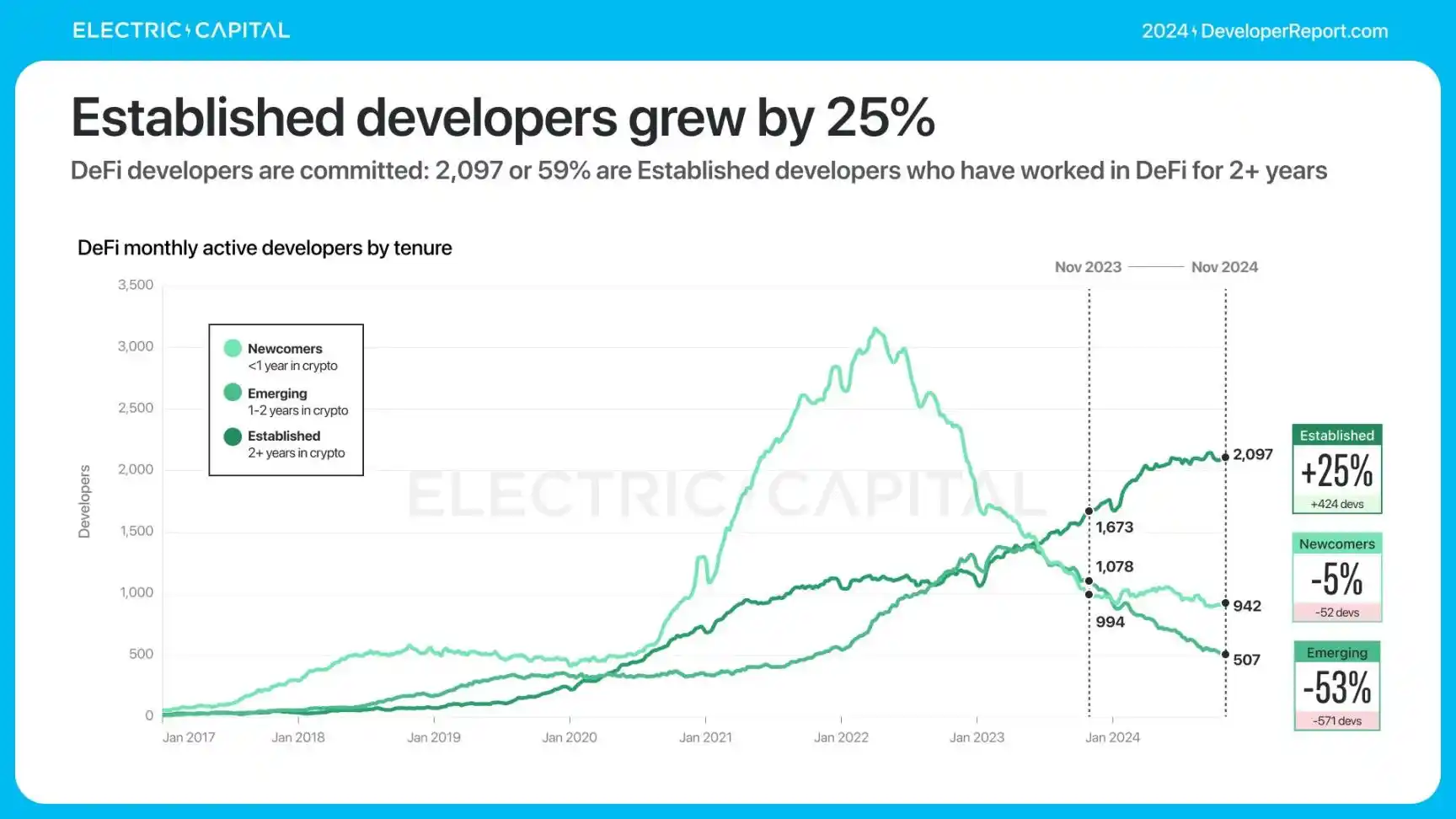
3,532 monthly active developers working on DeFi. DeFi developers are experienced - 2,097 (59%) have been working in DeFi for more than 2 years.
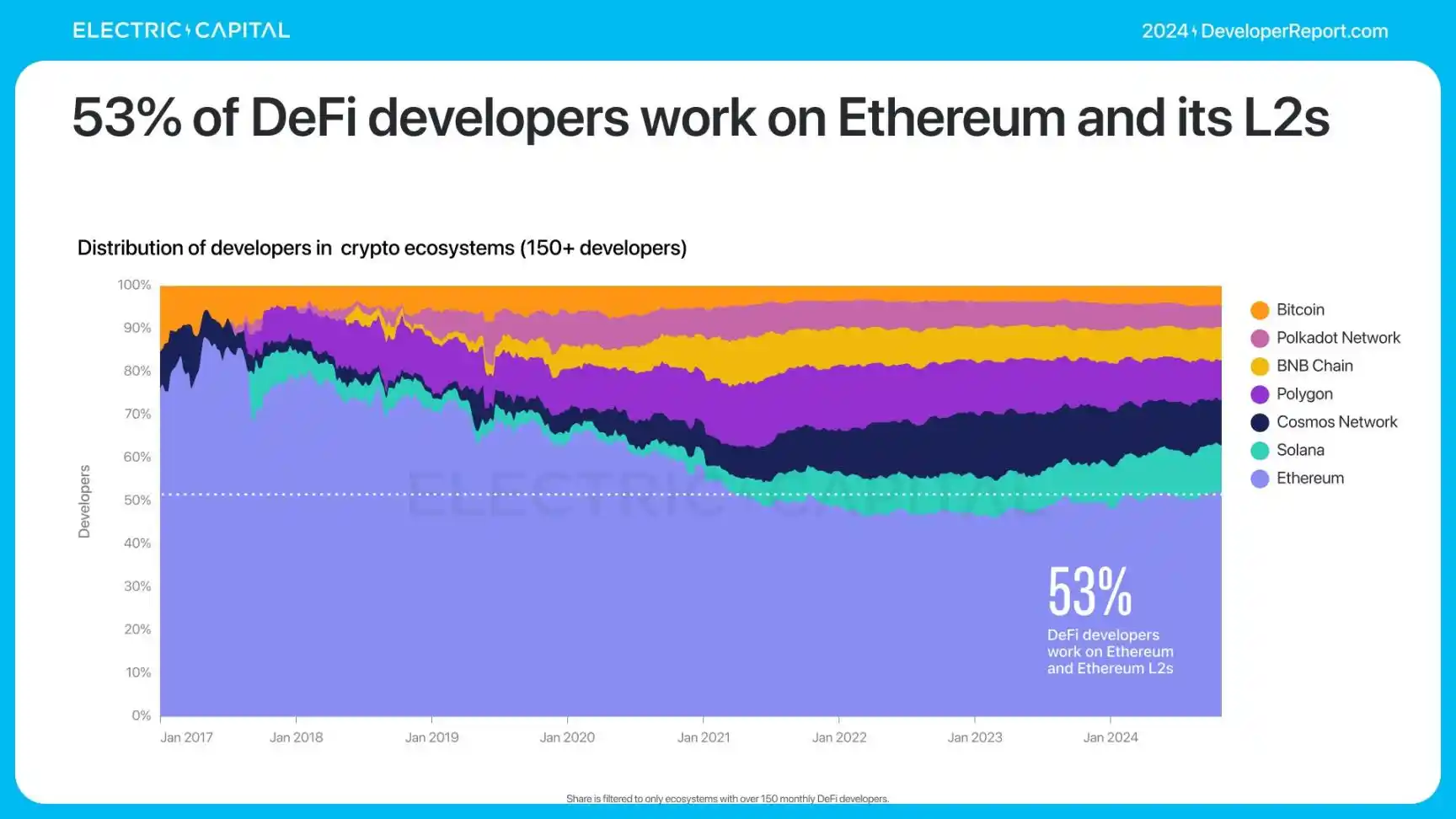
53% of DeFi developers work on Ethereum and its L2 chains.
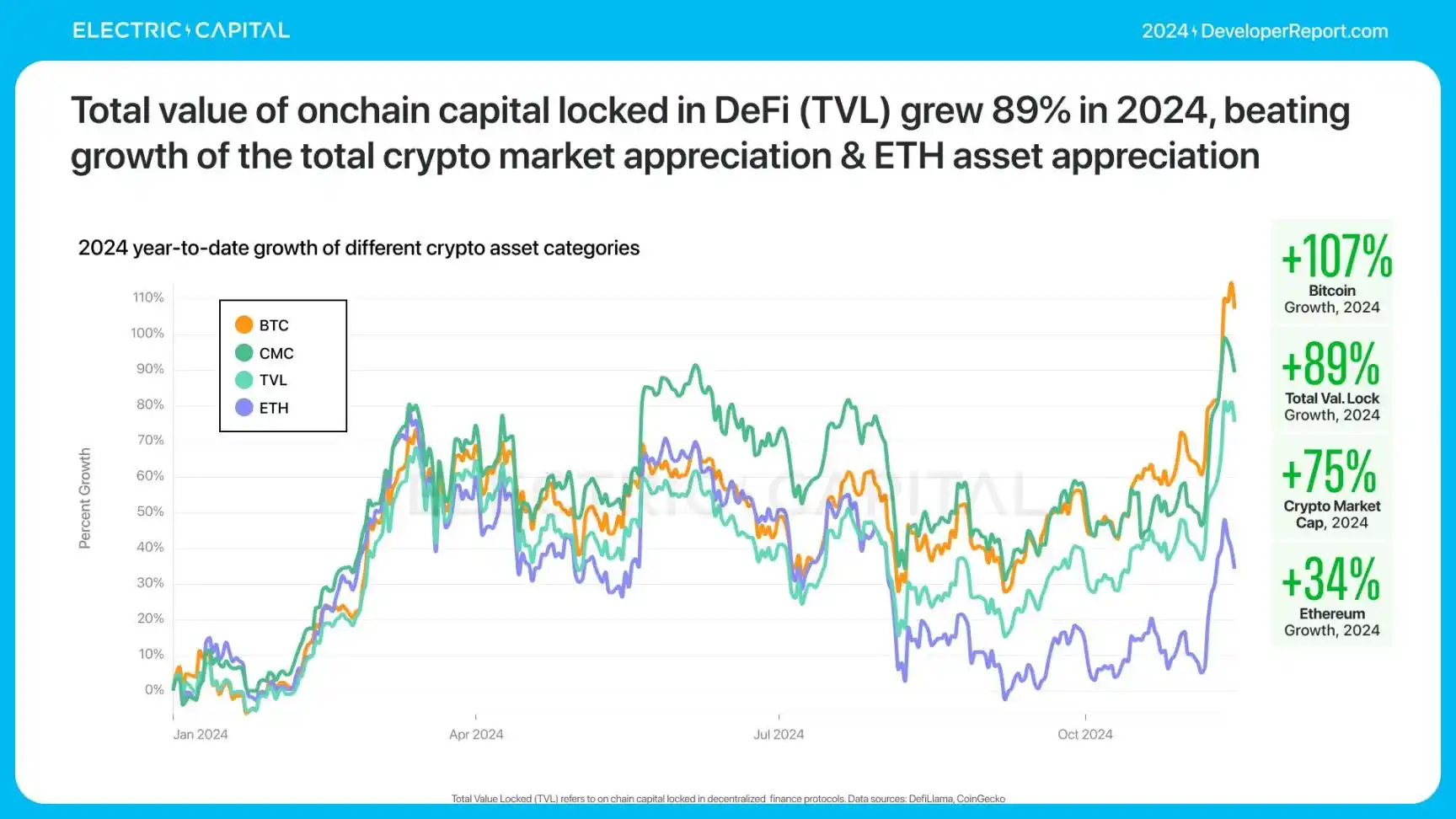
DeFi’s Total Value Locked (TVL) grew 89% in 2024.
Ethereum’s TVL dominates, 7x that of the next largest chain.
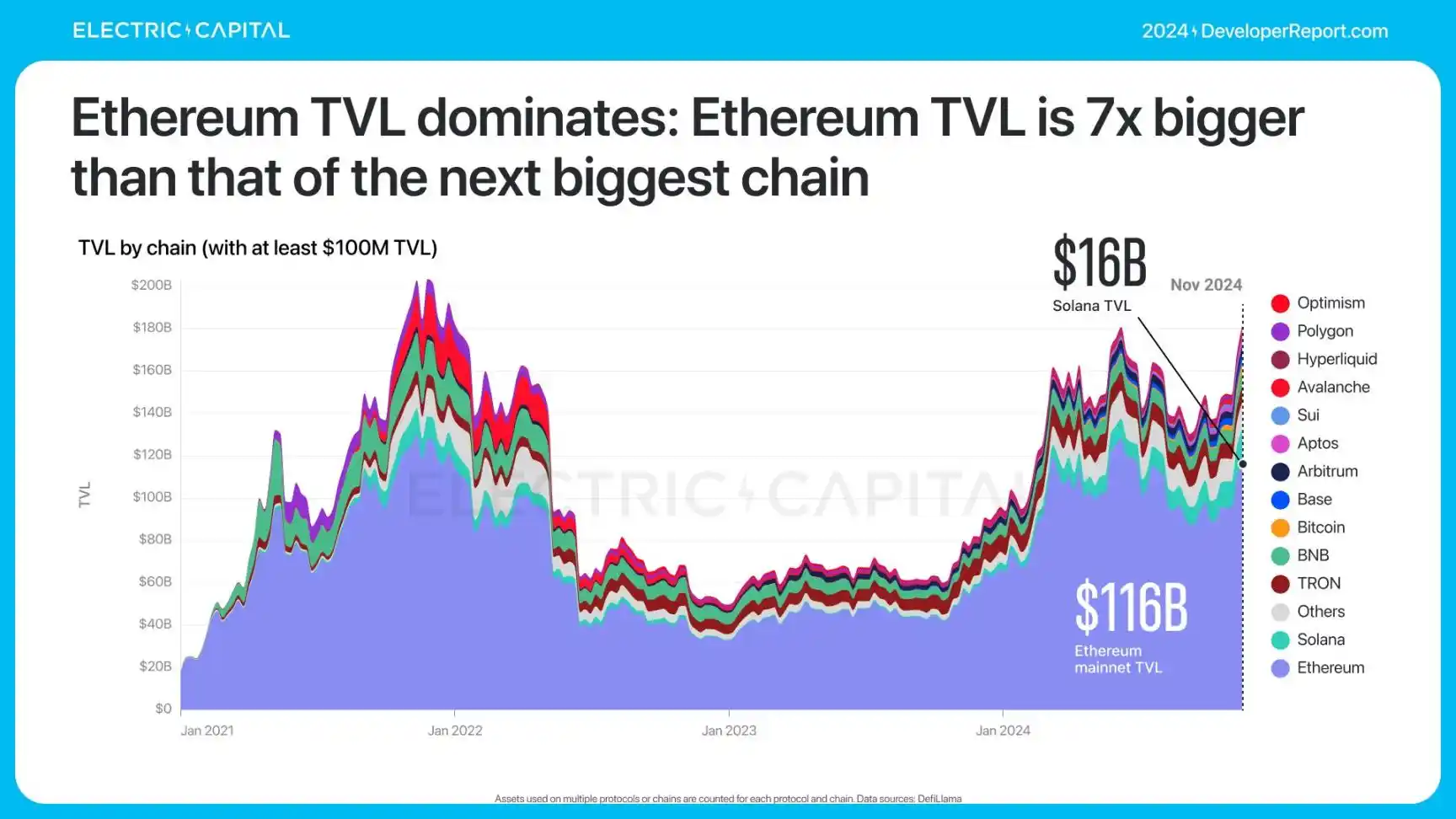
Most TVL has been concentrated on Ethereum.
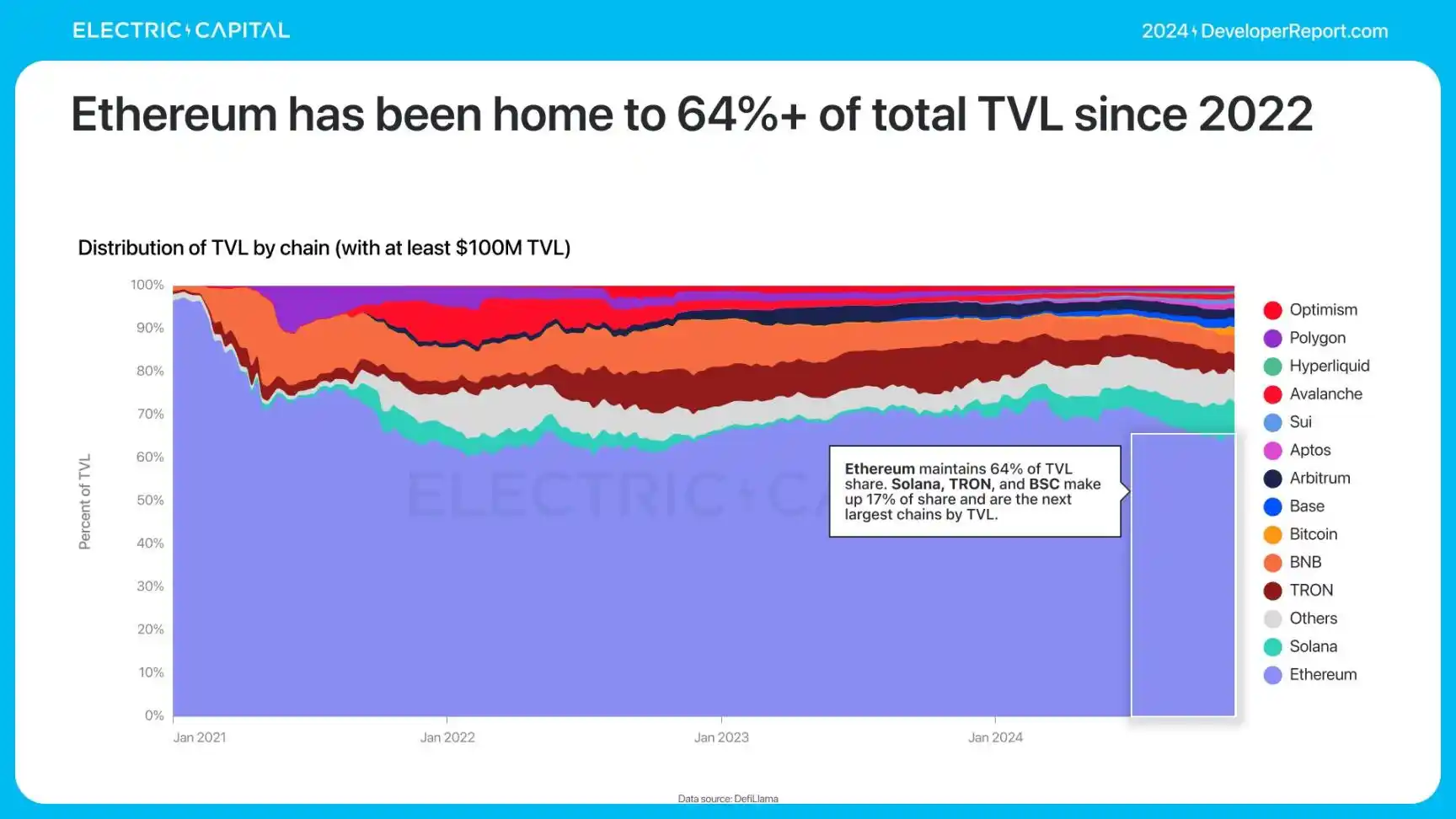
Non-Ethereum TVL grew from 3% to 36% in 3 years.
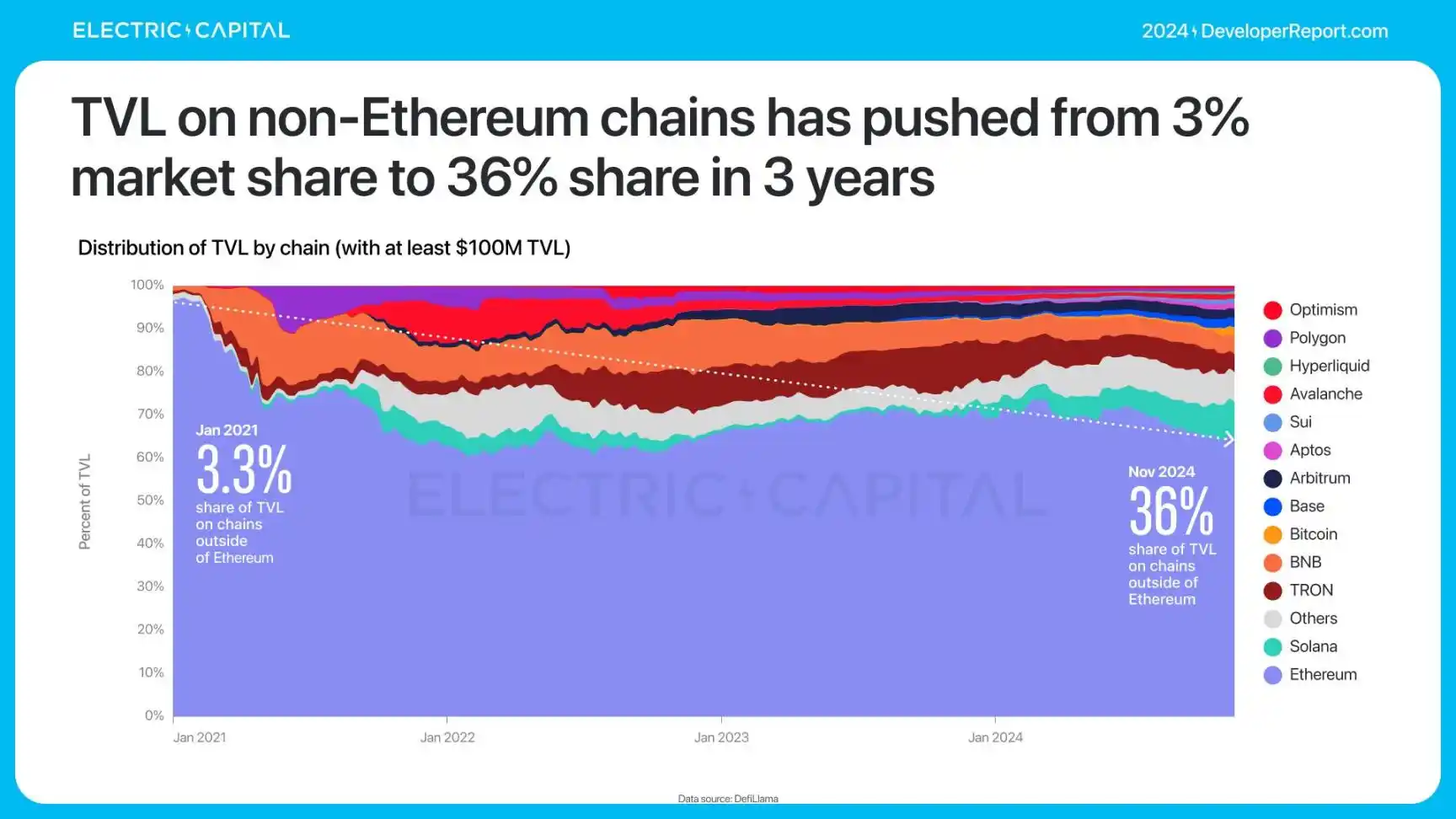
Non-Ethereum TVL grew from 3% to 36% in 3 years.
Non-Ethereum TVL grew from 3% to 36% in 3 years.
Non-Ethereum TVL grew from 3% to 36% in 3 years.
Non-Ethereum TVL grew from 3% to 36% in 3 years.
Non-Ethereum TVL grew from 3% to 36% in 3 years.
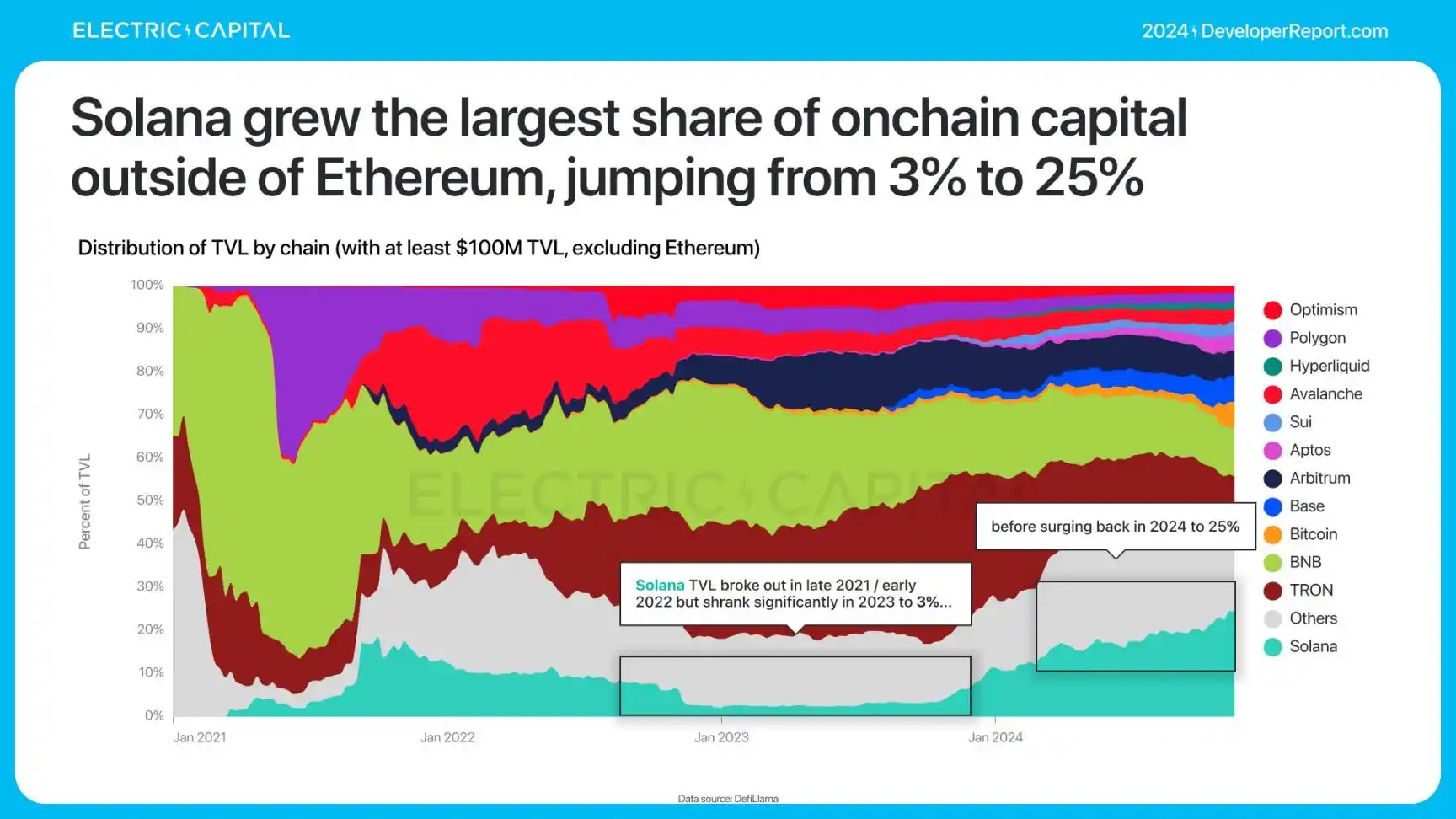
Non-Ethereum TVL grew from
The biggest jump in TVL share happened in Solana
What’s driving all this TVL growth? We can categorize DeFi developers by developer type.
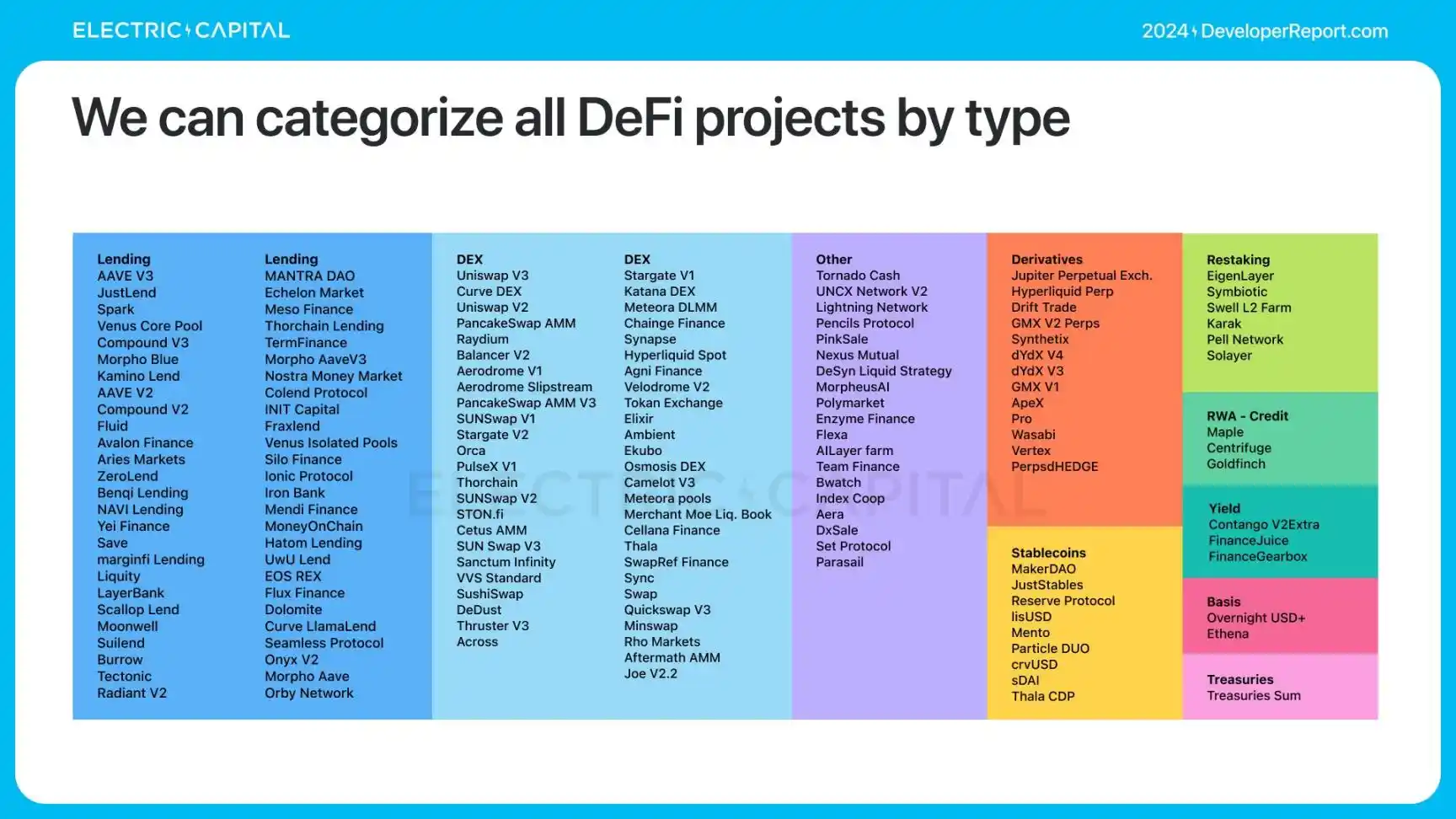
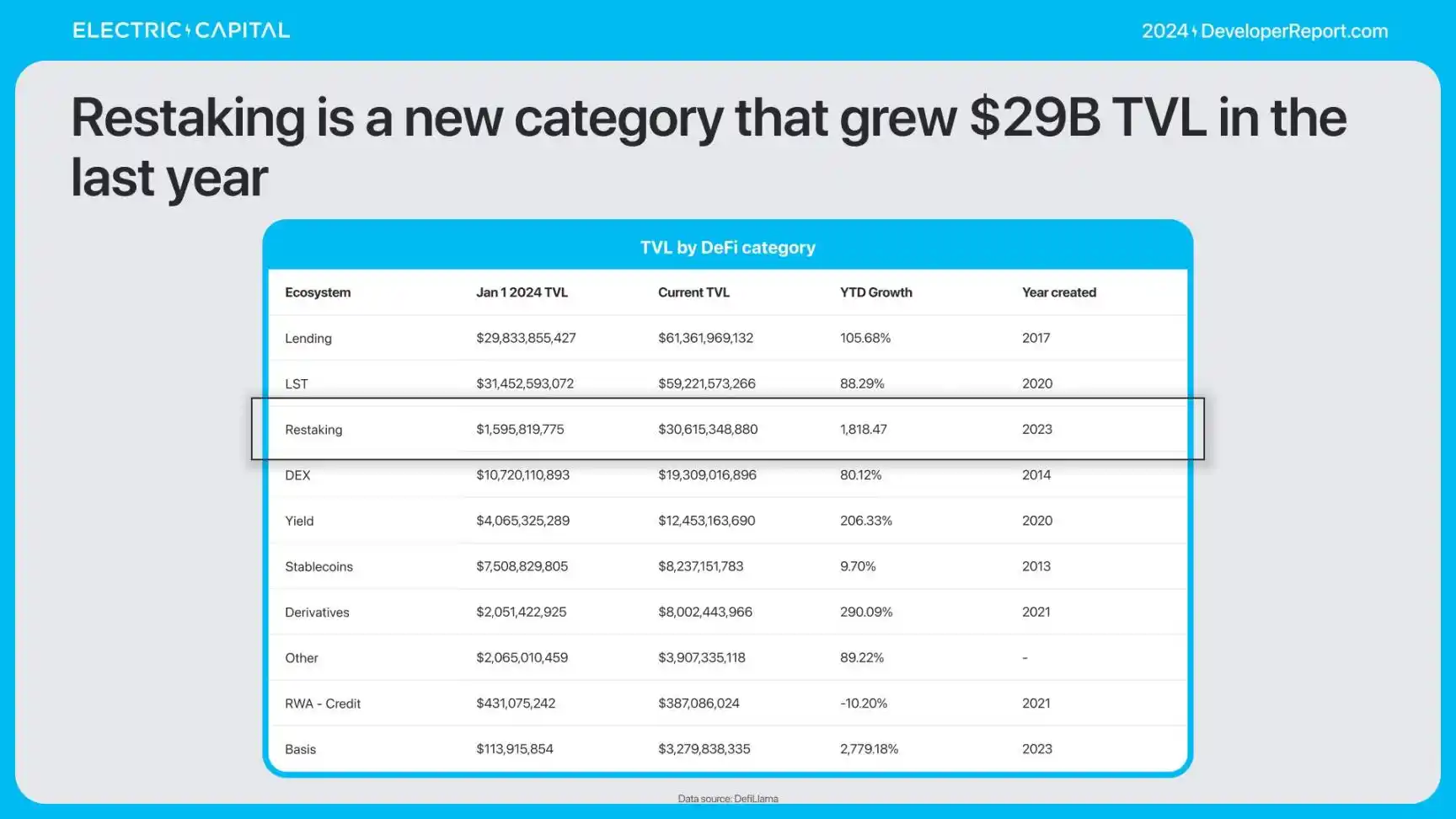
Restaking grew by $29 billion in TVL over the past year.
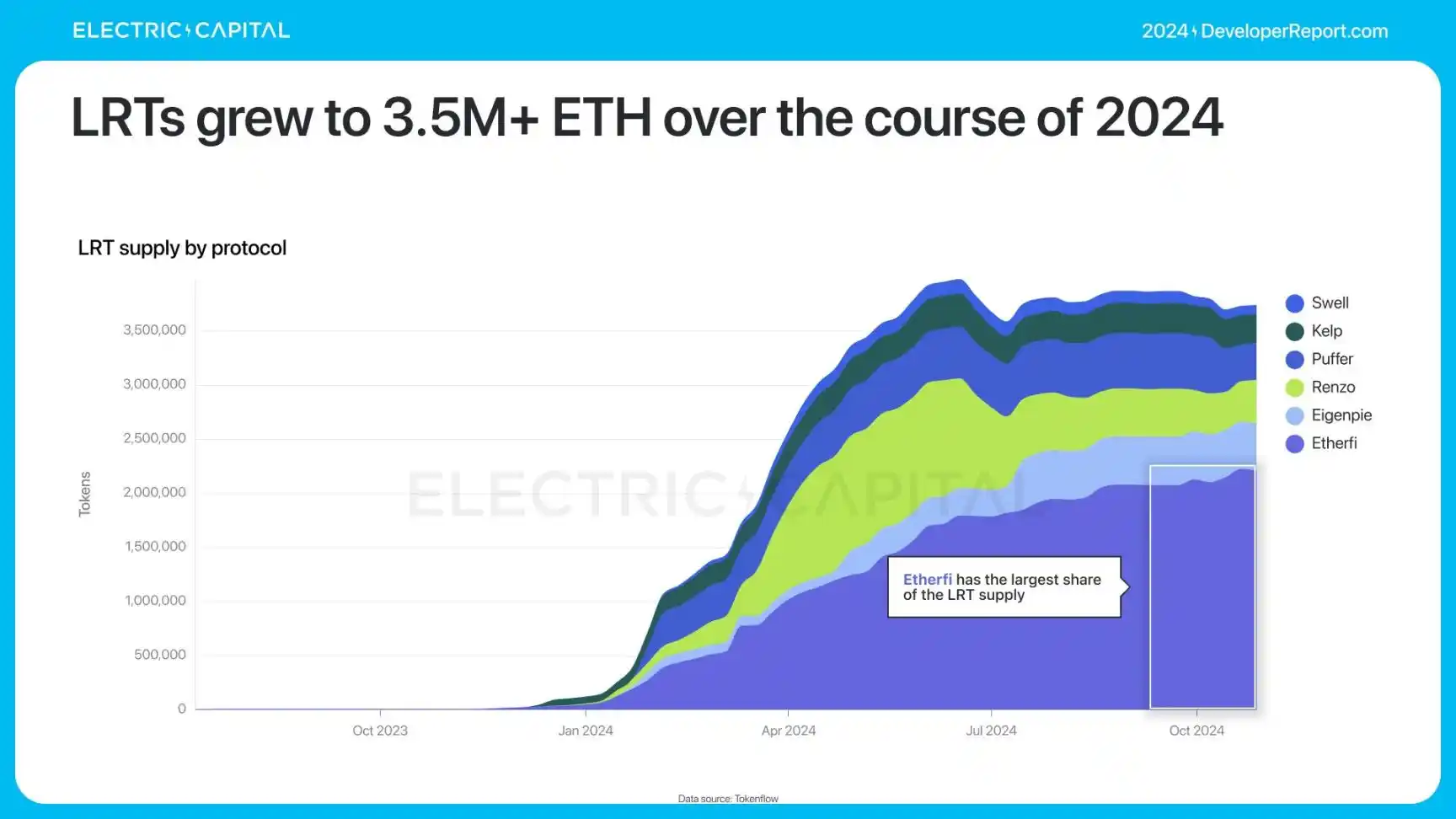
LRTs grew to over 3.5M ETH.
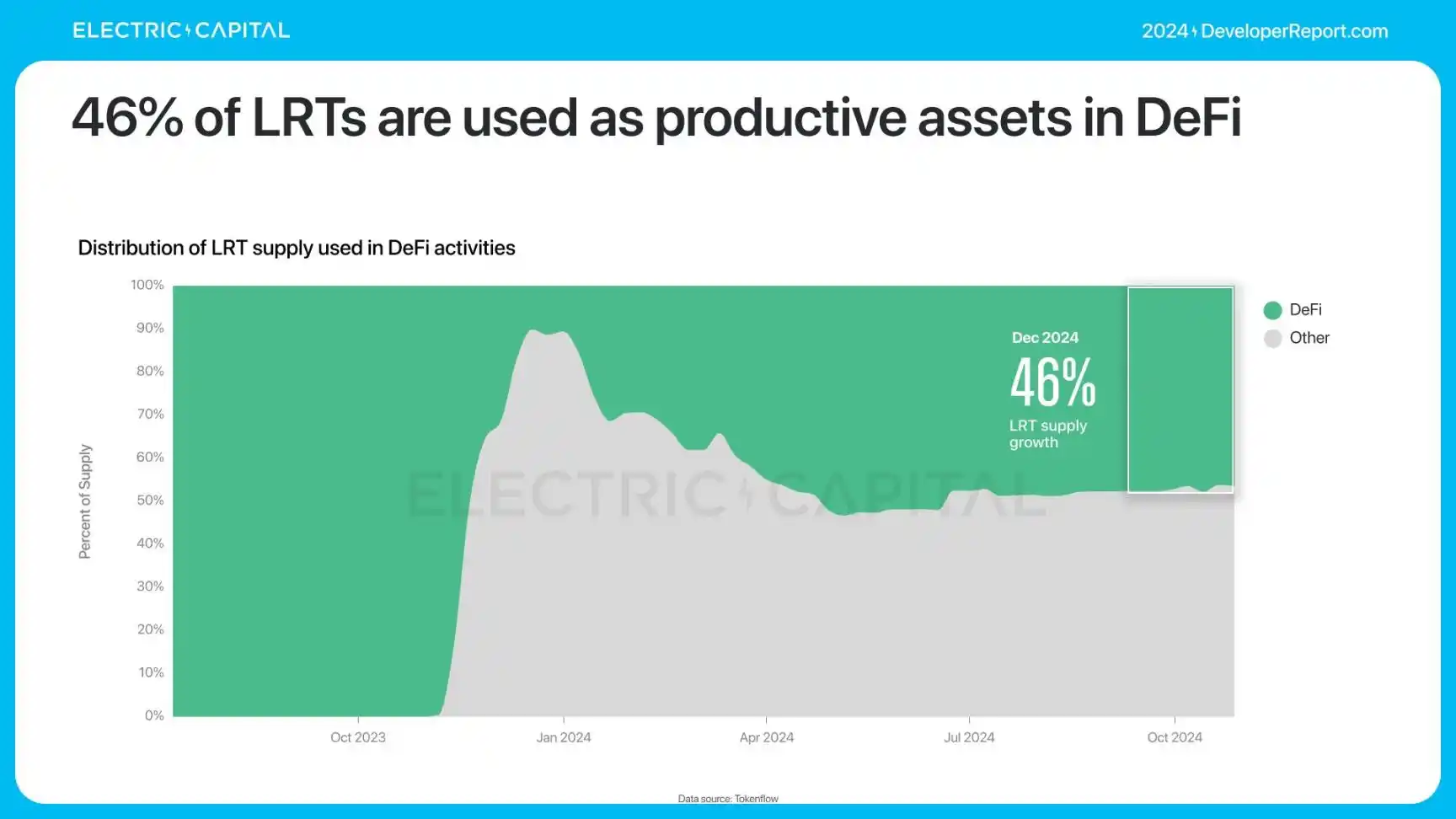
46% of LRTs are used in DeFi.
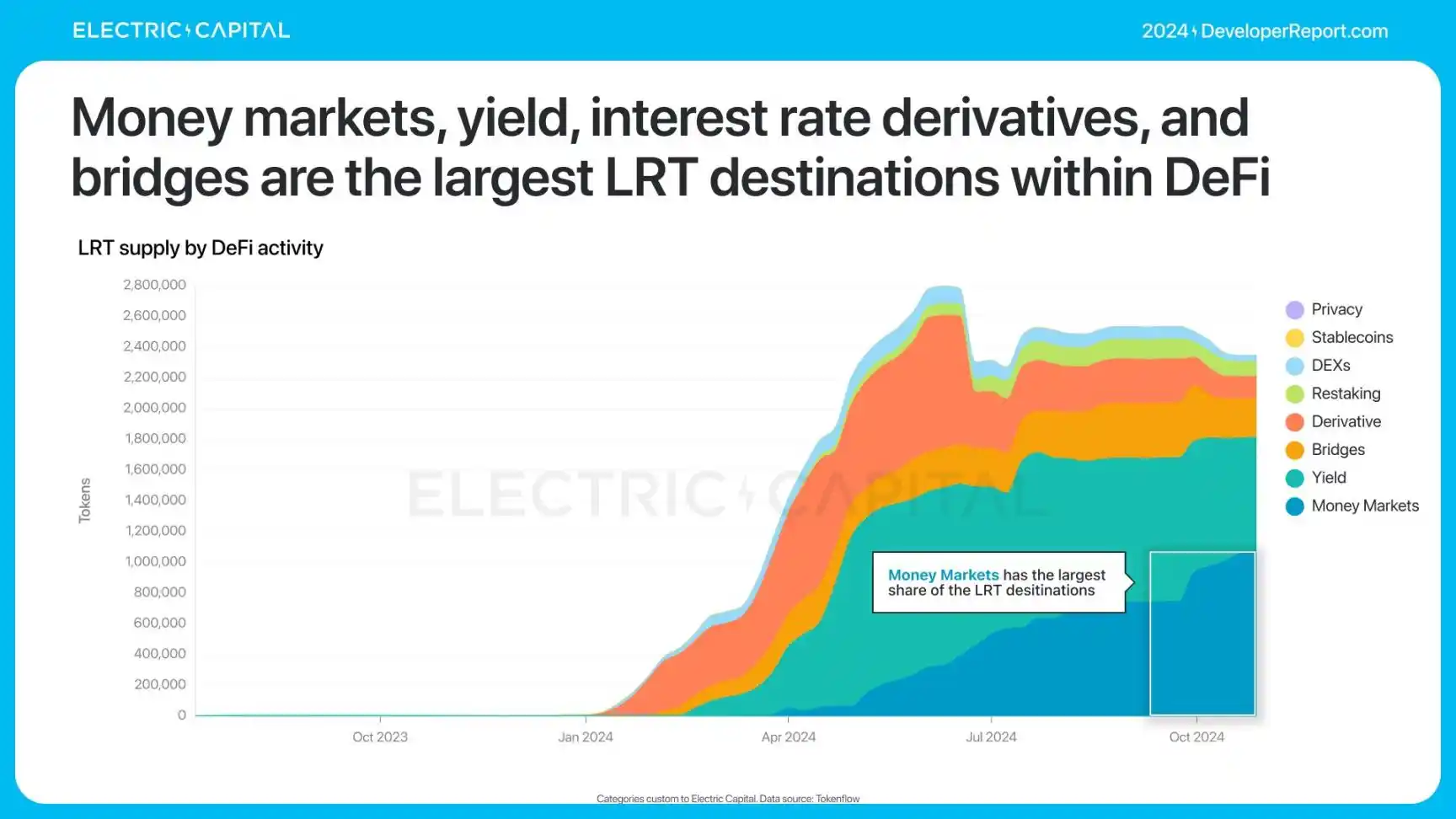
Most LRTs are deposited into money markets, yield, interest rate derivatives, and bridging platforms.
Eigenlayer enabled the creation of LRTs as a space. So, how is Eigenlayer’s developer ecosystem developing?
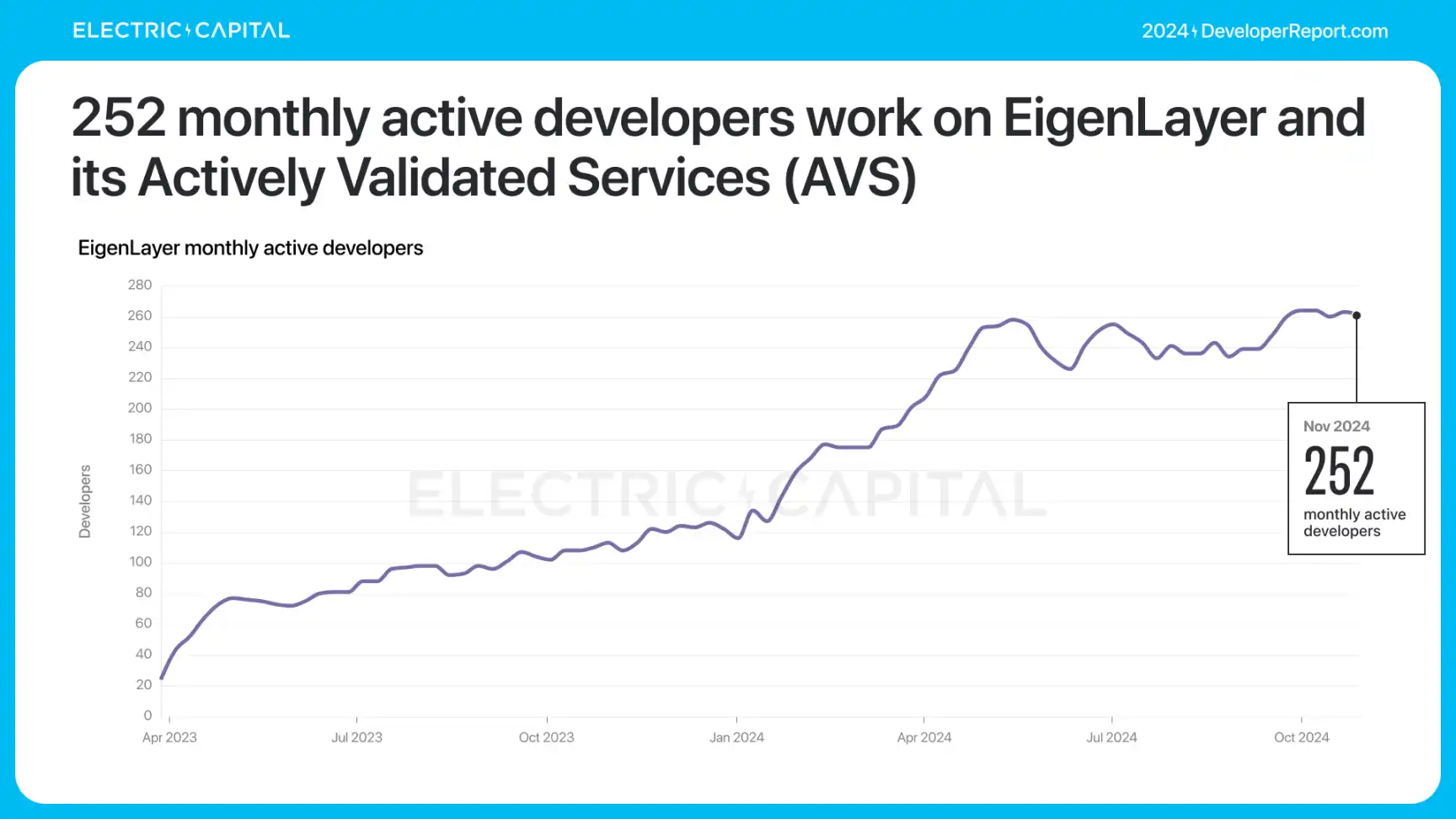
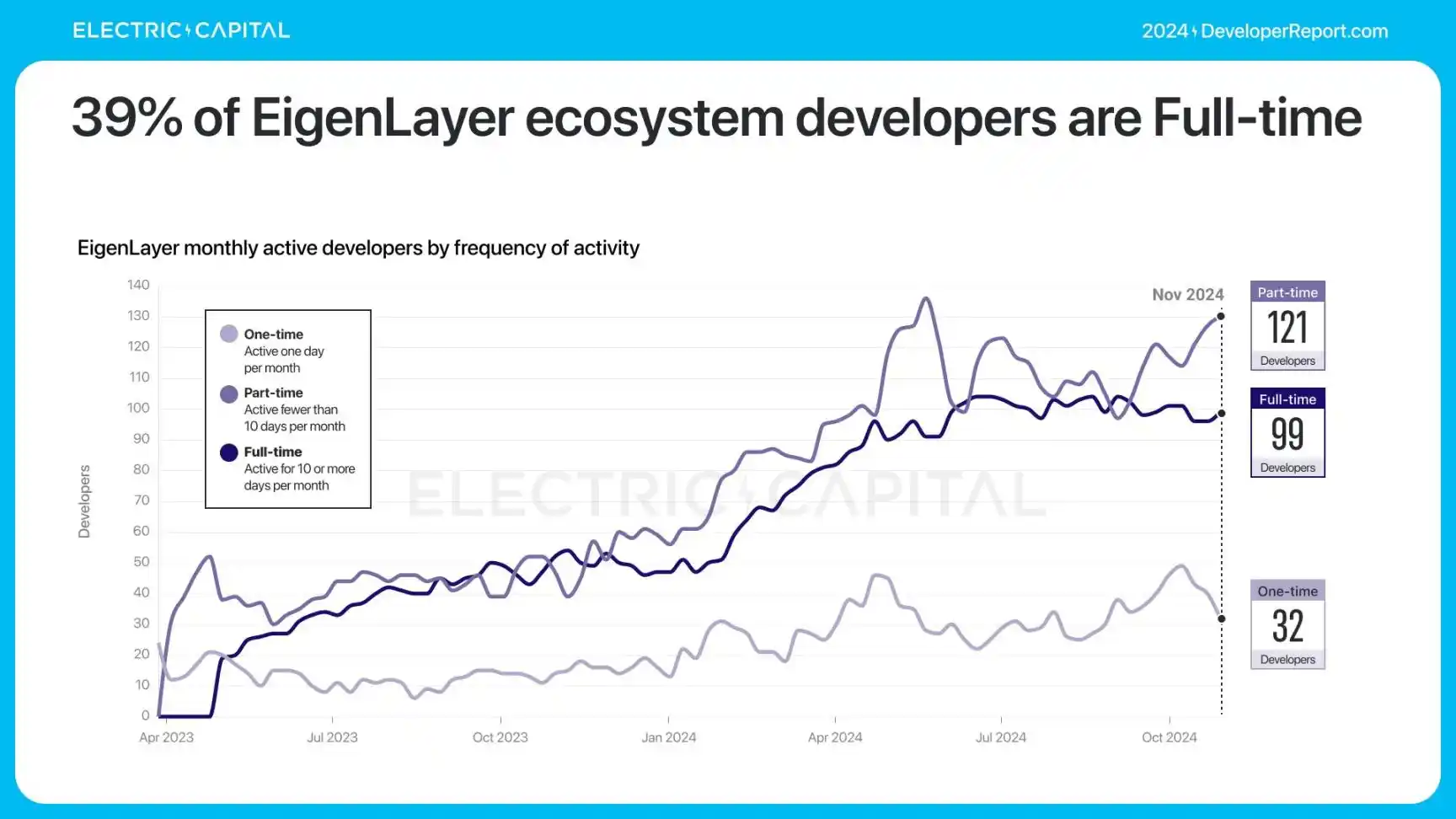
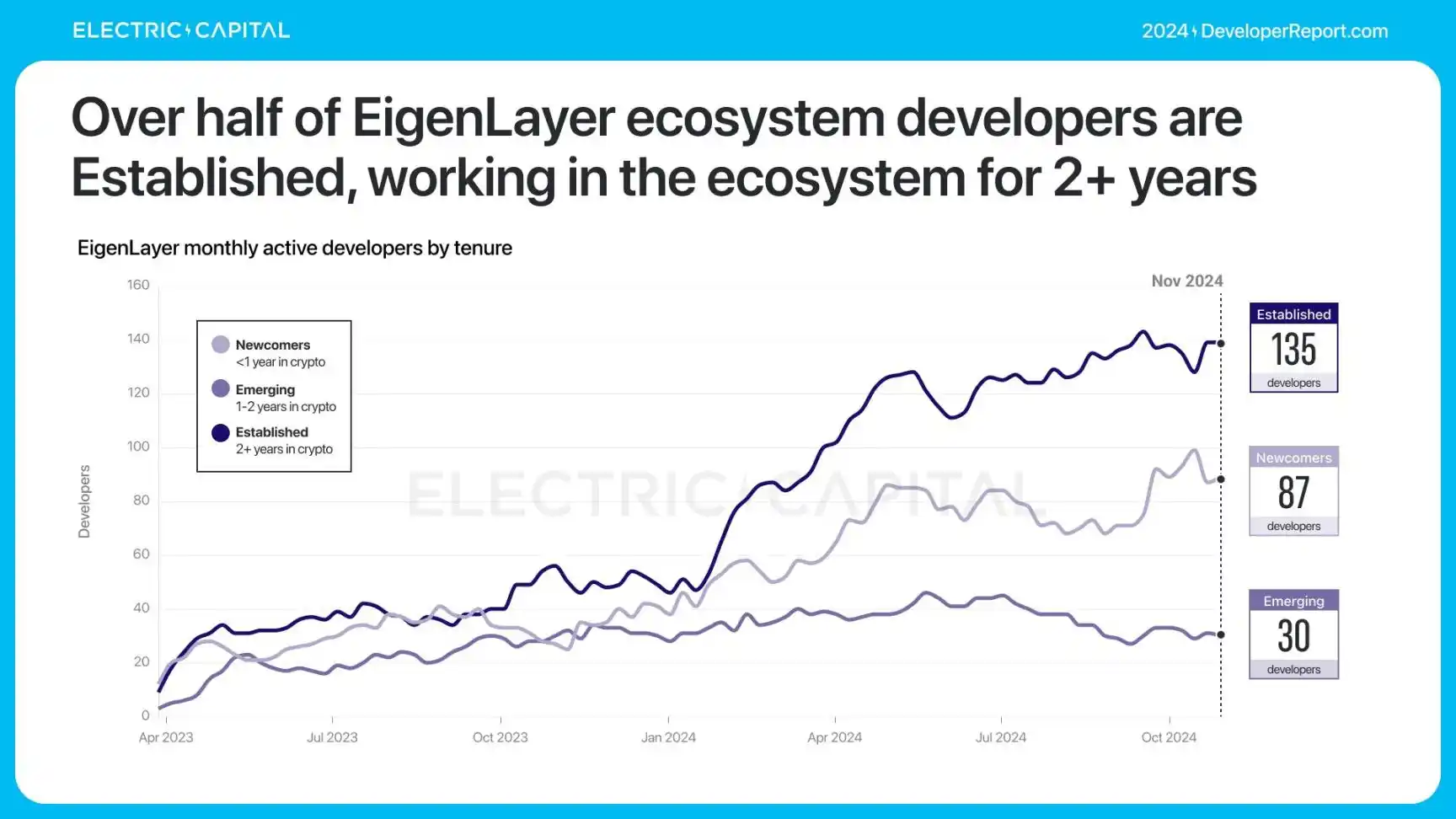
There are 252 monthly active developers working in the Eigenlayer ecosystem. Eigenlayer’s developers are very engaged: 39% are full-time developers, and more than half of the developers have been working in the ecosystem for more than 2 years.
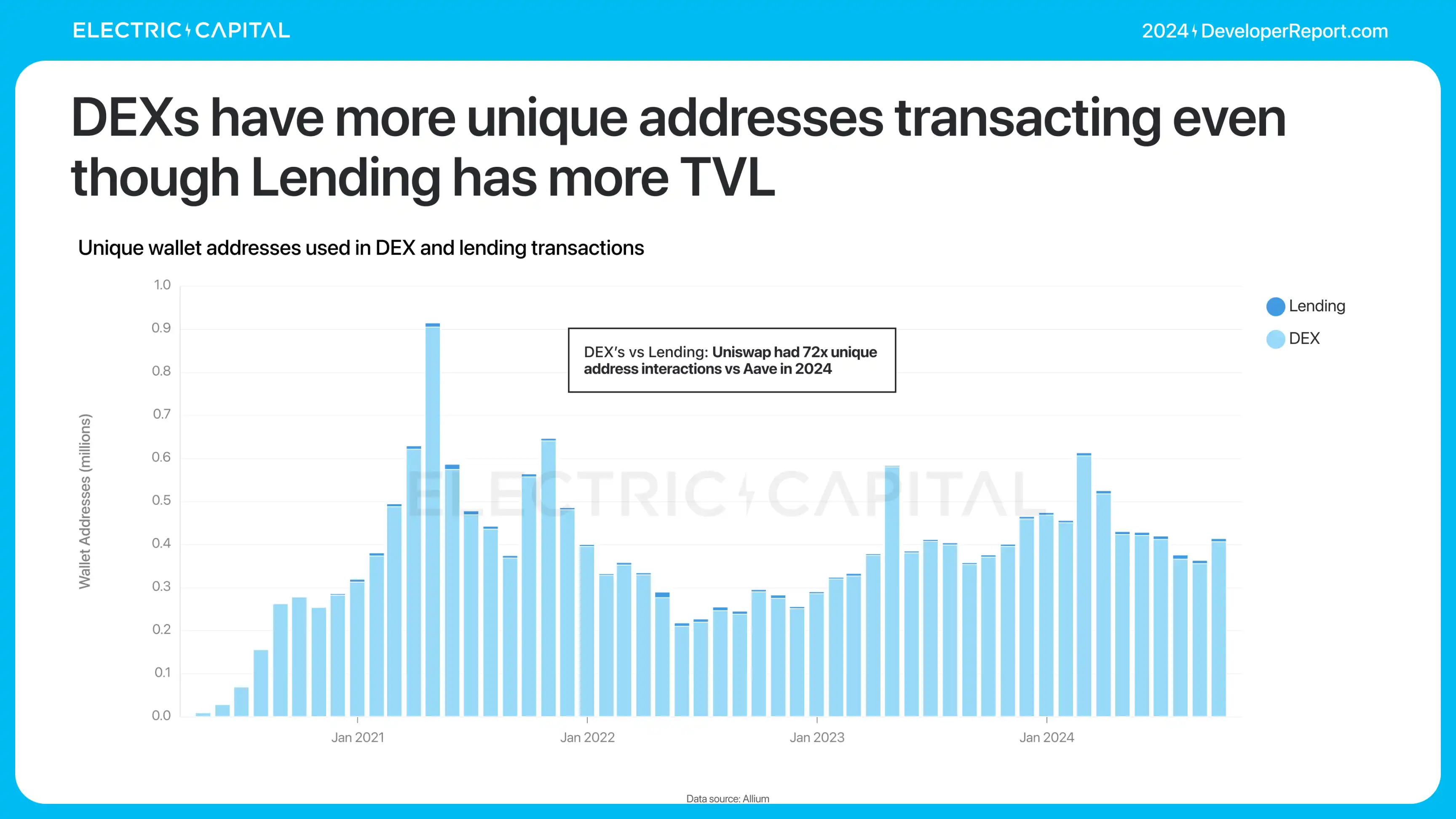
TVL is not the only metric we need to understand DeFi usage. While lending platforms have 3x the TVL of DEXs, DEXs have more unique addresses transacting. For example — DEX vs. lending platforms: In 2024, Uniswap had 72x more unique address interactions than AAVE. 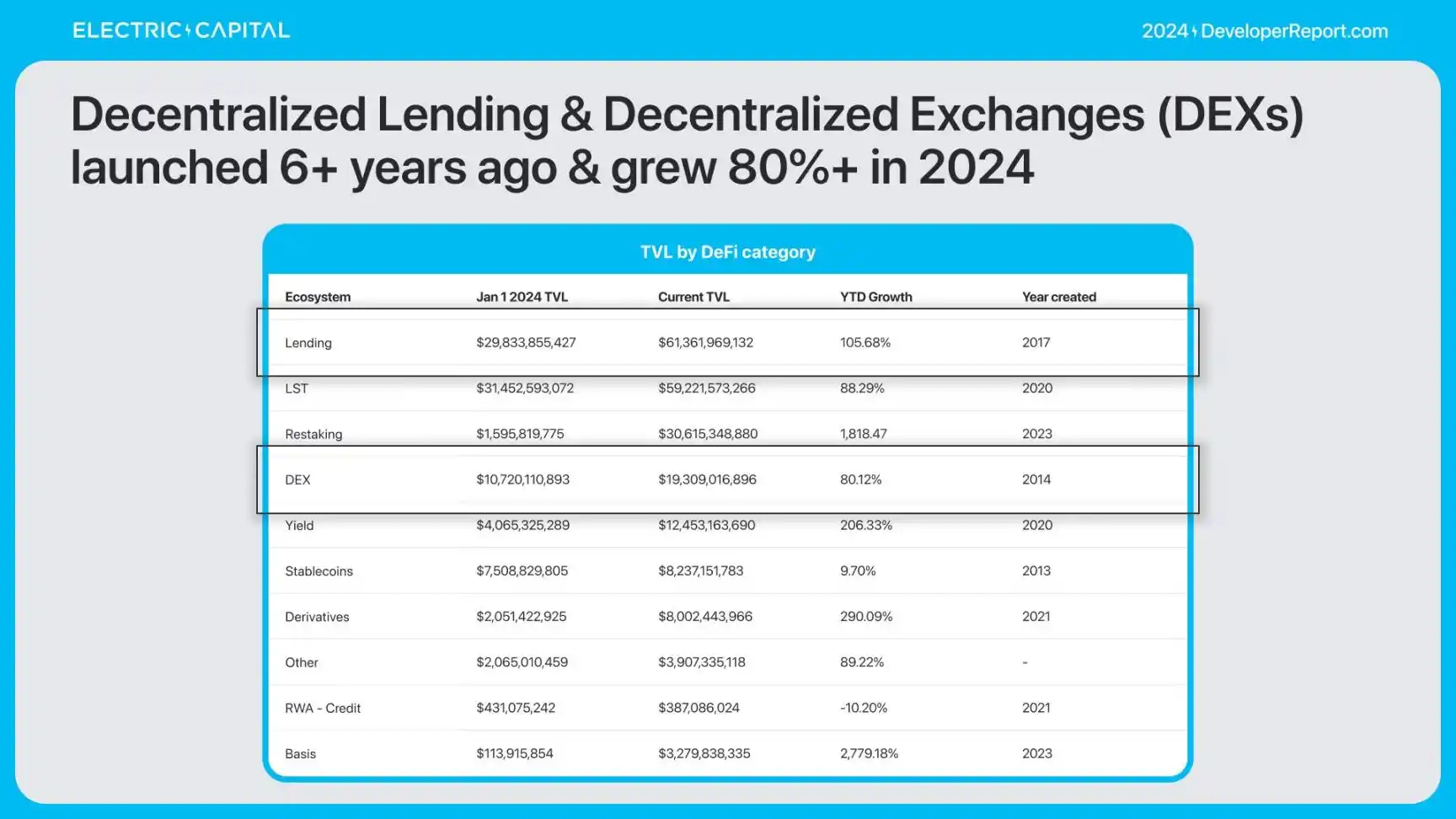
In 2024, DEX volume almost doubled to $209B per month.
Solana and Ethereum settled the most volume — over 2x the next largest chain.
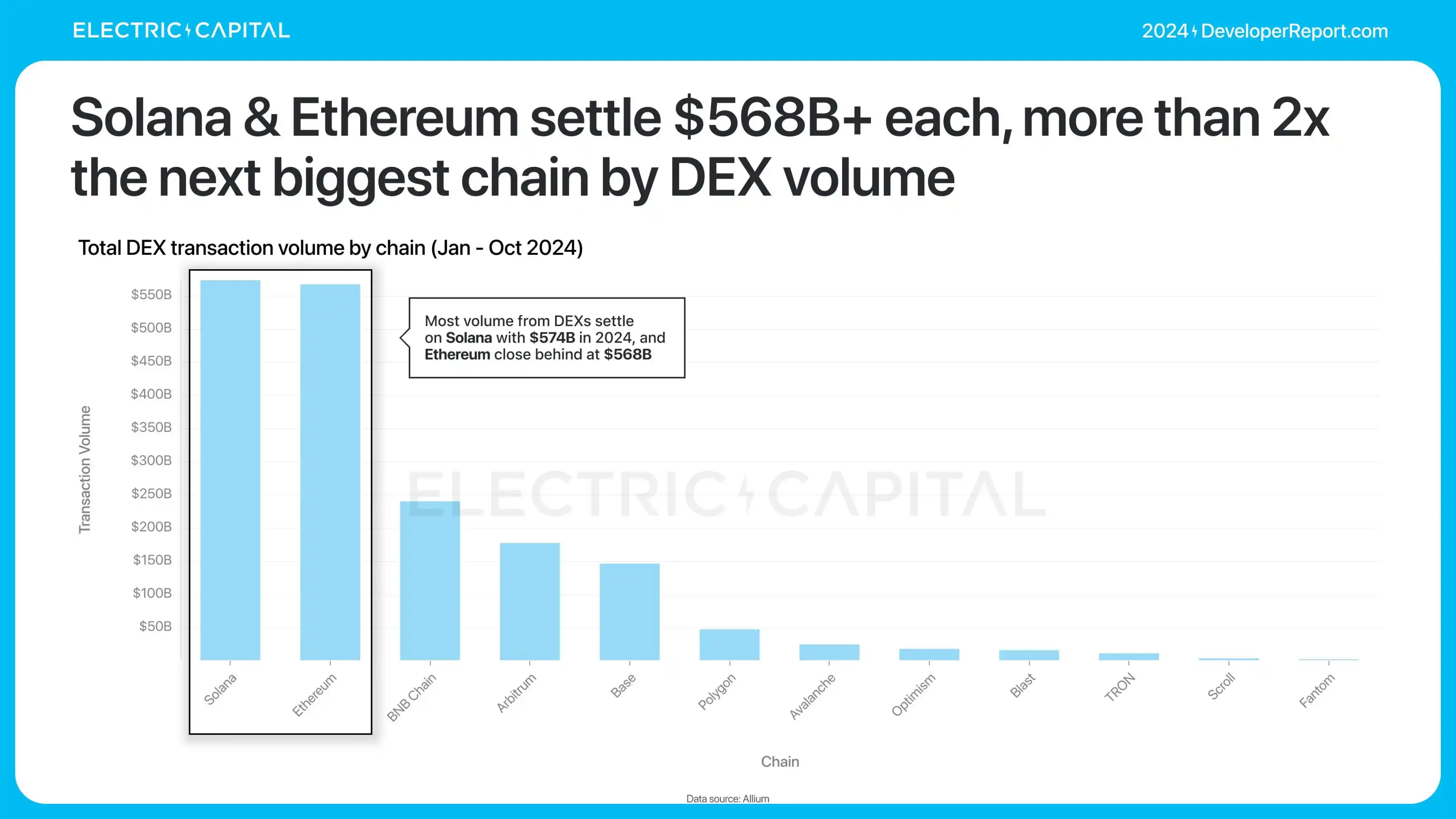
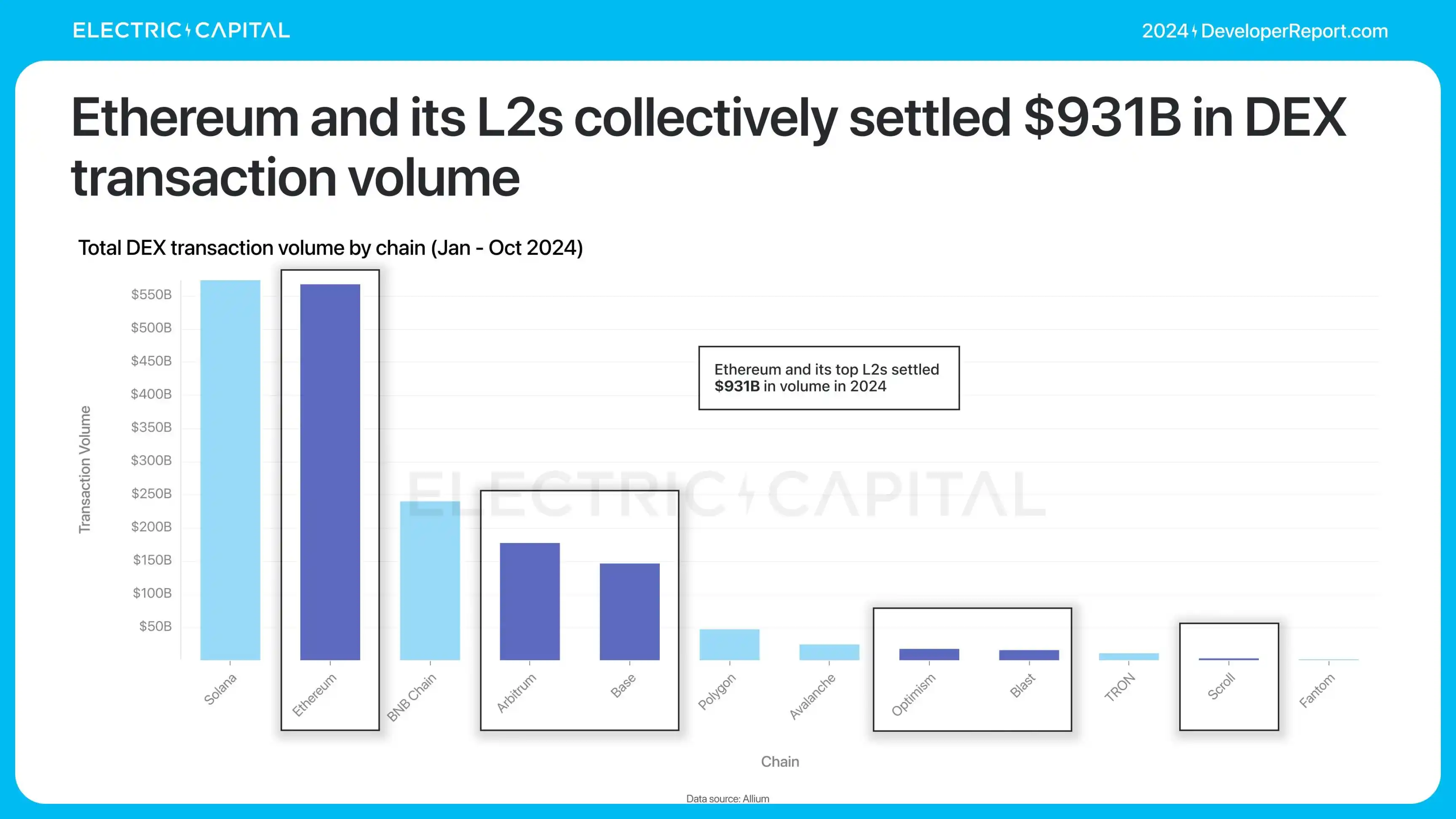
Solana settled the most volume in 2024, at $574 billion. Total DEX volume for Ethereum mainnet and its L2 chains is $931 billion.
Solana dominates the low-fee DEX use case. In 2024, its volume more than tripled, reaching 646 million transactions per month.
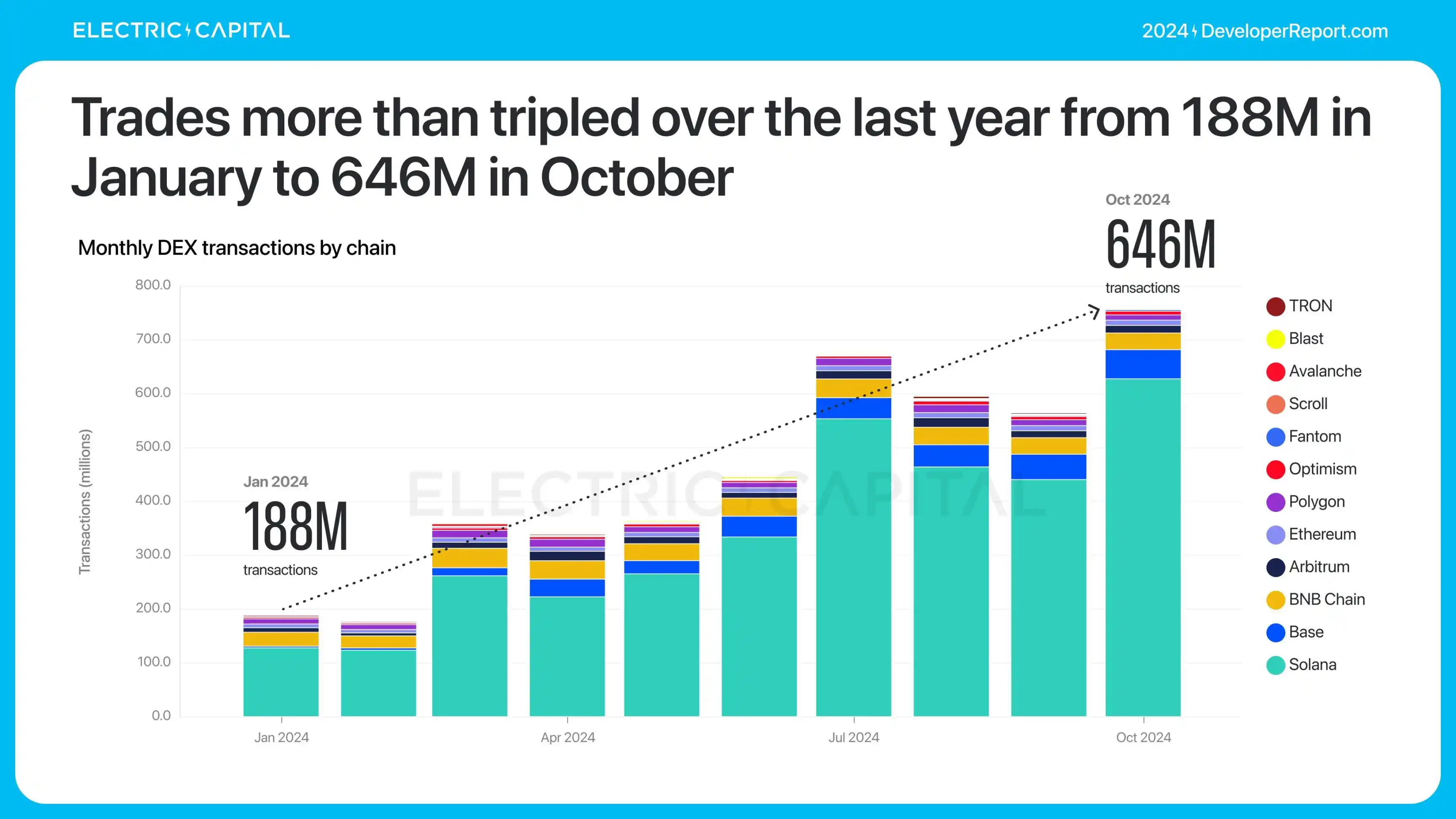
81% of DEX transactions come from Solana.
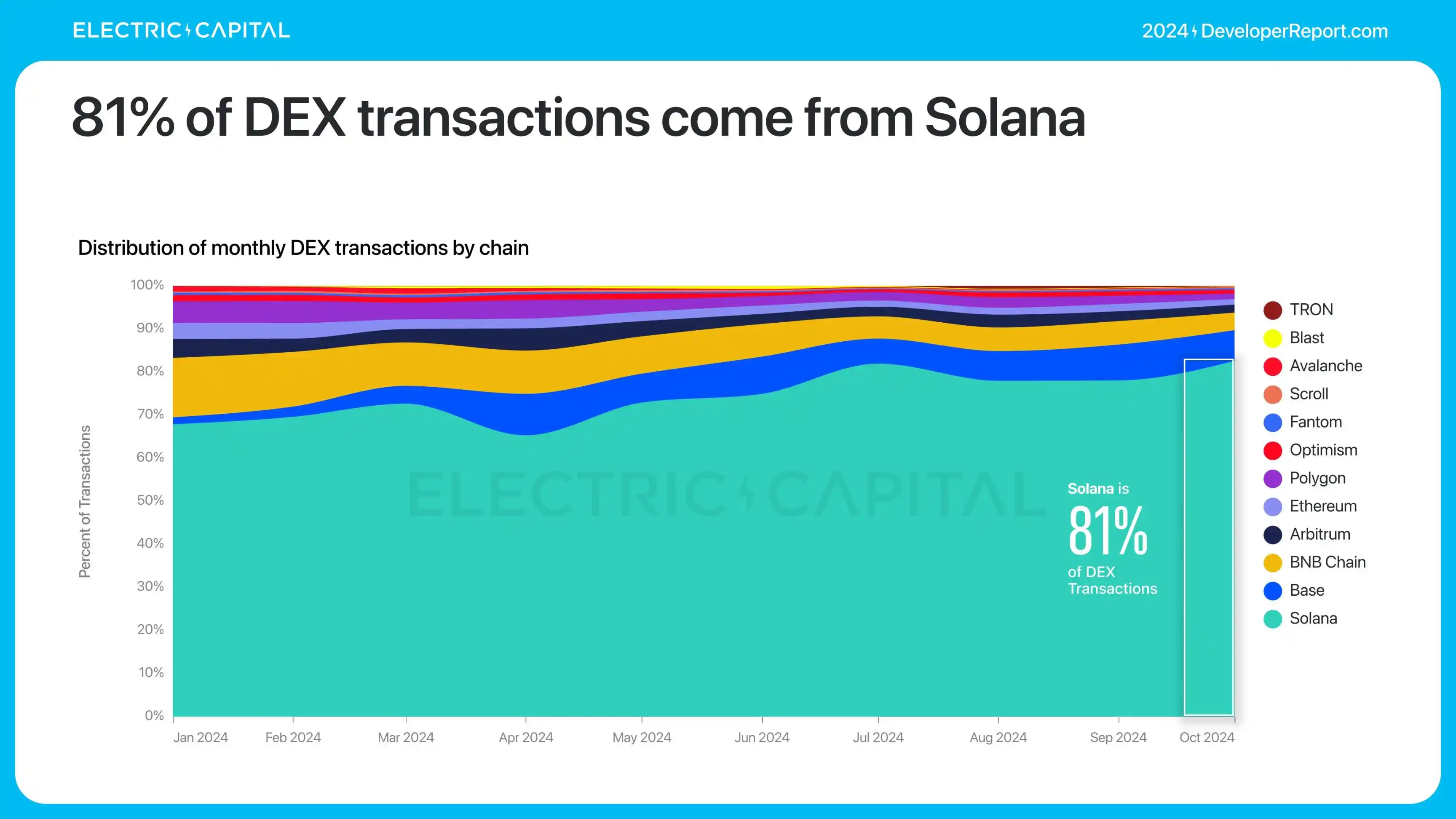
By number of wallets transacting, excluding wallets with only 1 transaction and less than $1. Solana has the most unique wallets transacting, 7x the number of the next largest chain.
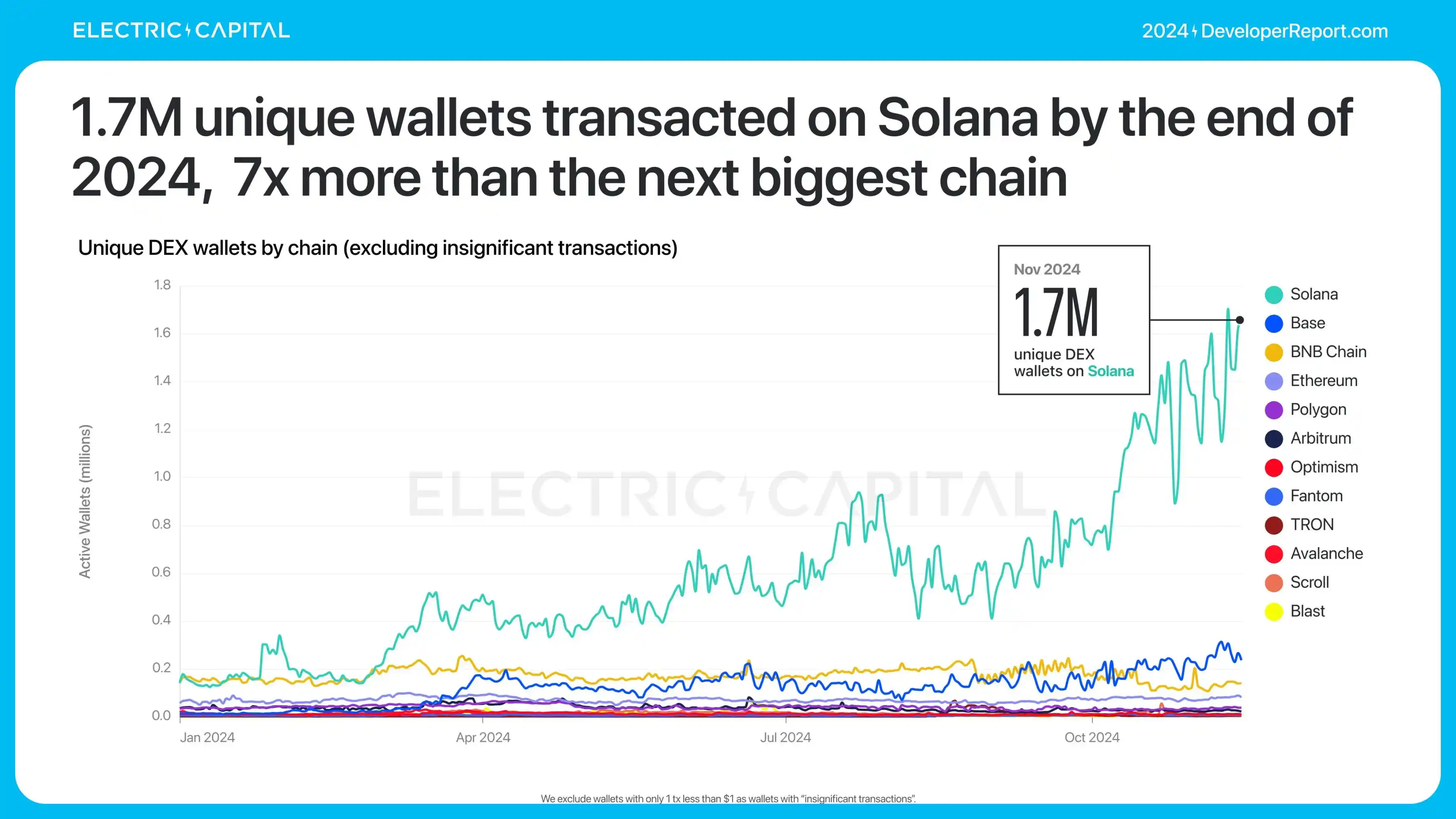
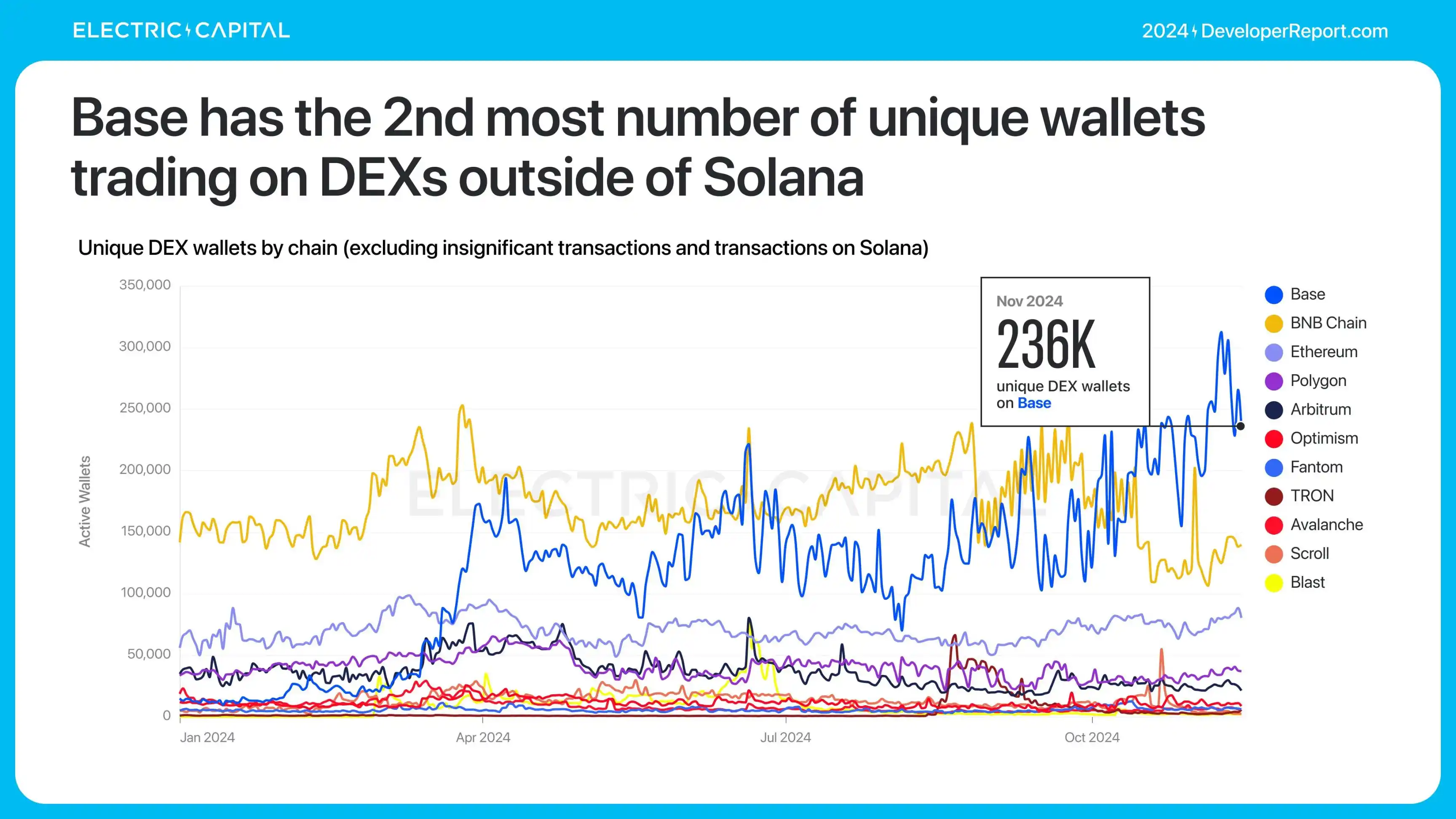
Base has the second most unique wallets transacting after Solana.
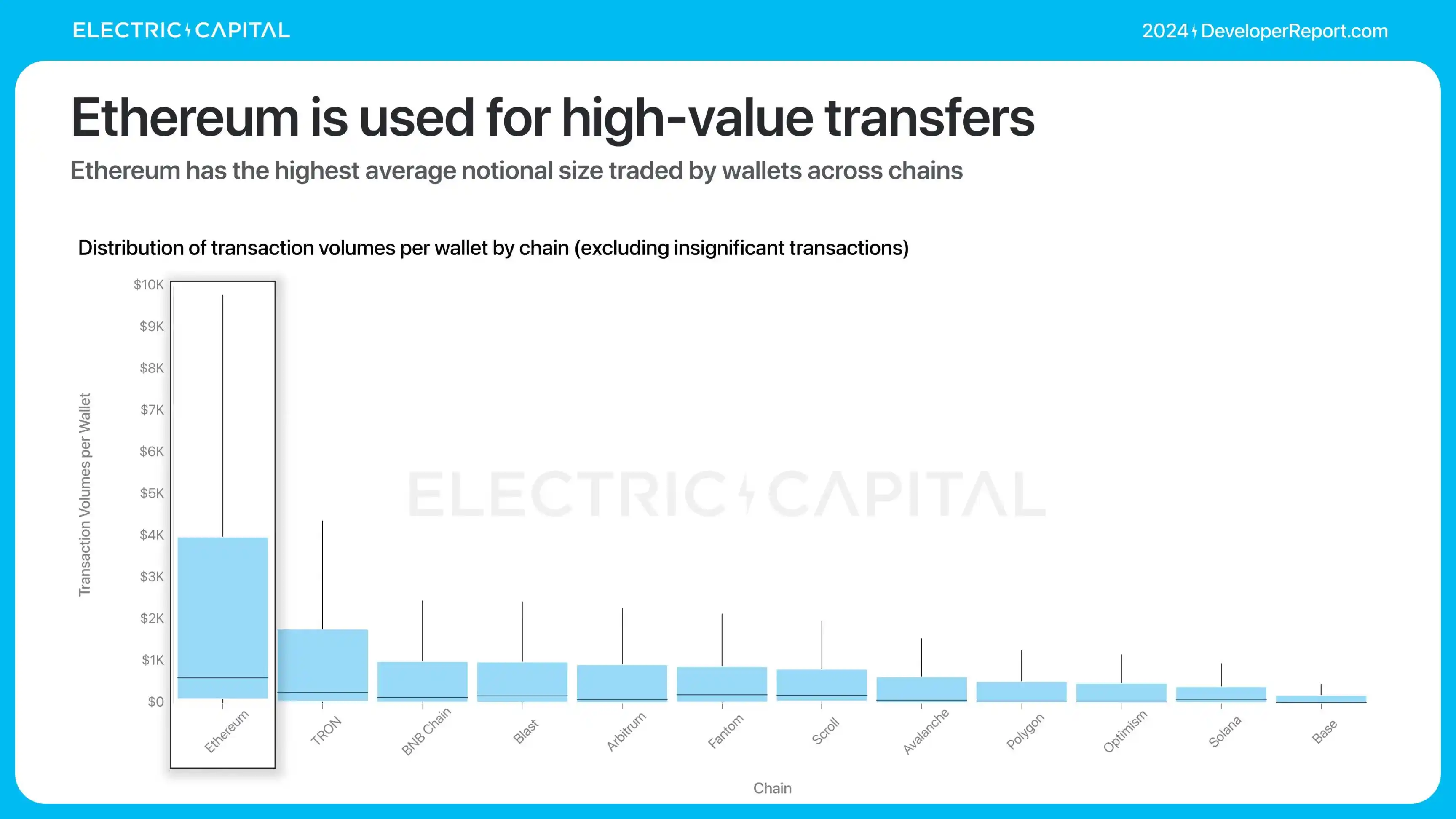
Base and Solana are very popular for small transfers. Wallets on these chains have the smallest average transaction amount.
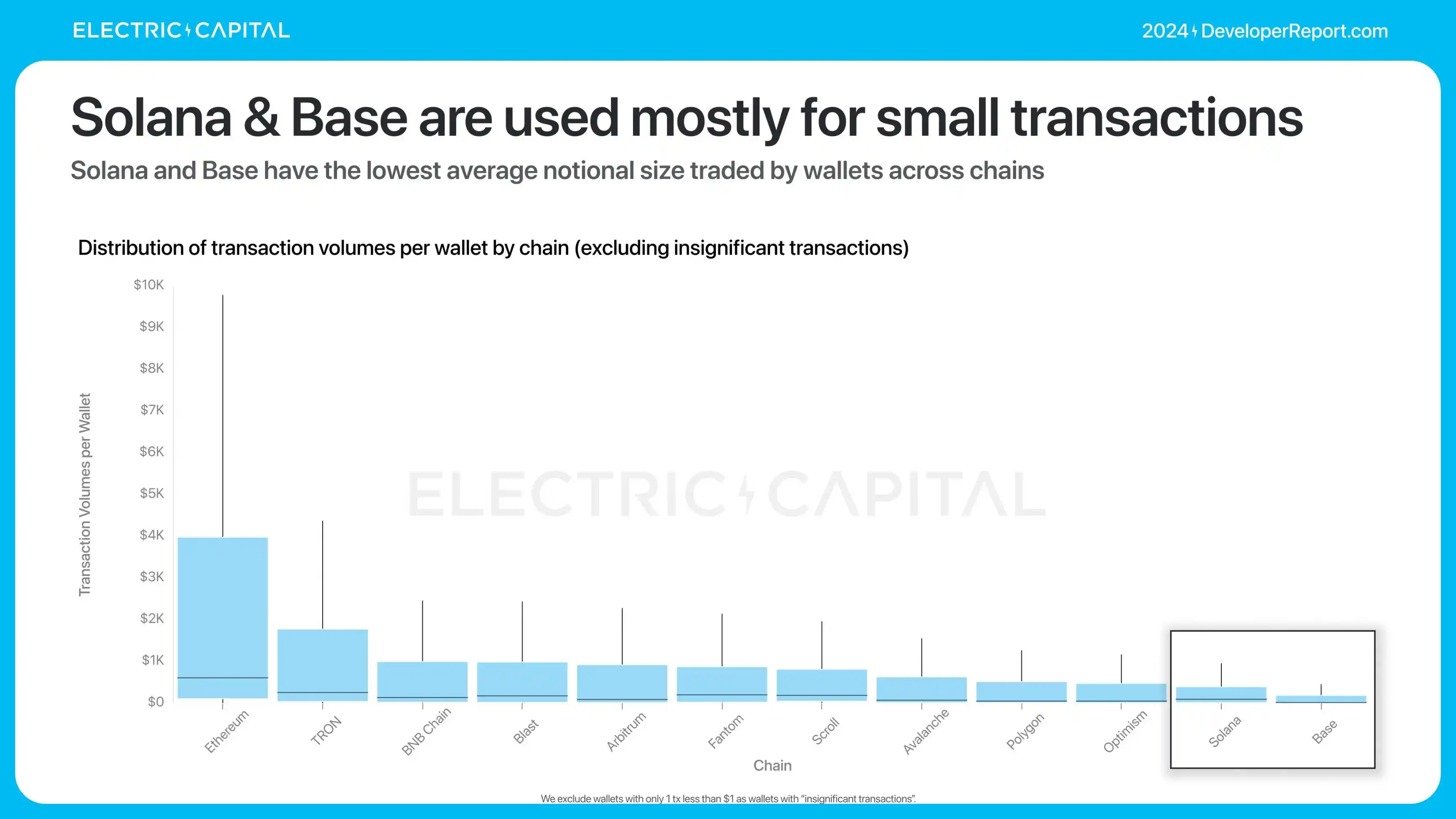
Ethereum is most popular for high value transfers. Wallets on Ethereum have the largest average transaction amount.
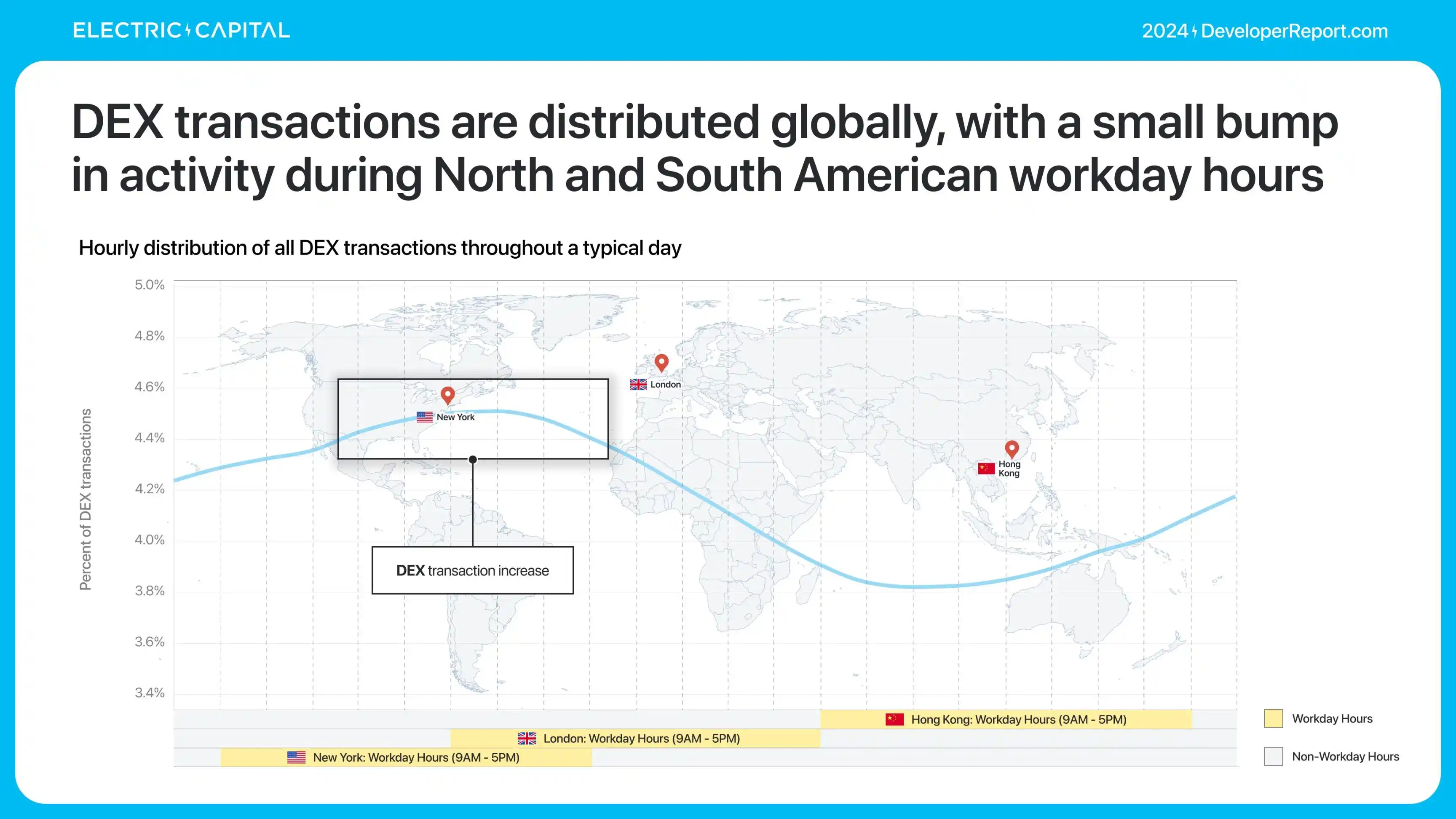
Where are these DEX users? We can understand the usage of DeFi through DEX because financial activities often start or end from DEX.
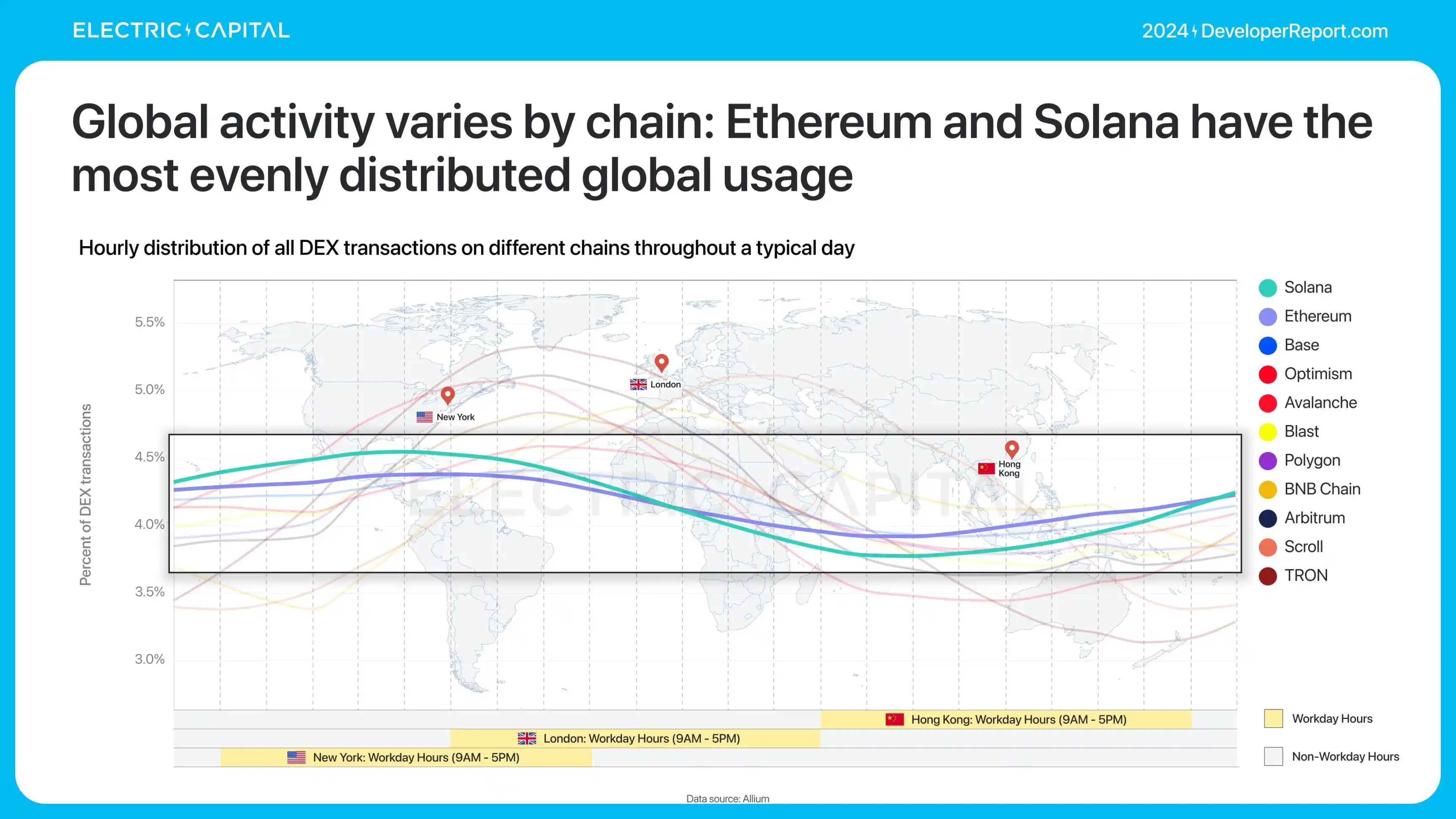
Global activity is distributed differently across chains — the more evenly distributed the activity, the more global the usage. Ethereum and Solana have the most evenly distributed usage.
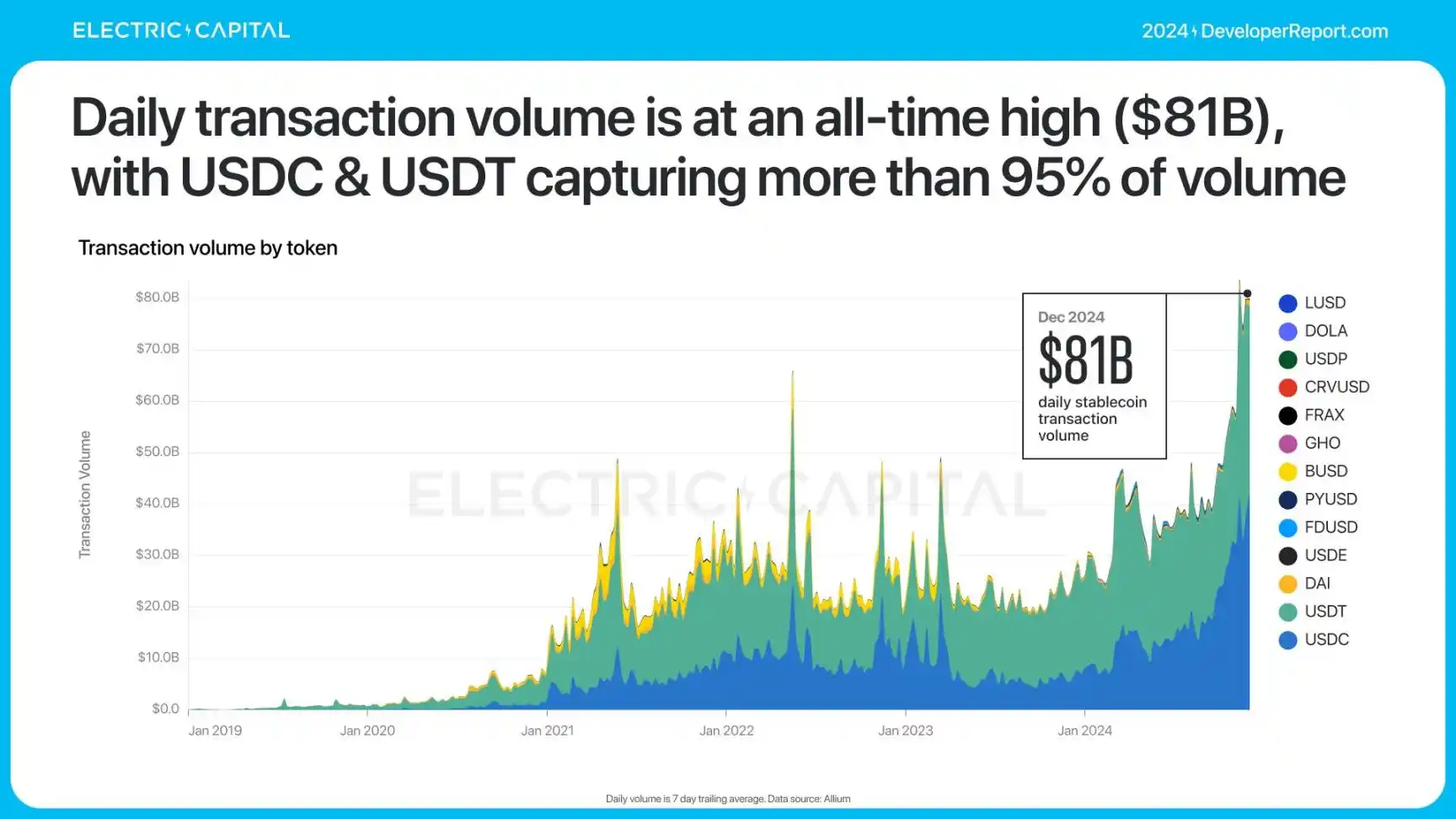
Stablecoins are one of the largest crypto use cases in the world. How are they performing? Stablecoin usage is at an all-time high: $196 billion in total stablecoins in circulation, with $81 billion in daily trading volume — both all-time highs for stablecoins.
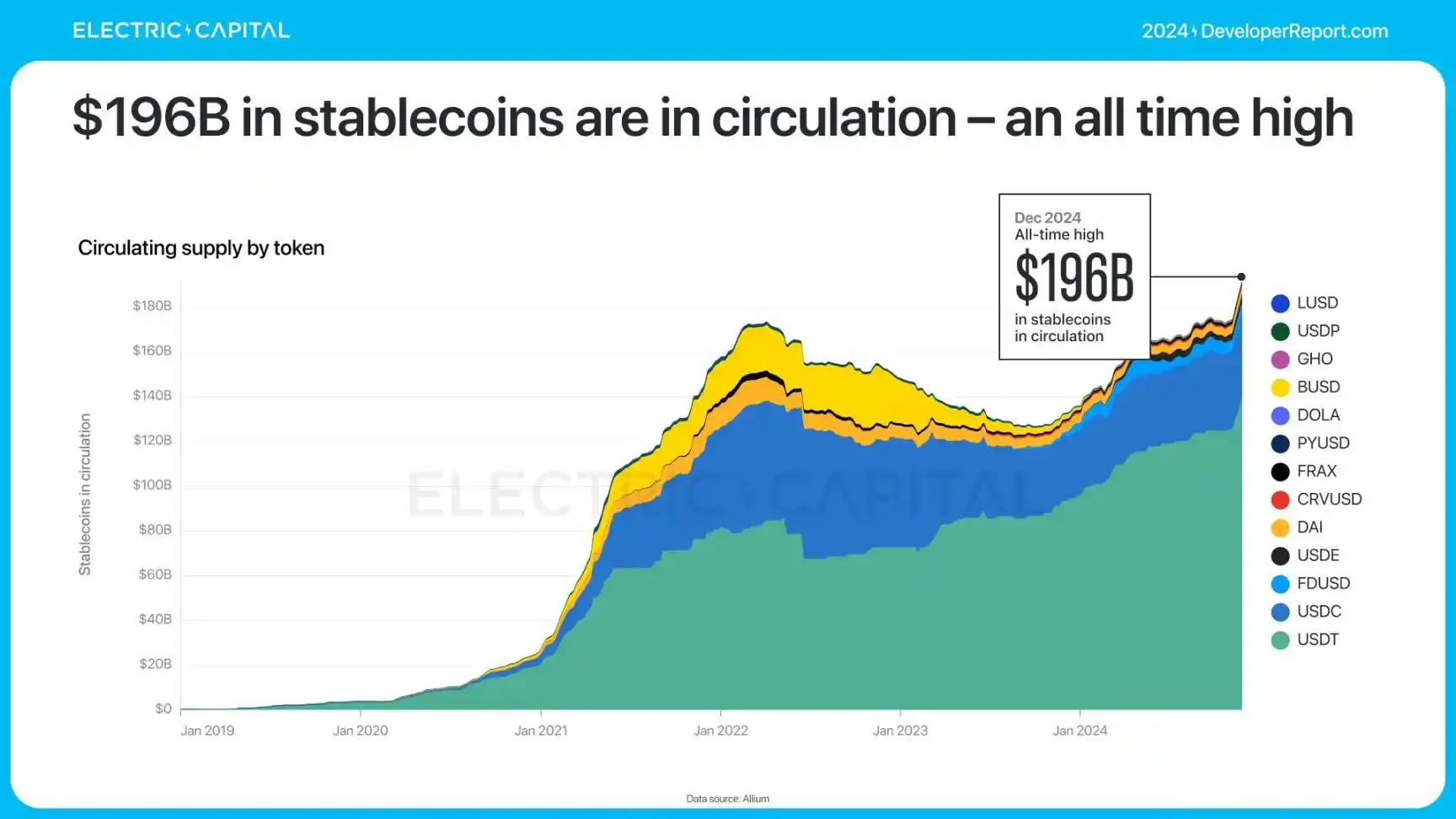
USDC and USDT account for 95% of trading volume.
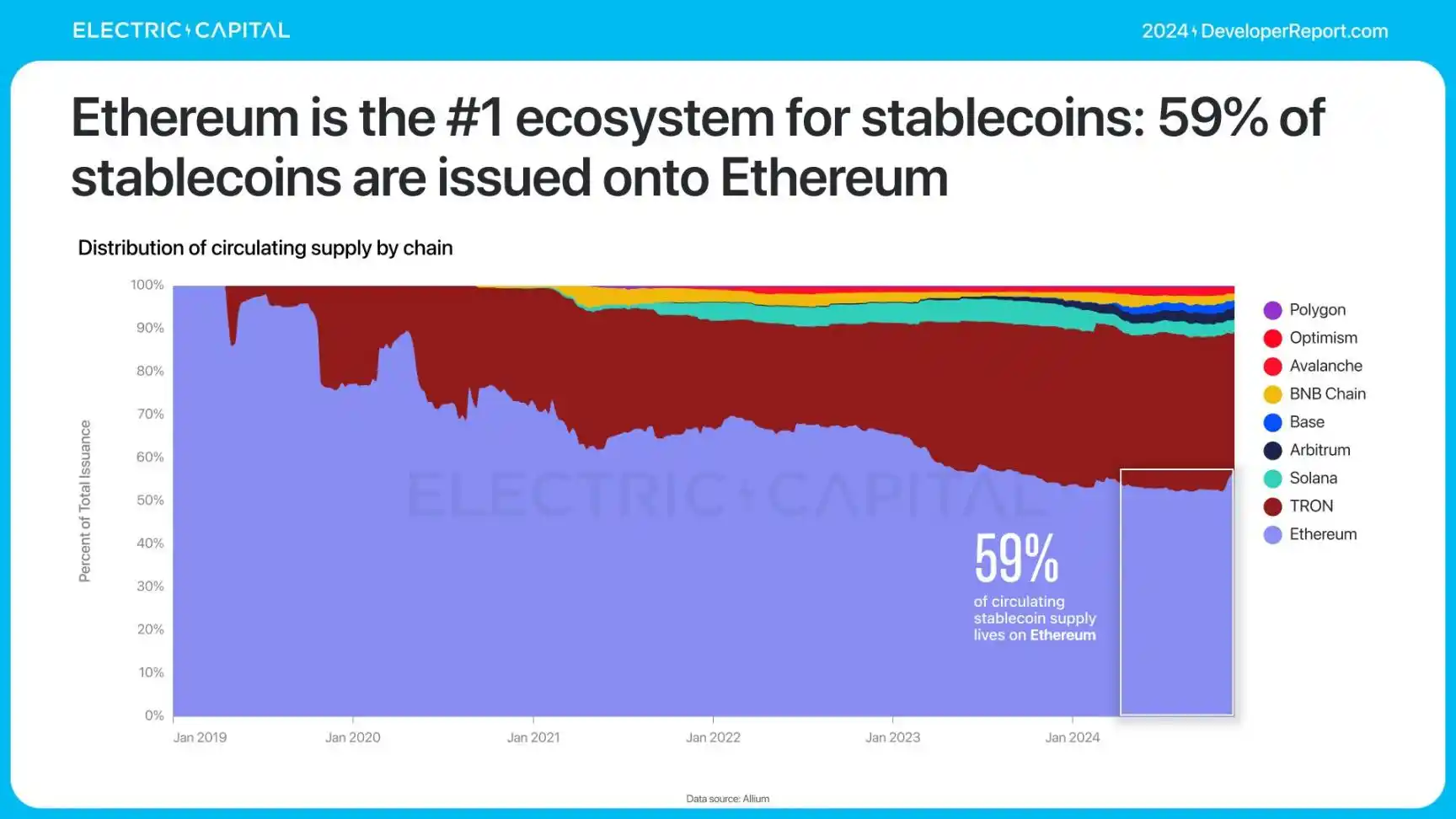
Ethereum is the first ecosystem for stablecoins - 59% of stablecoins are issued on Ethereum
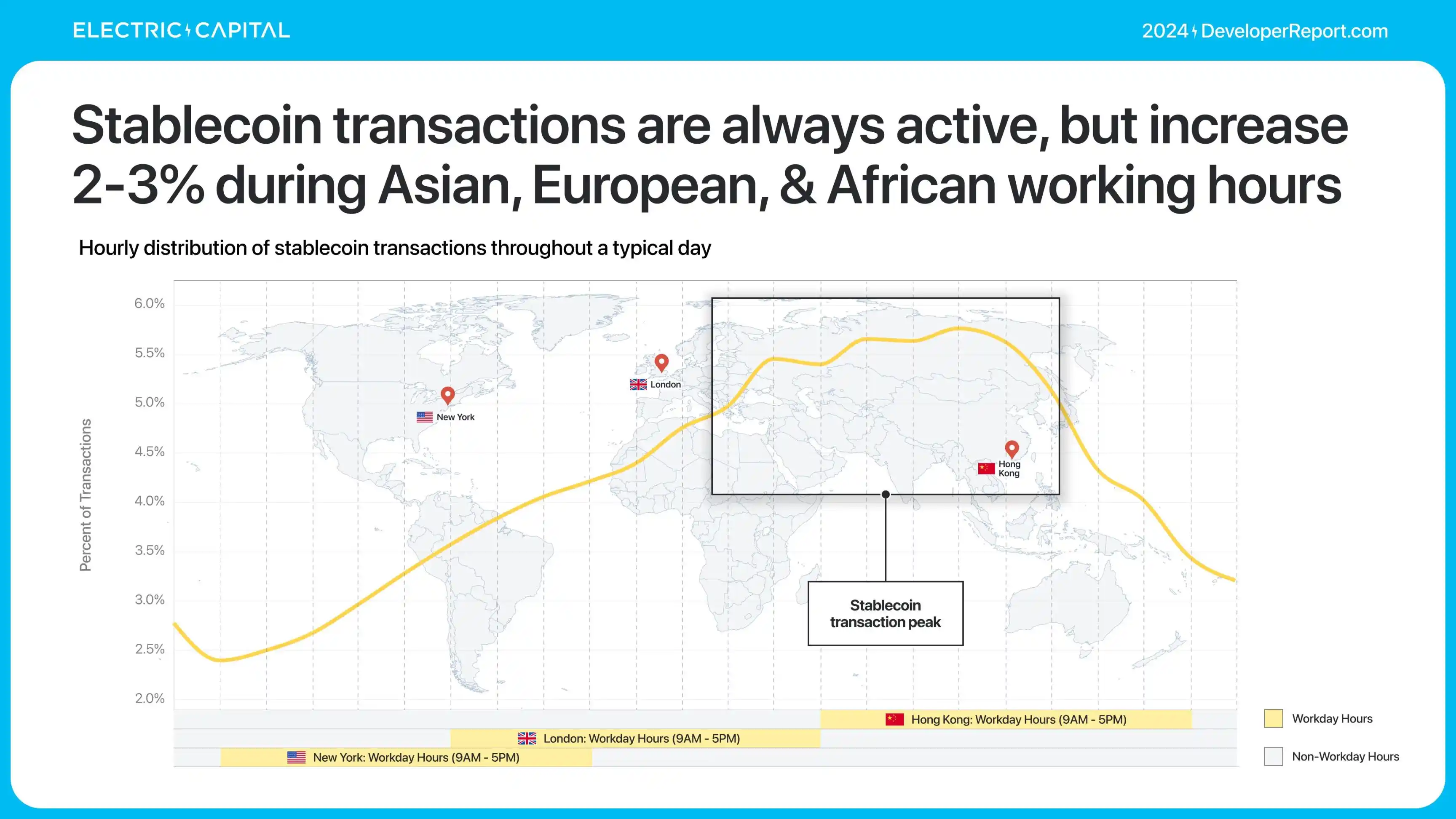
What is the global activity of stablecoins?
Stablecoins are always active, but trading volume increases by 2-3% during business hours in Asia, Europe, and Africa.
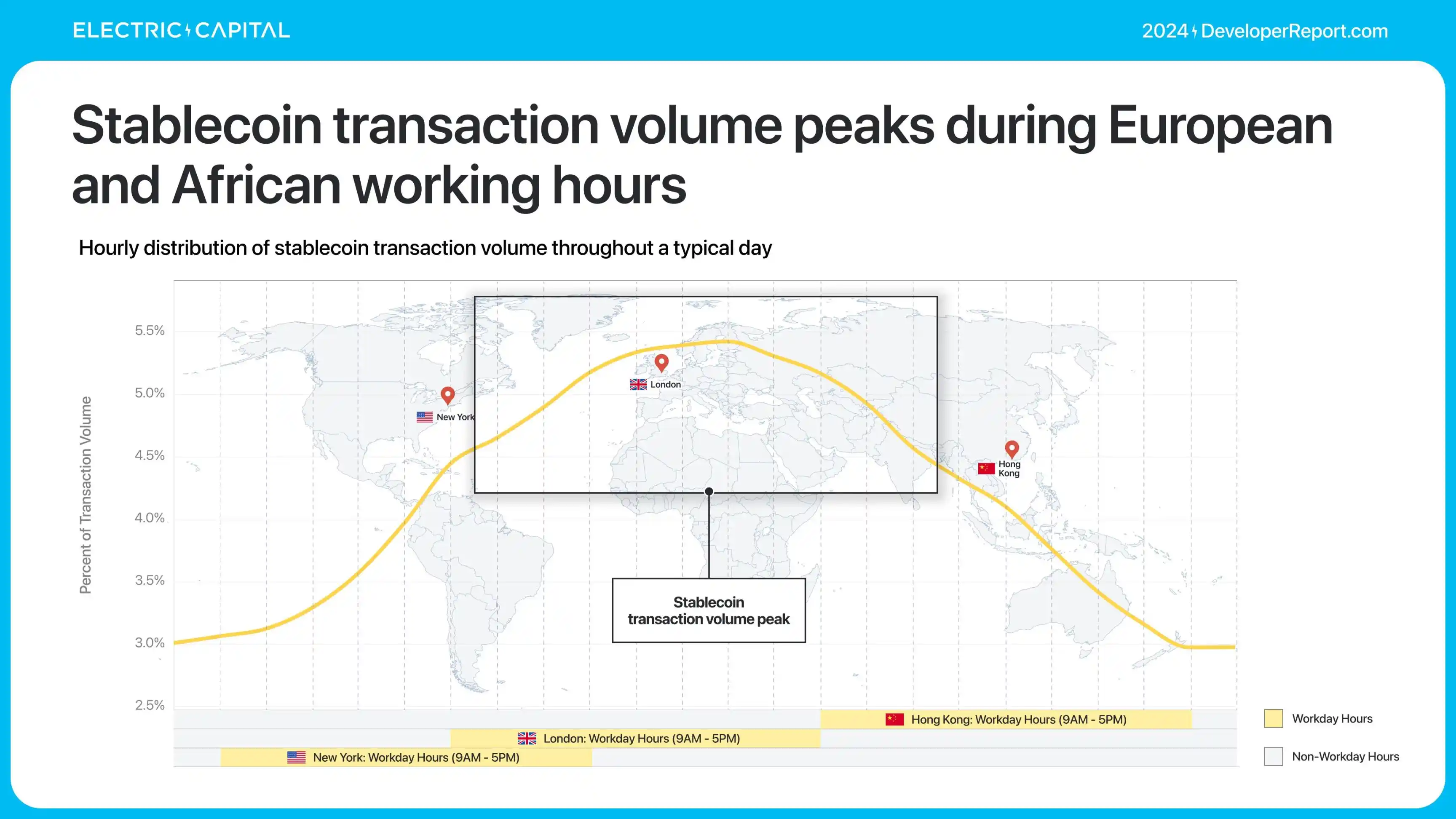
Although stablecoin trading peaks during business hours in the Eastern Hemisphere, trading volume is more skewed towards the Western Hemisphere.
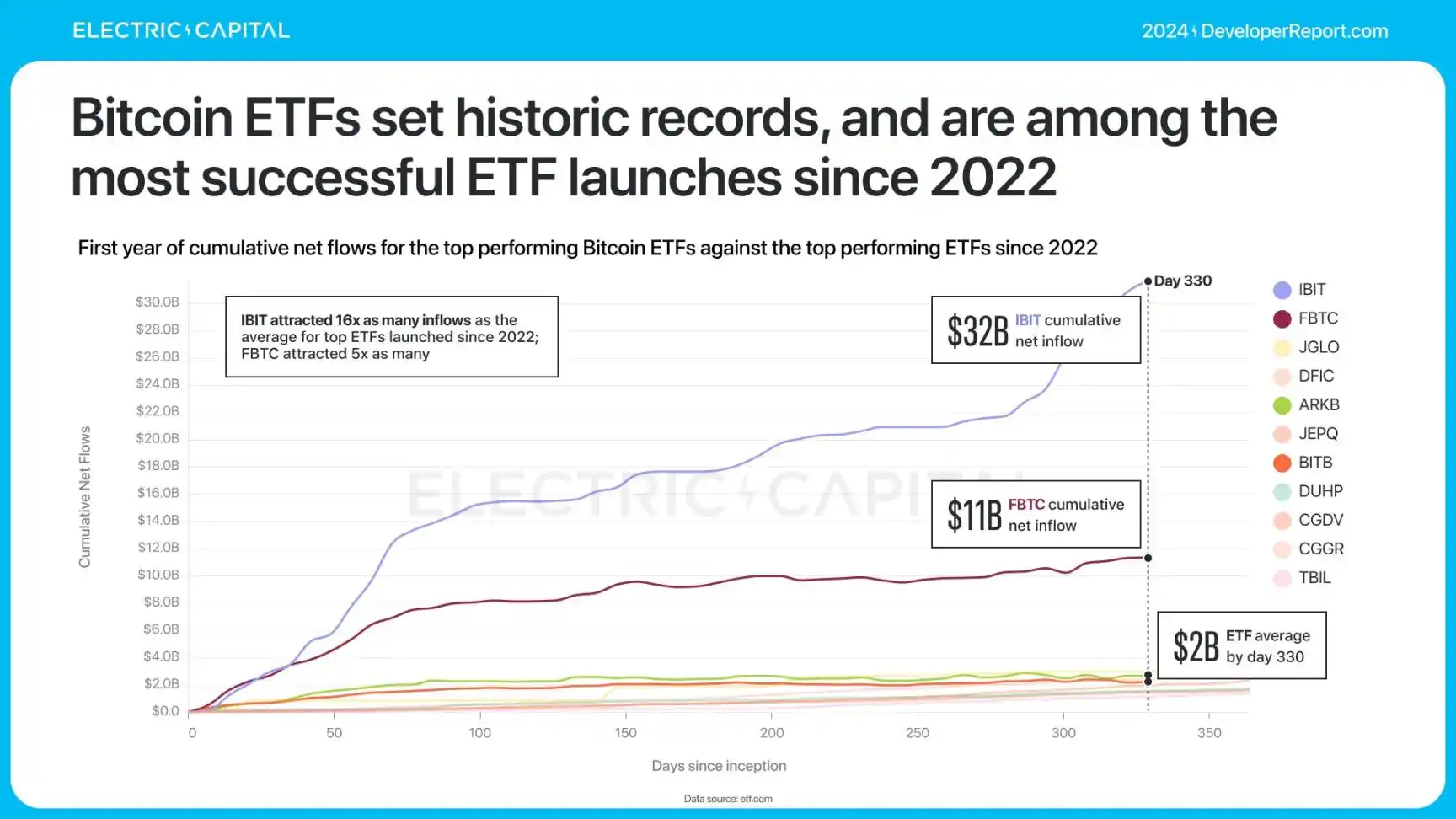
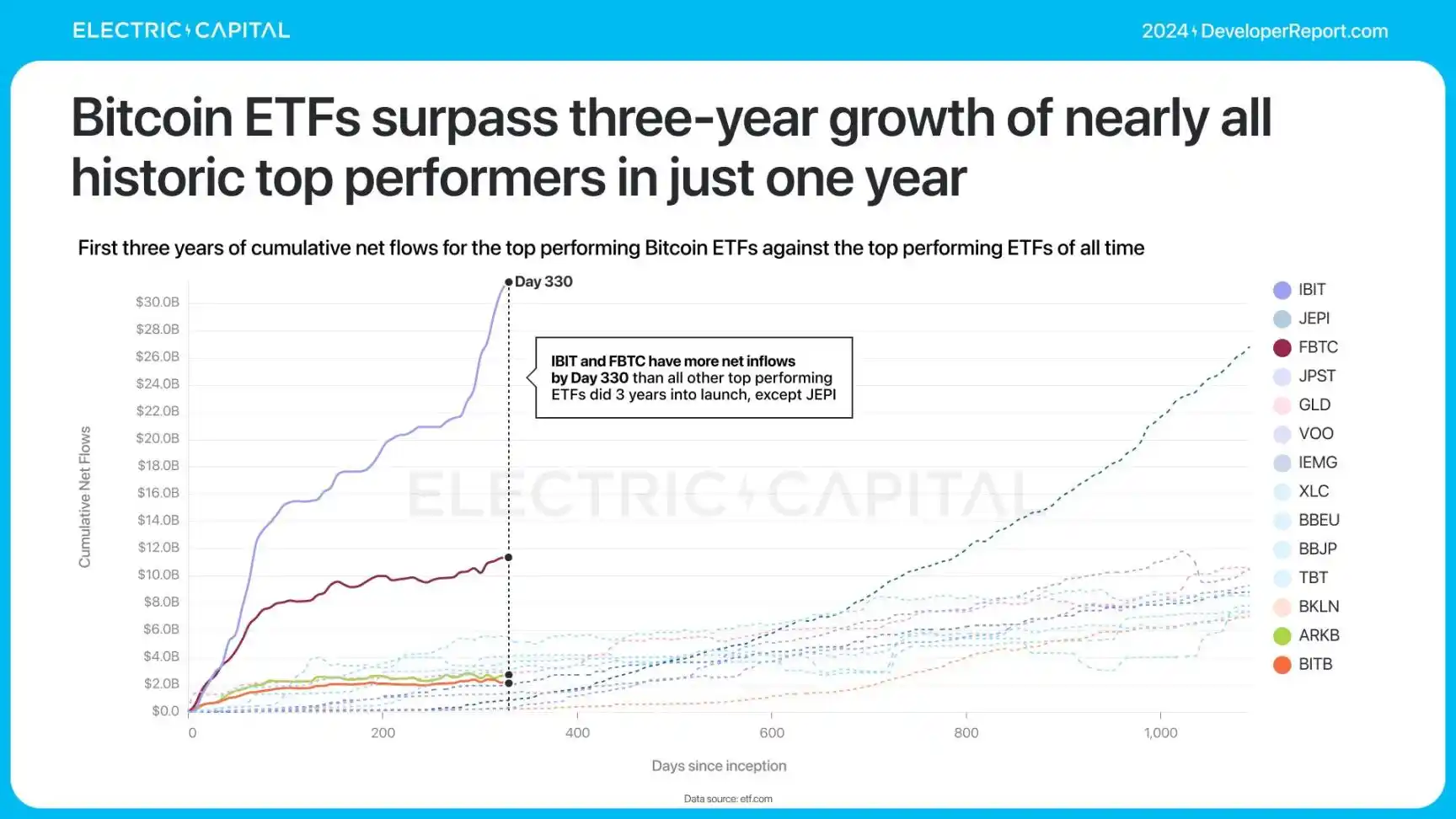
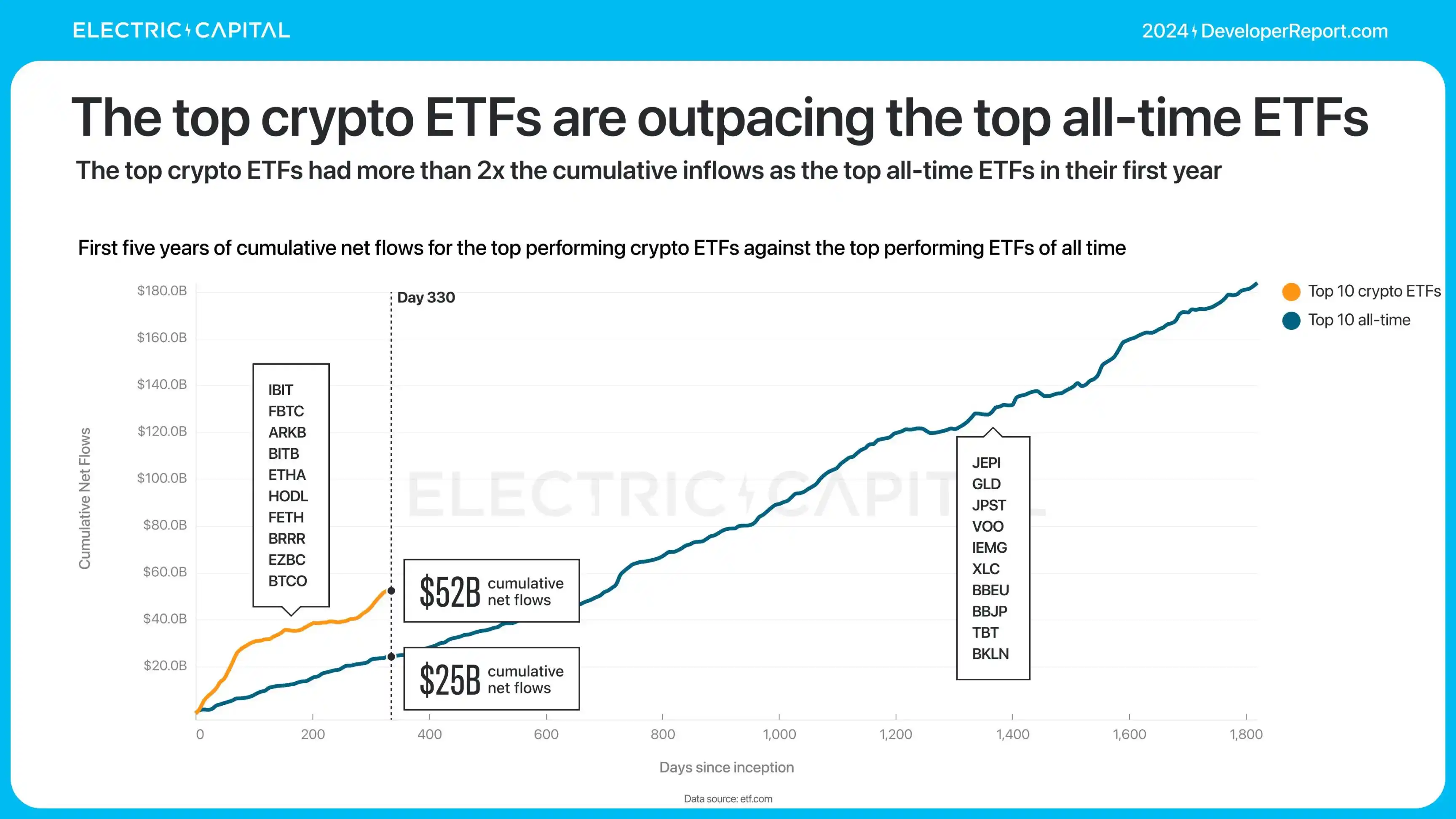
Bitcoin and Ethereum ETFs were launched this year, providing OTC capital with a convenient way to enter on-chain assets. Bitcoin ETFs have attracted over $50 billion in net inflows, making them one of the most successful ETFs in history.
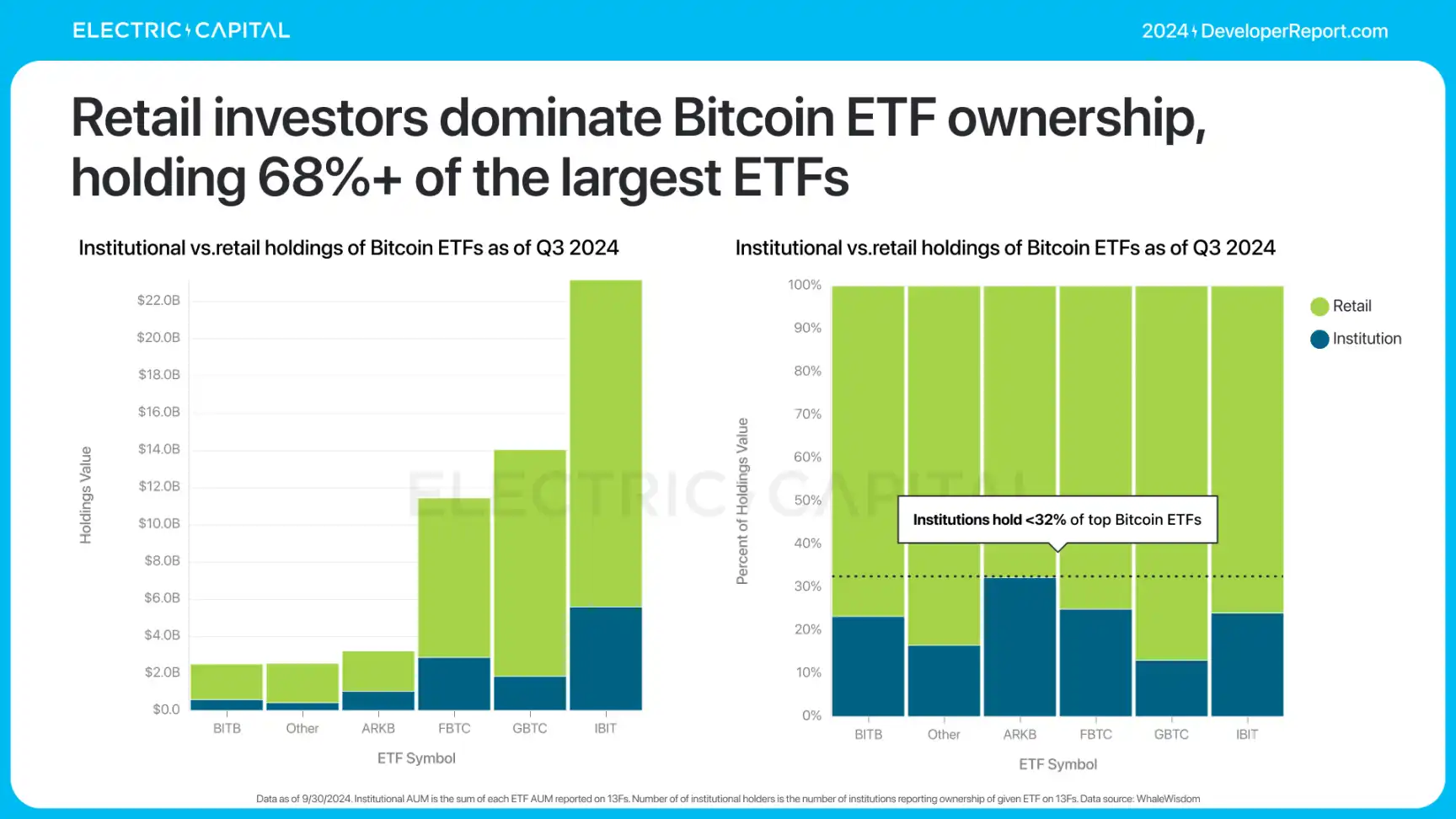
Most of the volume for Bitcoin ETFs comes from retail investors.
Although Bitcoin ETFs are still in their early stages, institutional investors are buying spot Bitcoin ETFs at a record pace.

The Ethereum ETF was launched in July this year. Currently, the Ethereum ETF has $13 billion in assets under management (AUM) and has attracted $3.5 billion in net inflows. This performance is comparable to the most successful ETF launches since 2022 (excluding Bitcoin ETFs). This is also driven primarily by retail investors.
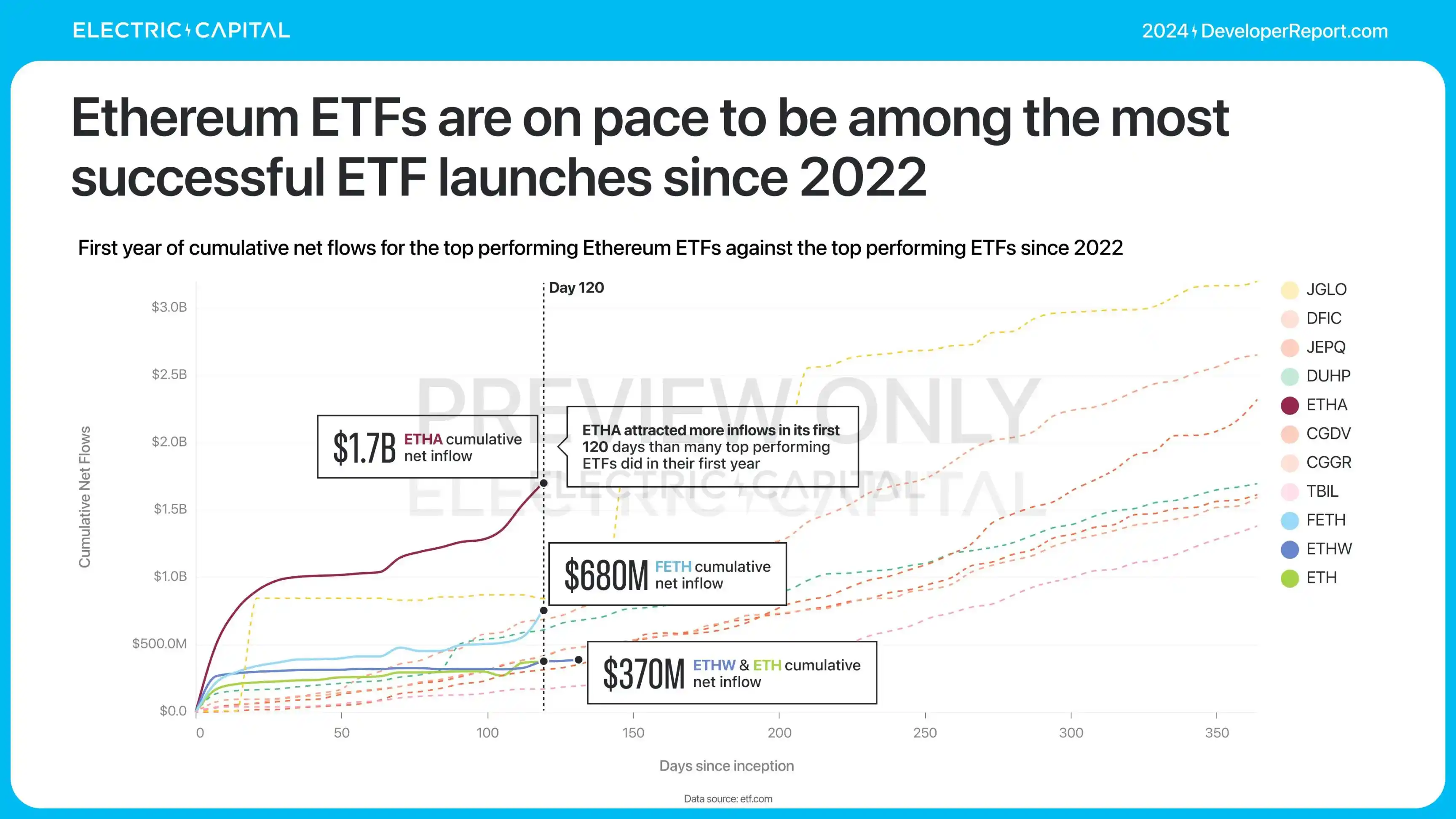
Bitcoin and Ethereum ETFs set a record. In their first year, the cumulative inflows are more than 2 times that of the most successful ETFs in history.
You may also like

Consumer-grade Crypto Global Survey: Users, Revenue, and Track Distribution

Prediction Markets Under Bias

Stolen: $290 million, Three Parties Refusing to Acknowledge, Who Should Foot the Bill for the KelpDAO Incident Resolution?

ASTEROID Pumped 10,000x in Three Days, Is Meme Season Back on Ethereum?

ChainCatcher Hong Kong Themed Forum Highlights: Decoding the Growth Engine Under the Integration of Crypto Assets and Smart Economy

Why can this institution still grow by 150% when the scale of leading crypto VCs has shrunk significantly?

Anthropic's $1 trillion, compared to DeepSeek's $100 billion

Geopolitical Risk Persists, Is Bitcoin Becoming a Key Barometer?

Annualized 11.5%, Wall Street Buzzing: Is MicroStrategy's STRC Bitcoin's Savior or Destroyer?

An Obscure Open Source AI Tool Alerted on Kelp DAO's $292 million Bug 12 Days Ago

Mixin has launched USTD-margined perpetual contracts, bringing derivative trading into the chat scene.
The privacy-focused crypto wallet Mixin announced today the launch of its U-based perpetual contract (a derivative priced in USDT). Unlike traditional exchanges, Mixin has taken a new approach by "liberating" derivative trading from isolated matching engines and embedding it into the instant messaging environment.
Users can directly open positions within the app with leverage of up to 200x, while sharing positions, discussing strategies, and copy trading within private communities. Trading, social interaction, and asset management are integrated into the same interface.
Based on its non-custodial architecture, Mixin has eliminated friction from the traditional onboarding process, allowing users to participate in perpetual contract trading without identity verification.
The trading process has been streamlined into five steps:
· Choose the trading asset
· Select long or short
· Input position size and leverage
· Confirm order details
· Confirm and open the position
The interface provides real-time visualization of price, position, and profit and loss (PnL), allowing users to complete trades without switching between multiple modules.
Mixin has directly integrated social features into the derivative trading environment. Users can create private trading communities and interact around real-time positions:
· End-to-end encrypted private groups supporting up to 1024 members
· End-to-end encrypted voice communication
· One-click position sharing
· One-click trade copying
On the execution side, Mixin aggregates liquidity from multiple sources and accesses decentralized protocol and external market liquidity through a unified trading interface.
By combining social interaction with trade execution, Mixin enables users to collaborate, share, and execute trading strategies instantly within the same environment.
Mixin has also introduced a referral incentive system based on trading behavior:
· Users can join with an invite code
· Up to 60% of trading fees as referral rewards
· Incentive mechanism designed for long-term, sustainable earnings
This model aims to drive user-driven network expansion and organic growth.
Mixin's derivative transactions are built on top of its existing self-custody wallet infrastructure, with core features including:
· Separation of transaction account and asset storage
· User full control over assets
· Platform does not custody user funds
· Built-in privacy mechanisms to reduce data exposure
The system aims to strike a balance between transaction efficiency, asset security, and privacy protection.
Against the background of perpetual contracts becoming a mainstream trading tool, Mixin is exploring a different development direction by lowering barriers, enhancing social and privacy attributes.
The platform does not only view transactions as execution actions but positions them as a networked activity: transactions have social attributes, strategies can be shared, and relationships between individuals also become part of the financial system.
Mixin's design is based on a user-initiated, user-controlled model. The platform neither custodies assets nor executes transactions on behalf of users.
This model aligns with a statement issued by the U.S. Securities and Exchange Commission (SEC) on April 13, 2026, titled "Staff Statement on Whether Partial User Interface Used in Preparing Cryptocurrency Securities Transactions May Require Broker-Dealer Registration."
The statement indicates that, under the premise where transactions are entirely initiated and controlled by users, non-custodial service providers that offer neutral interfaces may not need to register as broker-dealers or exchanges.
Mixin is a decentralized, self-custodial privacy wallet designed to provide secure and efficient digital asset management services.
Its core capabilities include:
· Aggregation: integrating multi-chain assets and routing between different transaction paths to simplify user operations
· High liquidity access: connecting to various liquidity sources, including decentralized protocols and external markets
· Decentralization: achieving full user control over assets without relying on custodial intermediaries
· Privacy protection: safeguarding assets and data through MPC, CryptoNote, and end-to-end encrypted communication
Mixin has been in operation for over 8 years, supporting over 40 blockchains and more than 10,000 assets, with a global user base exceeding 10 million and an on-chain self-custodied asset scale of over $1 billion.

$600 million stolen in 20 days, ushering in the era of AI hackers in the crypto world
Vitalik's 2026 Hong Kong Web3 Summit Speech: Ethereum's Ultimate Vision as the "World Computer" and Future Roadmap
On the same day Aave introduced rsETH, why did Spark decide to exit?
Full Post-Mortem of the KelpDAO Incident: Why Did Aave, Which Was Not Compromised, End Up in Crisis Situation?

After a $290 million DeFi liquidation, is the security promise still there?
ZachXBT's post ignites RAVE nearing zero, what is the truth behind the insider control?




 App
App