
 Buy Crypto
- Markets
 Futures
- Spot
- Copy Trade
- Earn
- More
Blockworks Research: As Ethereum recovers, what opportunities and challenges will Based Rollup bring?

Original author: Donovan Choy
Original translation: TechFlow

Ethereum loves Rollup. Recently, "based" Rollup has attracted much attention.
What is special about based Rollup? The core lies in its sequencer.
Traditional Layer-2 uses a centralized sequencer to process user transactions and submit them to Layer-1 for settlement, while based Rollup entrusts the sequencing task to the validators of Ethereum Layer-1. This mechanism is called "based sequencing".
This design has two major advantages: anti-censorship and enhanced interoperability.
By letting Layer-1 act as a sorter, Rollup based on Ethereum can provide the same liveness guarantees as the Ethereum mainnet while avoiding the censorship issues that may arise from a centralized sorter.
Read more: MagicBlock Open Sources a16z-supported "Short-lived Rollup" technology
Another important advantage is a significant increase in interoperability. Based on Rollup supporters (such as Justin Drake) call it " synchronous composability", that is, transactions on Ethereum can be synchronously ordered or bridged between different Layer-2.
In simple terms, smart contracts on a Rollup based on Ethereum can call other contracts on Layer-1 almost instantly within the same block, as if they were all on the same chain.
This synchronization and the idea of "money legos" is not new; it has always been an important part of Ethereum's original vision.
Read more: Rethinking Ethereum Consensus with Beam Chain
However, the current decentralized state of Rollup causes transactions between Arbitrum and Optimism to be asynchronous, which introduces uncertainty in fees. This uncertainty is further exacerbated by the fact that gas fees are calculated at different points in time, rather than uniformly calculated within the 12-second time slot of Ethereum blocks.
In addition to making Ethereum more interoperable, this mechanism also brings significant cost savings. Ahmad Mazen Bitar, technical lead at Nethermind, explained:
"Users can initiate a transaction on Layer-1, complete the operation using the deep liquidity pool of Layer-2, and then return to Layer-1. This synchronous composability makes the whole process more efficient."
Currently, the largest based Rollup is Taiko, which has seen significant growth in both its TVL and daily transaction volume this month.
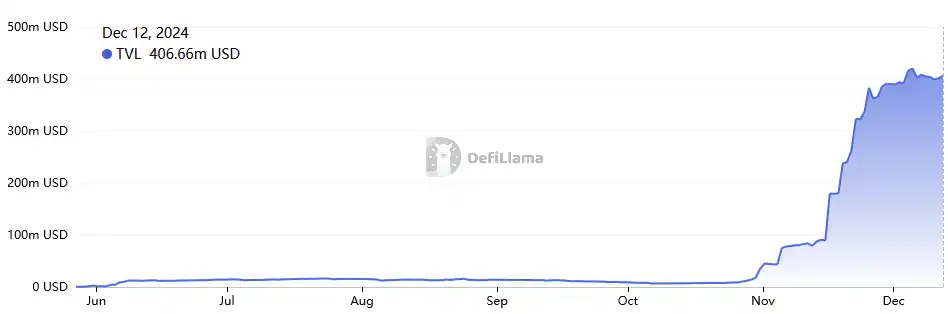
Source: DefiLlama
Other early based Rollup projects are also under development, such as Surge by the Nethermind team and UniFi by the Puffer Finance team. These projects are all based on the Taiko fork.
Nevertheless, based Rollup also faces some challenges. Since the sorting task is handed over to the Layer-1 validators, its performance is limited by the 12-second block time of Layer-1.
Therefore, the advantages of based Rollup (such as synchronous composability) may be difficult to fully realize in practice. It requires real-time zero-knowledge proofs to be completed within a 12-second time slot, otherwise composable transactions cannot be executed quickly.
To this end, Taiko introduced a variety of technologies, including zk proofs from Risc Zero and Succinct Labs, and a trusted execution environment (TEE) based on Intel SGX. This makes Taiko the first based Rollup to implement multiple proofs in a production environment without relying on a single trusted party.
"The performance of the prover is improving rapidly. We see more trusted execution environments (TEEs), more efficient and lower-cost zero-knowledge virtual machines (zkVMs), and verifiable state machines (AVSs) being introduced. We believe that the progress of zk technology is very smooth, and the goal of generating proofs within sub-time slot delays is not far away," said Brecht Devos, co-founder of Taiko, in an interview with Blockworks.
However, based Rollup also faces some challenges. For example, without a centralized sorter, an important source of revenue, MEV (maximum extractable value), may be lost. However, Devos said that this problem can be solved in some innovative ways.
In the Taiko network, "MEV can be captured by auctioning 'execution tickets' to Layer-1 block proposers," Devos explained to Blockworks.
So while Rollup based on staking gives ordering rights to Layer-1 validators by default, this is not the only solution.
Matthew Edelen, co-founder of Spire Labs, a company focused on Rollup infrastructure, shared a similar sentiment in a recent Bell Curve podcast: "Auctions are not the only way to allocate ordering rights. We can allocate 99% of ordering rights through auctions while allocating the remaining 1% to friends or independent stakers to present a better image on L2Beat."
In the long run, MEV (maximum extractable value) may not be a major problem. This view stems from a simple cost-benefit analysis: currently, most of the blockchain's revenue comes from congestion fees, which far exceeds the revenue of MEV. Moreover, as more efficient MEV solutions continue to emerge, the proportion of MEV revenue is gradually decreasing.
Therefore, for Rollup, a better revenue model is to rely on the network effect brought by synchronous composability and benefit from congestion fees rather than relying on MEV charges.
As Justin Drake said in The Rollup podcast:
“Right now, the ratio of congestion fees to contention fees is about 80:20. Of the revenue on Ethereum mainnet (Layer-1), 80% comes from congestion fees - about 3,200 ETH per day since the implementation of EIP-1559. Since the merger, MEV revenue has been about 800 ETH per day. I think this ratio will become more disparate, perhaps from 80:20 to 99:1.”
To sum up, the advantages of Based Rollup bring Ethereum’s user experience back to its original state.
Interestingly, this return is actually reminiscent of the characteristics that blockchain has had since its inception. Synchronous composability and Layer-1 transaction ordering have been core features of blockchain since the birth of the Bitcoin network.
This divergence of execution layer responsibilities is largely due to the centralized development path of Rollups in recent years (as well as the multi-chain architectures of Polkadot, Cosmos, and Avalanche). Today, Rollup-based solutions are ready to recapture this original intention.
「Original source」
You may also like

Consumer-grade Crypto Global Survey: Users, Revenue, and Track Distribution

Prediction Markets Under Bias

Stolen: $290 million, Three Parties Refusing to Acknowledge, Who Should Foot the Bill for the KelpDAO Incident Resolution?

ASTEROID Pumped 10,000x in Three Days, Is Meme Season Back on Ethereum?

ChainCatcher Hong Kong Themed Forum Highlights: Decoding the Growth Engine Under the Integration of Crypto Assets and Smart Economy

Why can this institution still grow by 150% when the scale of leading crypto VCs has shrunk significantly?

Anthropic's $1 trillion, compared to DeepSeek's $100 billion

Geopolitical Risk Persists, Is Bitcoin Becoming a Key Barometer?

Annualized 11.5%, Wall Street Buzzing: Is MicroStrategy's STRC Bitcoin's Savior or Destroyer?

An Obscure Open Source AI Tool Alerted on Kelp DAO's $292 million Bug 12 Days Ago

Mixin has launched USTD-margined perpetual contracts, bringing derivative trading into the chat scene.
The privacy-focused crypto wallet Mixin announced today the launch of its U-based perpetual contract (a derivative priced in USDT). Unlike traditional exchanges, Mixin has taken a new approach by "liberating" derivative trading from isolated matching engines and embedding it into the instant messaging environment.
Users can directly open positions within the app with leverage of up to 200x, while sharing positions, discussing strategies, and copy trading within private communities. Trading, social interaction, and asset management are integrated into the same interface.
Based on its non-custodial architecture, Mixin has eliminated friction from the traditional onboarding process, allowing users to participate in perpetual contract trading without identity verification.
The trading process has been streamlined into five steps:
· Choose the trading asset
· Select long or short
· Input position size and leverage
· Confirm order details
· Confirm and open the position
The interface provides real-time visualization of price, position, and profit and loss (PnL), allowing users to complete trades without switching between multiple modules.
Mixin has directly integrated social features into the derivative trading environment. Users can create private trading communities and interact around real-time positions:
· End-to-end encrypted private groups supporting up to 1024 members
· End-to-end encrypted voice communication
· One-click position sharing
· One-click trade copying
On the execution side, Mixin aggregates liquidity from multiple sources and accesses decentralized protocol and external market liquidity through a unified trading interface.
By combining social interaction with trade execution, Mixin enables users to collaborate, share, and execute trading strategies instantly within the same environment.
Mixin has also introduced a referral incentive system based on trading behavior:
· Users can join with an invite code
· Up to 60% of trading fees as referral rewards
· Incentive mechanism designed for long-term, sustainable earnings
This model aims to drive user-driven network expansion and organic growth.
Mixin's derivative transactions are built on top of its existing self-custody wallet infrastructure, with core features including:
· Separation of transaction account and asset storage
· User full control over assets
· Platform does not custody user funds
· Built-in privacy mechanisms to reduce data exposure
The system aims to strike a balance between transaction efficiency, asset security, and privacy protection.
Against the background of perpetual contracts becoming a mainstream trading tool, Mixin is exploring a different development direction by lowering barriers, enhancing social and privacy attributes.
The platform does not only view transactions as execution actions but positions them as a networked activity: transactions have social attributes, strategies can be shared, and relationships between individuals also become part of the financial system.
Mixin's design is based on a user-initiated, user-controlled model. The platform neither custodies assets nor executes transactions on behalf of users.
This model aligns with a statement issued by the U.S. Securities and Exchange Commission (SEC) on April 13, 2026, titled "Staff Statement on Whether Partial User Interface Used in Preparing Cryptocurrency Securities Transactions May Require Broker-Dealer Registration."
The statement indicates that, under the premise where transactions are entirely initiated and controlled by users, non-custodial service providers that offer neutral interfaces may not need to register as broker-dealers or exchanges.
Mixin is a decentralized, self-custodial privacy wallet designed to provide secure and efficient digital asset management services.
Its core capabilities include:
· Aggregation: integrating multi-chain assets and routing between different transaction paths to simplify user operations
· High liquidity access: connecting to various liquidity sources, including decentralized protocols and external markets
· Decentralization: achieving full user control over assets without relying on custodial intermediaries
· Privacy protection: safeguarding assets and data through MPC, CryptoNote, and end-to-end encrypted communication
Mixin has been in operation for over 8 years, supporting over 40 blockchains and more than 10,000 assets, with a global user base exceeding 10 million and an on-chain self-custodied asset scale of over $1 billion.

$600 million stolen in 20 days, ushering in the era of AI hackers in the crypto world
Vitalik's 2026 Hong Kong Web3 Summit Speech: Ethereum's Ultimate Vision as the "World Computer" and Future Roadmap
On the same day Aave introduced rsETH, why did Spark decide to exit?
Full Post-Mortem of the KelpDAO Incident: Why Did Aave, Which Was Not Compromised, End Up in Crisis Situation?

After a $290 million DeFi liquidation, is the security promise still there?
ZachXBT's post ignites RAVE nearing zero, what is the truth behind the insider control?




 App
App