
Beginner's Guide | How to Create an On-chain Wallet, Withdraw Coins, and Buy Coins?

Original Title: "Beginner's Guide: Step-by-Step to Play with On-Chain Meme Transactions"
Original Author: Asher, Odaily Planet Daily
In today's cryptocurrency world, mastering the creation and use of Web3 on-chain wallets, understanding how to buy popular on-chain tokens, and having some on-chain data analysis capabilities have become key ways to seize money-making opportunities.
As Bybit Co-Founder and CEO Ben Zhou stated in a post on Platform X, "Last weekend, all CEXs saw a large amount of SOL and USDC flowing out to go on-chain to buy TRUMP. Moonshoot + Meteora/Jupiter created over 30 billion TRUMP meme coins in less than 10 hours and did not rely on any CEX. We are accelerating the development and promotion of on-chain wallets, monitoring tools, etc. If we do not join this revolution, we will be left behind."
Today, Blockworks' data analyst Dan Smith pointed out in a post on Platform X that Solana's decentralized exchange (DEX) trading volume hit a historic high, with a daily trading volume of 33.6 billion USD. Specifically, the trading volume of the Trump Family token was 9.6 billion USD, the SOL-USD trading pair volume was 10.4 billion USD, and the stablecoin exchange volume was 0.85 billion USD. This data fully reflects the vibrancy of the Solana ecosystem and the high level of user participation in decentralized platforms.
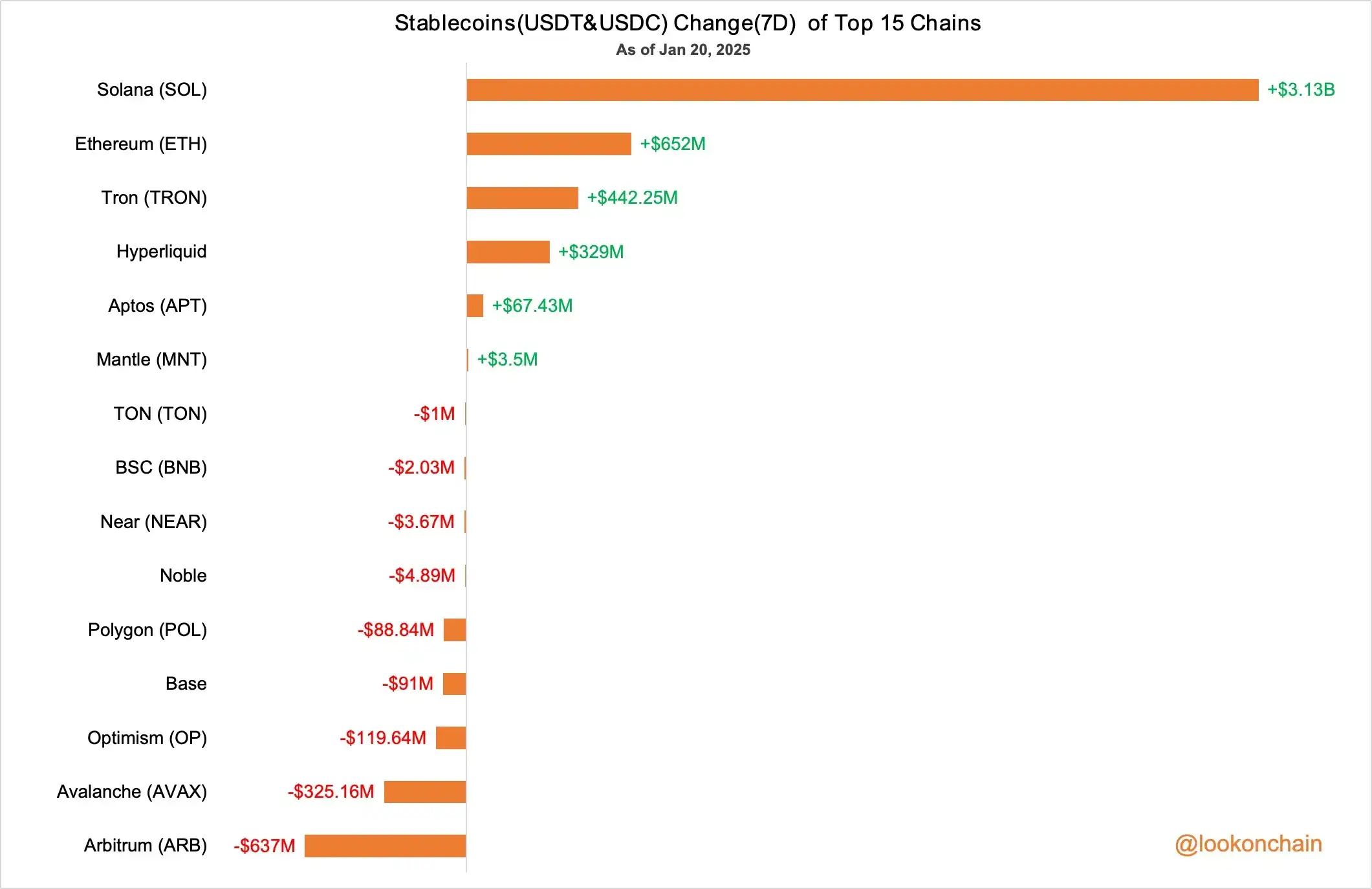
Meanwhile, according to Lookonchain monitoring, in the past 7 days, the total amount of stablecoins (USDT and USDC) on Solana has increased by 3.13 billion USD, showing the market's continued optimism towards the Solana ecosystem.
Given the high demand for tutorials from newcomers, Odaily Planet Daily will use SOL as an example (also where most wealth opportunities occur):
For "veterans" familiar with centralized exchanges—demonstrating how to withdraw funds on an exchange and explaining how to complete transfers through cross-chain methods when SOL withdrawals are suspended;
For pure newcomers outside the crypto circle—introducing the creation and use of Web3 wallets, how to buy on-chain projects, and recommended common on-chain tools.
Owning an On-Chain Wallet is a Prerequisite
Unlike centralized exchanges, users participating in on-chain cryptocurrency trading need to have a dedicated on-chain wallet. For "on-chain newbies," this is the first step to entering the crypto market. Currently, the Phantom Wallet and OKX Web3 Wallet are the two most common on-chain wallets, especially Phantom, whose ranking in the U.S. iOS App Store surpasses Coinbase, demonstrating its wide popularity. Since most newbie users primarily trade through mobile devices, the following will show detailed steps on how to create an on-chain wallet on a mobile device (similar steps can be followed on a computer).
Phantom Wallet Creation
STEP 1. Download the Phantom App from the corresponding app store on your phone, then click the software, click "Create New Wallet," and select "Seed Phrase Wallet."
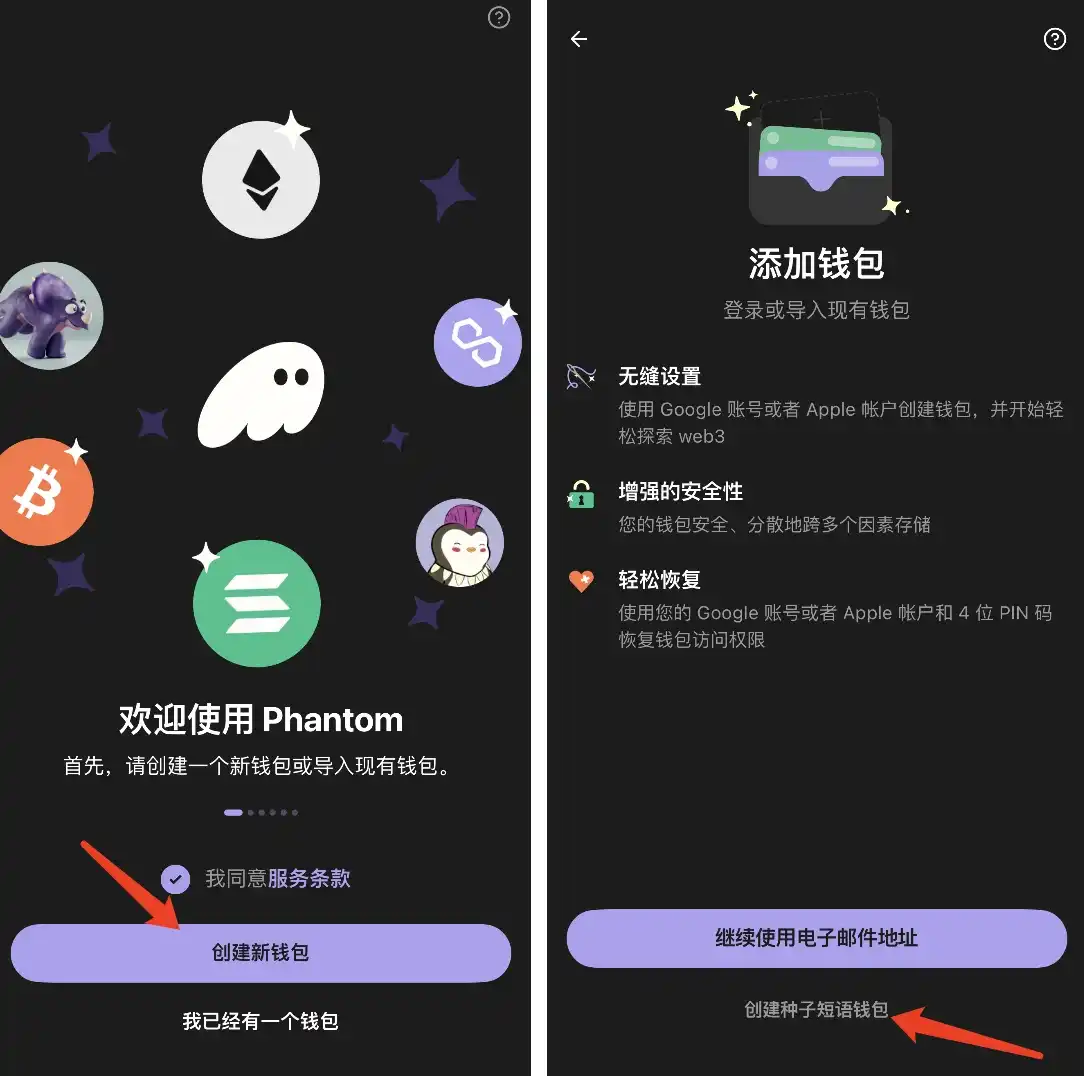
STEP 2. Save the seed phrase, preferably handwritten, as this is the only way to recover your wallet. Do not tell it to strangers.
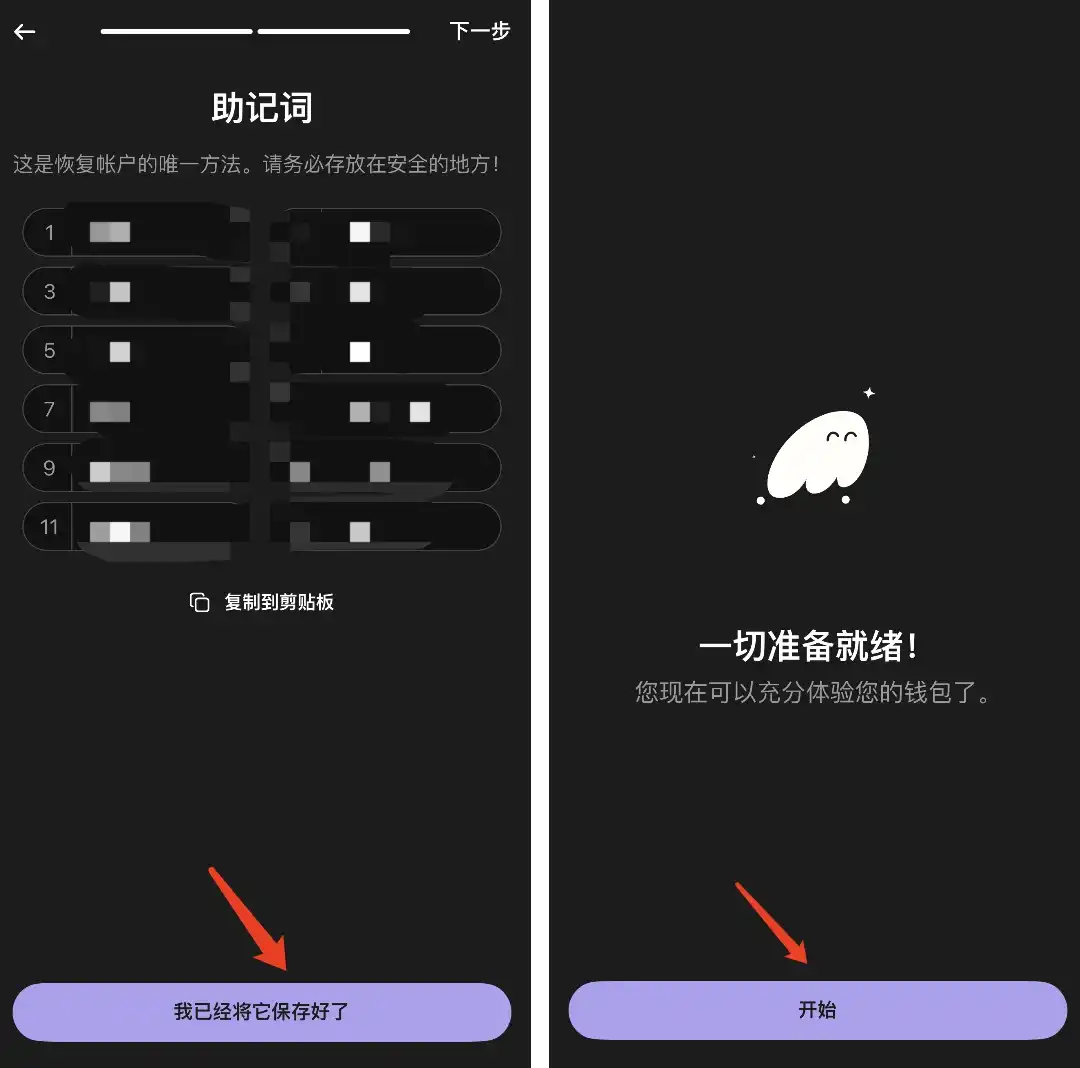
STEP 3. Obtain your wallet address.
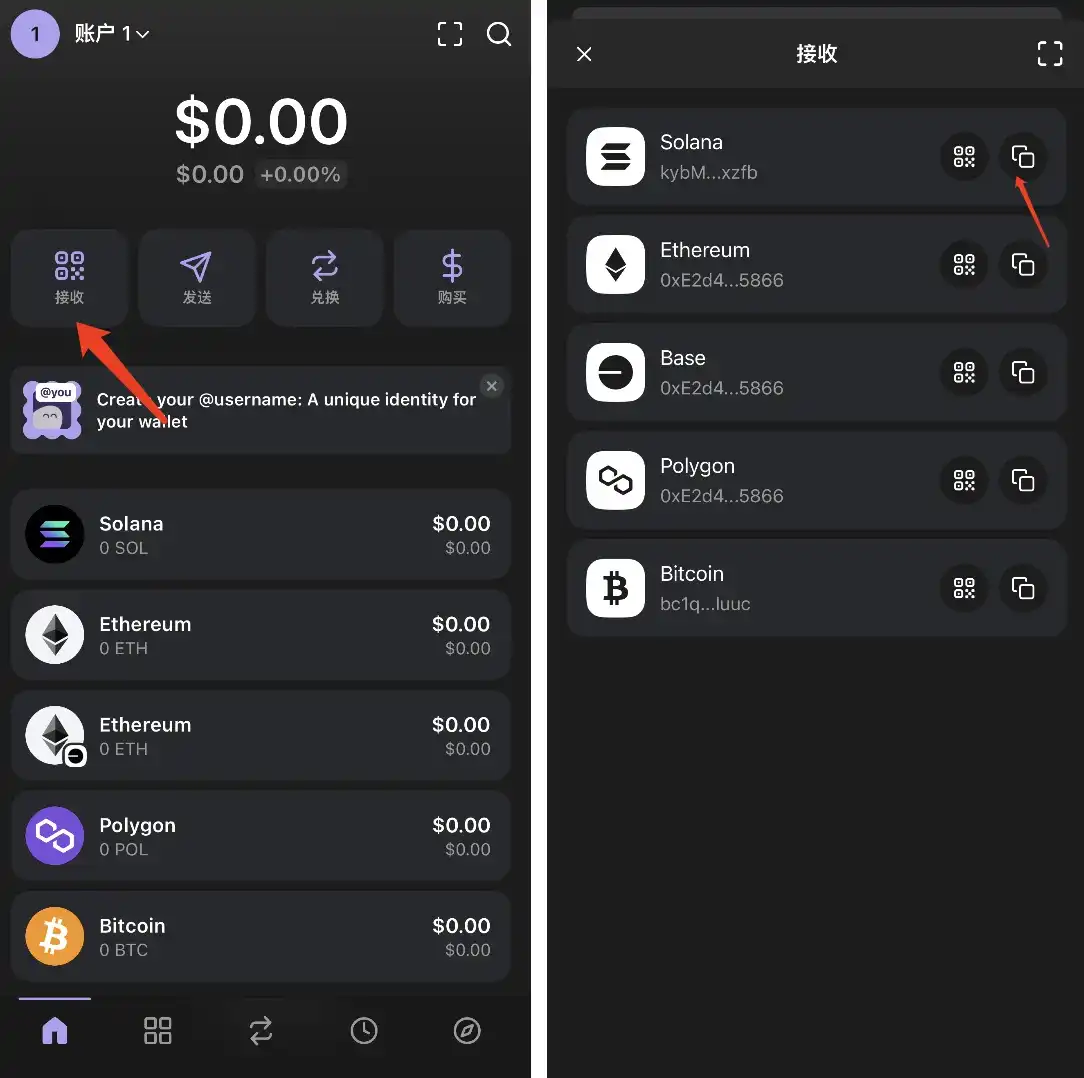
OKX Web3 Wallet Creation
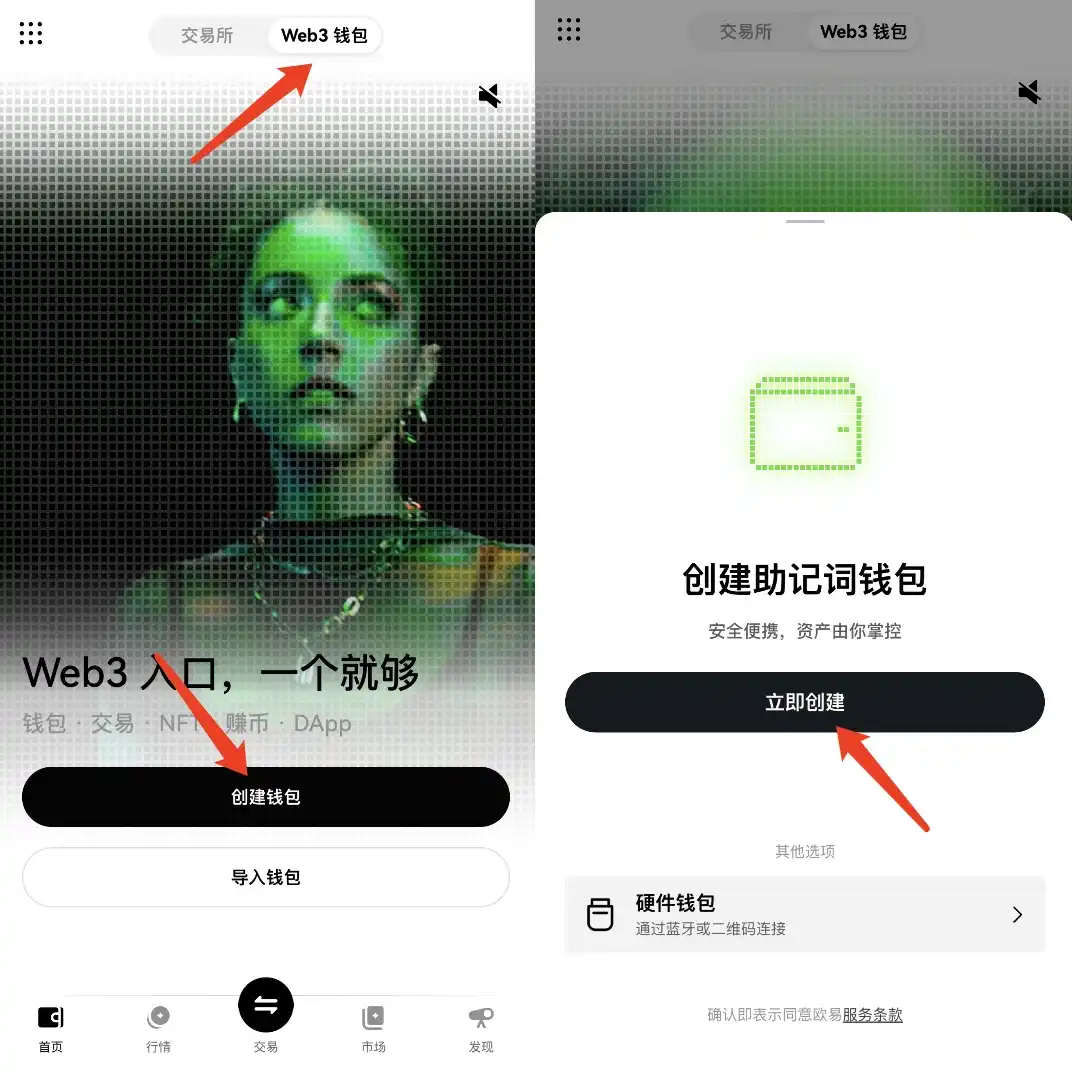
STEP 1. Enter the "OKEx" App, click at the top to switch to "Web3 Wallet," then click "Create Wallet."
STEP 2. Click "Manual Backup" to record the seed phrase.
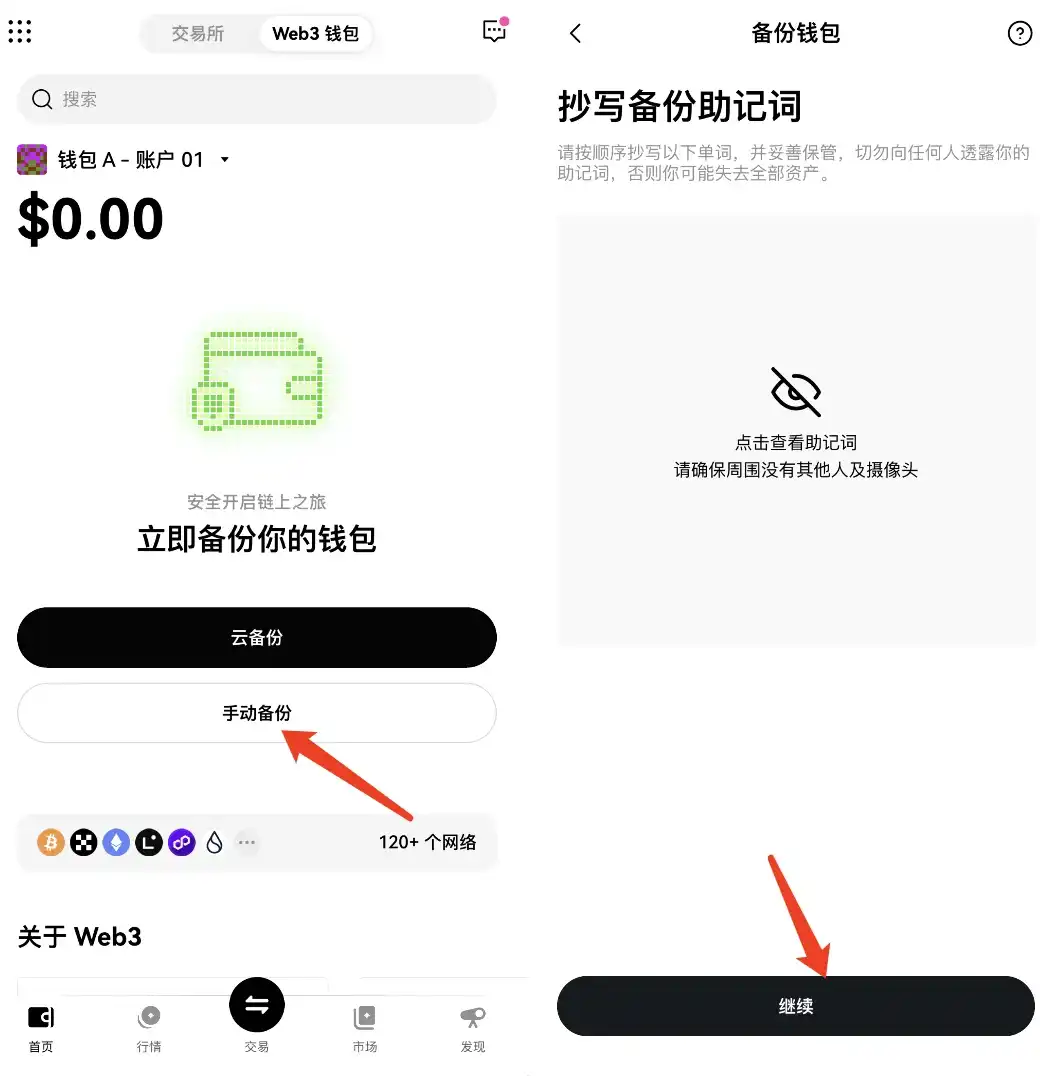
STEP 3. Obtain your wallet address.
(Odaily Planet Daily Reminder: The seed phrase is very important, so make sure to keep it safe.)
Exchange Withdrawal to On-Chain Wallet
Withdrawing SOL from Exchange to On-Chain Wallet
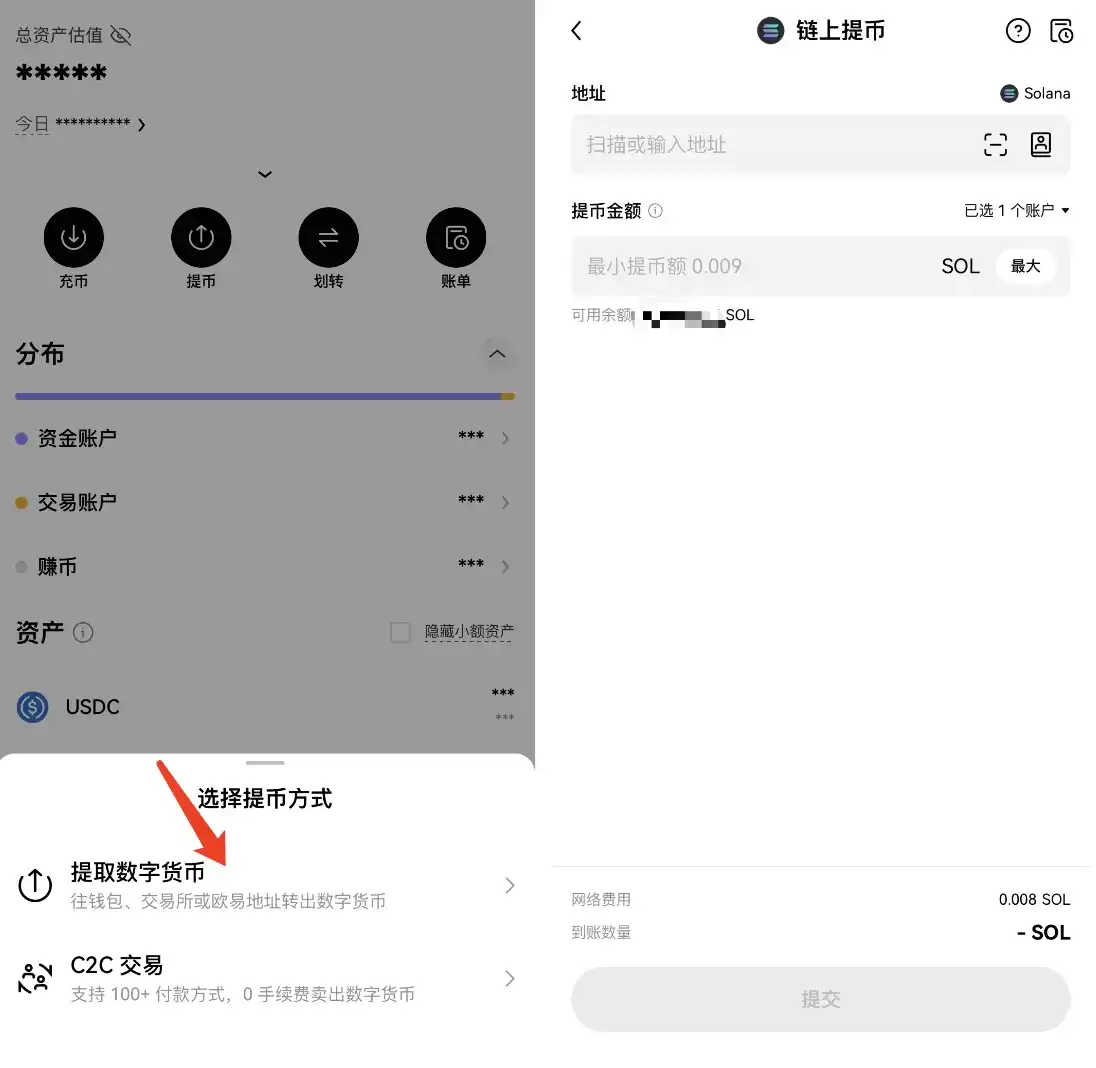
Go to a centralized exchange (using OKEx Exchange as an example), select "Withdraw," then choose "Withdrawal," select the SOL token, enter your wallet address (some currencies, like USDT, have multiple chain versions, so be sure to check the correct network when withdrawing).
How to Obtain SOL through Cross-chain Transfer when Withdrawals are Paused
For most users looking to purchase popular tokens in the Solana ecosystem, the typical process involves first buying SOL on a centralized exchange and then withdrawing it to their on-chain wallet. However, during events like the "Trump Couple Token Airdrop," a surge in users withdrawing SOL can lead to delays in withdrawals or even a pause in withdrawals. At this point, knowing how to perform cross-chain transfers becomes crucial to ensure timely purchase of high-demand tokens. The specific steps are as follows:
Cross-chain Website: https://portalbridge.com/usdc-bridge/
STEP 1. Withdraw USDC from a centralized exchange to the Avalanche, Arbitrum, or Optimism chain.
STEP 2. Using the aforementioned cross-chain website, transfer USDC from the Avalanche chain to the Solana chain (Avalanche chain is recommended due to general transaction confirmation times on Ethereum layer 2 solutions, which can take significant time during congestion, sometimes over half an hour).
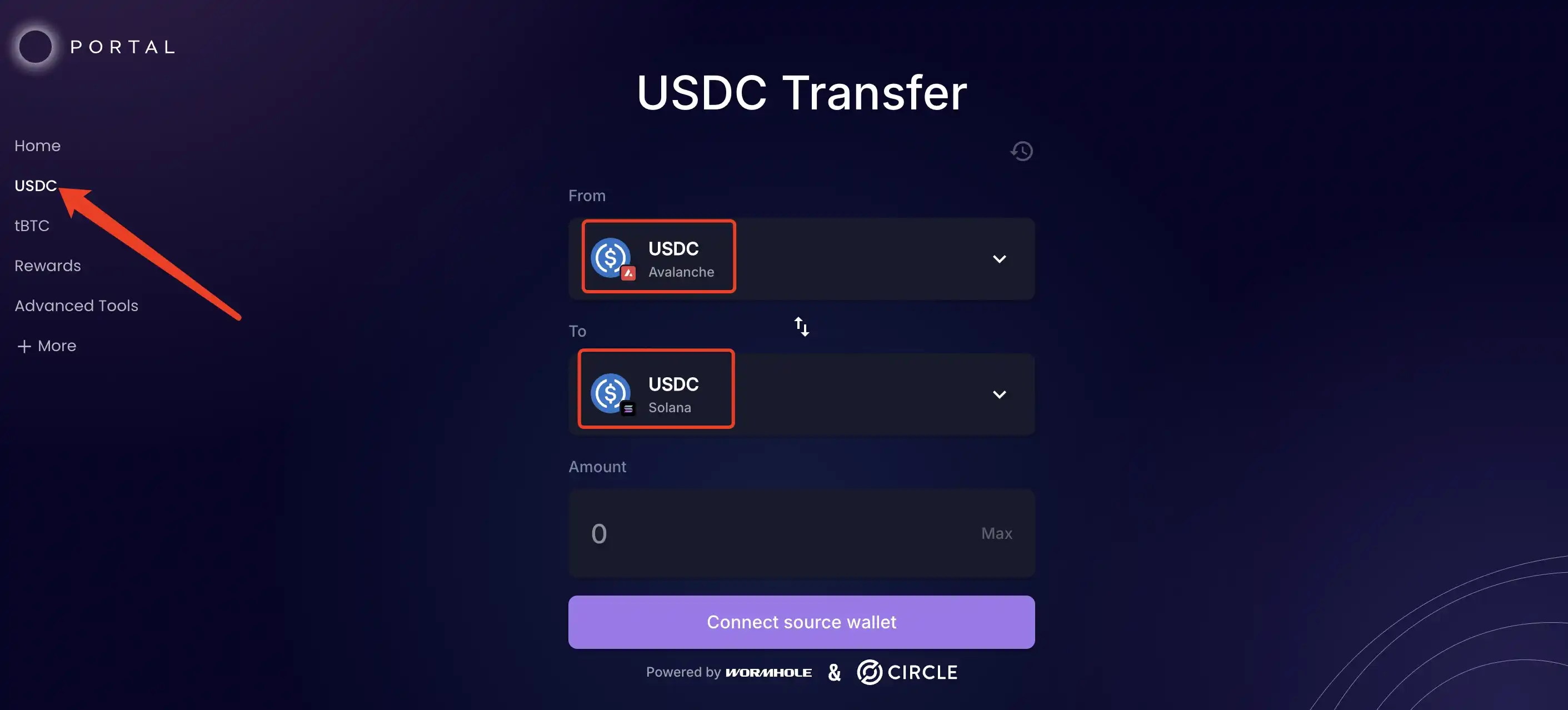
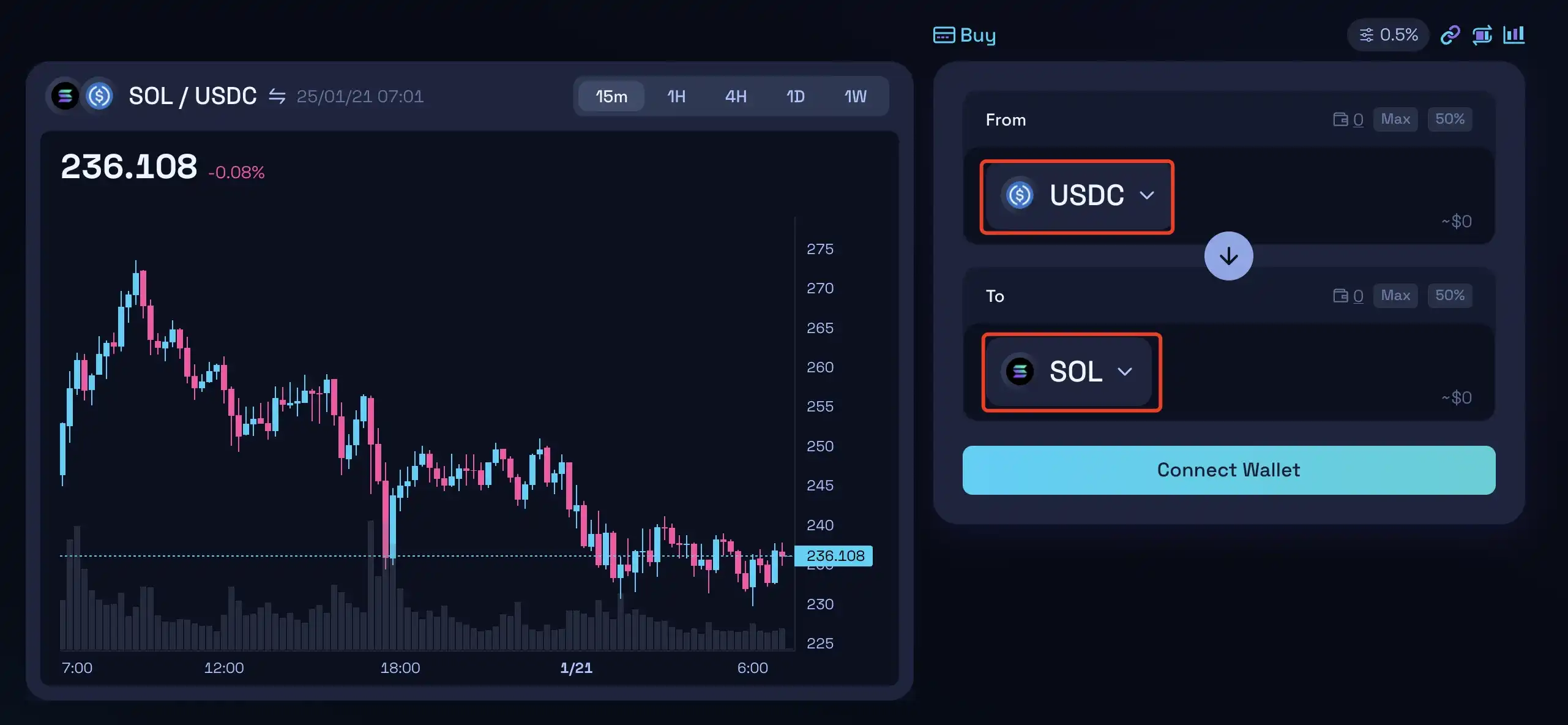
STEP 3. Once you have successfully transferred USDC to the Solana chain, you can swap it for SOL (Demo: https://raydium.io/swap/).
How to Purchase Popular On-chain Tokens
Direct Purchase on a DEX
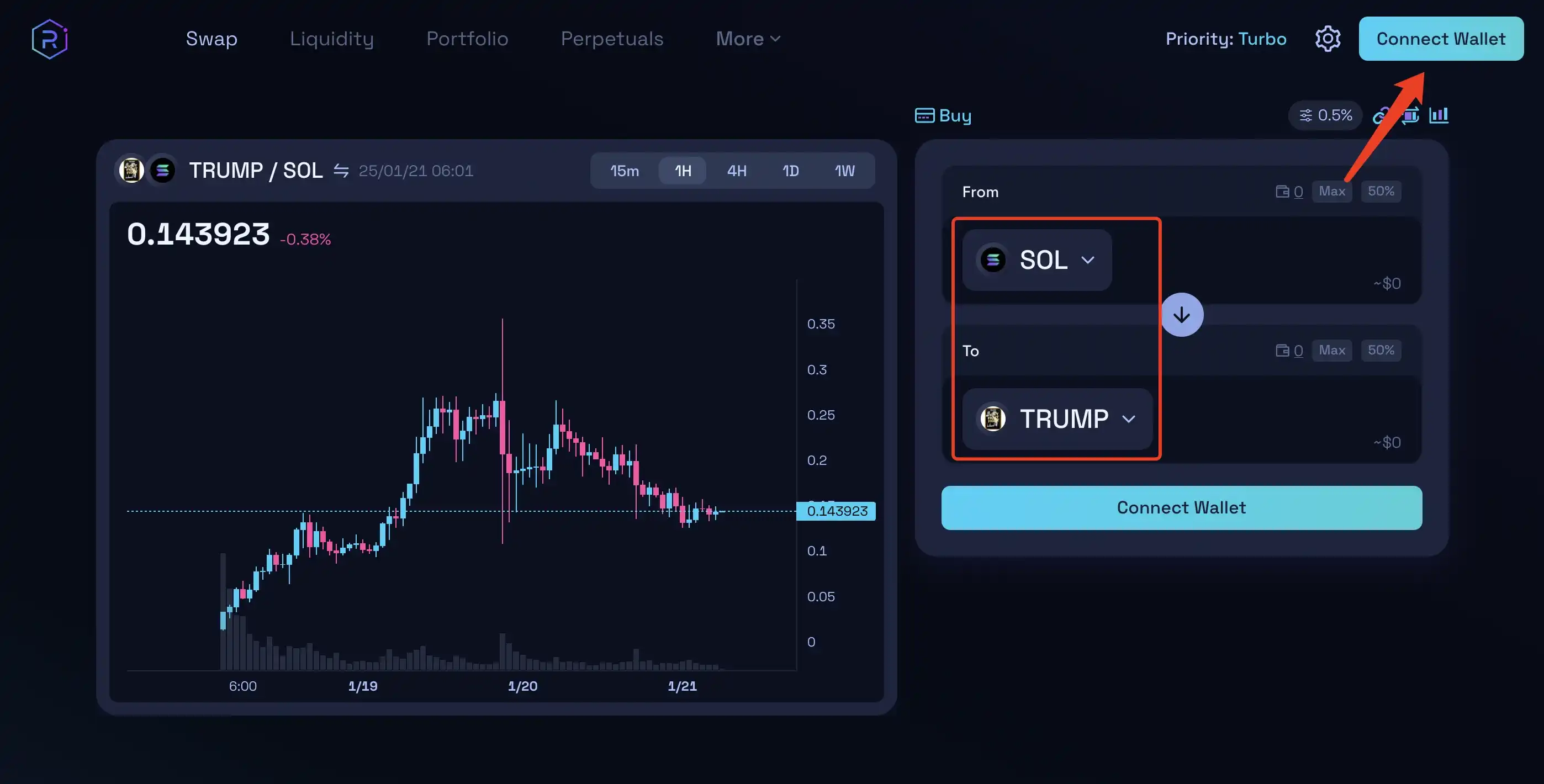
As of January 19th, according to DeFiLlama data, Raydium's 24-hour trading volume has surpassed that of Tether, ranking first. Raydium's 24-hour trading volume is $25.24 million, while Tether's is $17.65 million. It is evident that most purchases of tokens on the Solana ecosystem occur on the Raydium platform, with its official link being: https://raydium.io/swap/. Connect your wallet and select the desired token to proceed with the transaction.
On one hand, when a project's trading activity is high, relying solely on Raydium may not always result in smooth and timely buy/sell operations. On the other hand, since newly launched on-chain projects lack fundamental analysis basis due to their recent listing, investors can only assess their trends by observing factors such as token distribution, smart money inflow, and potential project manipulation. Investing blindly in meme coins carries high risks, but by mastering basic on-chain analysis techniques, one can significantly increase their success rate. Therefore, to better engage in on-chain trading and profit from it, it is recommended to use GMGN for transactions.
Using On-Chain Tool GMGN
GMGN is a website that combines a Meme Coin data dashboard with a trading tool. To use GMGN, visit the official GMGN site, connect your wallet, enter the token contract address you want to buy in the search bar, and input the amount of the token you wish to purchase (or sell) on the right side of the interface.
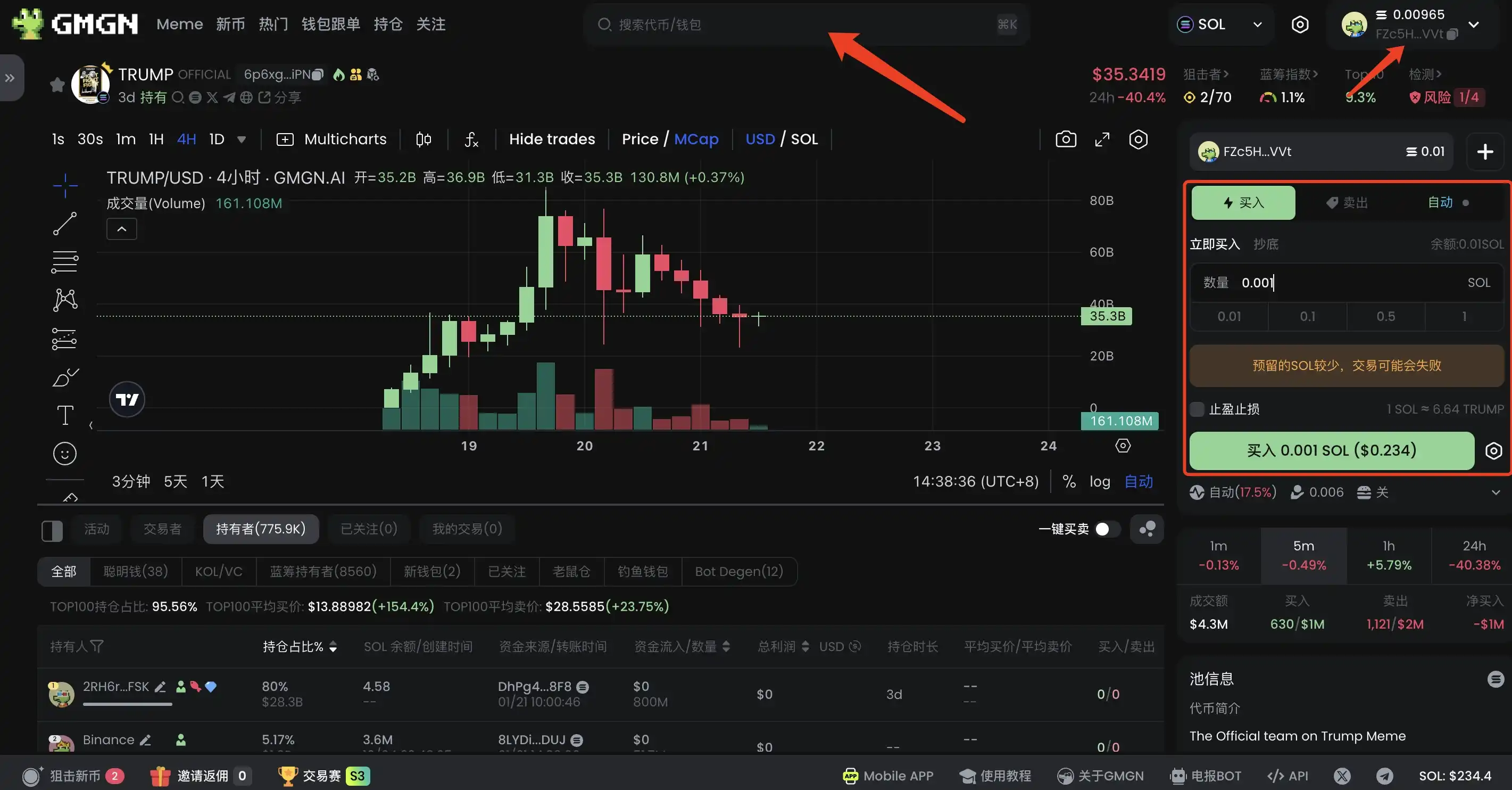
The above is just a simple introduction to the GMGN operating interface. For more GMGN operating tutorials, please refer to the following two articles:
100x Overnight? How to Use GMGN to Play with Meme Coins (Beginner's Guide)
How to Become a Meme Coin Trading Expert? (GMGN Advanced Guide)
You may also like

Mastercard Launches Agent Pay for AI, Plans to Record AI Agent Payment Authorizations on Polygon
Mastercard launched Agent Pay for AI, a new payment protocol designed to help AI agents make small payments such as pay-per-use access to data and APIs. The system plans to record human-granted AI agent permissions on Polygon, focusing on verifiable authorization, identity, and payment controls.

Curve Deploys Llamalend v2 on Optimism With 250,000 OP Incentives
Curve launched Llamalend v2 on Optimism with 250,000 OP incentives from the Optimism Foundation. The upgrade expands Llamalend beyond its earlier crvUSD-focused model, adding broader collateral support, LlamaRisk market reviews, and the ability to use Curve LP tokens as collateral.

Raydium Old Liquidity Pool Reportedly Exploited, With $1.34 Million Moved to Ethereum and Tornado Cash
An old Raydium liquidity pool was reportedly exploited for around $1.34 million in USDC, RAY, and wSOL, with the stolen funds bridged to Ethereum and deposited into Tornado Cash. The incident highlights the tail risks of legacy DeFi pools, old contracts, and cross-chain fund laundering paths.

Kalshi Executive Challenges “SBF Backed AI Unicorns” Narrative, Says Leopold Aschenbrenner Was Key Figure
Kalshi executive John Wang questioned the “SBF backed AI unicorns” narrative, saying Leopold Aschenbrenner was the key figure behind major AI investment decisions.

Pantera Capital Partner: How Tokenization is Restructuring the Private Equity and Early Investment Ecosystem?

New York Proposes Stricter Stablecoin Issuer Rules Aligned With Federal GENIUS Act
NYDFS proposed stricter stablecoin issuer rules aligned with the GENIUS Act, covering reserves, custody, redemption timelines, audits, and capital buffers.
Every exchange is a "Universal Exchange."

The counterattack of traditional finance: Alliance chains are quietly reviving

CryptoQuant Says Bitcoin Profitable Supply Is Near 45% Pressure Zone as On-Chain Data Points to Market Repricing
CryptoQuant said Bitcoin’s profitable supply is nearing the 45% pressure zone, signaling rising market stress, unrealized losses, and a possible on-chain repricing phase.

Bitcoin Falls Below 200-Week Moving Average as On-Chain Data Shows Over Half of Supply in Loss
Bitcoin dropped below its 200-week moving average as on-chain data showed over 50% of circulating supply is now in loss, signaling rising market stress.

CFTC Reportedly Plans New Prediction Market Rules Focused on Manipulation Risk and Public Interest Review
The CFTC is reportedly preparing new prediction market rules focused on manipulation risk, public interest review, and retail trader protections.

Meet the new WEEX trial fund—your gateway to greater profits

WEEX Labs Lands at Dutch Blockchain Week: A Disruptive Crypto × AI Conversation Sets Sail in Amsterdam
SK Hynix Reportedly Plans U.S. ADR Listing as Early as August, With SEC Approval Possible in Late June
SK Hynix may pursue a U.S. ADR listing as early as August, with SEC approval reportedly possible in late June amid strong AI chip supply chain demand.

SpaceX vs Tesla vs xAI: Which Elon Musk Trade Has the Biggest Upside in 2026?
OpenAI Reveals It Has Confidentially Submitted an S-1 to the SEC, Keeping the Door Open for a Future IPO
On June 9, according to an OpenAI announcement, the company recently confidentially submitted a draft S-1 registration statement to the U.S. Securities and Exchange Commission (SEC), beginning the preliminary compliance process for a potential initial public offering. OpenAI said it chose to disclose this proactively because it expected the news might leak; however, the company has not yet set a specific listing timeline, and related arrangements may still take some time.
Latest research from 13 top universities including Cornell University: The current state, challenges, and misconceptions of the fusion of Crypto and AI
Deconstructing Anthropic: The Best AI Company, Possibly Also a Type of Organizational Invention
Mastercard Launches Agent Pay for AI, Plans to Record AI Agent Payment Authorizations on Polygon
Mastercard launched Agent Pay for AI, a new payment protocol designed to help AI agents make small payments such as pay-per-use access to data and APIs. The system plans to record human-granted AI agent permissions on Polygon, focusing on verifiable authorization, identity, and payment controls.
Curve Deploys Llamalend v2 on Optimism With 250,000 OP Incentives
Curve launched Llamalend v2 on Optimism with 250,000 OP incentives from the Optimism Foundation. The upgrade expands Llamalend beyond its earlier crvUSD-focused model, adding broader collateral support, LlamaRisk market reviews, and the ability to use Curve LP tokens as collateral.
Raydium Old Liquidity Pool Reportedly Exploited, With $1.34 Million Moved to Ethereum and Tornado Cash
An old Raydium liquidity pool was reportedly exploited for around $1.34 million in USDC, RAY, and wSOL, with the stolen funds bridged to Ethereum and deposited into Tornado Cash. The incident highlights the tail risks of legacy DeFi pools, old contracts, and cross-chain fund laundering paths.
Kalshi Executive Challenges “SBF Backed AI Unicorns” Narrative, Says Leopold Aschenbrenner Was Key Figure
Kalshi executive John Wang questioned the “SBF backed AI unicorns” narrative, saying Leopold Aschenbrenner was the key figure behind major AI investment decisions.
Pantera Capital Partner: How Tokenization is Restructuring the Private Equity and Early Investment Ecosystem?
New York Proposes Stricter Stablecoin Issuer Rules Aligned With Federal GENIUS Act
NYDFS proposed stricter stablecoin issuer rules aligned with the GENIUS Act, covering reserves, custody, redemption timelines, audits, and capital buffers.


