
AI Trading in 2026: Bitcoin, Ethereum, and the Shift Toward Changing Crypto Trading


AI moves from narrative to infrastructure
In early 2026, AI has returned to the center of the crypto market — not as a short-lived narrative, but as part of trading infrastructure. AI-powered tokens continue to attract attention, while AI-assisted trading tools are increasingly embedded into exchanges, strategy platforms, and risk systems. For traders, the key question is no longer whether AI will be used, but how it changes execution, risk control, and decision-making in practice. As Bitcoin and Ethereum increasingly trade alongside equities and macro assets, AI systems are being forced to adapt to a more institutionalized market structure.
Understanding this shift requires separating market narratives from the actual mechanics of AI-driven trading.
From Market Attention to Trading Utility
Recent AI-related crypto projects reflect a broader trend: machine learning is being applied directly to operational tasks such as contract analysis, anomaly detection, and real-time risk monitoring. These use cases emphasize efficiency and control, rather than prediction.
At the same time, AI-assisted trading tools have become more standardized across the market. Most platforms now combine algorithmic rule engines with machine-generated signals, strategy visualization, and automated backtesting. What matters is not the presence of AI itself, but how consistently it is integrated into execution and risk frameworks.
For active traders, AI-assisted execution is increasingly viewed as a baseline capability — similar to charting tools or order management systems — rather than a differentiating edge on its own.
What AI Trading Tools Improve — and Where Limits Remain
Despite rapid development, AI trading tools operate within clear boundaries.
In practice, performance differences across systems are driven less by whether AI is used and more by data selection, signal filtering, and risk constraints. Signals may incorporate price action, volatility, order-book behavior, and on-chain data, but outcomes depend on how these inputs are weighted and controlled.
AI models optimize probabilities, not outcomes. They tend to perform best in stable market regimes and lose effectiveness when historical relationships break down. For this reason, core risk controls — position sizing, stop-loss rules, and drawdown limits — remain rule-based and transparent.
AI strengthens discipline and consistency; it does not replace judgment.
AI Tokens and Infrastructure: Separating Utility from Narrative
AI-related tokens continue to play a visible role in market cycles. Projects focused on infrastructure — including data availability, computing resources, and model deployment — are increasingly positioned as long-term enablers of AI-driven analytics and trading systems.
At the same time, speculative AI narratives demonstrate how quickly attention can move ahead of fundamentals. As regulatory discussions increasingly emphasize transparency and accountability, projects with auditable logic and practical utility are more likely to retain relevance beyond short-term market cycles.
For traders, the distinction is becoming clearer: infrastructure compounds gradually, while narrative momentum fades as conditions change.
AI as a Bridge Between Crypto and Global Markets
AI trading systems are also reshaping how traders view crypto in relation to other asset classes. Multi-asset AI frameworks increasingly analyze crypto alongside equities, commodities, and macro indicators, identifying shared volatility regimes and risk sensitivities.
This broader perspective allows for more adaptive exposure management. During periods of heightened uncertainty, AI-driven systems may reduce directional risk and favor more defensive positioning. Crypto is increasingly treated not as an isolated market, but as part of a global risk environment.
Practical Guidance: Using AI Without Surrendering Control
For traders, AI delivers value only when paired with clear oversight.
First, prioritize verifiability. Tools should provide long-term backtests, realistic assumptions, and transparency around signal logic and risk metrics. Explainability matters more than headline performance claims.
Second, use AI to manage risk, not outsource responsibility. Exposure limits, scenario-based drawdowns, and regime awareness remain essential.
Third, avoid concentration — both in tools and narratives. Combining AI-assisted strategies with diversified market exposure tends to be more resilient than relying on a single model or theme.
Conclusion: The Real Role of AI Trading in 2026
AI quantitative trading is unlikely to drive the crypto market through hype alone. Its lasting impact lies in structure rather than prediction — improving execution discipline, enhancing risk management, and connecting crypto trading more closely with global market dynamics.
In 2026, the traders who benefit most from AI are not those seeking certainty, but those using automation to build consistency. Understanding where AI adds measurable value — and where human judgment remains essential — is what ultimately defines the edge.
About WEEX
Founded in 2018, WEEX has developed into a global crypto exchange with over 6.2 million users across more than 150 countries. The platform emphasizes security, liquidity, and usability, providing over 1,200 spot trading pairs and offering up to 400x leverage in crypto futures trading. In addition to traditional spot and derivatives markets, WEEX is expanding rapidly in the AI era — delivering real-time AI news, empowering users with AI trading tools, and exploring innovative trade-to-earn models that make intelligent trading more accessible to everyone. Its 1,000 BTC Protection Fund further strengthens asset safety and transparency, while features such as copy trading and advanced trading tools allow users to follow professional traders and experience a more efficient, intelligent trading journey.
Follow WEEX on social media
Instagram: @WEEX Exchange
TikTok: @weex_global
YouTube: @WEEX_Global
Discord: WEEX Community
Telegram: WeexGlobal Group
You may also like

AI Crypto Trading in 2026: How AI Agents Use Stablecoins for Capital Management and Settlement
Learn how AI agents use stablecoins for crypto trading in 2026 — managing capital, settling transactions, and operating across exchanges and DeFi protocols.
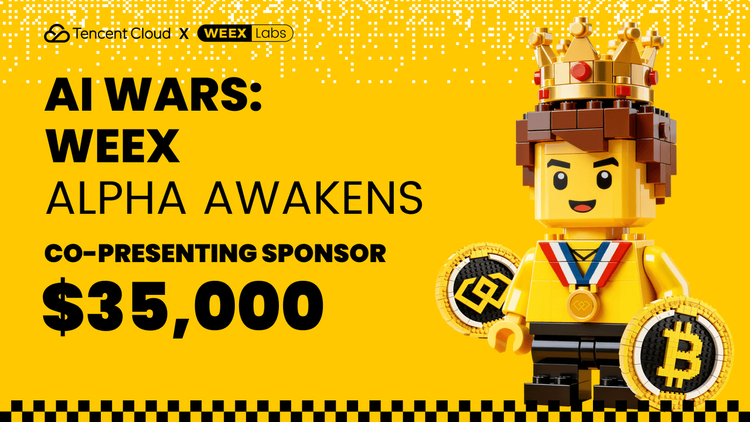
AI Trading's Ultimate Test: Empower Your AI Strategy with Tencent Cloud to Win $1.88M & a Bentley
AI traders! Win $1.88M & a Bentley by crushing WEEX's live-market challenge. Tencent Cloud powers your AI Trading bot - can it survive the Feb 9 finals?

How a Risk-Controlled AI Crypto Trading Bot Protects Capital in Real Markets
Ritmex demonstrates how disciplined risk control and structured signals can make an AI crypto trading bot more stable and reliable on WEEX, highlighting the importance of combining execution discipline with scalable AI trading systems.
How a Structured AI Crypto Trading Bot Won at the WEEX Hackathon
Crypto_Trade shows how structured inputs and controlled adaptability can build a more stable and reliable AI crypto trading bot within the WEEX AI Trading Hackathon, highlighting a practical path toward scalable AI trading systems.

How a Fully Automated AI Trading Bot Won at WEEX Hackathon (From 0 to AI Agent)
Nick’s journey on WEEX shows that successful AI Trading isn’t just about strategy ideas—but about structured AI agents, disciplined execution, and continuous adaptation in real market conditions.
Best AI Crypto Trading Bot? Inside the AI Trading System That Ranked Top 3 on WEEX
Discover the best AI crypto trading bot on WEEX. Learn how AI trading works, how to trade automatically, and why this system stands out among top AI trading apps.

OpenClaw and AI Bots: From AI Trading to BTC Liquidations in the Crypto Gold Rush
AI crypto trading bots like OpenClaw and AI trading apps are reshaping digital markets. From BTC liquidations to crypto bubble charts, automated trading is expanding alongside free crypto airdrops, affiliate programs, LALIGA partnerships, and tokenized gold markets.

From Human Strategy to AI Trading Bot: How Shadow Trading AI Won 2nd Place in the WEEX Hackathon
Ivan’s Shadow Trading AI secured second place in the WEEX AI Trading Hackathon, demonstrating how AI trading systems built on real market expertise can perform under live market conditions.

Who Will Control AI? Why Decentralized AI May Be the Only Alternative to Government and Big Tech
AI has become critical infrastructure, and governments and corporations are competing to control it. Centralized development and regulation are entrenching existing power structures. The Web3 community is building a decentralized alternative — distributed compute, token incentives, and community governance — before that window closes.

WEEX AI Hackathon: How Did This AI Trading Winner Succeed?
A self-taught AI trading enthusiast achieved top-10 results at the WEEX AI Hackathon. Learn about the mindset, AI tools, and lessons behind this impressive performance.
Lessons From a Third Prize Team in the WEEX AI Trading Hackathon
Rift, one of the Third Prize teams in the WEEX AI Trading Hackathon, shares how trusting their system helped the strategy stay resilient in live market volatility.

Champion Crowned at WEEX AI Hackathon: Revealing Strategy That Won $600K
A trader with only 6 months of AI trading experience won $600,000 at the WEEX AI Hackathon. Discover the strategy, tools, and lessons behind this breakthrough victory.

4 AI Trading Strategy Lessons from WEEX Hackathon Finalist
Finalist Bambi shares how AI tools helped turn real trading experience into an automated strategy, why survival-first risk control shaped the system’s design, and how the approach will evolve ahead of WEEX AI Trading Hackathon Season 2.
What Is OpenClaw? How The AI Agent Could Automate Crypto Trading Through APIs
OpenClaw is a rapidly growing AI agent on GitHub that can automate tasks and even execute crypto trades through exchange APIs. Learn how OpenClaw works, how it connects to exchanges, and the risks traders should understand before using AI trading agents.

WEEX AI Hackathon Champions Crowned, Revealing Future of AI Trading
The first-ever WEEX AI Hackathon has concluded, with 10 winners emerging from over 200 global teams. Beyond its $1.8 million prize pool, the event marked a milestone—proving that the future of AI trading belongs to accessible, AI-powered innovation.

Lessons From a Top 10 AI Trading Strategy in the WEEX AI Hackathon
A Top 10 finalist in the WEEX AI Hackathon shares how a market-neutral AI trading system competed against high-leverage strategies in live crypto markets.
From 27th to 4th: The AI Trading "Survivor Strategy" Behind a WEEX Hackathon Comeback
After a logic failure dropped him to 27th place, ClubW_9Kid rebuilt his AI trading framework and finished 4th in the WEEX AI Hackathon. In this interview, he explains the lessons behind disciplined AI execution, risk control, and why survival beats complexity in algorithmic trading.
What Is Vibe Coding? How AI Is Changing Web3 & Crypto Development
What is vibe coding? Learn how AI coding tools are lowering the barrier to Web3 development and enabling anyone to build crypto applications.
AI Crypto Trading in 2026: How AI Agents Use Stablecoins for Capital Management and Settlement
Learn how AI agents use stablecoins for crypto trading in 2026 — managing capital, settling transactions, and operating across exchanges and DeFi protocols.
AI Trading's Ultimate Test: Empower Your AI Strategy with Tencent Cloud to Win $1.88M & a Bentley
AI traders! Win $1.88M & a Bentley by crushing WEEX's live-market challenge. Tencent Cloud powers your AI Trading bot - can it survive the Feb 9 finals?
How a Risk-Controlled AI Crypto Trading Bot Protects Capital in Real Markets
Ritmex demonstrates how disciplined risk control and structured signals can make an AI crypto trading bot more stable and reliable on WEEX, highlighting the importance of combining execution discipline with scalable AI trading systems.
How a Structured AI Crypto Trading Bot Won at the WEEX Hackathon
Crypto_Trade shows how structured inputs and controlled adaptability can build a more stable and reliable AI crypto trading bot within the WEEX AI Trading Hackathon, highlighting a practical path toward scalable AI trading systems.
How a Fully Automated AI Trading Bot Won at WEEX Hackathon (From 0 to AI Agent)
Nick’s journey on WEEX shows that successful AI Trading isn’t just about strategy ideas—but about structured AI agents, disciplined execution, and continuous adaptation in real market conditions.
Best AI Crypto Trading Bot? Inside the AI Trading System That Ranked Top 3 on WEEX
Discover the best AI crypto trading bot on WEEX. Learn how AI trading works, how to trade automatically, and why this system stands out among top AI trading apps.