
AI Concept Cools Off, How to Respond to the New Market Trend?

Original Article Title: Pockets of Strength: stop fighting the market
Original Article Author: mikeykremer, MessariCrypto CTO
Original Article Translation: Ashley, BlockBeats
Editor's Note: The article delves into how to stay calm and rational in volatility, by identifying the market's strength and weakness signals, and adjusting strategies in response to the complex market environment. The article emphasizes that successful traders are not always right in their predictions, but rather know how to manage risk, quickly set stop-loss orders, and follow market trends. At the same time, the author points out that in a narrative-driven market, independent thinking and continuous reflection are particularly important. For all crypto investors, only by maintaining humility, vigilance, and adaptability can they stand undefeated in a competitive market.
The following is the original content (rearranged for better readability):
Alpha First
· Let the market tell you which coins are strong and weak – buy confirmed strong coins, sell weak ones. You don't have to be the first to enter, but you also must not be the last.
· Do your research: Find coins that contradict your assumptions and try to understand the reasons behind them.
· Go solo: If you rely solely on copy trading, the end result will not be ideal.
The Market is Right, You Are Wrong
Indeed, you can earn the most profit by investing and trading against market sentiment. Ideally, we all want to buy at the market bottom and sell at the top. However, this scenario is not realistic. If people were more willing to act in line with market trends, they could avoid much unnecessary pain. It is very reasonable to increase positions in coins that have risen by more than 40% in a day and sell off coins that have dropped by over 10% for several consecutive days.
· The market never makes mistakes: The market never makes mistakes, only individual viewpoints are wrong. This means that no matter how you think the market should operate, the actual market trend is the ultimate reality.
· Profit is the ultimate validation of correctness: Correctness does not mean predicting market trends, but whether you can make a profit. A trader may be correct in their market direction judgment, but may incur losses due to improper execution or timing. The true standard of correctness is whether the trades are profitable, not how accurate the predictions were.
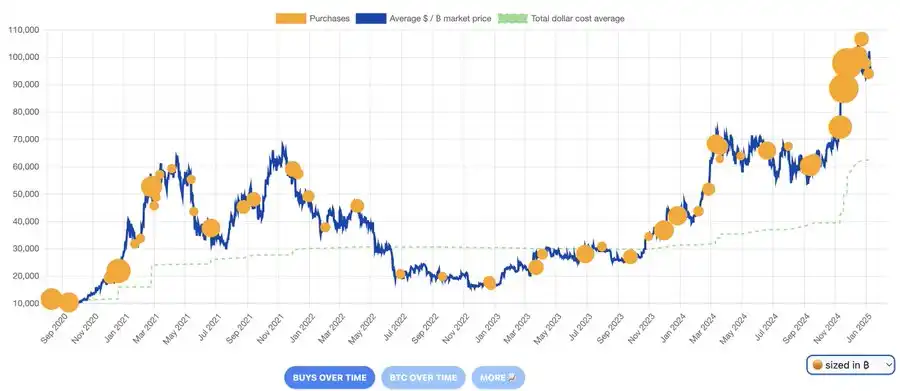
Instead of trying to predict market reversals, successful traders tend to identify and follow strong areas in the market. This means: being willing to buy assets that have already risen significantly, quickly stop-loss when market sentiment shifts, and avoiding further adding to losing positions.
The most successful traders focus not on always being right, but on effectively managing risk. This includes: taking profits in a timely manner, not hodling through major retracements, and being willing to re-enter after exiting.
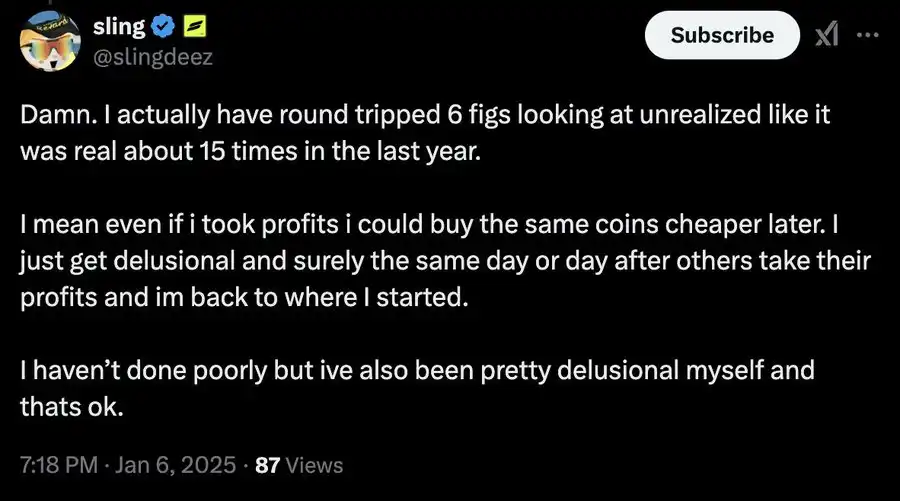
Price action is the only truth in the market. When your position is not in your favor, the market is sending you a message: your assumption may be wrong. A disciplined approach is to accept small losses rather than large ones.
When the coin you hold experiences a significant pullback, you need to calm down and ask yourself why. Has the overall market trend changed? Or has the market's focus shifted to other coins? What am I missing? Most importantly, you need to ask yourself: Is it necessary to endure this pullback? When the market doesn't align with your expectations, question your assumptions, stay humble, and adapt to the changing environment.
Market Signal: Aiccelerate Case Study
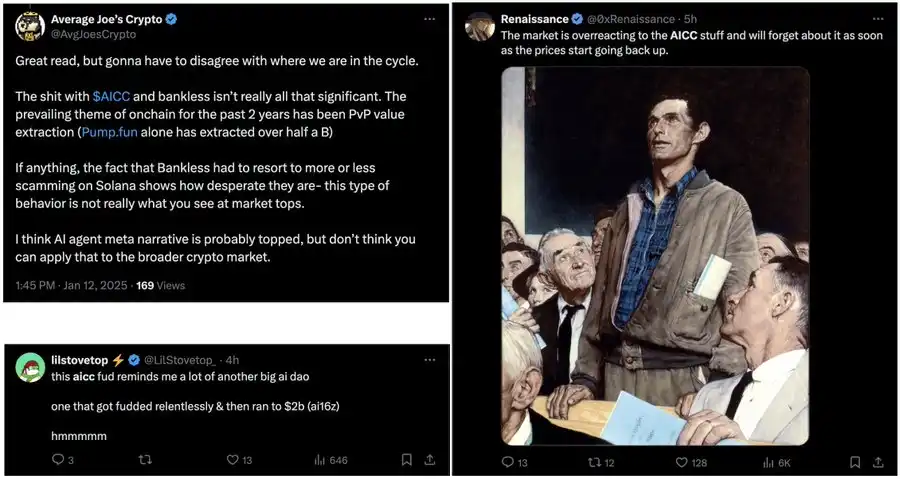
The current market's reaction to AICC provides a lesson in market psychology. The key is: if you disagree with the market's interpretation of AICC, you face two possibilities, both of which require immediate attention:
· The market is right, and you are wrong.
· The market is selling off due to other reasons you haven't identified.
In either case, fighting the trend is dangerous. If you can't explain the reason for the price drop, it's unlikely you'll identify when the price will stop falling. This is exactly what Buffett meant by "you only find out who was swimming naked when the tide goes out"—if you don't understand the market trend, you'll be exposed to unforeseen risks.
Reduce Blind Confidence
In the ever-changing cryptocurrency market, the only true "buy and hold" asset is Bitcoin. This is not a Bitcoin maximalist view but a pragmatic judgment based on Bitcoin's unique position as digital gold: it has unparalleled network effects, true decentralization, and institutional recognition. For assets in the cryptocurrency market, active management is not just advised but a survival necessity.
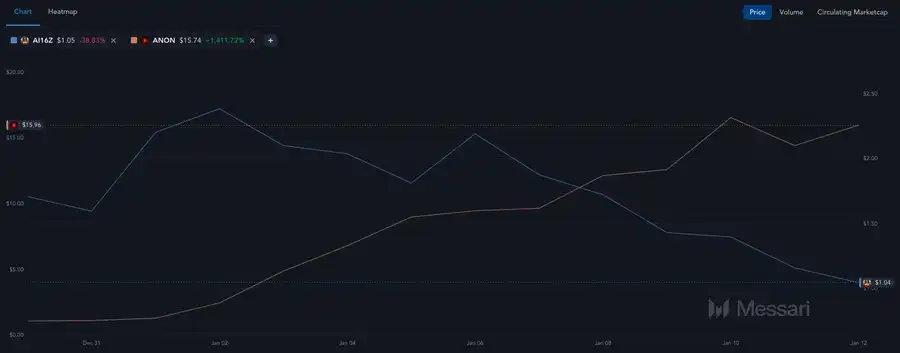
The crypto market requires a special mindset: one that is highly sensitive to market information and ready to adjust strategies at any moment. Successful traders maintain what Andy Grove referred to as "paranoid professionalism" — being constantly vigilant, questioning every position, challenging every assumption, and treating every profit as temporary. This is not pessimism but rather a form of realism in a market where the narrative can change at any time.
In the crypto market, the most dangerous trap is not leverage or poor timing of entry but emotional reliance on a position. We have all seen cases where:
· Traders become "holders" after incurring losses;
· Investors keep buying into a failing coin due to overconfidence in their assumptions;
· Community members develop emotional attachment to a coin and cannot face market changes. This "holding bias" destroys more capital than any smart contract vulnerability.
Success in this market requires being always online, constantly gathering information from multiple sources. But more importantly, it requires emotional management, the ability to objectively process information without being swayed by existing biases. Your convictions should be strong enough to support your trading decisions but also flexible enough to adapt promptly to changing market conditions. Think of yourself as a surfer reading the waves, not a captain trying to control the ocean.

I've observed that the most successful cryptocurrency traders share a common trait: they have strong convictions, but like wearing a loose jacket, they can discard it at any moment when the market winds shift. They understand that in the crypto market, being right does not mean holding onto unchanging beliefs but maintaining unwavering attention and adaptability.
Remember, every position other than Bitcoin needs active management, continuous validation, and humility in the face of changing conditions. In such a dynamic market, convictions should be seen as assumptions that need constant testing, rather than fortresses to defend at all costs.
The Power of Independent Thinking
In the echo chamber of crypto Twitter, every price fluctuation sparks countless conflicting narratives, making the ability to think independently especially rare and valuable. Merely consuming information is not the same as analyzing it, and following thought leaders cannot replace the formation of insight. At the end of each trading day, only your name is on the profit and loss statement.
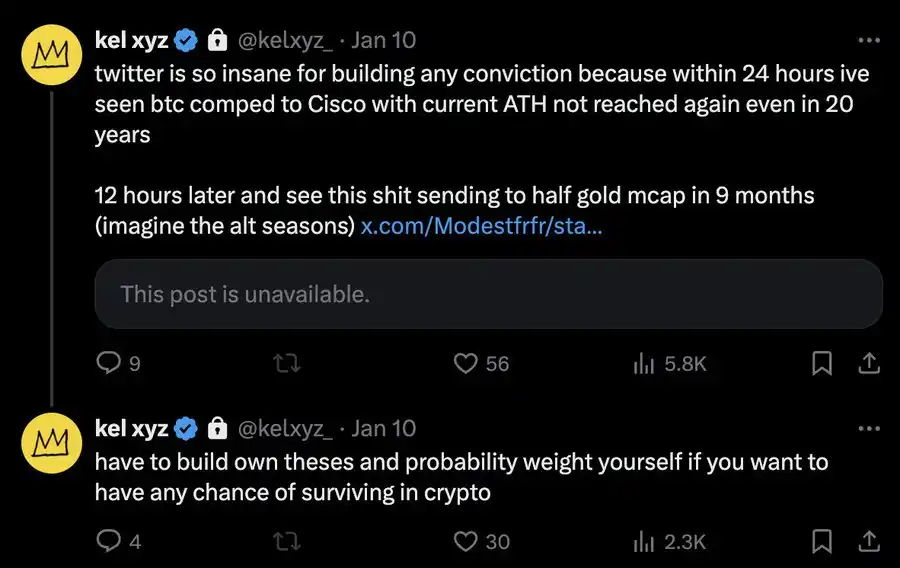
The market doesn't care about which influential accounts you follow or which "alpha group" you've joined. It only reacts to supply and demand dynamics, fear and greed, and market participants' actions based on these emotions. That's why blindly copying trades without understanding the underlying logic is dangerous — you never know when to exit, when to add to your position, and most importantly, when your original assumptions are no longer valid.
Writing is the most powerful tool for cultivating true market insight. Writing forces clarity of thought. When you attempt to explain your market hypotheses in written form, the logical gaps become glaringly obvious. Vague concepts that seemed rational in your mind must withstand the test of explicit articulation. That's why the most successful traders and investors (such as George Soros and Howard Marks) are often prolific writers.

See how Messari has become an incubator for some of the sharpest minds in the crypto market. The habit of regular research and writing not only captures thoughts but also hones them. Every article, every post, every market analysis compels the author to scrutinize their viewpoints, delve beneath the surface, and understand the inner workings of the market movement.
The path to market success isn't about finding the right person to follow but about developing your own voice. Start writing, even if just for yourself. Record your trades, explain your assumptions, analyze your mistakes. Publicly challenge your assumptions, engage in discussions. Publicly change your mind when new information arises. The goal is not to be consistently right but to have a clear, independent mindset.
Remember, in a narrative-driven market, those who can independently construct and analyze narratives have a significant advantage. Your writing doesn't need to be perfect or popular; it just needs to be authentic and analytical. This way, your nascent market intuitions can evolve into actionable trading hypotheses, and market participants can grow into market leaders.
Original tweet: 「Original Tweet Link」
You may also like

OpenAI Reveals It Has Confidentially Submitted an S-1 to the SEC, Keeping the Door Open for a Future IPO
On June 9, according to an OpenAI announcement, the company recently confidentially submitted a draft S-1 registration statement to the U.S. Securities and Exchange Commission (SEC), beginning the preliminary compliance process for a potential initial public offering. OpenAI said it chose to disclose this proactively because it expected the news might leak; however, the company has not yet set a specific listing timeline, and related arrangements may still take some time.

Latest research from 13 top universities including Cornell University: The current state, challenges, and misconceptions of the fusion of Crypto and AI
Deconstructing Anthropic: The Best AI Company, Possibly Also a Type of Organizational Invention
Apollo and Blackstone Reportedly Back $35 Billion Anthropic Chip Financing as Deal Details Remain Unclear
On June 9, according to currently available news alerts, Apollo and Blackstone Group participated in a $35 billion financing for an Anthropic “chip project.” Based on the original wording of the report, the funding has already been raised, but public information remains limited. The financing structure, use of proceeds, project entity, and whether Apollo and Blackstone participated through equity, debt, or project financing have not yet been disclosed.

Humanity Protocol Security Incident Escalates: More Than $31 Million Stolen From Related Addresses as Attacker Continues Selling H for ETH
On June 9, according to monitoring by Onchain Lens, more than $31 million has been stolen from addresses linked to Humanity Protocol, and the attack is still ongoing, with the hacker continuously swapping H tokens for ETH. Project founder Terence Kwok later confirmed the security incident on X, saying the issue involved a private key leak.

Bloomberg: As Bitcoin Weakens, Stablecoins and RWA Continue to Drive Expansion in Crypto Businesses
In June, Bloomberg reported that despite Bitcoin falling below $60,000 last week, wiping out about $235 billion in market value within seven days, and dropping close to 50% from last year’s peak, some core businesses in the crypto industry are still expanding, mainly in stablecoins, real-world asset tokenization (RWA), payments, and infrastructure. The report also noted that overall altcoin activity has contracted significantly: altcoin market capitalization has fallen from a peak of about $431 billion in November 2021 to around $170 billion, and among the tens of millions of tokens issued in recent years, fewer than 1,700 still maintain meaningful trading activity.

Galaxy Deep Research Report: How Hyperliquid's HIP-4 Upgrade Changes the Landscape of Prediction Markets?
Binance Research: RWA Market Expected to Expand Nearly 6x from Early 2025, with Public Equities and Onchain Payments Heating Up Together
In June, Binance Research said in its monthly market report that the real-world asset (RWA) market is expected to grow by about 589% from the beginning of 2025. Bond- and money market fund-related RWA expanded by about $6.5 billion, up 83% year over year, while publicly traded equity RWAs grew by about 422%. The report also noted that monthly crypto debit card transaction volume exceeded $747 million in May, up 48.6% year to date.

Japan to Assess a Framework for Yen Stablecoins and Crypto ETFs as Asia’s Compliant Payments Narrative Heats Up
Recently, according to the original report, Japan is considering the launch of yen stablecoins and cryptocurrency ETFs. Public information remains limited at this stage, and there is still no complete policy text, regulatory draft, or clear implementation timeline, so this is better characterized as a “policy discussion” rather than formal implementation. The original wording also noted that advancing stablecoin regulation in Asia is driving XRP usage and supporting growth in the XRPL ecosystem. However, based on currently available public information, there is not enough evidence to directly establish a clear causal relationship between this round of discussion in Japan and XRP or XRPL.

ZachXBT: Humanity private key leak and abnormal surge in H token should be viewed separately
On June 9, according to related disclosures, on-chain investigator ZachXBT posted an update on Humanity’s roughly $31 million security incident, saying that after further analyzing fund flows, he currently tends to believe the project team was not involved in an “inside job” or a self-staged attack. According to him, the official explanation about the private key leak was broadly accurate, but before the token unlock, the price of H had been artificially pushed higher, and the hacker later took advantage of that market environment; therefore, the private key leak and the earlier abnormal price pumping should be regarded as two separate and independent events. This reframing has shifted the market’s understanding of the nature of the incident. Earlier discussion around Humanity had focused on whether the team directly participated in the attack or used the security incident to cover up internal operations. ZachXBT’s latest remarks shift the focus from “whether it was self-theft” to “whether there were pre-unlock market structure issues.” He also questioned whether the team may have.

Morning Report | OpenAI has submitted an S-1 registration statement draft to the U.S. SEC; Morpho completes $175 million financing

Morning Report | BitMine increased its holdings by 126,971 ETH last week; trader Eugene announced his exit from the crypto market

Wang Chuan: How can one not feel anxious after the neighbor Old Wang made thirty times profit by investing in storage stocks? (Seven) - A quarter-century cycle
Cryptocurrency CEXs are flocking to sell US stocks, and traditional brokerages are facing an "uninvited guest."
$75 billion in foreign capital has fled, and South Korean retail investors have absorbed it all using leverage

Japan’s Three Megabanks Plan Joint Stablecoin Issuance in Fiscal 2026
MUFG, SMBC, and Mizuho reportedly plan to jointly issue fiat-pegged stablecoins in fiscal 2026, signaling Japan’s growing push into bank-led digital payment infrastructure.

Humanity Discloses H Token Dual-Chain Attack Details, With Losses on Ethereum and BSC Exceeding $36 Million
Humanity said the H token attack across Ethereum and BSC caused more than $36 million in losses after leaked ProxyAdmin keys enabled malicious contract upgrades and token minting.
White House Discusses CLARITY Act With Law Enforcement Ahead of Senate Vote
The White House discussed the CLARITY Act with law enforcement ahead of a Senate vote, focusing on illicit finance risks and developer protections.
OpenAI Reveals It Has Confidentially Submitted an S-1 to the SEC, Keeping the Door Open for a Future IPO
On June 9, according to an OpenAI announcement, the company recently confidentially submitted a draft S-1 registration statement to the U.S. Securities and Exchange Commission (SEC), beginning the preliminary compliance process for a potential initial public offering. OpenAI said it chose to disclose this proactively because it expected the news might leak; however, the company has not yet set a specific listing timeline, and related arrangements may still take some time.
Latest research from 13 top universities including Cornell University: The current state, challenges, and misconceptions of the fusion of Crypto and AI
Deconstructing Anthropic: The Best AI Company, Possibly Also a Type of Organizational Invention
Apollo and Blackstone Reportedly Back $35 Billion Anthropic Chip Financing as Deal Details Remain Unclear
On June 9, according to currently available news alerts, Apollo and Blackstone Group participated in a $35 billion financing for an Anthropic “chip project.” Based on the original wording of the report, the funding has already been raised, but public information remains limited. The financing structure, use of proceeds, project entity, and whether Apollo and Blackstone participated through equity, debt, or project financing have not yet been disclosed.
Humanity Protocol Security Incident Escalates: More Than $31 Million Stolen From Related Addresses as Attacker Continues Selling H for ETH
On June 9, according to monitoring by Onchain Lens, more than $31 million has been stolen from addresses linked to Humanity Protocol, and the attack is still ongoing, with the hacker continuously swapping H tokens for ETH. Project founder Terence Kwok later confirmed the security incident on X, saying the issue involved a private key leak.
Bloomberg: As Bitcoin Weakens, Stablecoins and RWA Continue to Drive Expansion in Crypto Businesses
In June, Bloomberg reported that despite Bitcoin falling below $60,000 last week, wiping out about $235 billion in market value within seven days, and dropping close to 50% from last year’s peak, some core businesses in the crypto industry are still expanding, mainly in stablecoins, real-world asset tokenization (RWA), payments, and infrastructure. The report also noted that overall altcoin activity has contracted significantly: altcoin market capitalization has fallen from a peak of about $431 billion in November 2021 to around $170 billion, and among the tens of millions of tokens issued in recent years, fewer than 1,700 still maintain meaningful trading activity.


