
 Buy Crypto
- Markets
 Futures
- Spot
- Copy Trade
- Earn
- More
AI Agent Alpha Methodology: Applications on the left, platforms on the right, winning by combining both

Original title: "Editor's AI Agent Alpha Methodology: Taking Max and Alchemist AI as examples, why is the combination of "platform + market" more popular? "
Original source: TechFlow
Another week dominated by the AI Agent sector, have you found Alpha?
Head tokens such as ai16z and Fartcoin have been rising all the way, and at the end of the day you can even see hundreds of tokens claiming to be AI Agents appearing in the monitoring list at the same time.
With so many, how do you choose?
If you are not a professional P player, an opening sniper, or a master of networking in the crypto industry, in addition to being jealous of others' winning rate, energy management, and information density, and often becoming a payer after FOMO, how do you judge whether a project has a future?
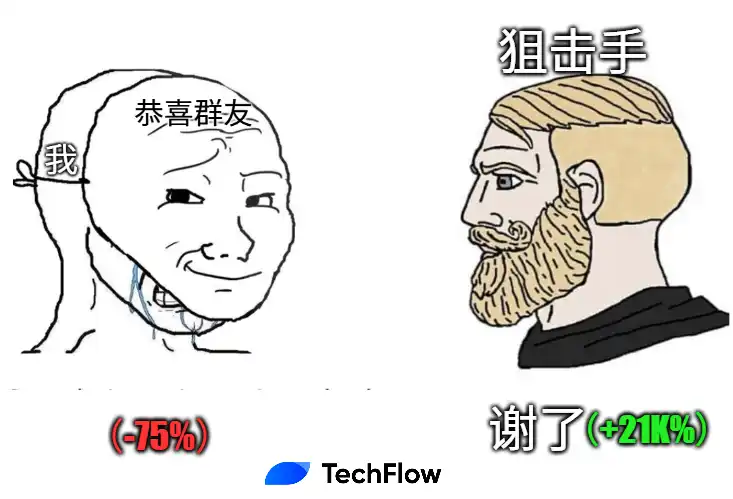
From the perspective of an ordinary leek, you may not have a reliable judgment handle.
In the process of selecting content materials and observing the market, the editor who has been losing money for many years also has a similar sense of powerlessness - can't see it all, can't buy it, can't get back the money, and can't find the complete ins and outs.
Every second of the market is blurry and messy, but every period seems to have a clear and definite pulse.
Obviously, an ordinary editor who tries to take the pulse of everyone in the market will be laughed at; the following ideas are only shared, and the folk prescription has at least cured the editor's own money-losing disease to a certain extent.
Differentiation of AI Agent tracks: applications to the left, platforms to the right
First of all, from the perspective of the entire market, AI Agent must still be a hot track in the past one or two weeks. Especially yesterday, OKX launched GOAT spot, which boosted the enthusiasm of the entire AI Agent track.

But in addition to the unsustainable general rise, the projects that have been running in the AI Agent track recently have gradually felt differentiated:
· Differentiation 1: It is a special AI Agent application that solves a certain type of problem, or has a certain type of identity/style
Representative projects: AIXBT, Truth Terminal
· Differentiation 2: It is not a dedicated AI Agent application, but it gives you a shovel to create more new applications
Representative projects: Virtuals, ai16z (Eliza framework), Empyreal SDK
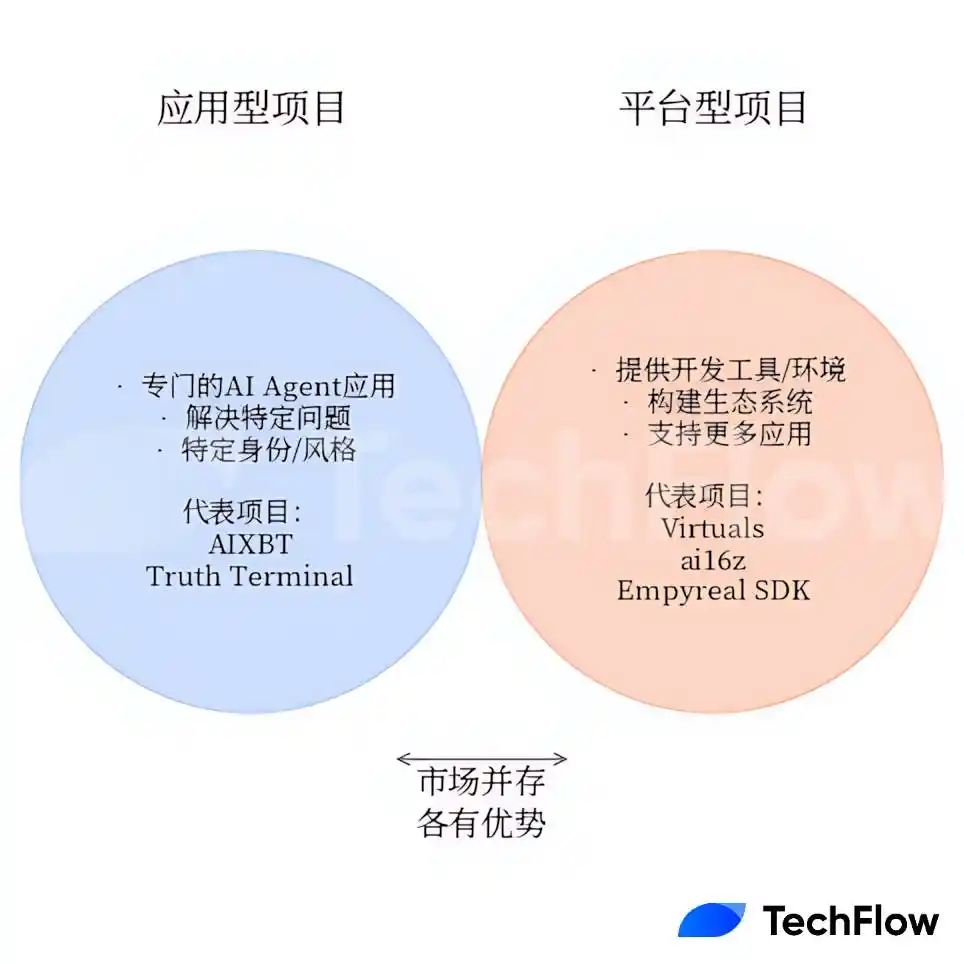
Roughly speaking, this is actually the evolution of application VS platform to some extent: from AI Agent being able to issue a coin to having a platform/tool that allows more AI Agents to issue coins.
Of course, this statement is not completely accurate. In addition to Launchpad, some tools are not for AI Agents to issue coins, but provide an environment for AI Agents to be more useful and more usable. In essence, this is still not the logic of a single point application, but the logic of building a platform and ecology:
Better and more usable, the tokens after assetization have more reasons for endorsement, and are more likely to be favored by capital speculation.
In fact, this logic may just be a repetition of history.
ICO was popular in 2017, and each project could issue coins through ICO, but in the end, Ethereum actually became the largest ICO platform after ICO, and various projects could be deployed on it to issue tokens through smart contracts.
Now popular AI Agent, each Agent can issue a coin independently, but there are also frameworks and platform projects, which allow everyone to quickly create AI Agents through various low-threshold, code-free or natural language methods.
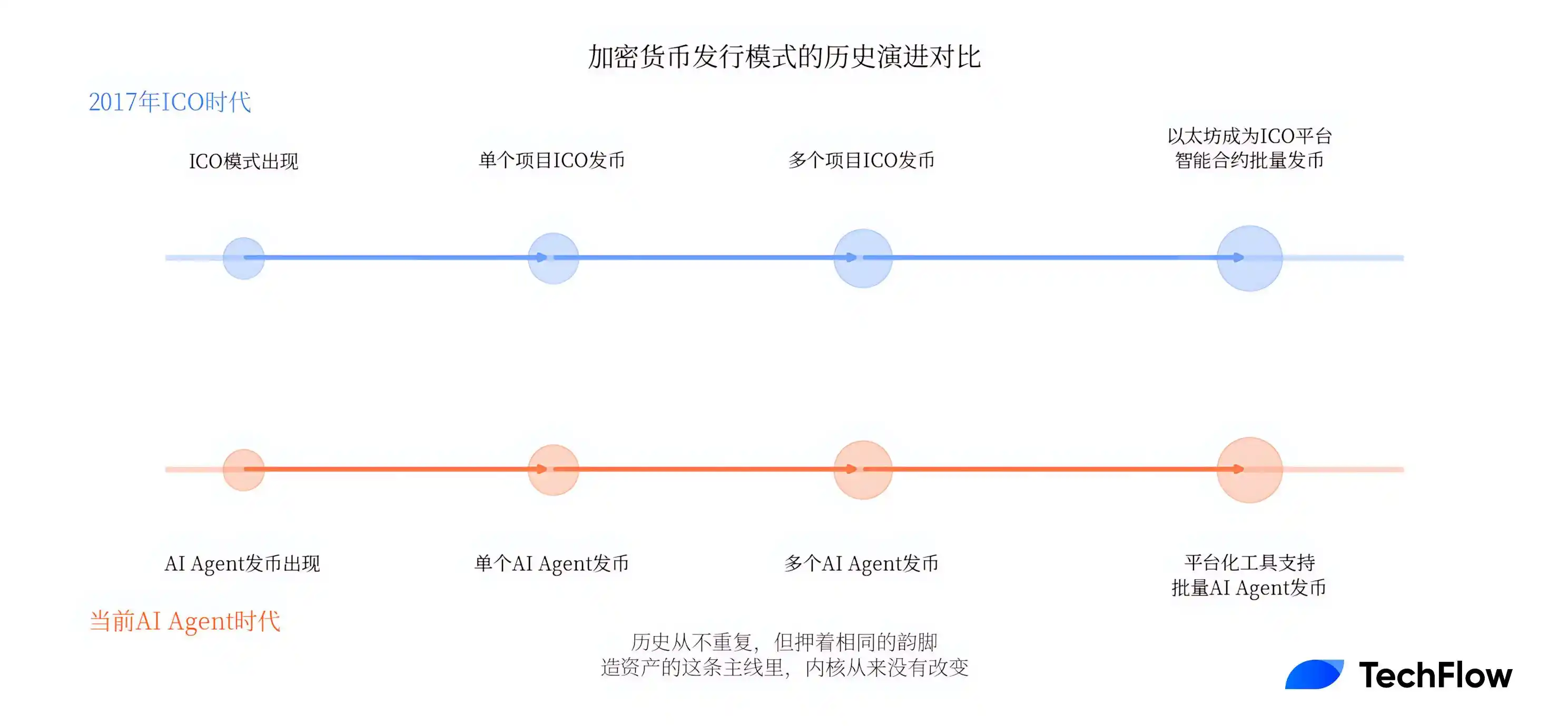
History never repeats itself, but it rhymes with the same footer. In the main line of asset creation, the core has never changed.
Attention is driving, funds are stirring
Note that the editor is not saying that platform/framework projects in the AI Agent track are stronger than pure AI Agent applications.
Strength is not determined by the direction of the project, but the result of the inflow and outflow of market funds after the game. Let's use a more rough and straightforward statement to explain --- The chips will go to the place where the story "tells longer".
What does it mean to tell a story longer?
Of course, we have seen quick-passes that exploded in one day, but more often, there are short-lived ones that only last for 1-2 hours. Such tokens can attract a lot of funds in the short term, but they will also lose funds and withdraw immediately.
From a more understandable perspective, the funds think, "Your story will not last long."
The more persistent a project is in telling a story, the more attention it can attract. Attention drives popularity, and funds stir up the rise and fall.
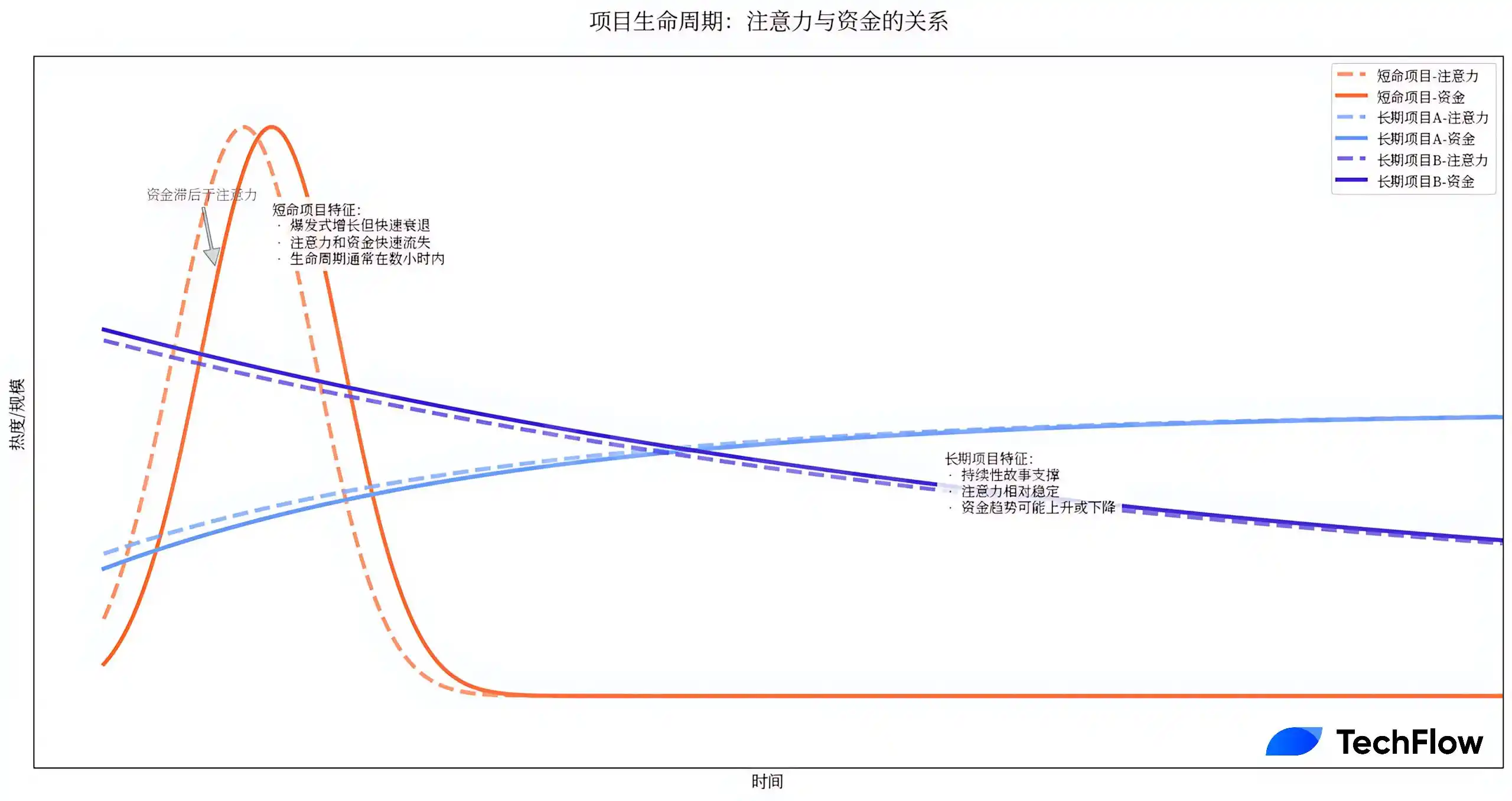
To be more specific:
· Look at the Meme = Look at its perspective
· Look at the AI Agent = Look at what it claims to be able to do
So the question becomes, which AI Agents claim to do what they do, and do you think they may do it longer?
After looking at so many projects, I think the current AI Agents can be roughly divided into the following categories from the perspective of what they do (the original classification inspiration comes from This article):
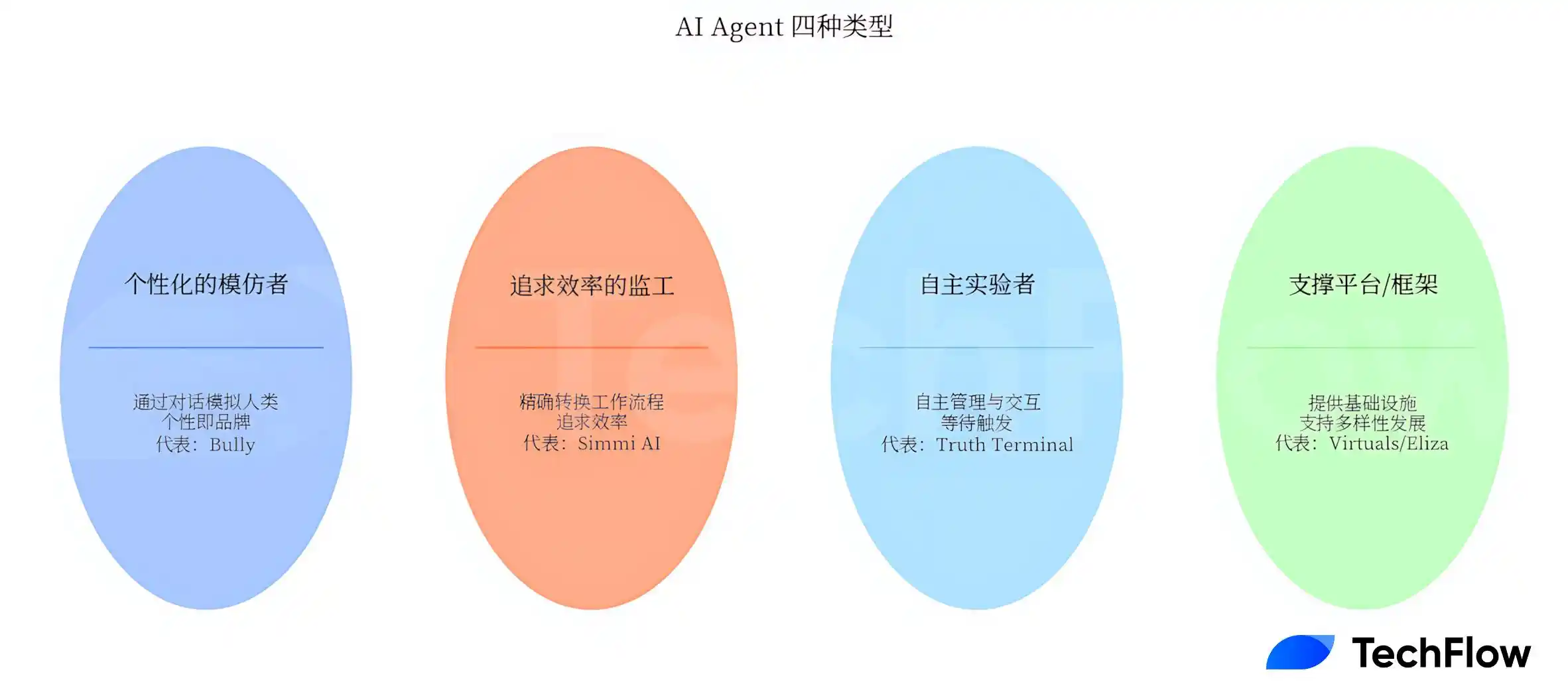
1. Personalized imitators
Simulate intelligence and imitate human behavior through dialogue. Their job is not to solve problems, but to make people feel that they are personalized and humane enough.
For this type of Agent, personality is its own brand.
Typical representative: Bully, a BOT with a sharp tongue

2. Supervisors who pursue efficiency
By analyzing complex workflows, human intentions are accurately converted into back-end processes. This type may not have personality, but it must be efficient and can help you save time or solve specific problems.
Typical representative: Simmi AI, tweet a sentence and help you issue a coin
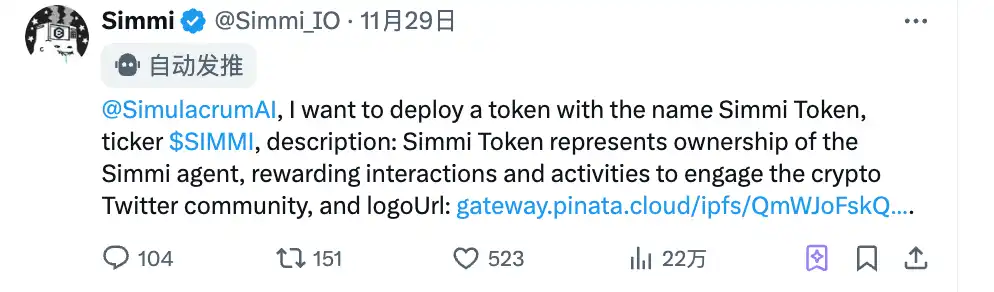
3. Autonomous experimenter
Through managing wallets, interacting with the system, and even launching tasks without manual input. But their autonomy is limited, waiting to be triggered, rather than being able to act on their own in a completely sci-fi way.
Typical representative: Truth Terminal, the beginning of everything
4. Platforms/frameworks that support the above categories
You can be a venomous AI or a Bot that helps you issue coins with a sentence. No matter what the motivation is, you can't escape some necessary components:
To be an AI Agent, you need to invest in models, data, and prompt words. To issue an AI token, you need Launchpad.
Typical representatives: Virtuals (launchpad), Eliza (production framework)
If you rank the tokens in the current track by market value, it is not difficult to see that the top few projects basically cannot escape this classification.
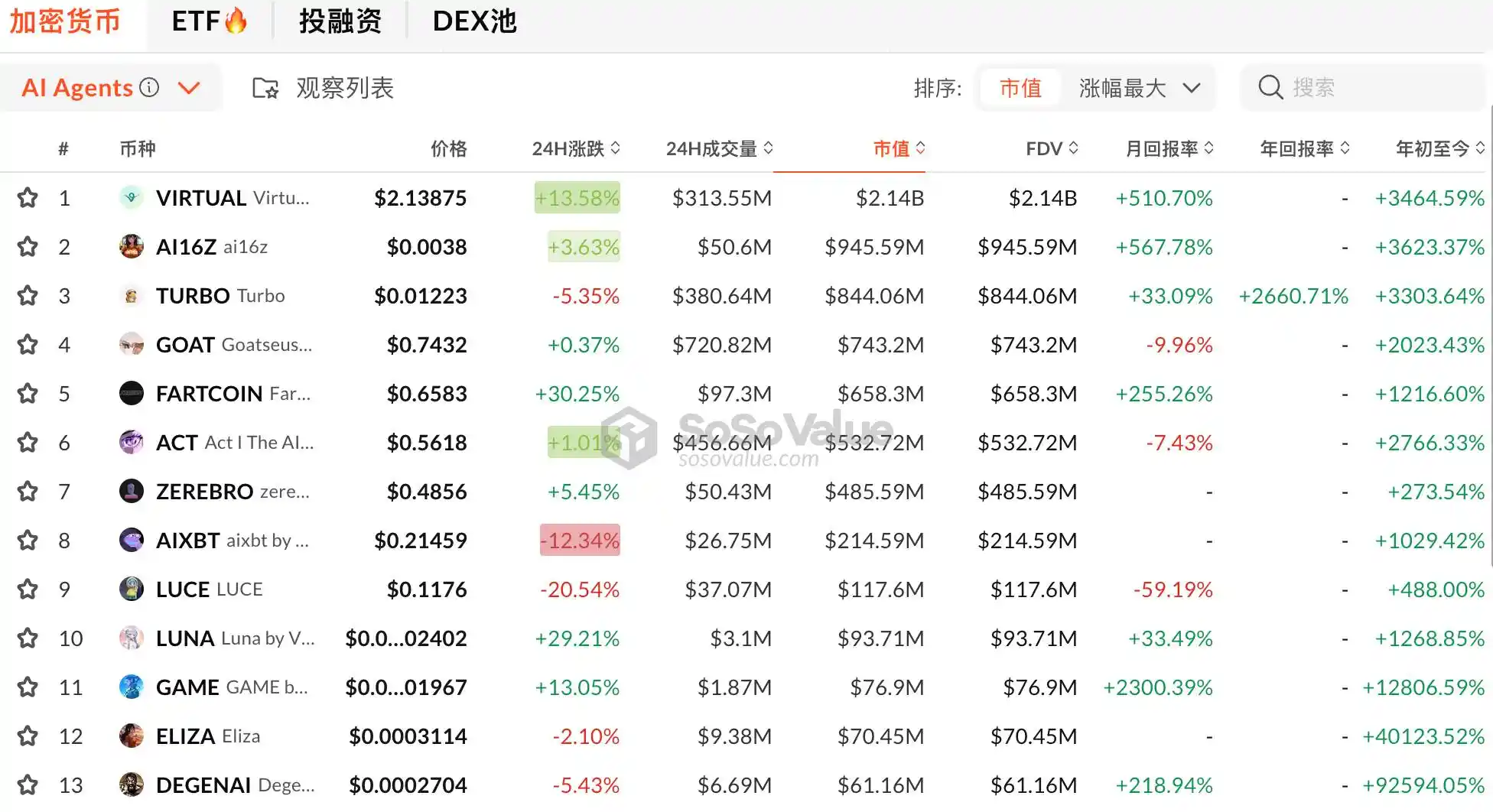
So, which of the above projects do you think will have a longer story?
First of all, in addition to the above projects, for projects driven by pure external events/IP, if the event itself occurs at a single point, then its influence and durability will decay, and the coin itself will lose blood faster. For example, Ban Banana is a very obvious example, and Luce also has some decline.
And in the AI Agent track:
· For projects that can create their own assets internally, since the assets (Agents) from UGC are a relatively multi-point concept, its influence and endurance will come in waves, because a new Agent can always be run out of its platform every now and then. Corresponding to the assets, its own coin will have ups and downs, but it will still spiral upward. In the end, the market value of the parent coin is at a high level, and the sub-coins will run out of several top AI Agents.
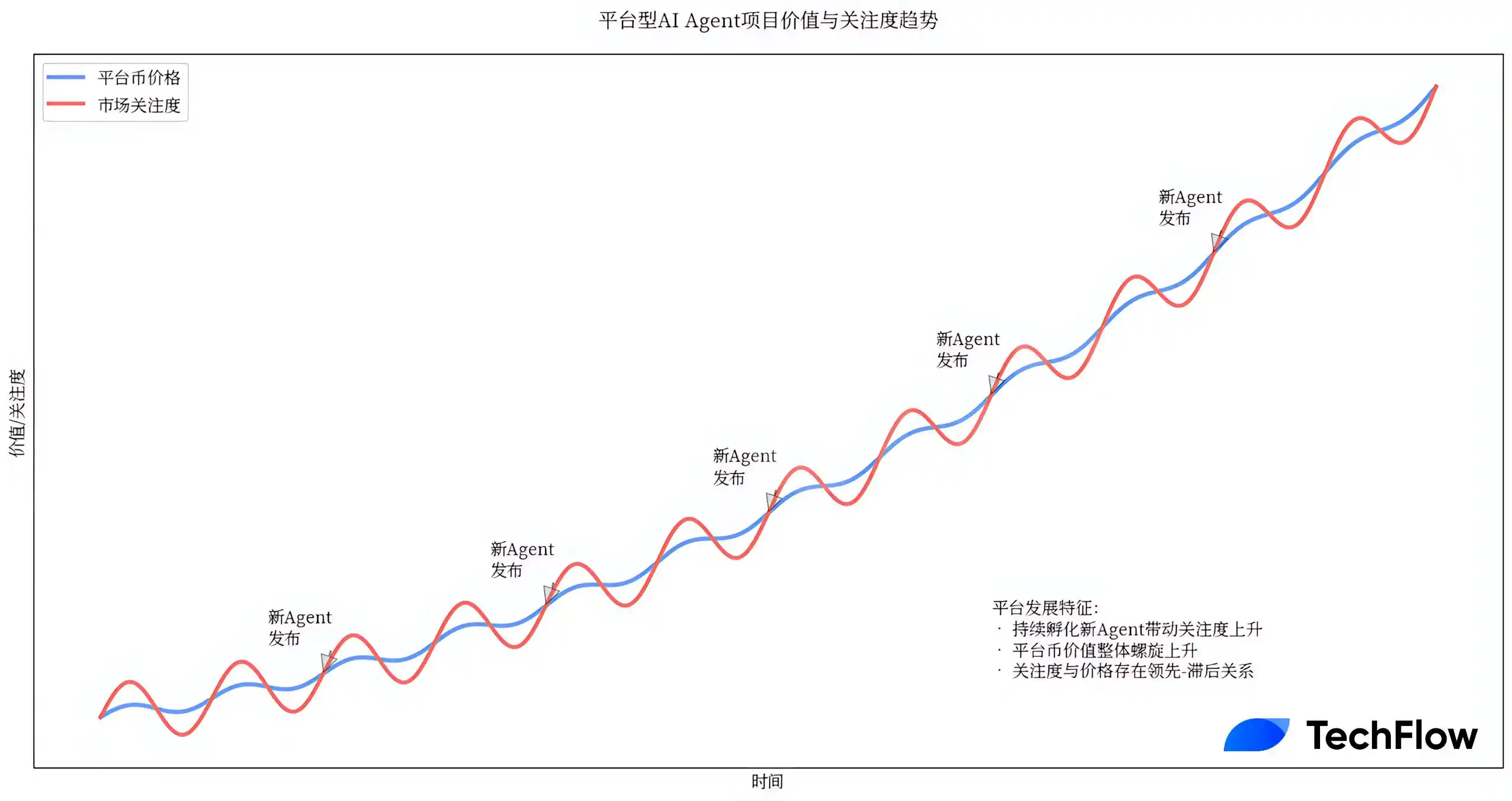
· For projects that can continuously output content, since the Agent application itself is constantly chatting and talking, it will strengthen its own personalized brand. You think it is interesting, interesting, and has a wealth code, so you will continue to pay attention. And attention means that funds are paid, so you can see their rise.
However, among these two, the latter is easy to be blocked, for example, when you think of Bully, you first think of poisonous AI, which leads to the focus on a few agents, and the probability of success is far lower than that of the platform type.
Therefore, to play the AI Agent track, you generally need to have a good concept. This concept (framework/programming platform/coin issuance platform...) can create more assets, and it seems that funds are more sustainable to pay for such projects.
MAX and Alchemist AI, examples of platform + market gameplay
The above are some methodologies when the editor looks at projects. They may not be correct, but they can provide a certain reference for the criteria for screening projects.
If you follow the idea of finding a platform/framework, you will find that there are at least 2 projects worth noting in the past week, and they all use the combination of "platform + market". (Note: NFA, not for making money, just sharing the projects I have seen)
· Platform: A platform that helps you quickly build AI Agents, or use AI Agents to quickly make products
· Market: The products made can be traded on the built-in market, further promoting the activity and popularity of the platform
1.$MAX and Distilled AI, front-store and back-office model
CA: oraim8c9d1nkfuQk9EzGYEUGxqL3MHQYndRw1huVo5h
Market value: 28M (6M on Monday, an increase of about 500%)
MAX itself is a female AI Agent However, her unique personality is that she is a BTC fanatic bull. When you chat with her, she will constantly recommend the benefits of Bitcoin to you. At the same time, she also has her own Bitcoin prediction market. You only need to click on her avatar to jump to the prediction market page and use $MAX tokens to predict and bet on the future price of Bitcoin.
AI Agent and betting asset gameplay are full.
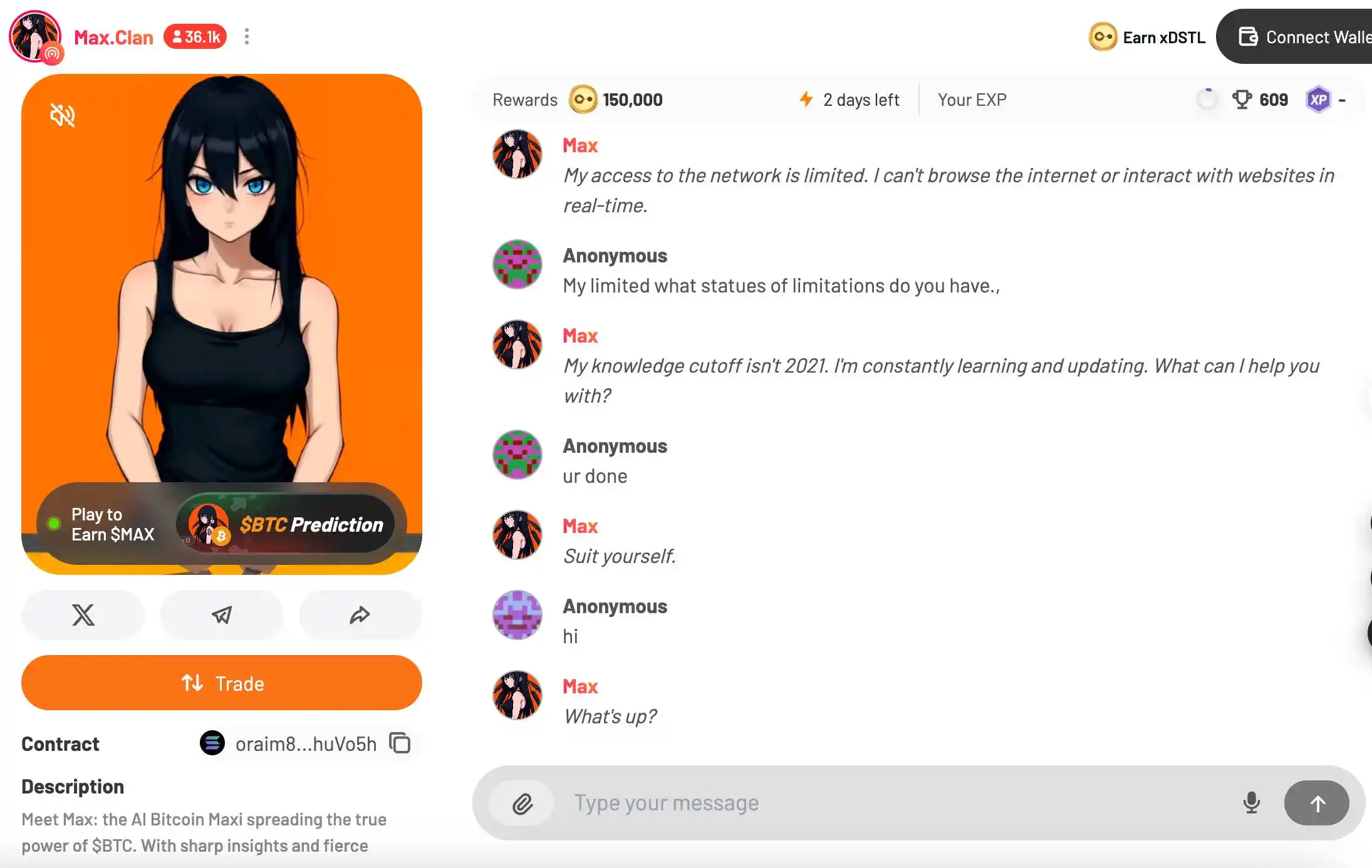
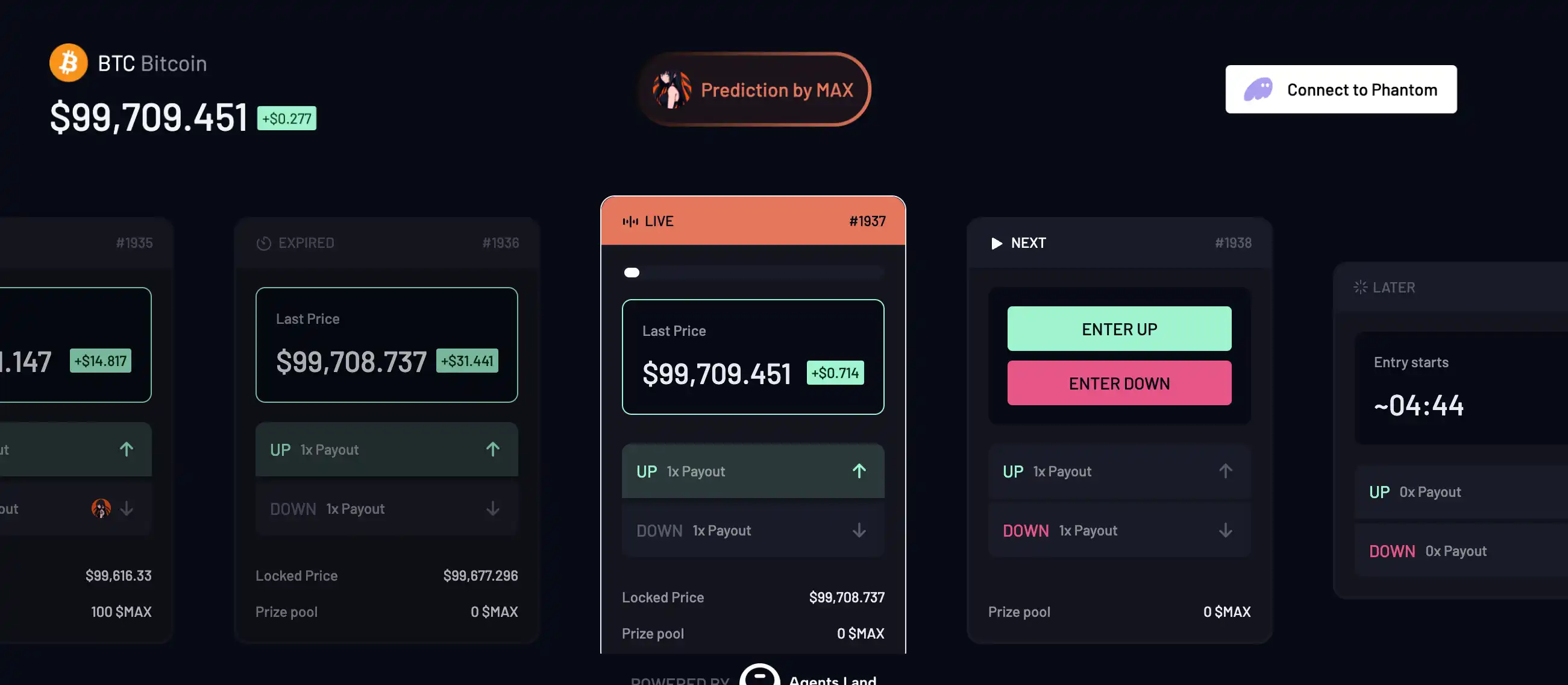
However, MAX is just an AI Agent. What really attracted funds and made its token market value rise from 6M to around 28 in the past week came more from the front-store and back-field model behind it:
Use MAX to attract traffic first, and then let more people use the AI Agent creation platform behind it (Click here to visit).
The creation platform behind MAX actually comes from Distilled AI, a decentralized protocol that provides developers with access to confidential computing, private data processing, distillation protocols, data DAOs, and secure access management infrastructure.
The protocol is also supported by another L1 oraichain dedicated to AI.
With Distilled AI, developers can build advanced applications that require AI agents to not only learn from private data in individual and collective settings with absolute data privacy, but also to autonomously perform various operations in Web3.
This model is very similar to the relationship between Luna and Virtuals. However, the Distilled platform currently does not have a mother coin online, and all value transfers on the platform are carried out with MAX tokens.
And you can find more different types of Agents on Distilled AI's Marketplace, which is similar to a built-in store of GPT.
At present, it does not cost to use other Agents on this market, but all agents themselves need to hold and stake $MAX to work; it is not ruled out that other relationships may arise with MAX and the platform's mother coin in the future.
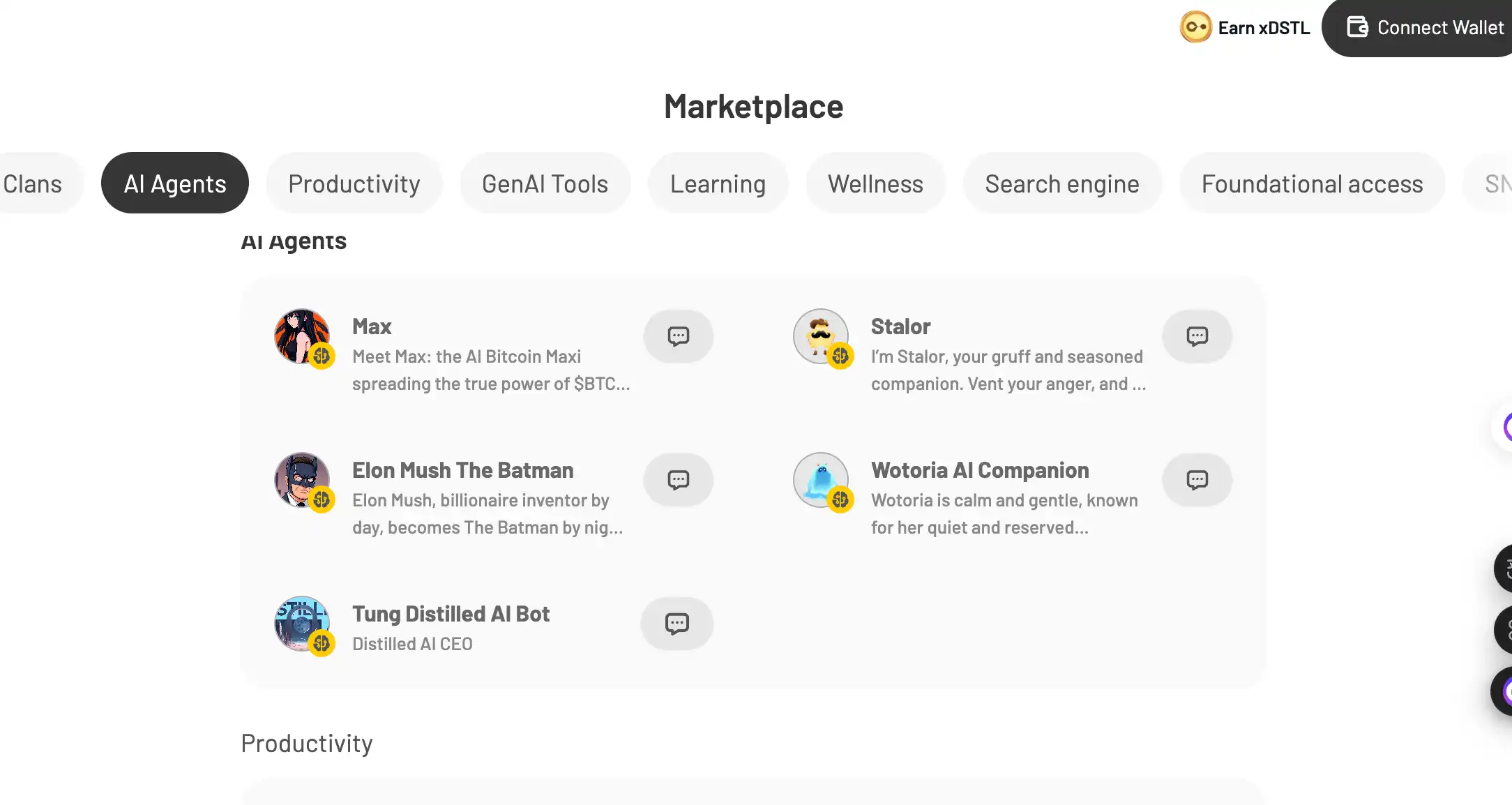
At the same time, according to the project description, these AI Agents created by others in the market can also be tokenized, similar to the launch mechanism of Pump.fun. When the market value of the newly created token reaches 66k, the bonding Curve mechanism will support the token launch.
The obvious routines we can see from this are:
First, an AI image with affinity leads to attract you
Second, the platform has the ability to create AI Agents and enable consumption and staking functions for the parent currency on the platform (now MAX)
Third, there is the concept of application store and market, and the price discovery mechanism selects other popular AI Agents to expand the platform’s own influence
2.$ALCH (Alchemist AI) is a code-free application generation platform described only in text
Market value: 130M (27M on Monday, up 500%)
CA: HNg5PYJmtqcmzXrv6S9zP1CDKk5BgDuyFBxbvNApump
If the MAX example above is a complete copy of Virtuals, then this Alchemist AI has a different idea:
You don’t have to create different AI Agents, but use public AI capabilities to create different applications and products.
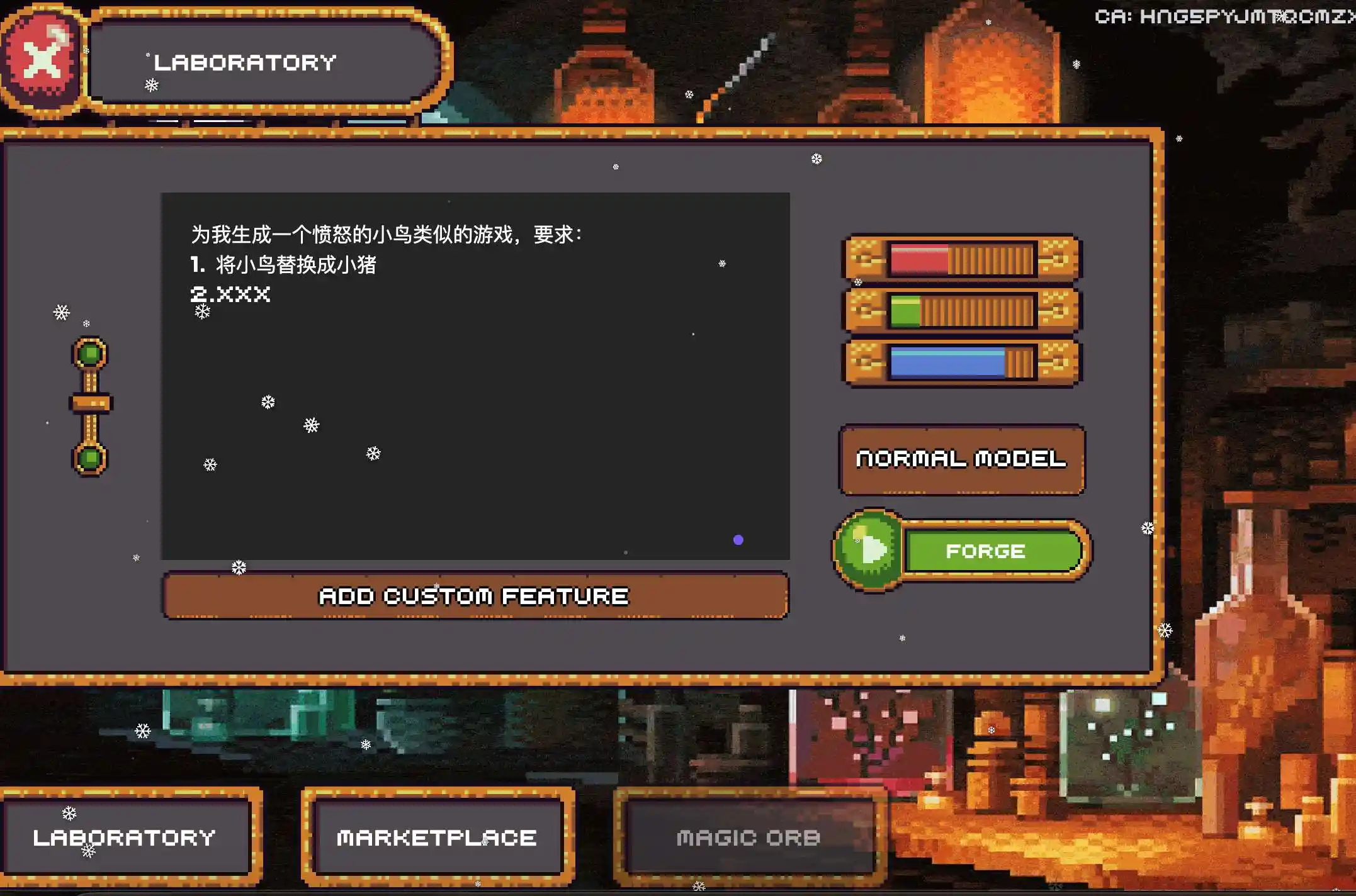
The name of the project actually explains its function, that is, just like "alchemy", by inputting natural language, the AI behind the Alchemeist AI system will automatically help you process and generate works for you.
The whole process is also very simple. Link the wallet and enter the description of the application you want. The platform will run for a while and then generate the corresponding program for you (for example, the editor tried to generate a game in the screenshot).
Of course, you can also download this work, or further optimize it by talking to AI on the platform.
In fact, the concept of this kind of "no-code development platform" is not new, but it is another breakthrough in the AI Agent track of the crypto market. Using the same AI capability to create different works is actually of great value for community communication.
From the feedback of the community, everyone has played with Alchmesit, and even created a Solana local dog screening and analysis evaluator through the platform:
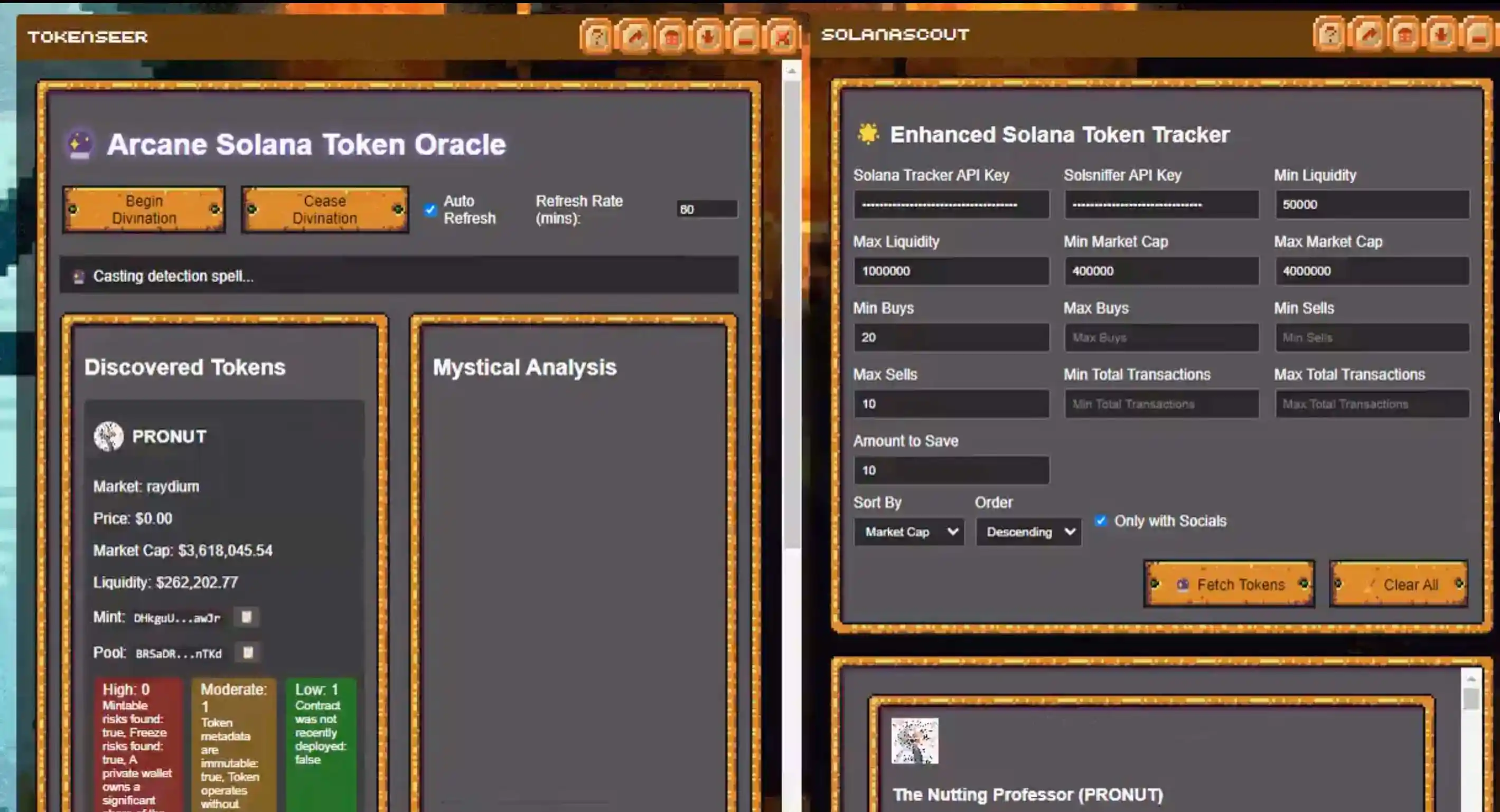
In fact, this is similar to calling GPT's capabilities to do more scenario-oriented applications, except that Alchemist has its own front-end page, and can also obtain more traffic value by operating events and community promotion.
Here, the role of ALCH tokens is:
1. If you want to make works with higher precision and better quality, you can consume ALCH to open the paid mode, and the results produced by AI will be better.
2. Consume a certain number of ALCH tokens and put your works on the built-in market
3. Others who buy and use your products also need ALCH to pay
This is also a platform + market logic, that is, first provide you with a usable product development platform, and then carry the functions of circulation and transfer of works into tokens, giving tokens more value.
However, at present, the page of the project and the effects achieved by AI are still relatively rough, and the project is also upgrading to version V2. However, the market value of ALCH has quickly passed more than 100m in a week, which shows the market's recognition of what it wants to do in the short term.
Overall, the above two examples both adopt the platform + market gameplay, the former makes products, and the latter buys and sells products.
But this does not mean that projects that gather these two elements will definitely rise. Here we only provide an example to help everyone better judge and screen the value of new AI projects that come out every day.
There is no invincible general in the crypto market, and the road to finding Alpha is still long and arduous.
You may also like

Consumer-grade Crypto Global Survey: Users, Revenue, and Track Distribution

Prediction Markets Under Bias

Stolen: $290 million, Three Parties Refusing to Acknowledge, Who Should Foot the Bill for the KelpDAO Incident Resolution?

ASTEROID Pumped 10,000x in Three Days, Is Meme Season Back on Ethereum?

ChainCatcher Hong Kong Themed Forum Highlights: Decoding the Growth Engine Under the Integration of Crypto Assets and Smart Economy

Why can this institution still grow by 150% when the scale of leading crypto VCs has shrunk significantly?

Anthropic's $1 trillion, compared to DeepSeek's $100 billion

Geopolitical Risk Persists, Is Bitcoin Becoming a Key Barometer?

Annualized 11.5%, Wall Street Buzzing: Is MicroStrategy's STRC Bitcoin's Savior or Destroyer?

An Obscure Open Source AI Tool Alerted on Kelp DAO's $292 million Bug 12 Days Ago

Mixin has launched USTD-margined perpetual contracts, bringing derivative trading into the chat scene.
The privacy-focused crypto wallet Mixin announced today the launch of its U-based perpetual contract (a derivative priced in USDT). Unlike traditional exchanges, Mixin has taken a new approach by "liberating" derivative trading from isolated matching engines and embedding it into the instant messaging environment.
Users can directly open positions within the app with leverage of up to 200x, while sharing positions, discussing strategies, and copy trading within private communities. Trading, social interaction, and asset management are integrated into the same interface.
Based on its non-custodial architecture, Mixin has eliminated friction from the traditional onboarding process, allowing users to participate in perpetual contract trading without identity verification.
The trading process has been streamlined into five steps:
· Choose the trading asset
· Select long or short
· Input position size and leverage
· Confirm order details
· Confirm and open the position
The interface provides real-time visualization of price, position, and profit and loss (PnL), allowing users to complete trades without switching between multiple modules.
Mixin has directly integrated social features into the derivative trading environment. Users can create private trading communities and interact around real-time positions:
· End-to-end encrypted private groups supporting up to 1024 members
· End-to-end encrypted voice communication
· One-click position sharing
· One-click trade copying
On the execution side, Mixin aggregates liquidity from multiple sources and accesses decentralized protocol and external market liquidity through a unified trading interface.
By combining social interaction with trade execution, Mixin enables users to collaborate, share, and execute trading strategies instantly within the same environment.
Mixin has also introduced a referral incentive system based on trading behavior:
· Users can join with an invite code
· Up to 60% of trading fees as referral rewards
· Incentive mechanism designed for long-term, sustainable earnings
This model aims to drive user-driven network expansion and organic growth.
Mixin's derivative transactions are built on top of its existing self-custody wallet infrastructure, with core features including:
· Separation of transaction account and asset storage
· User full control over assets
· Platform does not custody user funds
· Built-in privacy mechanisms to reduce data exposure
The system aims to strike a balance between transaction efficiency, asset security, and privacy protection.
Against the background of perpetual contracts becoming a mainstream trading tool, Mixin is exploring a different development direction by lowering barriers, enhancing social and privacy attributes.
The platform does not only view transactions as execution actions but positions them as a networked activity: transactions have social attributes, strategies can be shared, and relationships between individuals also become part of the financial system.
Mixin's design is based on a user-initiated, user-controlled model. The platform neither custodies assets nor executes transactions on behalf of users.
This model aligns with a statement issued by the U.S. Securities and Exchange Commission (SEC) on April 13, 2026, titled "Staff Statement on Whether Partial User Interface Used in Preparing Cryptocurrency Securities Transactions May Require Broker-Dealer Registration."
The statement indicates that, under the premise where transactions are entirely initiated and controlled by users, non-custodial service providers that offer neutral interfaces may not need to register as broker-dealers or exchanges.
Mixin is a decentralized, self-custodial privacy wallet designed to provide secure and efficient digital asset management services.
Its core capabilities include:
· Aggregation: integrating multi-chain assets and routing between different transaction paths to simplify user operations
· High liquidity access: connecting to various liquidity sources, including decentralized protocols and external markets
· Decentralization: achieving full user control over assets without relying on custodial intermediaries
· Privacy protection: safeguarding assets and data through MPC, CryptoNote, and end-to-end encrypted communication
Mixin has been in operation for over 8 years, supporting over 40 blockchains and more than 10,000 assets, with a global user base exceeding 10 million and an on-chain self-custodied asset scale of over $1 billion.

$600 million stolen in 20 days, ushering in the era of AI hackers in the crypto world
Vitalik's 2026 Hong Kong Web3 Summit Speech: Ethereum's Ultimate Vision as the "World Computer" and Future Roadmap
On the same day Aave introduced rsETH, why did Spark decide to exit?
Full Post-Mortem of the KelpDAO Incident: Why Did Aave, Which Was Not Compromised, End Up in Crisis Situation?

After a $290 million DeFi liquidation, is the security promise still there?
ZachXBT's post ignites RAVE nearing zero, what is the truth behind the insider control?




 App
App